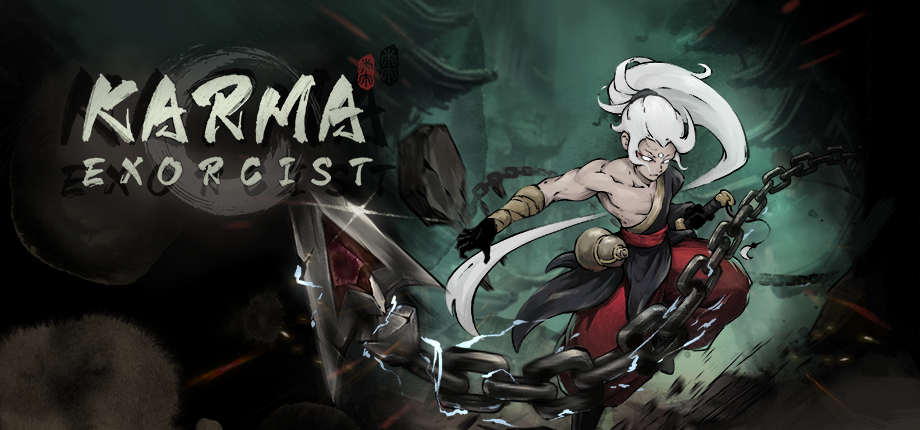
'Karma Exorcist' is a new action-Metroidvania currently in development by an eight-person Chinese studio. The game aims to captivate global players with its unique world-building, featuring 11 major zones set in the 'Difu' (the Chinese underworld), and a system of over 20 'Dharma Treasures.'
Ahead of a playtest running from today (the 27th) through May 5, I had the chance to try a demo version of the game at the 'Bilibili First Look' event in Shanghai.
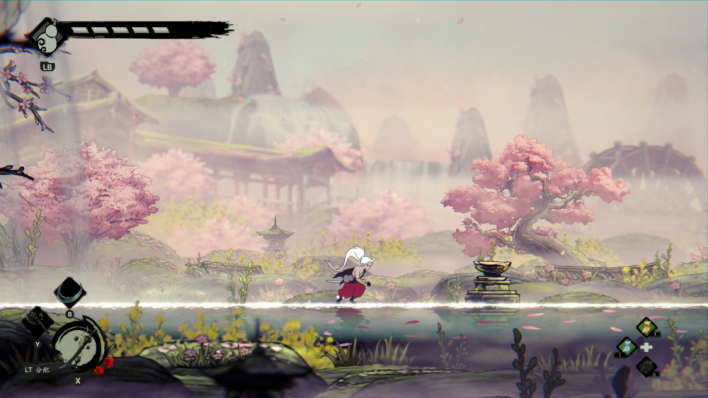
A Metroidvania Set in the Chinese Underworld, 'Difu'
The world of 'Karma Exorcist' is built upon the foundation of ancient Chinese underworld mythology, enhanced by original settings created by the development team. The story begins with endless warfare and tyrannical dynasties in the human world. As the repeated wars caused 'karma' (evil deeds) to accumulate, Houtu—the goddess of the earth in Chinese mythology—chose to absorb and suppress this karma within her own body to prevent it from spreading further.
However, when the accumulation of karma exceeded her limits, Houtu collapsed. Fengdu Dadi, the second-in-command of the underworld, took the risk of corruption to sever and seal one of Houtu's arms. This event caused the underworld to lose its functionality entirely, leaving everyone from grim reapers and the dead to the demons trapped in the 18 layers of hell tainted by karma.
The protagonist controlled by the player is a being born from the sealed arm of Houtu—specifically, from a single finger. Without memories or a name, and driven only by the will left behind by Fengdu Dadi to "turn all karma back into repentance," the protagonist begins a journey to resolve the crisis in the underworld.
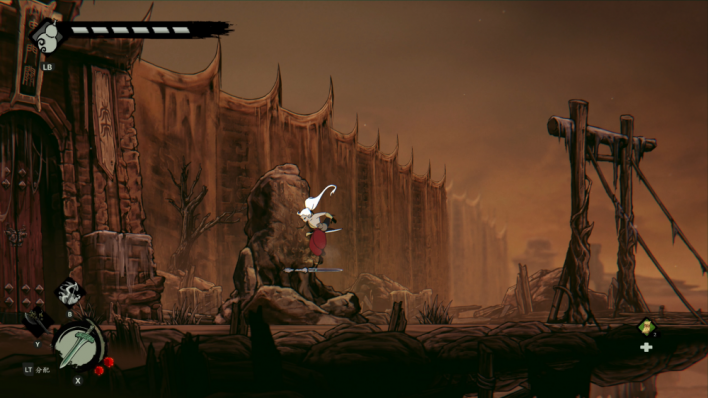
In line with this world-building, the environments in 'Karma Exorcist' are designed to mirror the journey through the afterlife found in traditional Chinese mythology. According to legend, the souls of the dead enter the underworld through the 'Ghost Gate Pass,' travel along the 'Yellow Springs Road,' and are judged at the 'Yama Hall.' Sinful souls drink the 'Mengpo Soup' on the 'Naihe Bridge' to erase their memories before returning to the cycle of reincarnation, while those with heavy sins are sent to the '18 Layers of Hell' to serve their sentences before they can be reincarnated.
In this demo build, the Yellow Springs Road and Ghost Gate Pass were playable, allowing me to explore the map while using the protagonist's basic 'Dharma Treasures' to defeat enemies. Each zone features characteristics tied to the underworld's original functions, now corrupted by the erosion of 'karma.' The game follows a classic Metroidvania design, where access to certain areas is restricted by the protagonist's current abilities while still allowing for a degree of exploration freedom.
As a being born from Houtu's sealed finger, the protagonist is unique in that they begin their journey at the 'Yellow Springs Road' rather than the Ghost Gate Pass. The Yellow Springs Road, the earliest area, features relatively less threatening enemies, primarily crawling or flying insects.
However, it is a well-known fact that flying monsters are the most dangerous in 2D platformer Metroidvanias. While it is possible to aim and attack upwards, they remain tricky to deal with, which is a common impression for the genre.

Moving right from the Yellow Springs Road leads to the 'Ghost Gate Pass,' the entrance to the underworld. According to the developers, the map flow of 'Karma Exorcist' is designed to progress from right to left, mirroring the path of the dead as they enter the underworld and drink the Mengpo Soup.
The protagonist's journey from the Yellow Springs Road toward the Ghost Gate Pass feels contrary to this, suggesting that in the final version, players will likely continue their journey into the space to the left after acquiring certain abilities at the Ghost Gate Pass.
Convenient Exploration Through Diverse Movement Abilities
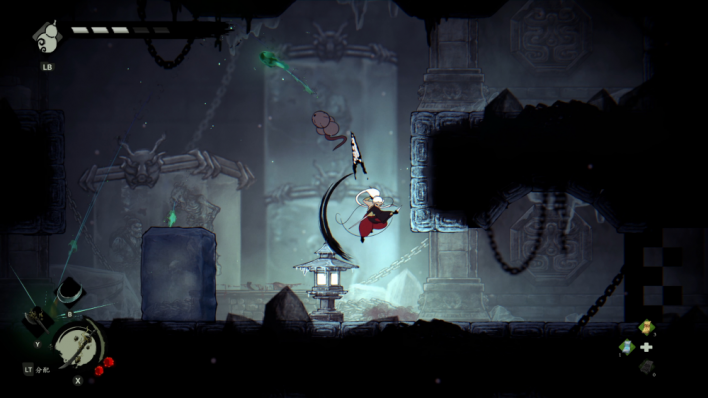
While progressing from the Yellow Springs Road to the Ghost Gate Pass, players face the first boss and acquire the 'Soul Snatching Chain' (Gouhunsuo), an item used for movement. Originally a tool used by the 'Yincha' (underworld messengers) to bind souls, the protagonist uses it like a grappling hook to traverse various platforms.
Because the path to the Ghost Gate Pass includes locations unreachable by a standard jump, acquiring the Soul Snatching Chain is essential. 'Karma Exorcist' uses these movement abilities to restrict access to certain areas while ensuring smoother traversal once the player becomes skilled with the game's mechanics.

The developers noted that the protagonist will be able to acquire more movement abilities, such as dashes and double jumps, and that these can be used to gain a tactical advantage in certain boss battles.
In my experience, the movement in 'Karma Exorcist' has a unique characteristic regarding 'jumping.' The jump height varies dramatically depending on how long the button is held. A quick tap barely lifts the character off the ground, which felt odd at first, but once mastered, it seems it will allow for more precise movement to desired locations.
Using the Soul Snatching Chain was also quite intuitive. It can be activated in mid-air by pressing the R1 button (on a controller), and time slows down while the button is held, making it easier to aim. Once the arrow is pointed in the desired direction, releasing the button fires the chain to pull the character to that spot.
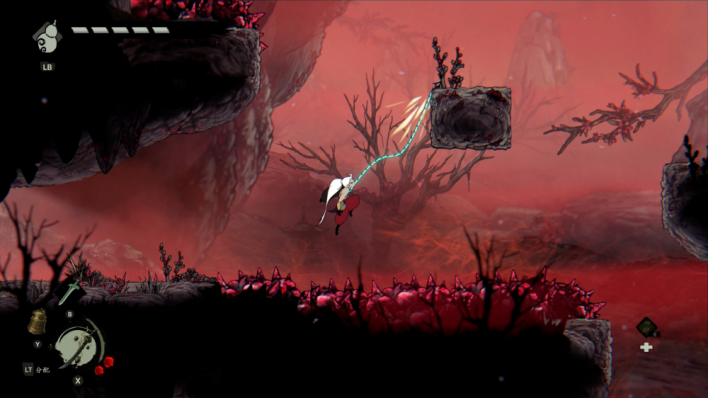
A Combat System Featuring Free Swapping of Dharma Treasures

The overall direction of combat in 'Karma Exorcist' is fast-paced and focused on positioning. The developers stated that they prioritize precision, accurate dodging, and understanding enemy attack patterns over simple attrition-based combat.
The basic combat design resembles 'Soulslike' games. Players light shrines that act as bonfires, which can be used for fast travel, and lost health can be restored by drinking from a gourd that refills as enemies are defeated. If health is fully depleted, the player revives in a 'soul state' with reduced maximum health, which can be restored to full by recovering the soul at the location of death.

In addition, the combat system of 'Karma Exorcist' is built around more than 20 types of 'Dharma Treasures.' Players can equip up to eight of these in their slots, and use three simultaneously via quick slots, allowing for real-time switching.
Each Dharma Treasure is linked to symbolic elements of Chinese mythology and tradition, each with its own unique combat method. They combine standard attacks with special abilities, leaving room for players to explore their preferred combinations. In the demo, I was able to check out the 'Sword' (a basic attack weapon) and a Dharma Treasure that summons a bell to deal area-of-effect damage to nearby enemies.

Beyond Dharma Treasures, there are bead-like passive items that can optimize attack builds. These can be found in chests while exploring the underworld or purchased from merchants using currency obtained by defeating demons. Some beads provide passive effects, such as increasing attack speed, allowing for deeper customization of combat builds.
Consumable items also exist. Mostly acquired in the form of talismans, these items provide auxiliary effects, such as increasing damage for a certain duration. They were particularly effective when used at the start of boss fights for burst damage or in maps crowded with tricky flying enemies.
With over 100 hand-drawn monsters and a setting based on the somewhat unfamiliar mythology of the Chinese underworld, 'Karma Exorcist' offers a fresh experience for fans of 2D platformer Metroidvanias. The game will hold a test on the Steam platform from April 27 to May 5.

Sort by:
Comments :0