A policy forum on the full revision of the Game Industry Promotion Act was held on the 13th. During the event, Hwang Sung-ki, chairman of the Game Self-governance Organization of Korea (GSOK), delivered a keynote presentation outlining the key contents and policy implications of the proposed revision. This was followed by presentations from Lee Jang-joo, director of the I-Rak Digital Culture Institute, on measures to prevent game addiction and identity verification systems, and Lee Do-kyung, secretary-general of the Youth Foundation, on user protection, self-regulation, private servers, and anti-cheat measures. The full revision was originally proposed by Representative Cho Seung-lae of the Democratic Party of Korea in September 2025.
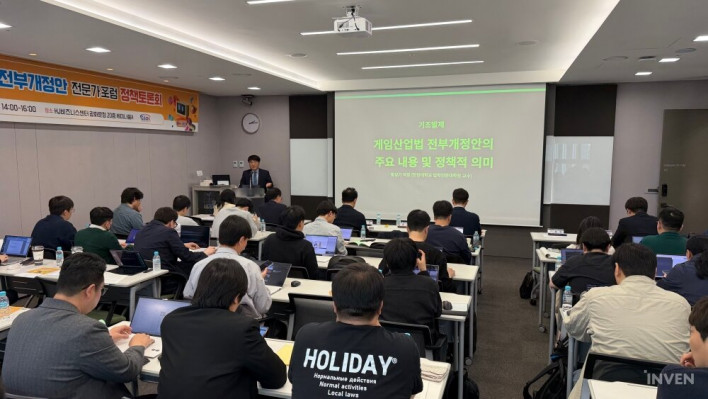
The GSOK, which hosted the forum, is the industry's first independent self-regulatory and policy research organization, established in November 2018 to foster a healthy gaming culture. While the organization views the revision as a model capable of overcoming the limitations of the outdated Game Industry Promotion Act—which has remained largely unchanged since its implementation in October 2006—and achieving both user protection and industrial growth, it organized the forum to examine how the disagreements and concerns of government ministries and other stakeholders might impact certain contentious issues.
The revision provides a legal basis for self-regulation (Article 23-3). It also includes 'matters concerning the verification of self-regulation compliance' as one of the functions of the proposed Game Promotion Agency or the Game Rating and Administration Committee.
In this regard, GSOK Chairman Hwang Sung-ki emphasized, "The self-regulatory model envisioned in the revision is closer to a 'managed' or 'approved' form of self-regulation. We must ensure that the legal basis for self-regulation is not interpreted or used as a basis for 'interference'." He suggested that only the basis for self-regulation should be legislated, while provisions regarding state support and compliance verification should be removed.
Regarding the addition of regulations on 'illegal programs such as hack tools' and 'illegal private servers,' Chairman Hwang gave a positive assessment, stating, "It is a more advanced approach than the current law in terms of balancing and harmonizing the values of protecting game users and fostering the game industry."
The Ministry of Culture, Sports and Tourism has previously suggested that direct punishment for users of illegal programs is undesirable, as it could leave minor users with a criminal record, and that strengthening preventive education would be more appropriate.
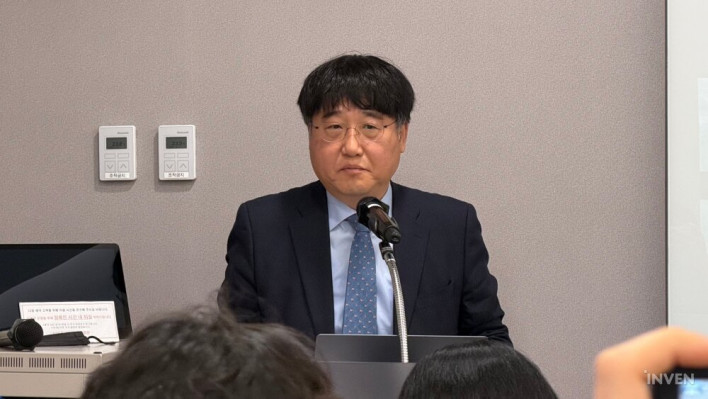
Chairman Hwang stated, "To solve the hack problem, legal mechanisms to suppress demand may be necessary. In this context, the introduction of penalty provisions for game users should be positively considered." He also recommended, "The revision does not include penalty provisions for users of illegal private servers. We should introduce such penalties, designed as offenses subject to complaint or offenses not punishable against the victim's will, to prevent unreasonable punishment."
Regarding the governance restructuring that would replace the existing Game Rating and Administration Committee with a new Game Promotion Agency and a Game Rating and Administration Committee, Chairman Hwang assessed, "It is designed to move away from the passive role of 'managing' games and act as a control tower that integrates various functions such as industrial promotion, cultural research, and user protection. If reorganized as proposed, it could become a collaborative platform involving the government, the private sector, businesses, and users."
The Korea Association of Game Industry has previously suggested that having the Game Promotion Agency, a single-headed organization, directly handle content regulation (content rating system) could be unconstitutional. Chairman Hwang drew a line, stating, "The association's opinion is incorrect from a constitutional perspective." He added, "There is no explicit provision in the Constitution mandating that content regulation must be performed by a collegiate body; whether it is handled by a single-headed or collegiate body is a matter of legislative policy."
He continued, "There is a Constitutional Court ruling that content rating itself does not constitute prior censorship, which is absolutely prohibited by the Constitution. Considering that there is a similar legislative precedent in the Publication and Printing Industry Promotion Act, it cannot be considered unconstitutional for the Game Promotion Agency, a single-headed organization, to be in charge of post-management of games."
The full revision promises to overhaul the current content rating system, which has been a source of frustration for both game companies and users, into a fully self-regulatory system. Chairman Hwang positively evaluated this as "a groundbreaking mechanism that addresses long-standing inconveniences in the field while increasing user accessibility," though he added, "In the long term, it needs to be simplified into a two-tier rating system—"All Ages' and "Not for Youth"—similar to the rating system for arcade games.
The revision intends to apply prize regulations only to arcade games and abolish them for general online games. The Ministry of Culture, Sports and Tourism is concerned that fully allowing prizes could lead to gambling-like behavior and user harm. Chairman Hwang said, "From a mid-to-long-term perspective, it is necessary to completely abolish the ban on prizes in online games, but given the potential side effects of a total abolition at this point, a phased, gradual relaxation approach may be more appropriate."
Chairman Hwang Sung-ki emphasized, "Representative Cho Seung-lae's full revision of the Game Industry Promotion Act can be seen as an attempt to redraw the 'big picture' of game policy, embodying the state's will to recognize games as a form of culture. The remaining task is to translate that picture into institutional implementation; the completion of a system is proven not by legal text, but by operation and practice."
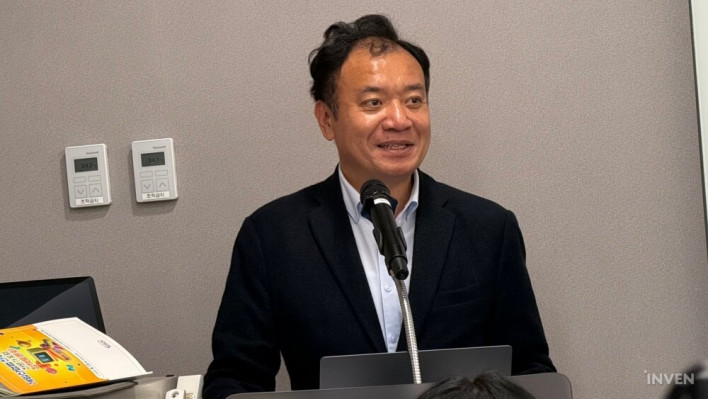
Lee Jang-joo, director of the I-Rak Digital Culture Institute, addressed measures for preventing game addiction and identity verification systems. He pointed out that while the revision places game culture promotion at the forefront, "the protection frame centered on 'addiction prevention' remains strong in the actual regulatory structure, which could lead to the relationship between cultural promotion and user protection being understood as control-oriented rather than support-oriented."
As an alternative, Lee suggested replacing the term 'game addiction,' which can carry stigma and conceptual ambiguity, with neutral, support-oriented expressions like 'supporting balanced game use,' and reinforcing content on the core principles of culture: diversity, accessibility, and preservation. He also recommended that identity verification and legal representative authentication be required only in high-risk areas, such as paid transactions or access to content not suitable for youth.
He emphasized, "I am not against youth or user protection itself, but we need to refine the targets and criteria for intervention. We should redesign the identity verification system into a selective structure focused on specific actions rather than a constant, general obligation, so that protection measures operate at actual points of risk."
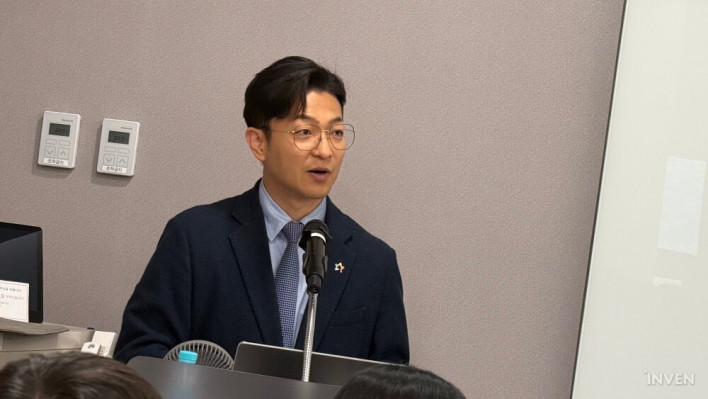
Lee Do-kyung, secretary-general of the Youth Foundation, addressed the revision's provisions on user protection, illegal program users, and private servers. The current damage relief center is limited to handling cases involving violations of gacha item probability disclosures, but users actually suffer from various damages such as unfair account suspensions, refusal of refunds, and excessive monetization. Lee stated, "It is necessary to reorganize the 'Gacha Item Damage Relief Center' into a 'Game User Damage Relief Center' to grant it the authority to respond to damages across the entire service."
Regarding the penalty provisions for illegal program users, Lee noted, "It is realistically impossible for the state to investigate the game logs of countless users one by one, and the requirements of "habituality" or "serious disruption" are legally ambiguous." Therefore, he analyzed that it is necessary to supplement the delegation provisions to specify the period and frequency for determining habituality, as well as the criteria for determining serious disruption, in the enforcement decree.
Regarding the issue of private servers, he pointed to 'types that do not harm the game company's revenue.' Lee urged, "There are forms created to continue playing games that have ended service, or forms where users freely modify game content to enjoy the game in diverse and new ways. These should be viewed differently from the original intent of the law, which is to block acts that harm game companies by infringing on IP through indiscriminate imitation or copying."
Meanwhile, questions were raised at the forum regarding the organizational structure of the planned 'Game Promotion Agency.' Regarding the 'employment succession' clause for existing Game Rating and Administration Committee staff specified in the addendum of the revision, questions were asked about the future direction of staffing and the qualifications of the first agency head, amidst a conflict between demands for personnel reform and the value of job stability.
In response, Lee Do-kyung expressed concern that "a full succession of personnel could lead to the old work methods and culture of the existing organization being carried over, resulting in nothing more than a name change." However, acknowledging that a complete exclusion of employment succession is difficult under the current legal system, he argued for selective, job-focused staffing rather than unconditional automatic succession. He emphasized, "At the very least, job re-verification is essential for managers at the team leader and director level, and personnel who were disciplined during the 2022 national audit must be thoroughly vetted."
Regarding the qualifications for the first agency head, he called for a shift in thinking. Lee explained, "Every time an agency head is selected, industry or regulatory/administrative experts are mentioned, but we need new ideas that match the value of games as 'New Content.' We need someone with excellent 'user-centric' understanding who can move beyond regulatory or industry-focused thinking, and if these perspectives and requirements are met, a young, unconventional talent could be appointed."
Attorney Lee Chul-woo, who followed, expressed agreement, saying, "Even if an employment succession clause is not specified during agency mergers, employment usually continues to guarantee workers' rights, but as Lee pointed out, personnel placement and re-verification must be thorough." He emphasized, "Since it has been pointed out that each employee has different capabilities and there is a lack of expertise in post-management, strict verification is essential." He also mentioned cases where the existing Game Rating and Administration Committee infringed on the rights of game users through content rating censorship, adding, "The independence of the damage relief center needs to be further strengthened to prepare for cases where government agencies infringe on user rights."

Sort by:
Comments :0