


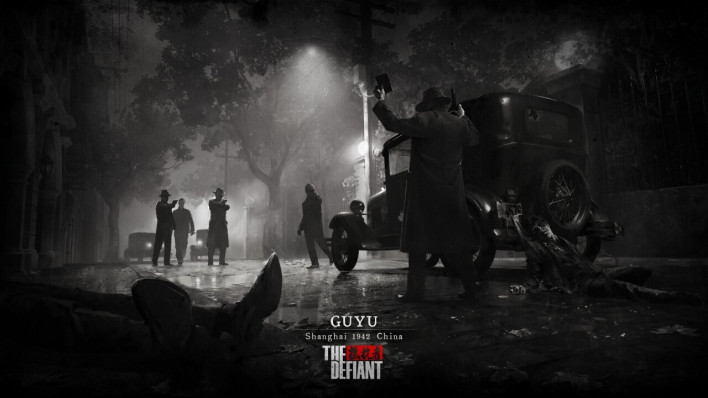
There are many FPS games based on World War II. From the Normandy landings to Stalingrad, and from North Africa to the Pacific theater, most major battles have been recreated in games multiple times. However, it is rare to find a title that puts the war fought in China during the same period at the forefront.
'The Defiant' is a single-player FPS that digs into this void. Set against the backdrop of the Second Sino-Japanese War, it weaves stories of different regions, seasons, and units into a single campaign. The development team has placed storytelling at the heart of the game, aiming to recreate the battlefields, weapons, and architecture of the time as close to historical records as possible.
The hands-on session in Shanghai, China, lasted about an hour. I was able to check five sections in total: a shooting range where I could freely test the weapons, segments of the main story combat labeled P1, P2, and P3, and a demo build scheduled to be unveiled at ChinaJoy 2026.
According to the developers, P1 through P3 were closer to 'vertical slices' created to showcase different combat scenarios rather than finished levels. Cutscenes and various cinematic effects were not yet fully implemented. In contrast, the final on-site demo was presented as a build that relatively fully demonstrates the quality and structure the team is aiming for.

The Familiar Feel of a Campaign FPS

'The Defiant' is a story-driven FPS. Its basic impression is quite similar to the single-player campaigns of major FPS titles that have gained popularity in the global market. If you have frequently enjoyed games based on World War II, it will feel even more familiar.
You move along a set front line with fellow soldiers, take cover to avoid enemy fire, and then push forward. Sometimes you must defend a specific position, and other times you must sprint to the next point while dodging a hail of bullets. Between battles, the protagonist and their comrades converse to convey the situation. It is the typical structure of a campaign FPS, alternating between gameplay and narrative sequences.
The control scheme also follows the conventions familiar to recent FPS games. You throw grenades with the 'E' key and can slide by pressing 'C' while running. There were no unique controls that required a separate adjustment period, and the configuration allows players accustomed to modern FPS games to focus on combat immediately.

There were also sequences requiring various key inputs. For instance, you might climb to high ground with a comrade's help or use a QTE to fend off a Japanese soldier who suddenly lunges with a bayonet while you are hiding behind a wall. While I died a few times when these appeared unexpectedly, they did not feel particularly special as they are techniques consistently used in mainstream FPS campaigns.
What the developers emphasized during their presentation was not the new FPS mechanics themselves, but rather the story they intend to tell within those mechanics. The game is planned as a 15-hour single-player campaign, and features like a co-op campaign are also in development.
China's Battlefields Across Four Seasons
The game's biggest differentiator is its setting. The campaign is divided into four chapters, each assigned a different season and region in China. Rather than a continuous war hero's journey following a single protagonist, it is structured more like an anthology, depicting the resistance that took place across China during World War II.


In this hands-on session, I was able to see a portion of the first chapter, 'Winter.' Set in northeastern China, it depicts the protagonist's unit, the Northeast Anti-Japanese United Army, climbing a snow-covered mountain to escape the pursuit of the Japanese military. The core content involves soldiers, outnumbered and surrounded by snow-capped mountains, fighting to survive.
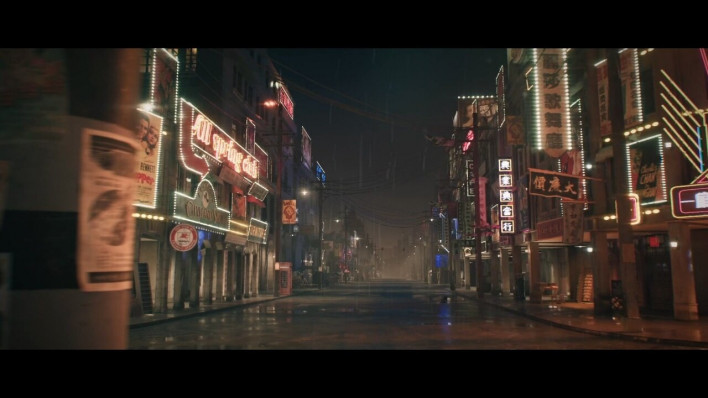
The developers plan to show completely different atmospheres depending on the season and region after the first chapter. The second chapter is set in Shanghai during the spring. Players take on the role of an informant, participating in espionage warfare in 1932 Shanghai. This chapter focuses more on covert operations and spy warfare than on all-out gunfights.
The third chapter unfolds with a somewhat brighter atmosphere than the previous two, dealing with battles around canals and the stories of local troops. The final chapter depicts the battles fought in the Taihang Mountains, centered on the Eighth Route Army. The developers explained that they plan to weave the historical context and seasonal characteristics of each of the four regions into their respective chapters.
I am personally looking forward to the second chapter. While war FPS games featuring snowy wildernesses and trenches are familiar, espionage warfare unfolding in the night views and streets of 1930s Shanghai is a rare sight. If they can clearly distinguish the combat style and narrative tone from the first chapter, the four-season structure could prove to be more than just a visual change.
Weapon Authenticity with a Former Firearms Officer
The most noticeable aspect during the experience was the significant effort the developers put into implementing the weapons.
While weapons familiar to fans of war games, such as the Arisaka rifle used by the Japanese military or the Soviet Mosin-Nagant, are present, there were also many weapons that are difficult to find in typical World War II FPS games. It is as if firearms that did not need to be covered in games focused on the Western Front have emerged as new options in the context of China.
This is why a separate shooting range was provided in the demo build. The developers recommended checking the feel of the weapons at the range before entering actual missions, as it would be difficult to use all the weapons implemented in the game through just the four combat segments.
By pressing the 'I' key (on keyboard), you can also view a weapon inspection animation. This feature allows you to rotate the gun to examine its exterior, markings, and loading status. While it does not directly affect gameplay, I could feel the intent to actively reflect how modern military FPS games treat weapons as objects of appreciation (e.g., exterior details, reload animations).

The developers explained that the weapons and vehicles in the game are also being produced as close to their historical appearance as possible by referencing historical data. In the interview, I heard that a developer who previously handled firearm management in the military is in charge of weapon implementation. They are not just listing period-accurate guns, but are also trying to add credibility to the sensation of operating and observing them.
However, the shooting system in this demo was closer to hitscan than ballistics-based. At the shooting range, I could hit the furthest target, placed for sniper rifle testing, even with a pistol. There is no need to calculate bullet travel time or drop; you simply place the crosshair on the enemy and pull the trigger to score a hit.
The developers explained that they are using the current method because of the frequent close-quarters combat inherent to the story, and that they are implementing differences between weapons through bullet spread, recoil, and damage drop-off over distance. Whether to add a ballistics system is still under discussion.
It is difficult to say that one approach is inherently superior based solely on realism. Given the fast pace of the story campaign, hitscan is a perfectly reasonable choice. However, if they intend to make historical accuracy and detailed expression of firearms a key feature of the game, it seems necessary to deliver a sense of weight in the shooting experience that matches those claims.

Bullets Flying from Everywhere: I Get the Intent, But


The combat difficulty was higher than expected. The biggest reasons are the background and enemy placement. In the snow-covered mountains, it is not easy to identify enemies from a distance. The Japanese military AI also moves more aggressively than expected, and if you stay in one place, bullets fly in from multiple directions.
According to the developers, this is an intentional design reflecting the combat situation of the time. With the Japanese military better armed than the protagonist's group, the latter is climbing the snowy mountains to escape pursuit. They explained that the combat balance was intentionally made difficult to make the player feel the 'pressure of the Japanese military closing in' from all sides.

The problem is that this pressure sometimes felt unfair rather than tense. Situations where I would be taken down by bullets from behind while dealing with enemies in front occurred more often than expected. There were also sections where I had to die because I continued to take damage even while hiding behind cover.
It should be noted that I have not yet experienced the entire map, and that P1 through P3 are unfinished combat slices. In fact, the developers acknowledged the issue of taking continuous damage while in cover and stated that they plan to fix it.
Still, in the final game, regardless of difficulty, players need minimal clues to grasp the situation. Sound cues to estimate enemy positions, dialogue from comrades, hit direction indicators, and terrain structures that allow one to read the front line should be supported. High difficulty becomes a challenge when you can understand why you lost, but it turns into fatigue when you repeatedly die for unknown reasons.

In some missions, I could also see combat designed around scripts. A prime example is a section where you must sprint to a specific location to avoid fire from a sniper positioned on a snowy ridge.
At first, I judged that it would be natural to eliminate the visible sniper before moving. However, no matter how many times I hit the sniper, they would not die. The solution to that section was not to kill the enemy, but to run to the point designated by the developers while avoiding the gunfire.
Such scripted sequences are not unfamiliar in campaign FPS games. Scenes where you must move to avoid overwhelming firepower or survive until a specific event occurs have been used for a long time. The problem arises when the game's rules and the cinematic rules collide. If you hit a clearly visible enemy with bullets and they show no reaction, the player naturally feels that the game is rejecting the solution they have devised.
The developers mentioned that they have received feedback on this section several times and plan to revise it. They need to make it possible to actually eliminate the enemy, or at least provide a cinematic reason why they cannot be dealt with using current weapons.
This is an important part of achieving the immersive storytelling that 'The Defiant' aims for. Scripts are effective tools for creating dramatic scenes, but in a FPS where the player is in direct control, the more blatantly their presence is revealed, the easier it is to break immersion.
Ultimately, the 'Story' is What Matters'
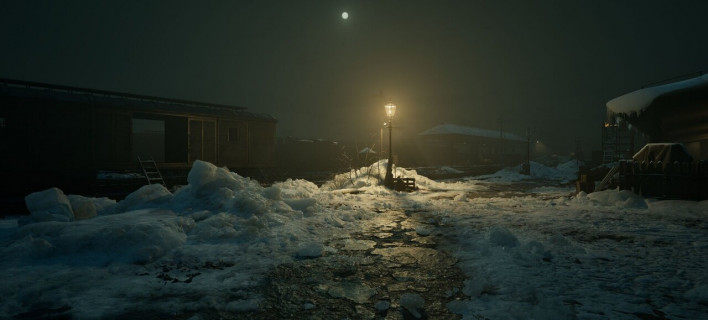
The developers also emphasized historical restoration in the process of recreating battlefields and cities. For regions that still exist today, the team visited them personally to collect photographic data and used scanning technology and Unreal Engine to reconstruct them as spaces within the game. For architecture and areas whose original forms are difficult to verify today, they are restoring them as close to their original appearance as possible by referencing historical books and photographs.
The hands-on section was focused on the snowy mountains, so it was difficult to see how widely these efforts were implemented. However, the spring Shanghai and mining areas revealed in the presentation showed completely different impressions despite being set in the same war.
Ultimately, 'The Defiant' at this stage is not a game that deviates significantly from the category of storytelling FPS games we know. It faithfully follows the conventions of major FPS campaigns in many areas: familiar controls and cinematics, script-based combat, QTEs, and companion AI. Looking at the combat system alone, it is difficult to say that it has revealed something decisive that can only be experienced in this game.
Rather, its biggest differentiator is its story and setting. As the developers stated in the interview, World War II games that deal with the Chinese front in earnest are rare. Among them, a single-player FPS made with this level of scale and graphics is even harder to find. This is clearly the most powerful weapon 'The Defiant' possesses.
However, the fact that the subject matter is unfamiliar does not automatically make a good game. The key going forward will be how well they can translate the historical background into compelling characters and stories, how they will adjust the boundary between high difficulty and unfairness, and how much individuality they can create for each chapter within the familiar FPS conventions.
Personally, I am looking forward to the second chapter set in spring Shanghai. If the survival battle in the snowy mountains and the espionage warfare unfolding behind the scenes of a glamorous city provide distinctly different sensations, the plan to divide the game into four seasons and battlefields will have sufficient merit.
'The Defiant' aims to convey an unfamiliar history by borrowing the conventions of familiar war FPS games; I look forward to seeing it again in a more polished state
![]()
- Kyuman "Frann" Kim
- Email : frann@inven.co.kr






Sort by:
Comments :0