


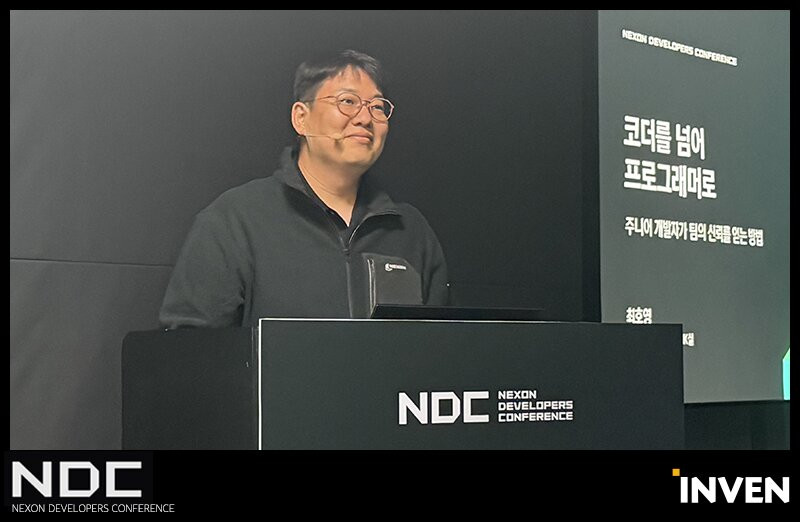
Topic: Beyond Coding: How Junior Developers Can Earn Team Trust Speaker: Choi Ho-young - Part Leader, Nexon Korea Category: Programming, Career Recommended for: Job seekers, junior programmers
Tags: #Programming #Role
[🚨 Session Topic] This session highlights that a programmer's responsibilities extend far beyond writing code and explains how to navigate these broader requirements. Nexon Korea Part Leader Choi Ho-young shares tips for junior developers to earn team trust, emphasizing the importance of feedback, sharing and documenting ideas, and schedule management.
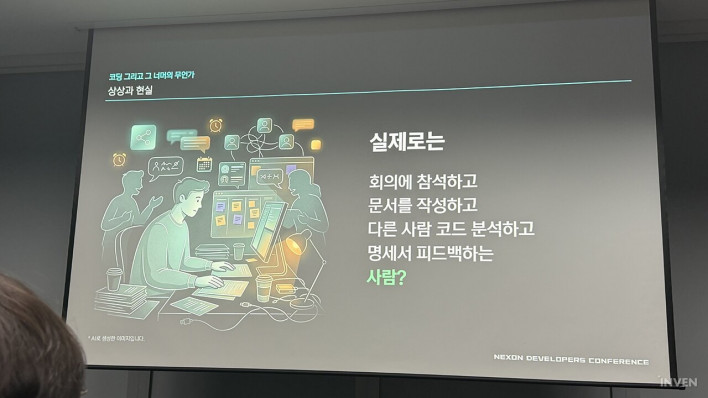
To those outside the gaming industry, a 'game developer' is often seen as someone who simply codes upon receiving instructions and then checks if the work functions correctly. Acknowledging this common perception, Choi noted, "People likely imagine someone typing away at endless, cryptic code in front of a dark monitor." He argued that in practice, a programmer's role is not so limited, and he offered guidance to aspiring junior developers on the mindset they should adopt.
Part 1 - Remember the Art of 'Counter-Proposing.'
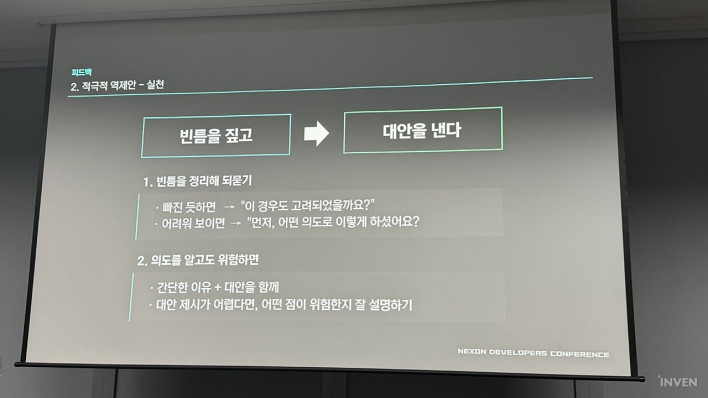
Choi pointed out that work specifications received from other departments are rarely perfect. As programmers are responsible for writing safe, robust code, he urged them to proactively identify and address logical flaws in these specifications.
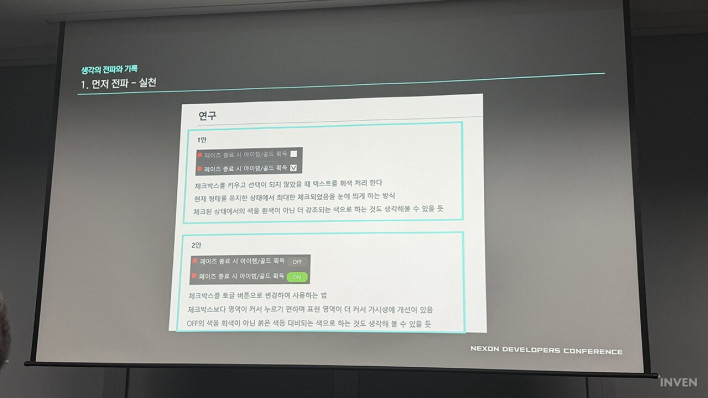
He emphasized that instead of accepting specifications at face value, it is crucial to engage with the requester to understand the 'why' behind the request. Using an attendance system as an example, he explained, "An attendance system requires complex design and is costly to build. The goal isn't just to build the system, but to understand its purpose. If the true goal is to provide frequent rewards to early-stage users, you could suggest a mail-delivery system as an alternative to building a complex UI." By counter-proposing, you can reduce unnecessary costs during the implementation phase.
He also suggested that counter-proposing can help expand the boundaries of game design. Instead of drawing a line by saying something is technically difficult, a programmer can offer to handle the technical constraints, encouraging the designer to create freely according to the project's goals. This, Choi added, prevents designers from prematurely limiting their ideas due to perceived technical barriers, which can otherwise diminish the fun of the design.
Furthermore, Choi cautioned that one must be careful when making counter-proposals. Since programmers are implementers, not the final decision-makers, they should offer suggestions without critiquing the resulting designs. He stressed the need to clarify whether a comment is merely a personal preference or a recommendation based on system stability.
Part 2 - Sharing and Documenting Ideas
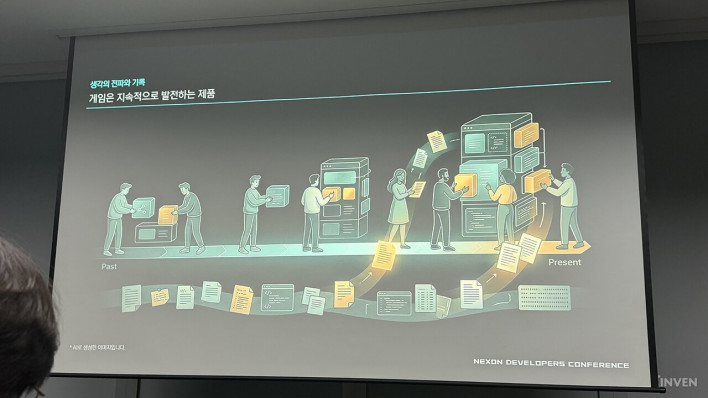
Choi explained that programmers are not just creators who finish a task and move on; they are maintainers who must continuously develop their work. Therefore, it is essential to share and pass on the reasoning and intentions behind their work to colleagues and their future selves.
He noted that even well-written code is just a result, and it is often difficult to discern the 'why' behind it just by looking at the code. He emphasized the need to document processes and results through documentation and commit messages.
He also highlighted the importance of proactive communication and documenting context. "If you only notify others after you've finished, you'll often find that the direction was wrong and it's too late to turn back," he said. Sharing direction before or during the work allows for early feedback and the potential to reuse existing code, which can drastically reduce unnecessary work costs.
He also added that while formal documentation is ideal, if that feels too burdensome, you should at least leave detailed notes on your work intent through Git or commit messages to provide hints for your colleagues or your future self. The idea is to put in the effort now so you don't find yourself despairing later, wondering, 'Why on earth did I write the code this way.'
Part 3 - The Importance of Schedule Management: 'Transparent Sharing' Over 'Perfect Compliance'
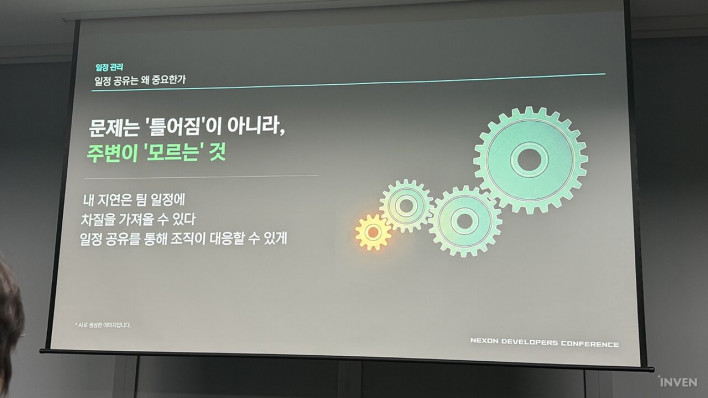
Along with the previous two points, Choi identified schedule management as a critical practical skill. He noted that even the most carefully calculated schedules are bound to shift during real-world development, and the key is how skillfully one responds and communicates in such situations. His answer: 'Transparent sharing.'
He advised sharing the status of a schedule exactly as it is, without padding or cutting it. He also emphasized that when progress stalls and a slump hits, one needs the courage to be honest with their leader rather than suffering in silence.
He also suggested a habit of checking in with oneself five minutes before starting work each morning: Is the work on track? Are there signs of delay? Are there issues to report to the leader? This helps prevent small problems from suddenly escalating.
Choi also stated that sharing should always be accompanied by alternatives. Simply saying, "The schedule is delayed," is irresponsible. The wisest approach is to present options—such as extending the schedule to improve quality or reducing the scope to meet the deadline—and outline the pros and cons of each. If no alternatives exist, he encouraged developers to clearly ask for help.
Finally, he advised maintaining clear communication with those who have the authority to adjust priorities, such as leaders or PMs. He cautioned against feeling secure just because something is written in a document; he advised calling these stakeholders directly to ensure they are aware of the situation and to see if there is anything they can do to assist.
Conclusion: Why Basic Practical Skills Matter in the AI Era
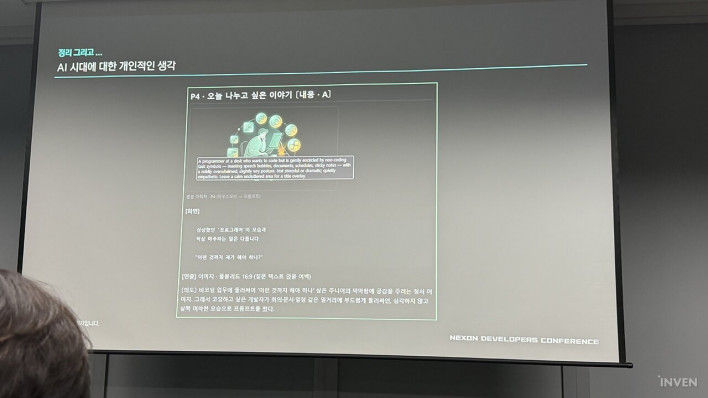
In closing, Choi mentioned that a significant portion of his presentation materials had been created in collaboration with AI. He reiterated why basic practical skills remain crucial in the AI era.
Since AI may replace a large portion of pure coding, Choi's argument is that it is vital to increase one's value by cultivating human-centric skills: identifying gaps in planning to adjust direction, sharing context with colleagues, and flexibly navigating crises. Through this presentation, he expressed his hope that junior developers entering the field will go beyond being mere coders and fulfill the role of true programmers.



Sort by:
Comments :0