


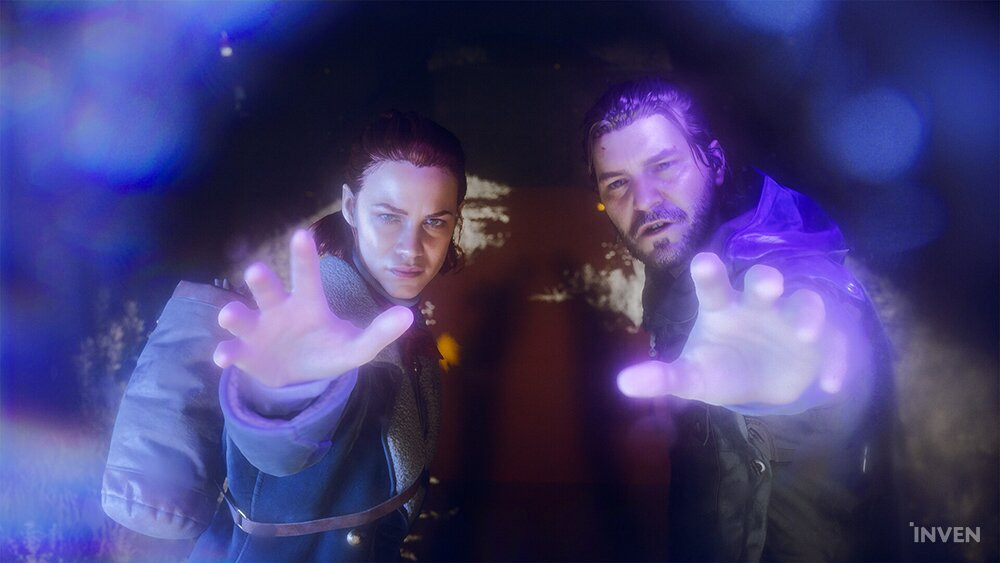
Remedy's new title, Control: Resonant, has confirmed a September 24 release date and revealed additional details through the State of Play and SGF showcases.
Control: Resonant features Dylan, the brother of the previous protagonist, as the new lead, and introduces entirely new combat and movement mechanics. As the largest-scale project in Remedy's history, it is set to offer an expanded experience in terms of direction, action, and narrative.
Ahead of SGF, a media event for Control: Resonant was held in Los Angeles. The event included hands-on gameplay and interviews with the development team, featuring Art Director Elmeri Raitanen and Lead Level Designer Anne-Marie Grönroos.
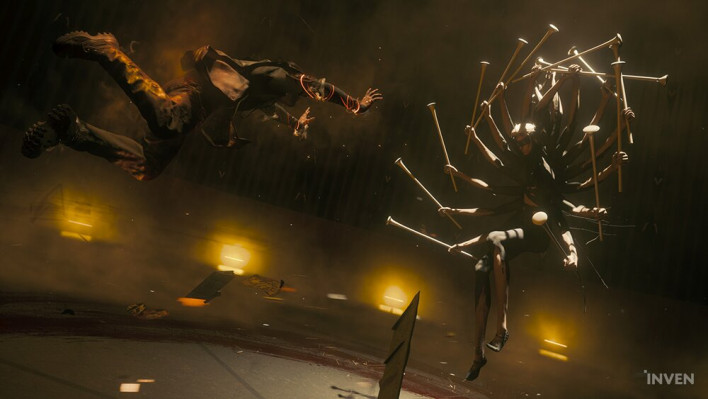
Dylan's movement abilities felt very powerful and impressive. How did you conceive these unique abilities, and what did you focus on to ensure they mesh well together.
Art Director = In terms of animation, it was important that Dylan's movements still felt heavy and grounded. Whether using a ground slam, taking damage, or striking enemies with the Hammer, there needed to be a sense of physical weight and impact.
Of course, Dylan can also launch enemies into the air and stay airborne for extended periods. However, we wanted his animations to avoid looking too flashy or superhero-like. We avoided unnecessary flips or exaggerated landing animations.
While Dylan possesses supernatural abilities, he hasn't suddenly become a martial arts expert. His movements are very direct; if he needs to deal damage, he moves with that specific purpose. We tried to strip away any unnecessary flair.
Lead Level Designer = There is also a reason for the speed. The game is set in Manhattan, and the environment is much larger than the Oldest House in the previous game. Simply running across such vast streets could become tedious.
So, Dylan needed to move quickly and be able to scale rooftops. We wanted to create more verticality than the previous game, which necessitated the ability to fight while airborne. However, we worked to balance this so that his movement wouldn't feel too weightless.

The gravity-based movement was also impressive. How did you come up with this unique mechanic, and what was the most difficult part of implementing it into actual gameplay.
Art Director = This was one of the most challenging elements to implement. However, when everything clicks, it feels incredibly unique and satisfying.
In gravity anomalies, players can completely shift their orientation. Even in that state, players retain full control over all actions. You can double jump, perform executions, attack with anomalies, or use your abilities.
Crucially, enemies can do the same. They can use all their actions regardless of their orientation. This isn't just a gimmick or a simple wall-running mechanic; it's a system deeply integrated into the core of the gameplay experience.
This system allowed us to create interesting combat spaces in our level design. We could flip buildings or create twisted spaces reminiscent of the movie Inception, while ensuring that combat still functions naturally within them.
Lead Level Designer = Readability was also vital. We don't have a UI that screams, This is a gravity anomaly. Instead, we had to make the surfaces themselves convey that information.
We established very strict design rules. We couldn't just place decorative objects that looked like gravity anomalies; players needed to look at a surface and intuitively understand, "That's a gravity-affected area."
Art Director = Although it's not in the demo, we discovered that systemic elements like rain serve as a great visual reference point. Even when the player is standing in a different orientation, the rain always falls in the same direction. Players can naturally grasp that "the rain is falling that way, so that must be down."
We have several such devices that use existing elements within the game world to help players maintain their sense of direction.
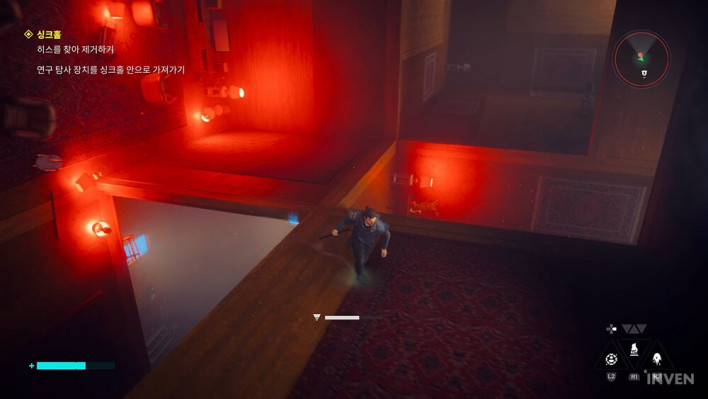
The immersion in the early part of the demo was excellent, making it relatively easy to adapt to the new movement, protagonist, and combat style. What efforts did you make to ensure players could get comfortable quickly.
Lead Level Designer = We placed great importance on onboarding—the way players learn the game. The portion you played is the early game, so we don't give you all the abilities at once; we provide them one by one.
We introduce one ability, give you time to practice, then introduce another, and encourage you to use them together. It progresses step by step.
The game becomes increasingly complex, but we expected players to be somewhat accustomed to previous lessons by the time they receive new elements. However, the second part of the demo might feel a bit overwhelming, as that section is closer to the mid-game.
Art Director = Another feature is the 'Rift,' a space within Dylan's psyche. You can visit this place at any time. If you forget something or are returning to the game after a break, you can come back here to practice.
There is a Training Ground where you can summon enemies to test various builds or combos. It's a structure that allows you to relearn button inputs before jumping back into the game. I think it's a great tool for onboarding.
Lead Level Designer = You can also review tutorials you've seen in-game at any time via the menu. If you've forgotten something you saw hours ago, you can look it up again.
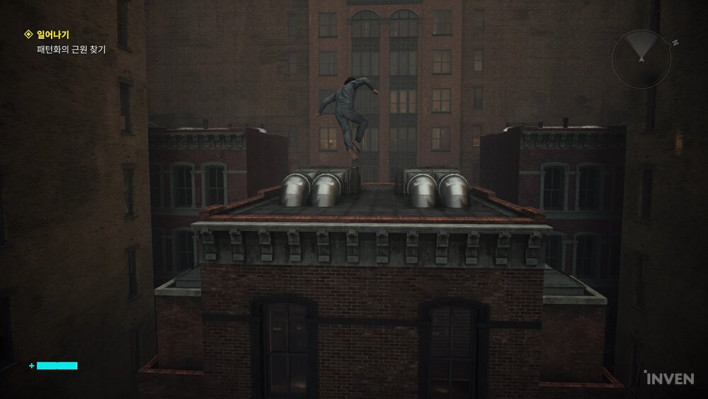
Dylan feels very fast and light when moving. Was this intentional, or is it something that might be adjusted during development.
Art Director = That feeling is exactly what we intended. We wanted this game to feel more responsive than any other title Remedy has made.
For example, Alan Wake is much slower, and the player's movement is deliberate. But that's part of the charm of a horror game; it fits the genre that the player cannot move so quickly.
Conversely, this game is much faster-paced and action-oriented. We wanted Dylan to react instantly to player inputs. Because the gameplay speed is high, the player needs to feel that they are in total control.
We are constantly balancing this, however. We are fine-tuning how fast it feels while maintaining the sense that Dylan is grounded and has weight.
Lead Level Designer = Even if Dylan moves with agility and lightness, we believe his attacks must still have impact. For instance, there must be a clear sense of weight when he strikes down with the Hammer.
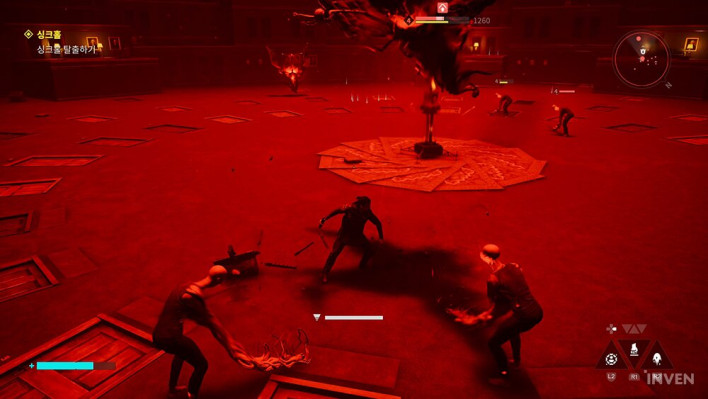
Can users who haven't played the previous game enjoy and understand Control: Resonant? Also, if one were to play Remedy's previous works to better understand this one, what order would you recommend.
Lead Level Designer = This game can be played entirely as a standalone experience. That's one reason we chose a new protagonist. Dylan himself doesn't know everything about the situation, and there are characters in the game who aren't familiar with the events of the previous title. So, you can enjoy this game without having played the first one.
Of course, if you have played the previous game, the experience will be different because you'll understand certain elements in a new light. The game does include a summary of the previous events, though it only covers the major beats. Still, it contains everything necessary to understand this story.
If you want to play a game first, the most natural choice is obviously the first Control, as this game continues that narrative.
Art Director = You can probably find the first Control at a very reasonable price now (laughs). So, personally, I recommend everyone play it.
However, we are crafting Control: Resonant as a standalone experience. The genre has shifted slightly, and the protagonist has changed. We didn't put a '2' in the title so that people would feel they could jump in and enjoy it even without playing the predecessor.
Of course, being Remedy, there are small references to previous works and elements that hint at future projects. There will also be Easter eggs and background details for those who enjoyed the previous games.
Lastly, please share a word for the Korean fans waiting for Control: Resonant.
Art Director = I love Korean entertainment, music, and food. I would be truly happy if Control: Resonant resonates with Korean fans. It would be wonderful if the elements we worked so hard on are appreciated by them. We are working very hard on this game, and I hope as many people as possible can enjoy and play it. We sincerely welcome our new fans in Korea.
![]()
- Soojin "Eonn" Kim
- Email : eonn@inven.co.kr




Sort by:
Comments :0