


The Mexican government has abruptly withdrawn its plan to impose an 8% special tax on violent video games, a measure that had been under review for possible introduction in 2026.
According to Mexico Business News and other local Mexican media, on the 23rd, Mexico’s Ministry of Finance announced that it would pull the item proposing a special tax on violent video games from its broader “health tax” package—an agenda submitted in the name of improving public health and covering social costs. Back in September, the Ministry of Finance argued for the health tax and the video game special levy by pointing to the fact that health-related costs tied to products like soft drinks and tobacco reach 116 billion pesos annually (approximately KRW 9.28 trillion), and by citing the rationale that “recent research has found an association between the use of violent video games and higher aggression among adolescents, as well as negative social and psychological impacts such as isolation and anxiety.”
After that, Mexico’s executive branch conducted a three-month review and concluded that it is technically impossible to establish objective taxation criteria for determining whether a video game is “violent.” The original plan was to apply an 8% Special Tax on Production and Services (IEPS) to titles classified as adult-only under Mexico’s game content rating system—specifically those rated “C” and “D.” However, the proposal ran into administrative limits: there is no practical way to classify tens of thousands of software titles one by one. In particular, the idea of taxing only the “violent” portion within subscription services such as Xbox Game Pass or PlayStation Plus—by deducting tax proportional to the share of violent games in those catalogs—was cited as an unprecedented technical challenge from a software-audit standpoint.
The sheer scale of Mexico’s game industry was also a factor that could not be ignored. Mexico is a leading market in Latin America and the world’s 10th-largest gaming market; in 2024, the industry’s size surpassed US$2.3 billion (approximately KRW 3.2959 trillion). Concerns were raised that introducing a rushed tax into this massive market—home to as many as 76 million active users—could pour cold water on the broader industry ecosystem, which has been particularly vibrant, including the establishment of 67 new development companies over the past five years.
Industry stakeholders and experts warned that the tax would ultimately translate into higher consumer prices and deliver a disproportionate blow to local small and mid-sized independent studios that lack capital. They also noted that academic circles, including the Royal Society in the UK, have released findings suggesting that socioeconomic factors such as poverty and domestic violence exert a greater influence on real-world crime than the violent content of digital media—thereby casting doubt on the scientific basis often cited to justify a game tax, namely a “causal relationship between games and aggression.”
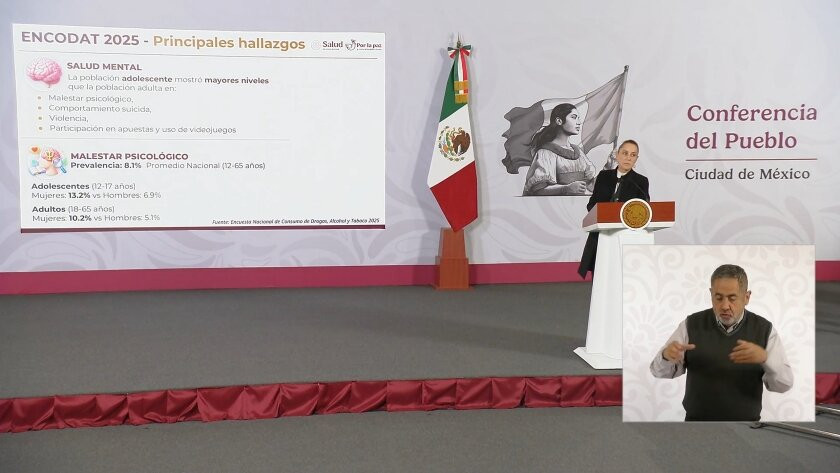
In connection with this, President Claudia Sheinbaum said at a press conference on the 23rd that “it is very difficult to clearly distinguish between violent games and those that are not,” indicating that the government would shift its strategy away from punitive taxation and toward preventive campaigns. She added that Mexico plans to roll out campaigns aimed at adolescents and guardians to prevent gaming addiction and encourage responsible content consumption, while concentrating investment in education programs designed to build peace across society as a whole.
This article was translated from the original that appeared on INVEN.
![]()
- Seoho "Ruudi" Yoon
- Email : ruudi@inven.co.kr







Sort by:
Comments :0