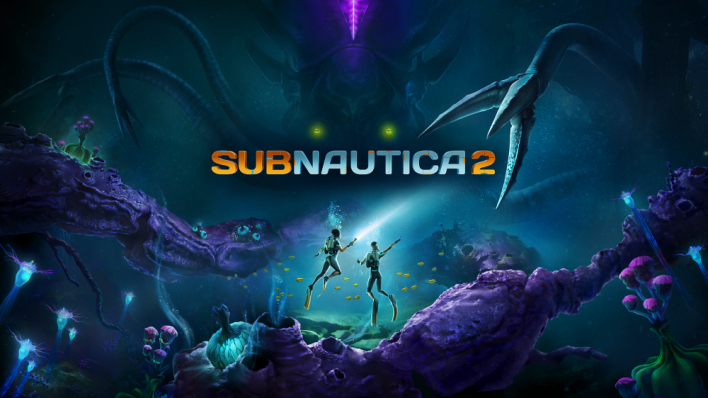
Subnautica 2, the official numbered sequel to the marine survival adventure series Subnautica—which has sold over 18.5 million copies worldwide—will launch in early access on May 15 at midnight.
Moving away from the original game's setting of Planet 4546B to an entirely new alien world, this installment is built on Unreal Engine 5, promising a significant leap in both visuals and gameplay. It introduces four-player co-op for the first time in the series, along with a new 'BioMod' system that allows players to evolve their bodies using alien DNA.
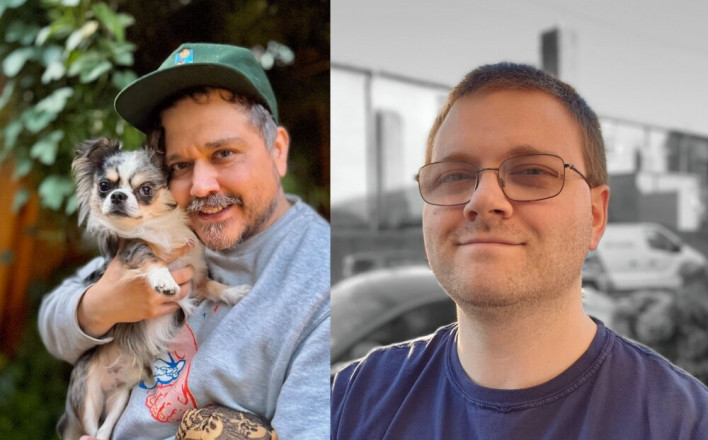
Ahead of the launch, Inven conducted a written interview with two key figures from the developer, Unknown Worlds: Subnautica 2 Lead Designer Anthony Gallegos and Creative Media Producer Scott MacDonald. We explored the blueprint for Subnautica 2, covering everything from the process of redefining the series' identity to the design philosophy behind the new systems and a message for Korean players.
Striving for Both Familiarity and Novelty
First, could you please introduce yourselves, your roles on the Subnautica 2 project, and your journey to joining the team.
Scott MacDonald = Hello, I'm Scott 'Obraxis' MacDonald. I've been with Unknown Worlds since before it was officially incorporated, and I've worked on every game from the Natural Selection series to the Subnautica series. After working as an animator and QA lead, I am now the Creative Media Producer, overseeing all visual work seen outside the game, such as trailers and developer vlogs.
Anthony Gallegos = I joined Unknown Worlds in 2021. It is deeply meaningful to me that I started as a fan and now have the role of helping shape the future of this franchise.
The previous Subnautica series is an IP that has sold approximately 18.5 million copies. How did the team manage the pressure of creating an official numbered sequel to such a successful IP during the early stages of development.
Anthony Gallegos = I think developing Subnautica is both the least and most burdensome task for our team. On one hand, we have a well-established IP that fans love, providing a foundation to tell more stories. On the other hand, fan expectations for what constitutes a 'Subnautica-like' experience are incredibly diverse.
So, the first thing we had to do was define 'what is Subnautica?' Early on, we explored various ideas, including continuing the story of the previous games directly. However, we eventually concluded that the core of Subnautica lies in the experience of exploring an alien planet, the structure of placing the player underwater, and the mystery that needs to be unraveled.
These elements could be implemented without following the previous games exactly, but we had to carefully analyze the strengths and weaknesses of the predecessors to decide how to reimagine the series' core. Through this, we aimed to provide an exciting experience for both existing fans and new players. I believe the start of Early Access is an important first step in realizing this core.
You've moved the setting from the original Planet 4546B to an entirely new alien world. What were the primary design principles you established when designing the new planet's ecosystem and biomes.
Anthony Gallegos = We wanted to challenge ourselves to implement both familiarity and novelty in the franchise. While the original Peeper doesn't appear, we created new fish that will remind long-time players of it. At the same time, we built a world with new biological rules. For example, the 'Four Eye' is a creature where two individuals live their entire lives fused as one entity. We plan to introduce more of these strange and unique creature designs in the future.
We also designed the biomes to feel familiar at first, but gradually shift into increasingly strange and alien environments as the game progresses. However, since the concept of 'alien' can be interpreted differently by everyone, it's hard to explain in specific terms. I believe these elements will become a powerful differentiator for the franchise over time.
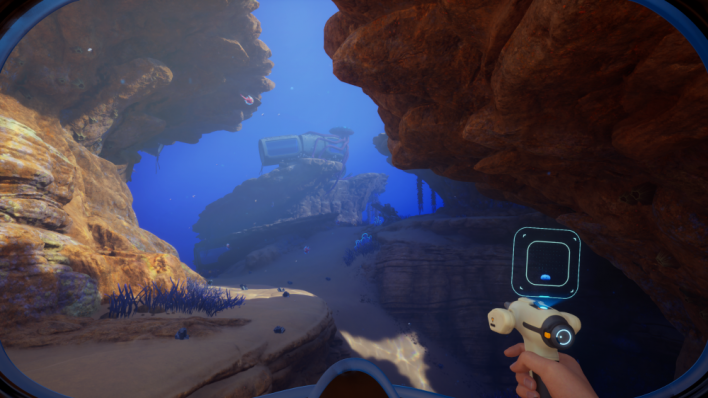
The 'BioMod' system, where players evolve their bodies using alien DNA, looks fresh. Why did you shift the axis of the growth loop from tools and submarines in the previous games to 'character transformation,' and how did you balance this to ensure it doesn't undermine the 'lonely exploration' feel unique to Subnautica.
Anthony Gallegos = BioMod is not meant to replace the existing growth system, but to complement it. It is designed to broaden the player's range of choices as they invest time. It also serves to provide a new form of growth that isn't technology-based, and since we expect this to be a very long game, it also means players will have more recipes to discover.
This feature is also closely linked to the core themes of Subnautica. Survival in Subnautica isn't about changing the world to suit your needs, but about adapting to a hostile alien environment. If the previous game was about escaping, Subnautica 2 is based on the premise that this alien planet is the player's only home.
Furthermore, BioMod is designed not to disrupt the single-player experience. For example, the ability for players to leave behind biological orbs while moving is useful for cave exploration when playing alone, and in multiplayer, it acts as a guide for teammates to follow.
This is the first time the series has introduced four-player co-op. You previously stated that the game was 'designed based on the single-player experience, with multiplayer as an option.' It must have been very difficult to ensure both modes share the same content without breaking either. Were there any specific points you focused on regarding balance, difficulty, and resource pacing.
Anthony Gallegos = Our main goal during the Early Access phase is to balance the game around the single-player experience. We expect most players to experience the game as a single-player journey, either for their first time or exclusively. Multiplayer is excellent, but it is an optional element.
Playing with friends naturally creates balance issues. While there is the advantage of multiple people gathering resources quickly, it also means all equipment must be crafted for multiple people to use, and bases become larger, requiring more resources.
In our current internal playtests, we believe these elements are sufficiently balanced, and we don't see an urgent need for multiplayer-specific balance adjustments. However, if players express different opinions after launch, we will reflect community feedback and make adjustments.
The Leviathans from the previous games were synonymous with 'fear' for many players. You've introduced the Leviathans in this game as being 'more intelligent in threatening the player.' What is the biggest change in AI or behavior pattern design compared to the previous games.
Scott MacDonald = In the previous games, creatures and Leviathans could only consider one action at a time, and the elements they could react to were limited. However, thanks to Unreal Engine 5's Behavior Tree, they can now judge and act on their own based on the environment, the player, nearby creatures, and objects. This makes the creatures feel much more like living beings and allows them to blend naturally into the world.
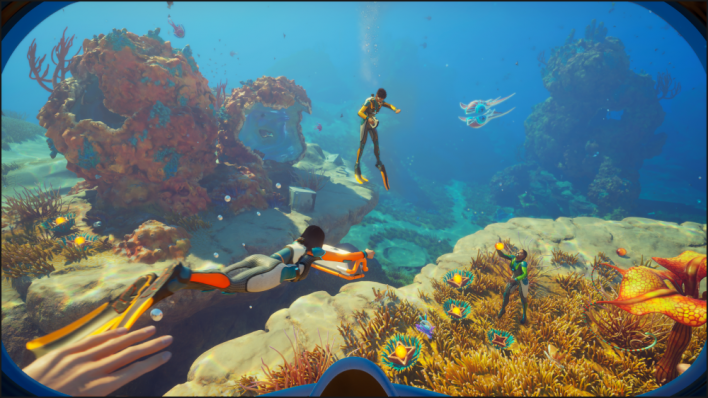
The transition to Unreal Engine 5 must have affected not just the visuals, but also the gameplay design. What new possibilities have UE5 technologies like Nanite and Lumen opened up for deep-sea presentation or level design.
Scott MacDonald = Nanite has allowed us to implement a world with much higher polygon counts and detail. While the original Subnautica was built on a voxel-based system, this time we have implemented every element as sophisticated 3D meshes crafted by our artists.
Lumen provides natural lighting, and it offers a much more realistic environment, especially through the effect of light reflecting inside player-built bases. This will feel like a very significant upgrade compared to the previous games.
The original Subnautica was highly praised for its sound design, particularly the horror created by the silence of the deep sea and the cries of creatures. How does sound contribute to exploration and tension in this game, and are there any new audio approaches you've attempted in the UE5 environment.
Scott MacDonald = The sound in Subnautica 2 is an element players will feel immediately. During development, we often use silence or placeholder sounds, but when the Power Up Audio team works on it, it transforms into an entirely new level of experience.
Since visual information is limited in the deep sea, sound has a huge impact on the player's emotions and judgment. A single sound heard from afar can create tension. We aimed to combine these elements with the Unreal Engine 5-based graphics to provide a more immersive experience.
"We wanted to pay tribute to the fans and community who have maintained and developed Subnautica in various ways"
The Subnautica series was impressive for its storytelling, which relied on indirect means like the environment, ruins, and log entries rather than direct cutscenes or dialogue. This game introduces a new planet and the setting of an 'unbalanced ecosystem.' Are there any changes in the tone and method of storytelling compared to the previous games.
Anthony Gallegos = We are still maintaining the series' proven storytelling method. Delivering the story through the environment and exploration elements provides an experience where the player discovers things for themselves. This method gives players the feeling that the story isn't just being handed to them, but that they are uncovering it, which I believe is the core appeal of the series.
However, in terms of tone, Subnautica 2 moves in a slightly more mature direction. While we maintain the humor, the overall story and themes contain darker aspects than before. The theme of the consequences of corporate greed and arrogance continues, but we also wanted to include hope and the possibility of player change.
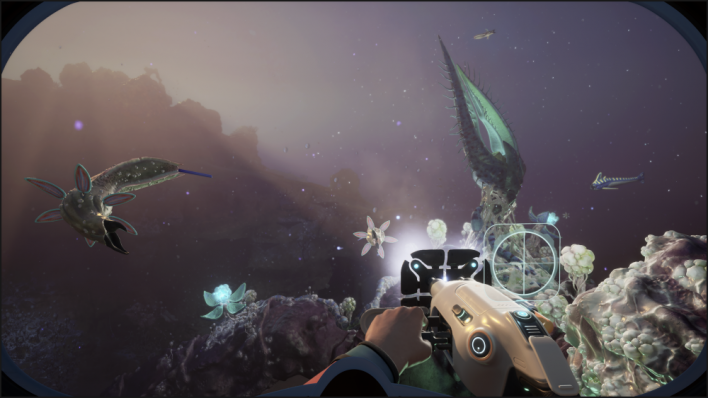
I understand that the recently launched 'Dive into the Legacy' is a weekly series highlighting the journeys of individual community members. What was the background for planning this series, and were there any episodes that left a deep impression on you during production.
Scott MacDonald = This project started during a brainstorming session with Krafton. We all wanted to pay tribute to the fans and community who have maintained and developed the Subnautica series in various ways. From modders to wiki contributors, everyone is important, and we felt their stories deserved to be highlighted.
A particularly impressive case was the story of Artyom, covered in the first episode. He started as a Subnautica fan, became a playtester, and is now working as a developer for Subnautica 2.
Another is the story of Dina. She is a photographer who encountered Subnautica while undergoing cancer treatment and later got a Reaper Leviathan tattoo. These stories left a deep impression on us during the development of Subnautica 2, and we wanted to share them with the world.
Deciding 'how much completion to offer' at the time of Early Access is one of the most sensitive decisions for a development team. What criteria did you use to draw the line between what is included in the Subnautica 2 Early Access build and what will be added at the official launch.
Anthony Gallegos = Unknown Worlds aims for 'Open Development.' It might sound a bit unfamiliar, but to us, it means releasing the game as early as possible. Many developers feel burdened by releasing an unfinished game, but we believe we can achieve the best results when we develop alongside our players.
If we reveal the entire progression or story of the game, it becomes difficult to make meaningful changes later. So, for Early Access, we wanted to start by providing enough content to be worth the price while still offering surprises and fun. Personally, I think we have well exceeded that standard.
Rather than hiding too much at launch, our goal is to provide content in meaningful units without damaging the game's structure. The reason we haven't finished the game yet is that we judged that releasing it in a 'finished' state might actually create a worse Subnautica experience.
"Please look forward to the 'finale' of a special experience on May 15"
The early access schedule has been pushed back from the original plan. Could you share the internal discussions that led to this decision, and what convinced the team that this was the right time to communicate this to the community that has been waiting.
Anthony Gallegos = There were varying opinions on what constituted the right amount of content for early access. Some felt a 2025 release was feasible, while others disagreed. Ultimately, we made the decision to postpone it to 2026.
We are currently very confident in our launch content. We believe we are providing enough volume for players to enjoy for many hours, while also being early enough in the Early Access phase to have a meaningful impact on development.
Are there any parts of the previous Early Access experience that you particularly want to improve this time.
Anthony Gallegos = Currently, Unknown Worlds is trying to collect a much wider range of player data than before and analyze the reactions to it. The tools we use for this are also much more advanced than in the past. Through these improvements, I believe we will be able to better understand our players and continue development in a better direction.
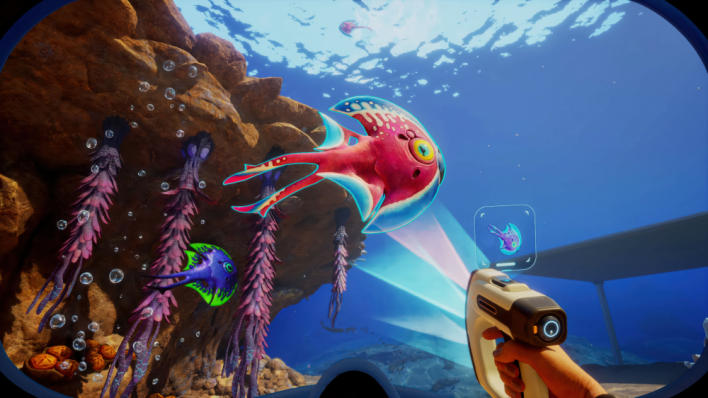
The Subnautica series has a strong fandom in Korea as well. Korean is included as one of the 11 supported languages at launch. How do you plan to handle the level of localization, and are there any feedback or community cultures among Korean players that you have paid particular attention to.
Scott MacDonald = Thanks to having a parent company in Korea, many of our colleagues at Krafton have played Subnautica 2. The feedback regarding localization, in particular, was very helpful. By working closely with the publishing and localization teams, we were able to gain many insights into what elements are effective in the Korean market. Onboarding improvements were one of them, and the high interest and affection for the Leviathans were also impressive.
Finally, for the Korean players who have been waiting for the sequel after playing the previous title, could you each recommend one specific moment in Subnautica 2 that you really want them to experience for themselves.
Anthony Gallegos = It’s difficult to explain without spoilers, but the 'finale' of the early access content will be a very memorable moment. The visuals and music come together to create a truly special experience. You’ll know it when you see it. Trust me.

Sort by:
Comments :0