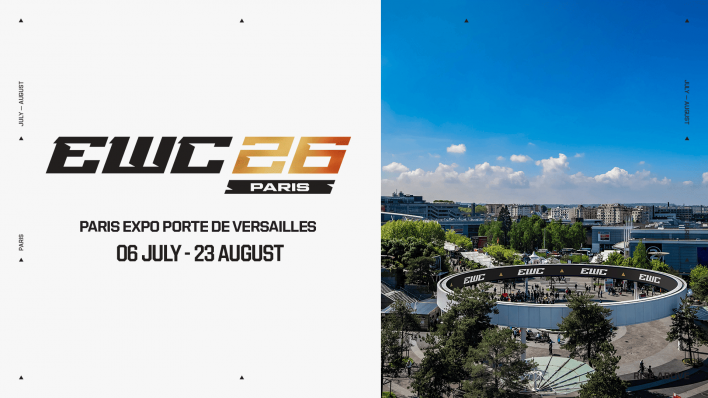
The Esports World Cup (EWC) is moving its stage ahead of its third edition. Originally scheduled to be held in Riyadh, Saudi Arabia, EWC 2026 has been relocated to Paris, France, due to rising instability in the Middle East. The massive seven-week tournament, featuring a total prize pool of $75 million, will run from July 6 to August 23. The decision to move the event out of Riyadh for the first time has captured the attention of esports fans, who are also eagerly anticipating the inaugural 'Esports Nations Cup (ENC)' set to debut this November.
With the EWC approaching, Fabian Scheuermann, Chief Games Officer (CGO) of the Esports Federation (EF), shared a special message regarding the Korean esports market. He noted that the Korean market continues to grow and reaffirmed its high value as a global esports powerhouse.
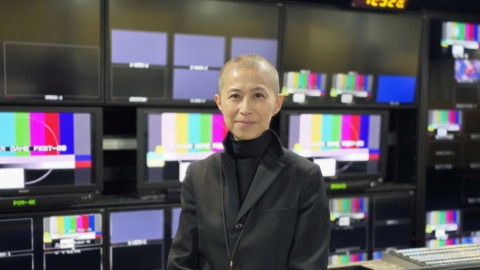
In an interview with CGO Fabian Scheuermann, we discussed the background behind the move to Paris, concerns regarding the multi-title format, and the operational direction of the first-ever national tournament, the ENC.
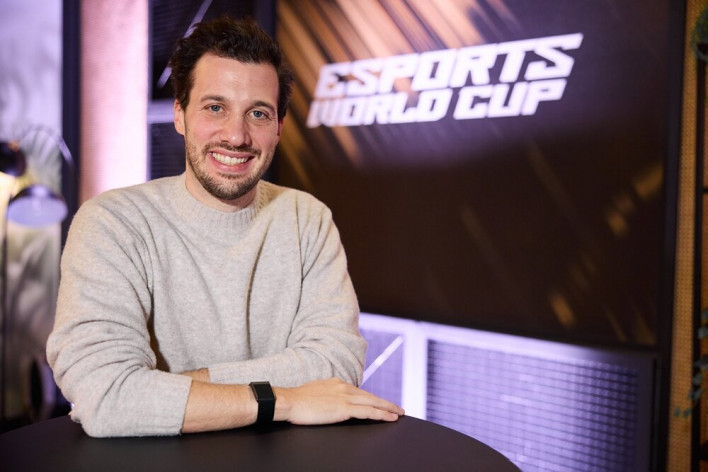
The event is moving from Saudi Arabia to Paris. There must have been several candidate cities; what was the background behind choosing Paris?
"France's esports ecosystem is world-class. It has a passionate fan base, professional teams, and major publishers based locally, and the government has been actively investing in esports for years. Above all, there was a shared consensus on what EWC 2026 should be, and a strong will to realize that vision in Paris.
France's esports heritage and experience in hosting events were also key factors. France has successfully hosted major international esports tournaments in succession, such as the final CS:GO Major at the Accor Arena in 2023, the Six Invitational at the Adidas Arena earlier this year, and the 2026 RLCS Paris Major at the Paris La Défense Arena.
This experience gave us confidence that France could fully manage an event of the scale required by the EWC. In particular, the venue, 'Paris Expo Porte de Versailles,' is a large exhibition center widely known as the home of Paris Games Week. Accessibility, infrastructure, and operational expertise were also important considerations, and Paris, as one of the world's sports capitals, has a proven track record of successfully hosting global events and welcoming large international audiences.
Ultimately, Paris was selected because of the combination of its esports heritage, capacity to host large-scale events, and the strong cooperation and support from the entire French esports ecosystem. These factors gave us confidence that we could maximize the potential of EWC 2026.
The host city was changed to Paris due to Middle Eastern issues. While this was a change due to special circumstances, are you considering plans to rotate the event among various cities around the world in the future?
"The EWC was designed from the start with the goal of growing into a global platform. Since its inception, we have aimed to create an event where the world's best players, clubs, and fans can gather in major cities across the globe, and our goal is to maintain the same level of competition and scale regardless of where it is held.
While the Paris move for EWC 2026 accelerated the realization of this vision, the vision itself is not new. Paris was chosen as the first international host because it possessed the necessary infrastructure, accessibility, and esports ecosystem to host the EWC at its full scale, while also offering the opportunity to connect with one of the world's most passionate gaming communities.
At the same time, Riyadh remains the heart of the EWC. Riyadh has played a key role in the EWC achieving its current status and remains a vital foundation for the long-term future of the ecosystem; we plan to return to Riyadh in 2027.
We believe that esports is inherently global. As audiences, players, and clubs gather from all corners of the world, it is a natural progression to explore opportunities to host the tournament in other major international cities over time. Paris is an important first step in this journey and will serve as an opportunity to demonstrate that the EWC can be successfully operated on a global stage in various countries.
Based on your experience so far, what potential do you see in the esports industry? Also, what have you felt or perceived differently while working in this field?
"When people talk about the esports industry, they often focus on audience size or prize pools. However, what impresses me most is the passion shown by players, teams, and fans. It is particularly impressive that people from completely different regions can gather around a single tournament.
At the EWC, 24 games with different cultures, identities, communities, and histories come together. Seeing fans of Chess, Valorant, League of Legends, Mobile Legends: Bang Bang, and fighting games participating together in the same event, I felt that esports has reached a stage where different communities can coexist while maintaining their own identities.
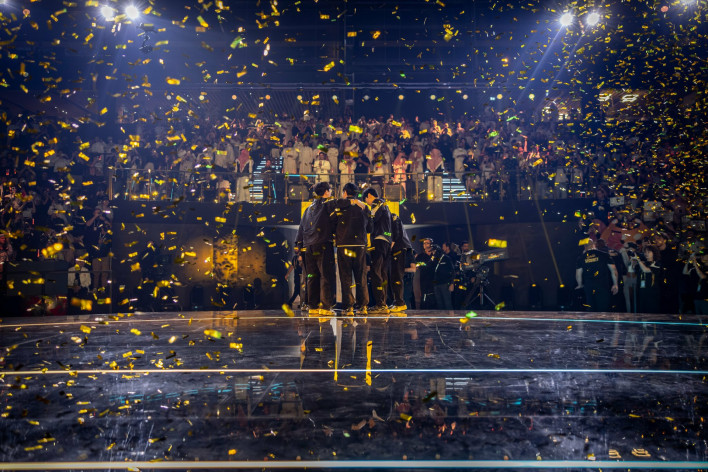
But the most important thing is the stories of the players behind the tournament. A moment that personally left a deep impression on me was when Yangon Galacticos won the 2025 PUBG Mobile World Cup in Riyadh. The celebration in Myanmar was truly incredible. Thousands of people gathered to welcome the team home, and the players were celebrated like national sports heroes. For many, these players represent their community and country on the global stage.
Another thing I learned while working in esports is how much collaboration happens behind the scenes. An event like the EWC can only proceed when publishers, teams, players, and partners all move in the same direction, and the relationships across the industry are much more solid and mature than many people think.
This is why I have the greatest confidence in the future of esports. There is an audience, there is talent, and there is passion. I believe the esports industry is becoming more organized, more professional, and more closely connected every year.
There are many titles at the EWC, but I think LoL is the most talked-about with the largest fandom. Korea can be considered the birthplace of esports, possessing a world-class league and teams like the LCK, and T1 and Gen.G are teams selected for the Club Partnership Program. I am curious how the EF views the Korean esports market commercially and strategically.
"Korea is an essential market for esports. You cannot talk about the history, culture, performance, or tournaments of esports without mentioning Korea. This applies across the various titles included in the EWC, and League of Legends is, of course, a very important part of that discussion.
Korea is also a commercially important esports market. According to the 2025 Esports Industry Survey, the domestic esports industry reached ₩287.2 billion in 2024, a 11.8% increase from the previous year. I mention this figure because it shows not only the size of the market but also that the Korean esports market is still growing.
When you add high fan engagement, world-class teams, major leagues, and a strong publisher and platform ecosystem, Korea is a very important market for the EWC, both strategically and commercially.
Our goal is to make Korean teams, fans, and media feel that the EWC is truly their tournament. It is important that they feel it is not just a tournament they are invited to, but one in which they have a stake and one they are determined to win. To this end, we are working closely with powerful Korean esports teams like Gen.G and T1.
It is also important that the competitive structure rewards the best-performing teams regardless of region, while properly showcasing the elements fans expect from the EWC through media activities within Korea. We want to earn the interest and trust of Korean fans.
The first ENC will be held this November. National tournaments are an interesting element, but it seems difficult to create a high-quality event. If the EWC attracted attention with its overwhelming prize pool when it first started, it seems that for a national tournament, honor or 'national pride' is more important than the prize money. What are your thoughts on this, and how are you preparing for it?
"I believe the Esports Nations Cup (ENC) adds a new layer to the global esports ecosystem. The true power of a national tournament does not lie solely in the prize money. It lies in the honor of representing one's country and the experience of fans uniting behind their national flag, which can be seen in all international sports. Players want to wear the colors representing their nation, compete alongside teammates from the same country, and test their skills against the best nations in the world. We believe esports is now ready for such a stage.
That is why we are carefully preparing the first tournament with game partners, national team partners, clubs, coaches, and local stakeholders. We expect over 100k players from more than 150 countries and regions to participate in the qualifiers. This scale is important because it provides players around the world with a genuine opportunity to earn their spot, rather than just being invited.
Of course, the prize money is also important. We are realizing this at the ENC through guaranteed prize money and an identical reward structure across all games. However, I don't think it is the prize money itself that will make people remember the ENC; what they will remember are the rivalries, the upsets, and the moments when players step onto the stage carrying the expectations of their nation.
Which country had the most enthusiastic support at the EWC, and which country is seeing unexpectedly growing interest in esports, even if it is still in the early stages?
"Korea is undoubtedly one of the countries with the strongest and most dedicated esports fan bases in the world. The depth of understanding Korean fans possess, the history built by teams and players, and the high level of engagement surrounding major tournaments have been formed based on a long-standing passion for the esports ecosystem.
France also has a passionate fan base and major esports organizations representing Europe. It has also proven itself as a major esports hub based on the infrastructure that allowed us to host EWC 2026 in Paris. I also think Southeast Asia is one of the regions with the most passionate fan bases in the world. Gaming culture, especially mobile gaming, is deeply embedded in daily life there.
Several countries with rich esports histories, such as Brazil, France, the UK, and the US, have submitted rosters for all nine team-based titles selected by coaches. However, what has been particularly positively surprising so far is that countries not yet widely recognized globally—such as India, Tunisia, South Africa, Kazakhstan, Guatemala, Chile, Argentina, and Azerbaijan—have also submitted rosters for all titles.
The desire to compete with national pride exists globally. Through a stage and scale never seen before, the ENC will realize this aspiration and provide a moment for countries that have been relatively overlooked to step into the spotlight.
I know the Esports World Cup is an event featuring various titles, but there are opinions that the focus is diluted because there are too many games. What are your thoughts on this?
"The reason the EWC exists is that no single game can represent the entirety of esports. Every title has different audiences, cultures, histories, and regional foundations. For example, what Counter-Strike means to European and South American fans is different from what Mobile Legends means in Southeast Asia or Honor of Kings in China.
Our goal is to create a platform where all these communities can gather while highlighting the unique charm of each game.
The important thing is to ensure that every game has its moment. That is why we work closely with publishers to coordinate tournament formats and schedules, ensuring the EWC integrates naturally into each game's existing competitive calendar. We also operate dedicated competition spaces for each title, avoid major scheduling overlaps as much as possible, and ensure each title receives independent attention.
What we confirmed through the past two tournaments was that the multi-title format actually creates new connections between communities. Fans who came to watch the game they originally enjoyed often discovered new titles, players, or teams to root for. Also, because all match results are reflected in the larger Club Championship standings, we have seen club fans following and cheering for titles they had never watched before.
Ultimately, what is the direction the EWC and ENC are aiming for?
"The long-term goal of the EWC and ENC is to create the biggest moments in esports and support the sustainable growth of the industry. At the same time, I believe it is an important direction to cooperate with the existing ecosystem that publishers, tournament operators, and communities have built over a long time.
What makes the EWC special is that it brings different ecosystems onto one stage. It provides fans with the opportunity to experience a broad spectrum of esports in one place, and offers clubs the chance to compete across multiple titles through the Club Championship. This is an experience that cannot be created by a single-title tournament.
The ENC adds another dimension to this. Players already have the opportunity to compete representing their clubs, but the ENC allows them to compete representing their countries. Over time, we believe that club competition and national team competition can coexist, just as they do in many traditional sports.
Our goal is to create an annual event that the entire industry can pay attention to and participate in. If we succeed, I think the EWC and ENC will be evaluated by the role they play in connecting the entire esports ecosystem as one.
Any final words?
"I would like to thank the Korean fans. The passion and high expectations of Korean fans are the driving force that keeps the entire esports industry moving forward. Furthermore, Korean teams, players, and the esports community have played a crucial role in shaping global esports for a long time.
We hope the EWC and ENC will be tournaments where Korean fans feel a true sense of connection, feel represented, and take pride in being part of it. I look forward to seeing you experience the world-class competition of the EWC in Paris in person.

Sort by:
Comments :0