
In massive open-world games boasting expansive maps—such as 'Crimson Desert,' 'GTA V,' 'Red Dead Redemption 2,' and 'PUBG'—there is a common, almost ritualistic quirk that players attempt: the experiment of blocking the massive trains that endlessly circle the map and trying, by any means necessary, to bring them to a halt.
This phenomenon has surfaced in recent releases as well. Players of Pearl Abyss' 'Crimson Desert,' which officially launched on March 20, have also gone to great lengths to stop the trains traversing the map. In the process, one user even managed to briefly stop a train, drawing significant attention.
'Stopping the train' is not a one-off happening limited to a specific game. A quick search for 'stopping the train' on YouTube reveals a flood of experimental videos from players of all nationalities. For instance, world-renowned creator MrBeast produced a large-scale content piece centered on stopping the train in 'GTA V.' The video saw an explosive response, surpassing 110 million views.
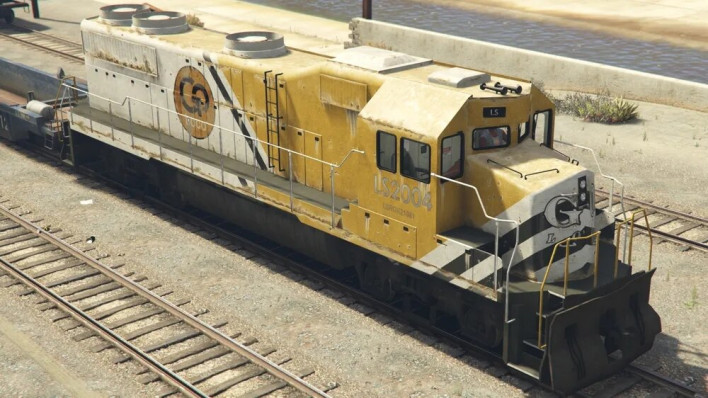
The methods players employ to stop the train are beyond imagination. Stacking dozens of heavy tanks on the tracks like a barricade is standard practice. Some players pack over 1,500 explosives along a section of track to trigger a massive chain reaction, while others create spectacles where dozens of players gather to stand in the path of the oncoming train with their own characters.
However, these experiments usually end in miserable failure. As if mocking the laws of physics, the carefully gathered heavy trucks are often sent flying into the air like scraps of paper, or the player's character is shattered upon impact with the oncoming wall of steel. Despite experiencing countless failures and futile deaths, gamers constantly seek new variables to block the train's path. Why? Why are gamers so obsessed with 'stopping the train'?
The Absolute Power of the 'User' vs. the Unchanging 'Train'
In a game, the user is an absolute being who determines the fate of the virtual world. The world is designed for the user and revolves around them. The player's choices and actions can fundamentally alter the grand narrative of the game. Depending on the user's decisions, key characters live or die, specific factions rise or fall, and peace may return to a region in chaos. They can take the life of an ordinary NPC walking down the street at will, or conversely, become a hero who saves those in crisis and reshapes the world's order.
These narrative and environmental interactions grant the user a powerful sense of efficacy, making them feel as though they perfectly dominate and control this world. This is because every event and character in the virtual space is perceived as a passive object that reacts and changes only according to the user's will.
Yet, even in a world built for the user, there are things they cannot influence. One such thing is the massive train that endlessly circles a fixed route. This object allows for no physical interference from the user. No matter how much effort or what methods the omnipotent user employs, they cannot stop the train on its set track. The sense of efficacy the user feels vanishes in front of the train.
In fact, there is a clear reason from a programming perspective why the train allows no physical interference. If dynamic physics calculations—such as mass, friction, and real-time collision—were applied to a massive, moving train object, the system's computational load would increase excessively. This would cause severe frame drops and collision bugs in the physics engine.
Therefore, for the sake of optimization, developers implement the train as a 'kinematic object' coded to move unconditionally along a fixed path (spline), omitting physics calculations. Through their gameplay experience, users intuitively grasp this system and develop a curiosity to attempt physical interference with an object that lacks physics-based constraints.
'Stopping the Train' Through the Lens of Game Theory
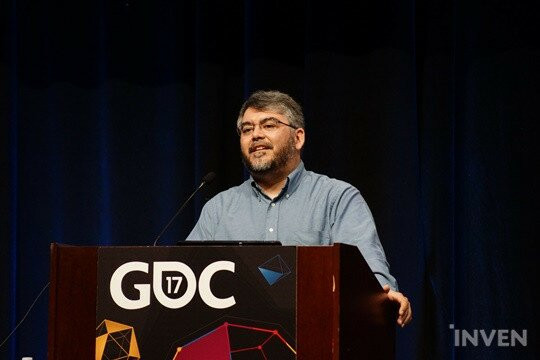
The challenges posed by gamers can also be explained by game design theory. In his book 'A Theory of Fun for Game Design,' game designer Raph Koster defined the fun experienced by users as the 'learning and destruction of patterns.'
The human brain finds interest in the process of analyzing and learning when faced with new and complex patterns, but it quickly feels bored the moment those patterns are fully understood and become predictable. At this point, the way to provide a powerful stimulus to the brain again is to destroy the familiar pattern oneself or create entirely unexpected variables.
A train that circles a fixed track forever at a constant speed is the most perfect and predictable pattern in a game. The reason players install 1,500 explosives or stack 100 trucks, even knowing they will fail, is not simply to destroy the target. It is because they anticipate the catharsis—the fun—that comes from creating a new variable, such as a minute collision detection error or a derailment, within a perfectly controlled system; in other words, achieving the destruction of a rigid pattern.
The 'Bartle Taxonomy' established by Richard Bartle also supports this. This theory classifies players in multi-user environments into four types based on their behavioral patterns: Achievers, Explorers, Socializers, and Killers.
Among these, users with a complex inclination toward being Explorers and Killers find the greatest fun in 'mechanical exploration'—testing the physical and systemic limits set by the game beyond mere spatial exploration of hidden areas. To them, the invincible train is a massive research subject that symbolizes the limits of an unbreakable system. It is an expression of intellectual curiosity, observing how much the engine can handle in terms of massive explosion calculations and where the flaws in the system might be revealed.
Beyond Experimentation: 'Stopping the Train' as Content
Attempts to stop the train have evolved from individual, one-off experiments into play content that the community enjoys together. Dozens of players gather in online sessions for experiments on a scale that a single user could not handle alone.
They systematically divide roles, steal large dump trucks, and build massive barricades at tunnel entrances or on narrow bridges. Gamers who do not even know each other's faces voluntarily create cooperative content for the single goal of 'stopping the train.' The moment hundreds of vehicles collide with the train, the game's physics engine exceeds its computational limits, causing physical glitches where vehicles soar into the sky or stacked objects vibrate.
Users do not view these as mere bugs, but consume them as a new spectacle and successful content. The experimental process and results, created by joining forces, are shared via video platforms, forming a challenge culture that encourages the participation of other users. This voluntary way of playing, where users create their own rules and enjoy them together, remains a subject that attracts gamers' attention even years after a game's release.
A Longing for the Purest Form of Freedom
The fundamental reason users try to stop the train in a game is to experience the purest form of freedom within a virtual space. In the real world, it is impossible for an individual to control massive physical flows or established rules.
However, in the space of a game, one can challenge taboos and test limits. The act of trying to stop a train that never deviates from its set path is an attempt to reject controlled rules and create variables on one's own. Even if countless experiments end in failure and the objects so painstakingly placed are destroyed in vain, gamers feel freedom in the very process of attempting control to create cracks in the system. The 'stopping the train' experiment in games demonstrates the essential challenging spirit of gamers who seek to interact actively rather than passively following the board laid out by developers.


Sort by:
Comments :0