
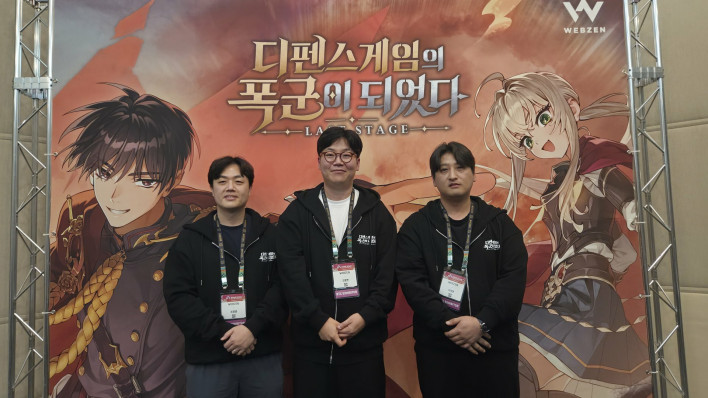
On November 19, Webzen introduced the development direction and key gameplay systems of its upcoming title 'I Became the Tyrant of a Defense Game: LAST STAGE' (hereinafter 'Tyrant of a Defense Game') at G-STAR 2026 held at BEXCO in Busan. Webzen Crevics CEO Kim Dong-hyun, Lead Designer Ryu Gwang-yeol, and Art Director Lee Dae-hyun attended the press conference, where CEO Kim Dong-hyun personally presented the game's development philosophy, major features of the G-STAR demo build, and overall plans for the title.
'Tyrant of a Defense Game' is a command strategy RPG currently in development, based on the Naver Webtoon adapted from the web novel of the same name. The story begins when the protagonist clears the notoriously difficult game 'Protect the Empire' and transmigrates as Ash, the Third Prince of the empire. Becoming the commander of the Southern Front, Ash defends Crossroad, explores the Lake Kingdom, and battles against invading monster hordes.
A central priority during development was capturing the role of the 'commander' as portrayed in the original work—a process of deciding who to stand beside, what assets to prepare, and when to commit power. The experience is designed to feel familiar to fans of the original work while serving as a journey of discovering the world from a commander's perspective for newcomers.
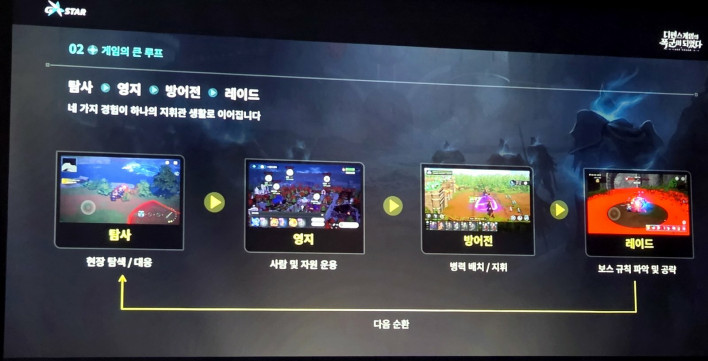
To achieve this, the game was structured around a continuous loop of exploration, management, and command. As players progress, the situations they must assess change, requiring different decisions at every step. Information gathered during exploration is used to prepare forces, which are then deployed to counter invasions. The core emphasis is ensuring that decisions made across each content type contribute to a single, cohesive commander experience. During the subsequent Q&A session, the developers added that they strived to adhere closely to the original lore while establishing and implementing this direction.
Diorama Pixel Art Capturing Space and Direction Spaces Living with Life, Battlefields Revealing Grand Scale
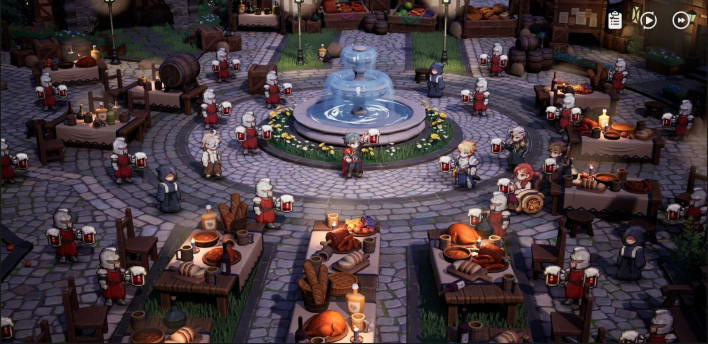
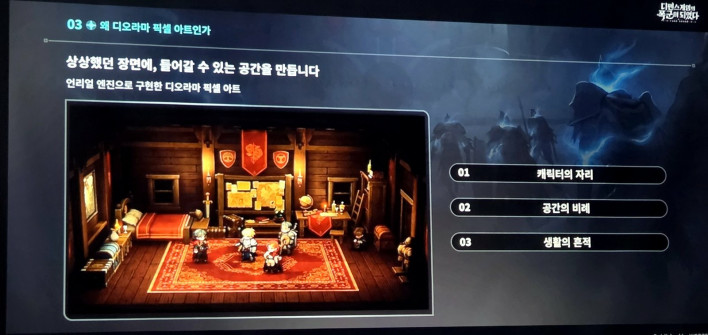
'Diorama pixel art' was used for the game's visual presentation. Beyond simply recreating characters from the original work, establishing the environments they inhabit was equally vital.
The shared spaces with companions are not mere backdrops for placing characters. Props and structures are crafted to convey a sense of genuine lived-in presence. By assembling these elements into lived-in spaces, the focus was on preserving the distinct charm of pixel art while adding spatial depth and atmospheric realism to the world.
A similar approach was applied to depicting battlefields. Close-up views needed to capture character details and actions, while zoomed-out perspectives had to convey the overall scale of combat. To achieve this, environments were constructed with careful attention to lighting, composition, and the proportions between characters and structures—allowing players to understand character-environment relationships while keeping track of the battle's overall scale.
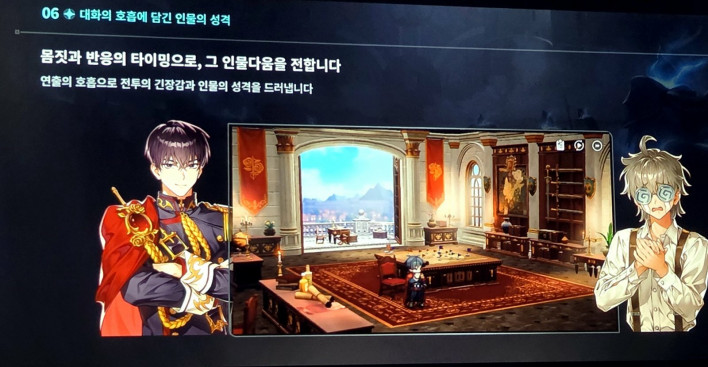
Animations and cinematic direction were added to convey emotional nuances. Design considerations extended from character positioning to determining which character to focus camera attention on depending on the scenario, as well as their postures and movements. Stances and relative positioning between characters facing each other can invoke tension, while body language and reaction timing reveal personality traits. Beyond delivering dialogue, careful attention was given to pacing and direction to capture both combat tension and distinct character identities.
Exploration, a Process of Learning the World's Rules Tactics Formed by Attributes, Status Effects, and Environments
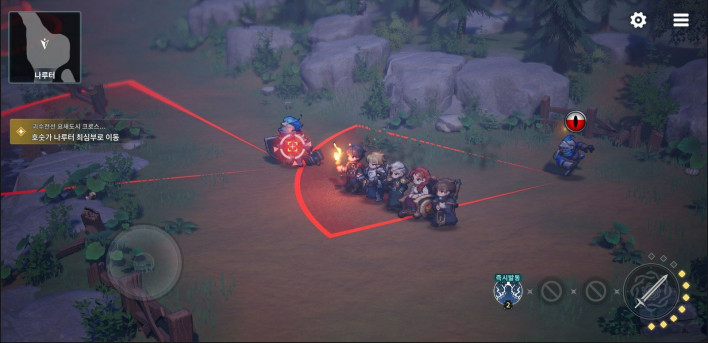
In actual gameplay, 'Exploration' serves as both a journey to discover the world and a process for gathering information and mastering combat techniques needed for upcoming battles. Just as Ash uncovered new facts during his exploration of the Lake Kingdom to prepare for invasions in the original story, the game's exploration experience seamlessly flows into the commander's duty of preparing for defense battles. A key element of exploration is connecting attributes with status conditions. Each character possesses distinct attack types and elemental attributes, and how these are linked to specific status conditions changes their combat applications.
A prime example is combining the 'Wet' status with Electric attacks. Applying Electric attacks to a target in a Wet state inflicts the Shock status. Allies utilize their unique abilities to inflict different status effects, which are then followed up by complementary attacks. Rather than simply casting individual character skills, coordinating how companions collaborate to inflict status conditions forms a core part of strategy.
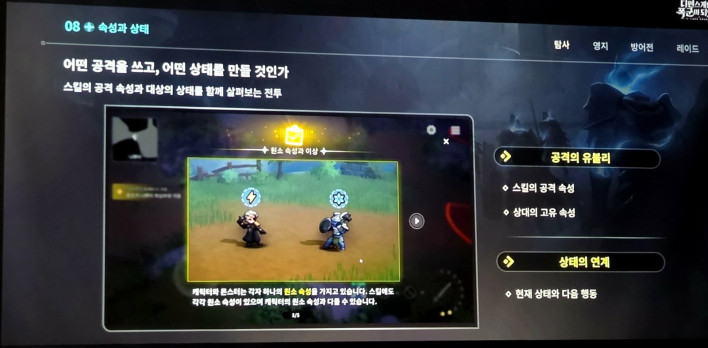
These interactions are not limited to character skills. Environmental objects on the battlefield also feature reaction conditions. Players can hit targets that stepped into water puddles with Electric attacks to shock them, or inflict Burn on Mana Stone fragments to trigger explosions.
Consequently, players must understand not only character skills but also what objects exist in the surrounding environment and under what conditions they react. Even against the same enemy, available tactics shift depending on how elemental attributes and status ailments are chained. Reading and analyzing battlefield situations is crucial. Players must assess target status conditions, predict when and where reactions will occur, and decide their next moves accordingly. Learning the world's rules through exploration directly feeds into tactical judgment used in subsequent combat.
Prepare in the Territory, Command in Defense Battles Continuous Decisions Driven by Enemy Intel and Battlefield Conditions
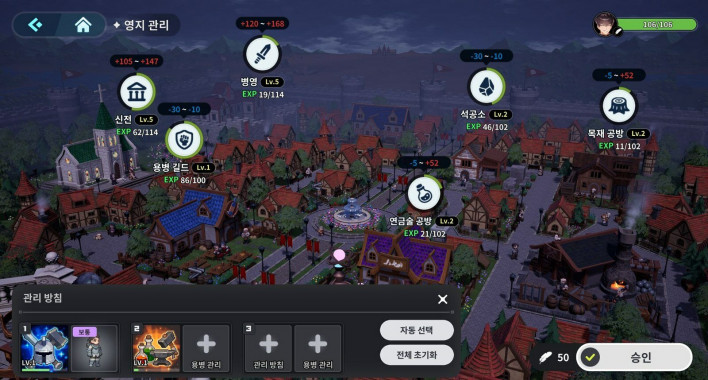
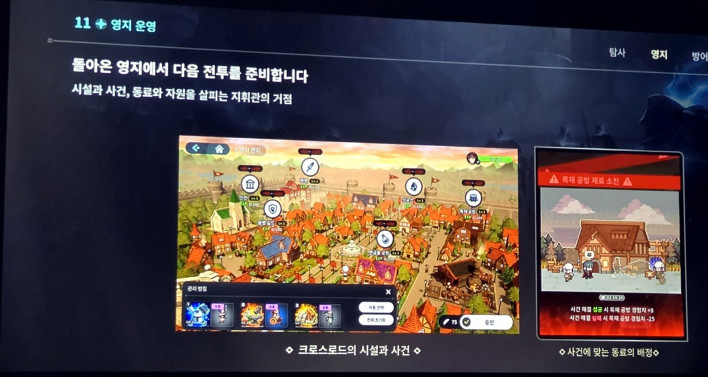
Alongside exploration, another core gameplay pillar is 'Territory Management.' Serving as a hub to manage Crossroad's facilities and resources in preparation for the next invasion, it extends the commander's role outside of active combat.
Utilizing companions effectively is equally important during management. Companions participate in territory management rather than being confined to combat, with each character offering distinct roles and utility. Events occurring within the territory serve as opportunities to discover individual personalities and functions. Players manage companions and resources to prepare necessary forces for upcoming invasions. Deciding which companions to deploy and which military assets to secure ties directly into prep work for upcoming defense battles.
In the defense battles that follow, intelligence on incoming enemies serves as the benchmark for preparation. Players review incoming enemy waves and weather conditions to determine how to deploy troops and supplies across the field and ramparts.
Analyzing enemy intel before battle and properly deploying available forces and command assets is key. Rather than relying solely on deploying high-stat characters, emphasis is placed on tailoring forces and assets to specific battlefield conditions.
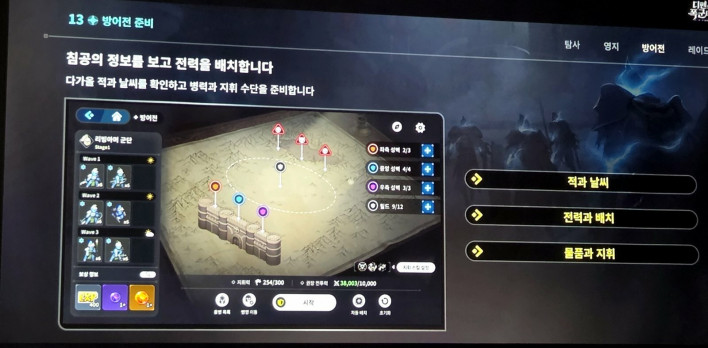
However, tactical decision-making does not conclude before battle begins. Once defense battles commence, the commander's role continues. Players must monitor evolving battlefield conditions to decide how to deploy their prepared forces effectively.
Rather than passively watching pre-battle plans unfold, players must make ongoing tactical choices in response to fluid combat situations. How pre-gathered intel and prepared forces play out on the battlefield, along with adapting to changing circumstances, forms a core element of defense battles.
Boss Raids and the Commander Gameplay Loop Starting and Reserve Roster Composition and Break Timing
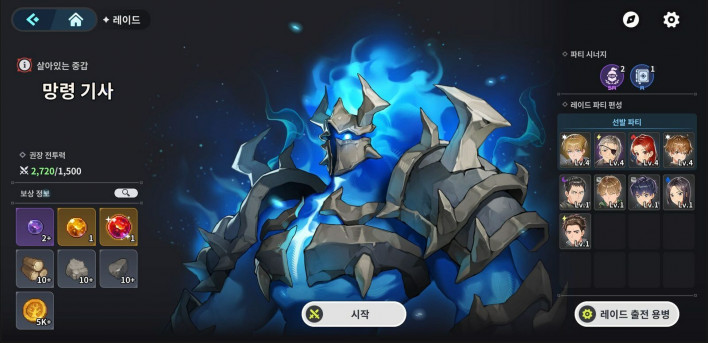
Following defense battles, players face bosses in 'Raids.' In raids, analyzing boss characteristics and building a counter-party is essential. Parties consist of starting companions and reserve companions. Because players can adjust roster compositions using reserves upon advancing stages or if the starting squad is wiped out, forces must be planned considering both immediate deployment and contingent scenarios.
Active player intervention is required during combat, such as recognizing attack ranges and deciding where to reposition the party. Countering boss-specific traits and timing Break states are crucial strategy elements. Beyond optimal party composition, making real-time decisions on dodging attacks and timing counters is essential.
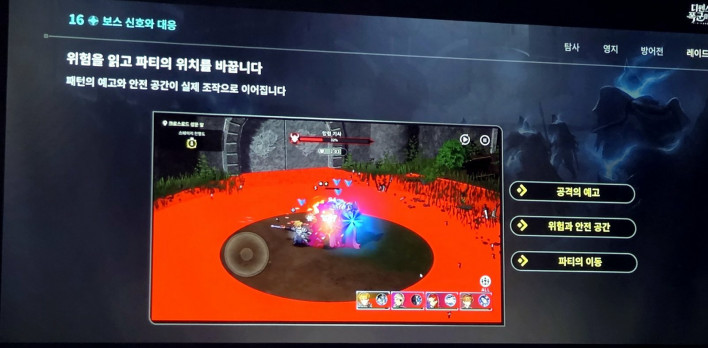
Cinematic direction is also used in raids to convey combat tension. As attacks and counters exchange, character movements and scene framing are leveraged to heighten the drama of boss battles.
In this way, 'Tyrant of a Defense Game' features a gameplay loop where players master world rules through exploration, prepare companions and forces in their territory, and make real-time command decisions during defense battles and raids. While each content type functions differently, they align under a single role: that of a commander. Ash's journey in the original story—gathering intelligence, leading allies, and facing overwhelming odds—is translated into gameplay through this structure. Exploring the world to learn its rules, using that knowledge to prepare forces, and executing commander judgment on the battlefield forms a complete core loop.
Closing the presentation, CEO Kim Dong-hyun stated, "The experiences across exploration, management, and defense battles all converge into acting as 'a single commander.' Players decide what assets to deploy, who to prepare, and when to intervene and react. We structured the game so these distinct decisions assemble into the cohesive experience of being a commander."