While playing Last Epoch, you will acquire various currencies beyond basic Gold, including Favor, Amber of Memory, and Timeglass Fragments. Because there are so many types with different uses, it can often be hard to figure out what they are for when you first get them. The variety of currencies expands significantly once you enter the endgame.
You do not need to dive deep into every single currency, but knowing their primary sources and uses will save you a lot of confusion while farming. This guide summarizes the main currencies and materials you will frequently encounter in Last Epoch and how to use them.
The Most Basic Currency - Gold
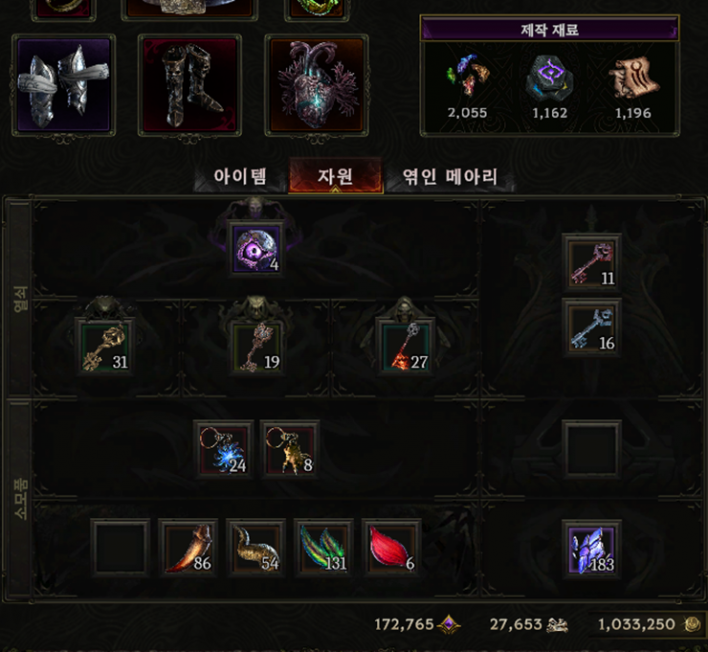
The most basic currency you encounter first in Last Epoch is Gold. It is used in various places, such as buying items from regular vendors or expanding stash tabs, and if you have joined the Merchant's Guild, it is also used to buy items listed by other players.
In late-game, you can spend massive amounts of Gold at the Vaults of Uncertain Fate, the reward area of the Lightless Arbor dungeon. Gold drops increase as Corruption rises, so your income will naturally grow as you progress through the endgame.
Gold might feel scarce early on due to stash expansions, but unless you belong to the Merchant's Guild, it is not a resource you need to hoard excessively, so there is no need to be overly frugal.
Item Faction Currencies - Favor and Merchant's Tokens
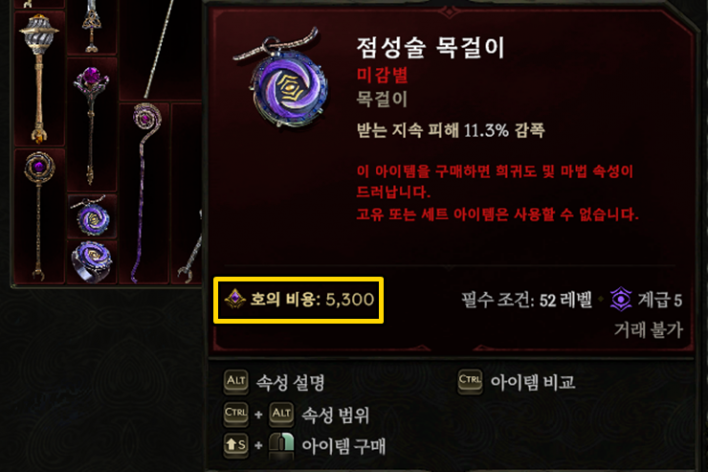
Favor is a currency exclusive to Item Factions, used by both the Circle of Fortune and the Merchant's Guild. You earn it by slaying monsters or completing quests, and earning and spending Favor also increases your Faction Reputation.
In the Circle of Fortune, it is used for purchasing Observatory Prophecies, utilizing faction features, and buying items from vendors. In the Merchant's Guild, it is required for buying and selling items with other players. You can also earn Merchant's Tokens in the Merchant's Guild. Using a Merchant's Token replaces the Favor cost when buying an item, making it ideal to use on items with high Favor requirements.
Weaver Content Currency - Amber of Memory
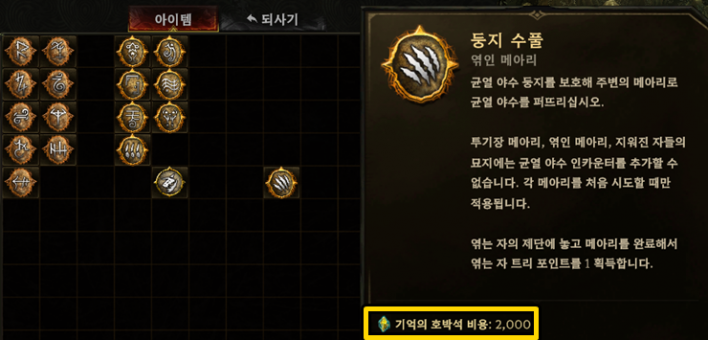
Amber of Memory is a core currency used in the endgame faction, The Weaver. It is mainly acquired while progressing through Tombs and Catacombs in the Monolith of Fate.
Collected Amber of Memory can be spent at the NPC Mask in the Sanctuary of Webs (located in The End of Time) to purchase various Woven Echoes. It is also required for resetting points invested in the Weaver Tree or enchanting Idols. Earning and spending large amounts of Amber of Memory speeds up your faction level progression.
Omen Window Currency - Timeglass Fragments
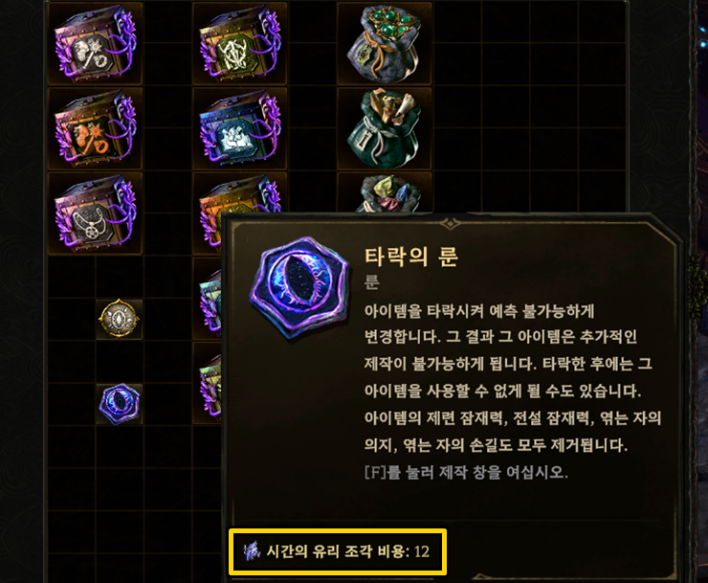
Timeglass Fragments are an endgame currency obtained by completing Omen Window encounters. Bringing them to the vendor in the center of The End of Time allows you to exchange them for various rewards, such as Runes of Corruption, Corrupted Equipment, Keys, Ancient Bones, and Omen-related Woven Echoes.
Completing the higher-tier encounter, a Greater Omen Window, spawns a Timeglass Core. Here, you can spend Timeglass Fragments to generate specific Echo Chains of your choice, allowing you to tailor your Monolith farming direction.
Primordial Unique Item Crafting - Rift Beast Materials
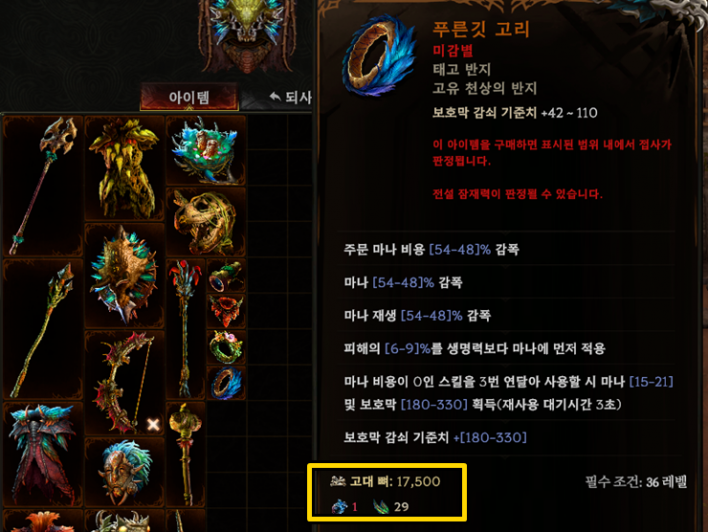
Completing Rift Beast encounters rewards various body parts and materials, such as Ancient Bones and Crystallized Hearts. Bringing these to Skarven Bloodhorn in The Garden (Ancient Era) allows you to trade them for Primordial Uniques, Runes of Evolution, Amber, regular Uniques, and more.
The required material types and quantities vary depending on the Primordial Unique item you wish to trade for, so if you are targeting specific gear, it is best to check the required materials beforehand. If your build directly requires a Primordial Unique item, you can purchase that gear; if your build does not need a Unique item, buy Runes of Evolution to craft Primordial Exalted gear instead. For a detailed guide, refer to the following article.
▶ Making a 6-Affix Item! Using Primordial Gear and Runes of Evolution
Crafting Materials - Affix Shards, Glyphs, and Runes
Equipment crafting utilizes Affix Shards, Glyphs, and Runes. Affix Shards are the foundational crafting material used to add new affixes to gear or upgrade existing affix tiers. Glyphs serve as support materials that assist crafting outcomes. Runes apply special effects to the crafting process itself, such as removing affixes, transforming items, or duplicating gear.
While there are many types of Glyphs and Runes with diverse functions, you don't need to memorize them all right away. Focus first on the ones frequently used in general crafting, and check the details for specialized items—such as Runes of Ascendance, Runes of Corruption, or Runes of Evolution—when a specific situation arises.
Below is an overview of the most commonly used Glyphs and Runes.
| Name | Effect | Usage |
|---|---|---|
| Glyph of Hope | 25% chance to consume no Forging Potential | General affix upgrading |
| Glyph of Chaos | Randomly changes affix type when upgrading | Replacing unwanted affixes |
| Glyph of Order | Preserves affix roll percentage when upgrading | Upgrading affixes with high roll values |
| Glyph of Despair | Chance to seal an affix into a separate slot | Securing an additional affix slot |
| Name | Effect | Usage |
|---|---|---|
| Rune of Shattering | Destroys gear to extract Affix Shards | Gathering needed Affix Shards |
| Rune of Removal | Removes a random affix and grants its shards | Removing an affix or recovering shards |
| Rune of Discovery | Adds random Tier 1 affixes to open slots with no FP cost | Filling all empty affix slots |
| Rune of Ascendance | Converts item into a random Unique or Set item | Attempting to obtain Unique items |
| Rune of Refinement | Rerolls affix values within their current tiers | Attempting to improve affix roll values |
| Rune of Havoc | Shuffles the tiers of 4 affixes on Exalted gear | Attempting to obtain Tier 7 on a desired affix |
| Rune of Evolution | Upgrades a Tier 7 affix to a Tier 8 Primordial affix | Crafting Primordial gear |
| Rune of Corruption | Applies random changes and Corruption to gear | Attempting final endgame gear enhancements |