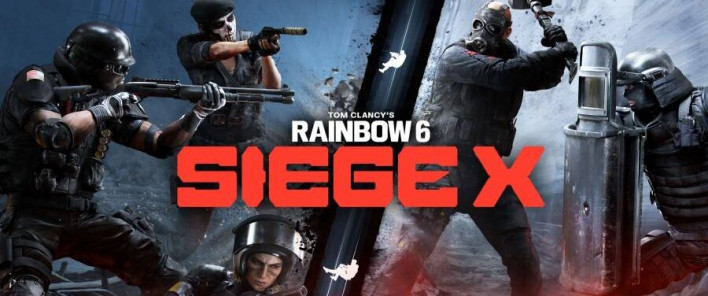
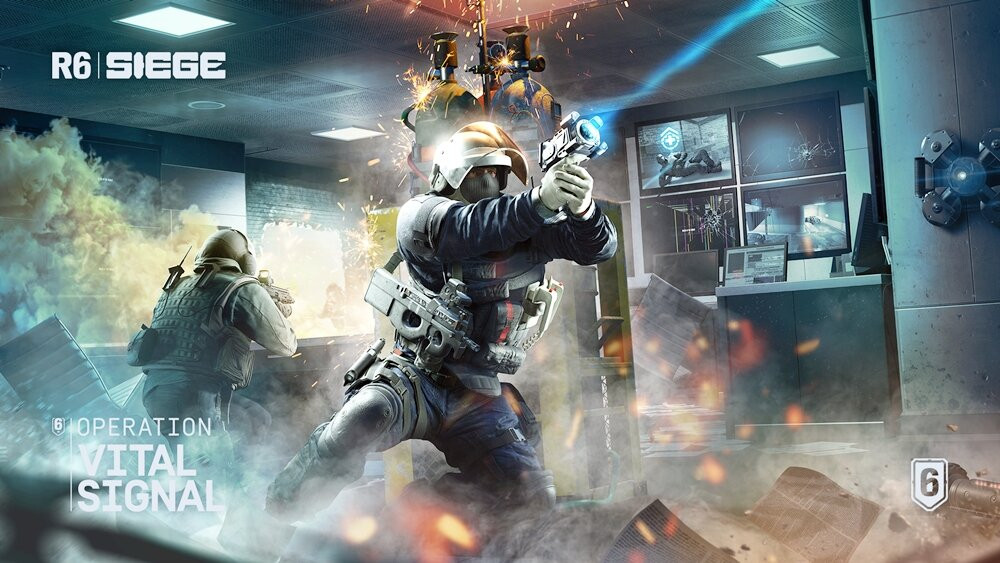
Ubisoft revealed the feedback system it established to rebuild player trust in Rainbow Six Siege, along with the concrete results achieved. Using the spread of player dissatisfaction during the 2025 '#SaveSiege' movement as a turning point, the company shifted from the traditional approach of collecting feedback after development to directly involving players during the development process.
During a media presentation held in Osaka, Japan, Ubisoft shared case studies on operating Siege's Feedback Loop. Senior Creator Strategy Manager Myriam Lemieux and Game Strategy Insights Manager Kenza Bousfiha led the presentation, detailing how teams responsible for developer-player communication collaborate and how these changes have impacted actual player satisfaction and trust.
Siege's feedback system is operated across multiple departments, including User Research, Community, Data Analytics, and Global Strategic Insights. The User Research team conducts playtests with professional players, general players, and newcomers; the Community team gathers online sentiment and feedback from content creators; the Data Analytics team tracks in-game behavioral data such as chosen modes and Operators; and the Strategic Insights team conducts surveys and market analysis. Developers emphasized that because vocal online users and silent players may exhibit different behaviors, it is crucial to synthesize multiple data sources when making decisions.
The catalyst for a major revamp of this system was the negative sentiment observed starting in 2022. At the time, developers identified five major pain points driving dissatisfaction: lack of communication, server and connectivity issues, Ranked 2.0, content and balance, and player protection. These factors accounted for roughly 20–30% of all negative sentiment online. In response, developers moved away from merely announcing update results and adopted a communication policy focused on continuously explaining the causes of technical issues, response efforts, and the intentions behind system changes.
A prime example of this was Ranked 2.0. Previously, demands to revert to Ranked 1.0 were repeated constantly, but it was difficult to pinpoint why players preferred the legacy system. When the dev team produced content explaining the background and design intent behind Ranked 2.0, player feedback became significantly more detailed. Instead of vague requests for a rollback, players began offering detailed critiques of current system flaws, giving the team actionable data for real improvements. Similarly, server connectivity issues saw a drop in complaint share after transitioning the existing infrastructure to a more stable architecture.
The '#SaveSiege' movement in 2025 served as another turning point in feedback management. Ahead of the Munich Major, developers adjusted planned workshops to discuss Ranked 3.0 with community stakeholders ahead of schedule—well before any public reveal plan. Long-term development plans, traditionally revealed at the Six Invitational, were also shared early. This was an effort to incorporate player feedback during development and reduce uncertainty about future changes, rather than waiting to evaluate completed systems after launch.
Survey data confirmed this shift. According to Kenza Bousfiha, during the height of the '#SaveSiege' movement in September 2025, four key metrics—player satisfaction, Net Promoter Score (NPS), intent to continue playing, and perception of cheating issues—all plummeted. Cheating was identified as the single biggest factor driving the decline, while players demanded balance philosophy changes focused on buffs over nerfs to foster fun and variety. Three months after the dev team unveiled a new balancing philosophy and anti-cheat roadmap, a follow-up survey showed improvements across all four metrics.
Response to the new balancing policy was also positive. Roughly two out of three surveyed players felt that recent balance changes made the game more enjoyable, making it the largest contributor to increases in overall satisfaction and intent to continue playing. Trust in the development team's anti-cheat capabilities also rose. However, progress was not entirely linear; during Year 11 Season 1, evaluations of technical performance and cheating worsened again, leading to a dip in NPS. Nevertheless, overall satisfaction, intent to continue playing, and trust in the dev team's responsiveness remained intact, marking a key distinction from previous downturns.
Currently, the Siege dev team continues gathering feedback through seasonal surveys, workshops, Testing Grounds, and developer livestreams. Individual feature teams—such as those handling Operators or events—are increasingly requesting direct player feedback, while opportunities for players and developers to meet and discuss upcoming content have expanded. Presenters shared data comparing online sentiment from Fall 2022, Fall 2024, and Fall 2026, illustrating not only an increase in positive responses but also greater stability with fewer volatility swings in public sentiment.
Myriam Lemieux emphasized that listening to user feedback is not enough; developers must follow up by explaining how that feedback was applied to the development process. Kenza Bousfiha noted that while satisfaction and technical feedback will inevitably fluctuate in a live-service game, maintaining trust in the dev team throughout that journey is essential. Built on this continuous feedback model, Ubisoft plans to keep refining Siege's future direction alongside its community.