Entering its 11th year of service, Rainbow Six Siege is still evolving. It introduces new content while reworking old systems, and sometimes even abandons features in development right before launch. Balancing the changes players desire with the competitive equilibrium built over many years presents long-term live-service games with challenges quite distinct from creating a new game.
The Year 11 Season 4 (Y11S4) update arriving on December 1 reflects these exact considerations. Support abilities for Doc and Thunderbird are getting revamped, and Ranked 3.0 is introducing a Solo/Duo queue. On the other hand, the Bulletproof Drone—which was expected to offer new tactical options—was canceled due to competitive fairness concerns. Knowing what to keep and what to let go has become just as crucial as adding new systems.
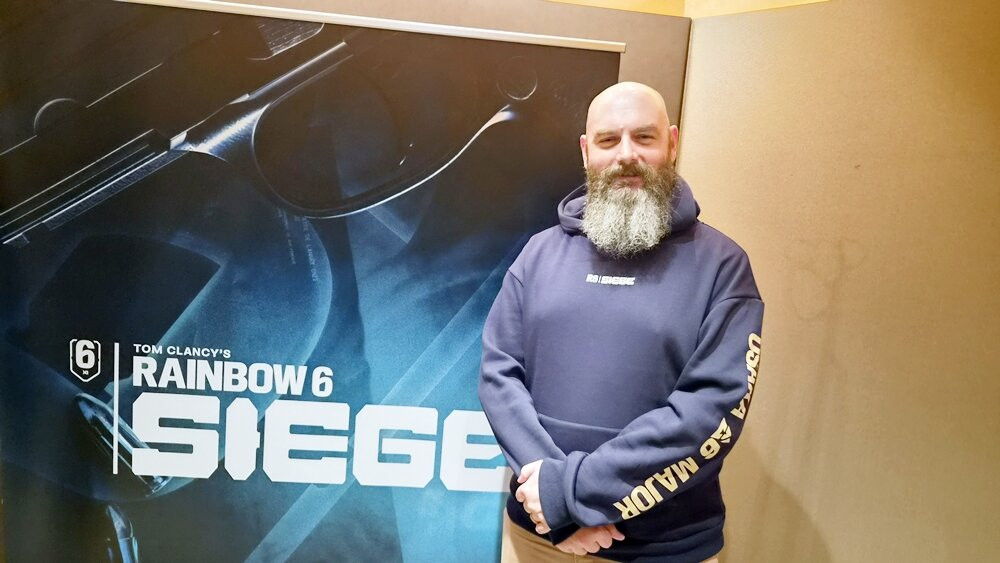
Creative Director Joshua Mills, whom we met in Osaka, Japan, traced the criteria for these decisions back to Siege's distinct competitive experience. He explained that since the game already boasts a established identity, it is more important to build upon existing strengths rather than recklessly adding new features. We asked him about the major changes coming this season, attacker/defender balance, and the future direction of Siege.
Doc and Thunderbird are receiving major support ability overhauls this season. What was the reason for reworking both operators at the same time, and what was your primary focus during development?
"Doc's remaster had been planned for a while. The most important goal was making his healing ability convenient while ensuring it felt valuable. Because Siege has a one-shot headshot system, healing isn't always effective. Therefore, we needed to ensure healing had a clear, tangible impact in actual combat.
As we worked on Doc, we naturally took a look at Thunderbird, another defender healer. It was important to preserve their distinct identities so that Doc's remaster wouldn't overshadow Thunderbird. Ultimately, we applied the same philosophy to both: healing should be easy to use regardless of the combat situation, and its impact must be distinct.
Broadly speaking, both operators function as combat medics. They can perform necessary support actions and immediately raise their weapons to jump back into the fight. We wanted to make the healing role—which many players love—far more effective in-game.
In internal testing, the results were very positive. Players no longer need to dedicate all their attention just to healing. You can maintain your primary combat actions while utilizing healing as a secondary tool, all while feeling its clear impact.
Siege is entering its 11th year of service. With so many changes over the years, what does the development team consider to be Siege's unshakeable core value? Conversely, what areas need to evolve moving forward?
"That's an interesting question. I'm part of a team built across multiple generations of developers. Over the past decade, various people have led the team, and countless developers have contributed to the game. Entering Year 11, what matters most is recognizing that Siege has established a unique identity. We are no longer building a new game from a blank canvas; we are inheriting and building upon a rich legacy.
When the team and I think about the next chapter, our top priority is Siege's inherently competitive nature—the tension and adrenaline you feel when squadding up with friends and diving into a Ranked match. That experience is hard to find anywhere else.
That is why players care so deeply about the game and strive to reach higher levels. Our job is to refine that core experience and make it enjoyable for even more players.
Ultimately, that competitive fire is the center of Siege. It's the engine and the heart driving everything.
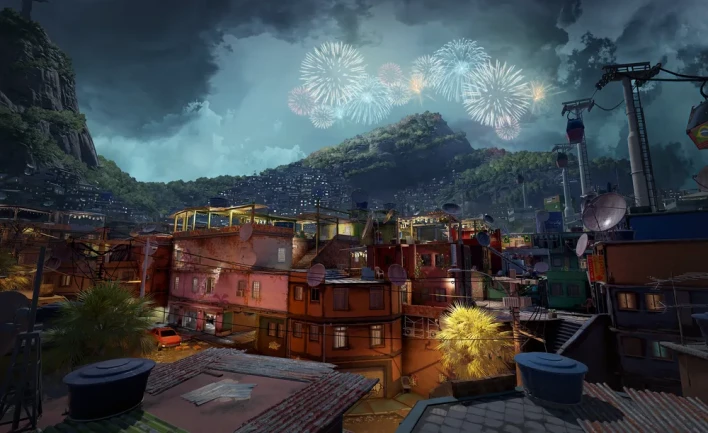
This season brings a rework for the Bank map, along with modernization for Favela, Yacht, and Tower. Personally, I feel these three maps were in the greatest need of improvement. What went into selecting them, and what direction is the modernization taking?
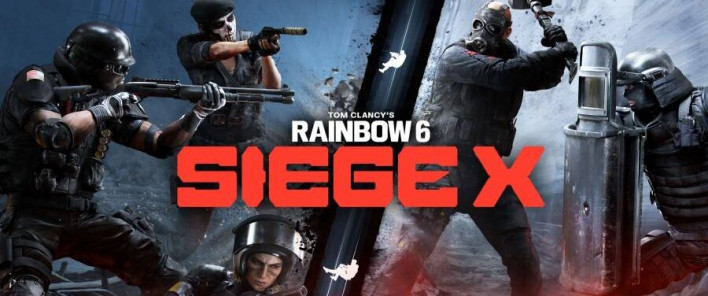
"Map modernization began with 'Siege X' introduced in Year 10 Season 2. At the time, we introduced new lighting, textures, and destructible environment elements, with the goal of applying those updates across every map in the game.
We first upgraded the Pro League maps, followed by the maps in the Ranked pool. All that remained were the casual maps. So this work is less a brand-new project and more about finishing what we started—closing out the final chapter to complete the full map modernization initiative.
We know these maps might not be the most suited for competitive play. However, it's important to support all content in the game. Every map needs to meet the quality standards that Siege strives for today.
In the end, modernizing these three maps represents completing the final phase of the ongoing project.
This season introduces Ranked 3.0 and the Social Hub. These changes enhance competitive fairness while encouraging players to connect. How do you plan to evolve the relationship between competition and community in Siege moving forward?
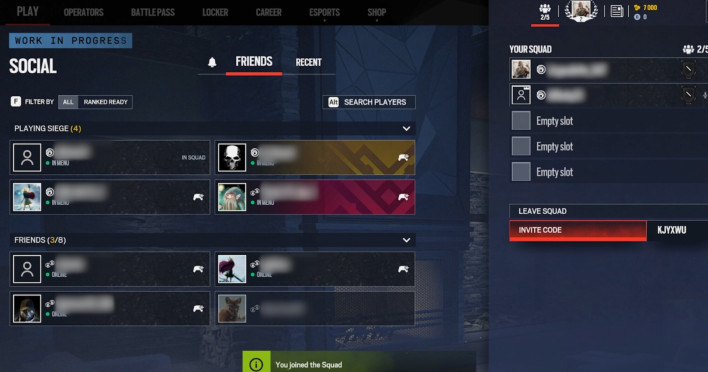
"With Ranked 3.0 this season, we are introducing distinct Solo/Duo and Flex queues. This change lets players comfortably enjoy the game in whichever way they prefer. A significant number of players play solo, and requests for this feature were very frequent.
This season also coincides with the holiday period. During the holidays, people are often busy seeing family or handling other commitments, making it hard to assemble a full 5-stack. Now, even without gathering five people, you can continue playing in the queue that fits you best. It's our way of responding to community requests as we wrap up the year.
The Social Hub takes things a step further by connecting people and creating opportunities to play together. For instance, say you meet a teammate with great synergy while playing Solo/Duo. Now, you can easily view recent teammates and connect with them as friends far more seamlessly.
As I mentioned earlier, tactical, organized teamplay is the heart of Siege. We want to strengthen that experience and create more opportunities for players to meet new teammates and build their next squad. A squad formed this way could ultimately compete in the Siege Cup, since the Siege Cup requires a full 5-stack.
Ultimately, the Social Hub isn't just a quality-of-life feature. It sets the foundation for the next stage of a 'Connected Siege,' where players link up and grow together.
Having just played the game, I got the impression that defenders still feel stronger than attackers. Attacker/Defender balance has been an ongoing debate in Siege. The Bulletproof Drone meant to assist attackers was canceled, while half-height reinforcements and the Doc remaster seem to buff defenders. How do you foresee attacker and defender balance evolving following these changes?
"Given Siege's fundamental design, it's natural for attackers to have a tougher mission. Attackers enter without knowing what awaits them inside, so they must gather as much intel as possible and execute their plan based on that. This asymmetry will remain intact.
What's interesting is that despite significantly boosting intel-gathering capabilities over the past year, attacker win rates remain lower. We expanded intel tools through operators like Deimos, Snake, and Dokkaebi, but players aren't fully utilizing that information.
Some players attempt to break through defense lines purely through gunskill or mechanical aim. But if defenders deploy a proper strategy, raw gunplay alone won't secure victory. Attackers must go through additional steps of gathering intel and executing tactical coordination. That is why player onboarding and education are critical to us—players need to understand how crucial it is to gather intel and make precise moves.
Personally, I like to look back at the early Rainbow Six titles. Back then, you checked rooms with a camera at the door, assessed the situation, planned every move, counted down 'three, two, one,' and breached simultaneously—clearing the area before enemies could react.
Attackers in Siege today can absolutely play that way. It's just that we aren't seeing that level of coordination often enough yet. We are exploring various ways to help players move and coordinate more closely. If that happens, defenders might start complaining that attackers are too strong.
We're approaching half-height reinforcements in the same spirit. Introducing them to the Testing Grounds first lets us see what unexpected setups players come up with. Internal testing revealed several potent defensive holds, but once real players get their hands on it, we'll see wild strategies we never imagined.
Restricting half-height reinforcements as a secondary gadget choice also serves to manage their impact. It forces a decision between taking a deployable shield or a half-height reinforcement, establishing a clear risk-reward dynamic. While half-height reinforcements create strong holding positions, losing control of that position leaves defenders vulnerable. It creates a back-and-forth struggle for initiative.
Of course, defenders hold an inherent advantage baseline. However, the extent varies by map and bomb site. Siege is inherently an asymmetrical game.
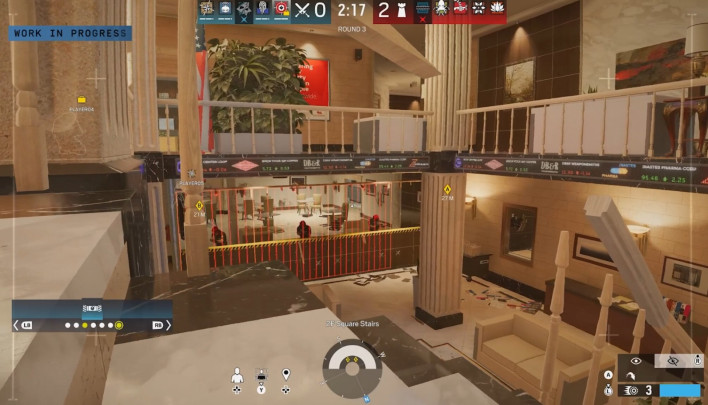
During the reveal, it was explained that the Bulletproof Drone was canceled because it could compromise competitive fairness. As Creative Director, what criteria guide your decisions when a new idea conflicts with the game's competitive identity?
"It's a tough decision because we don't want to disappoint players. There are players looking forward to new features, and we want to deliver them.
However, if you know clear priorities, it becomes a simple choice. The moment a new feature crosses the line and threatens competitive integrity, the debate is over.
It comes down to making the right call for the game's long-term health and longevity. In those situations, there's no reason to feel guilty about making the decision.
We're glad we could transparently explain the reasoning behind this decision before launch. Clearly communicating why we made this call to the community is essential for building trust. Ultimately, our duty is to safeguard the game and ensure its continued evolution.
Personally, Thunderbird's revamp is one of my favorite changes. However, with Thunderbird gaining the ability to cleanse flash and stun effects, there are concerns that Warden's position might be weakened. Are there any plans for further reworks for Warden?
"That's an interesting point. Giving Warden a new weapon was actually a decision made to give him a bit more competitive edge.
Warden retains his unique ability to see through smoke. Whether players actively use his gadget is another matter, of course—we know not every player actively leverages Warden's gadget.
It's true that Thunderbird cleansing stuns reduces some of Warden's unique utility. However, Warden still retains his specific role and purpose.
The key distinction is that their playstyles differ. Warden is a combat-focused, aggressive operator, whereas Thunderbird is built for team support. The types of players who pick each operator are inherently different.
So even with some overlapping capabilities, we believe both will have plenty of room to shine in their respective niches.
Starting in Year 12, a new operator will launch every season once again. What will Siege look like 5 or 10 years from now? What is your long-term creative vision?
"When discussing our long-term creative vision, there's a phrase I've been emphasizing to the dev team recently: 'Focused Excellence.'
As I mentioned earlier, Siege already knows what kind of game it is. There's no need to rebuild everything from scratch or reinvent the wheel. Instead, we must perfect the strengths we already have—protecting and elevating them.
Ultimately, that means high quality. The game must run reliably, crashes and force-closes must be minimized, and it must be thoroughly protected on the anti-cheat front.
Players deserve a seamless environment to enjoy the game they love. Our job is to deliver that environment every day. The development team is intensely focused on this.
If a new feature doesn't contribute to the long-term health of the game, we must be willing to walk away from it. Moving in a direction that makes the game healthier and stronger in the long run—that is our ultimate goal.