It is no exaggeration to say that reviewing Crimson Desert back in March was the most daunting assignment of my games journalism career. Ever-shifting builds, immense public anticipation, and a sheer volume of content that felt endless no matter how much you consumed. Though I fought through the adversity to reach the ending, writing the review afterward proved even harder than playing the game itself. While no game review is easy, Crimson Desert was undoubtedly a unique case.
Let’s step back into the past for a moment. There were many reasons why reviewing Crimson Desert proved so confusing for critics at the time, but digging down to the core, it boiled down to one underlying factor: Crimson Desert was a game composed of several massive chunks of gameplay, but the connective tissue holding those chunks together was far too loose.
Narratively, weak exposition left many plot points lacking plausibility. Content-wise, despite offering a staggering amount to do, the game failed to clearly explain how to engage with it all. Combat skills were immensely varied, yet high control complexity held players back. While each component possessed massive scale, the flimsy connective tissue prevented players from enjoying it 100%, creating a pervasive issue throughout the entire title. That was the core problem: looking at any single snapshot, it seemed like an absolute masterpiece, but when connected as a whole, it failed to deliver on that premise.
With the August update adding the 'Enhanced' moniker, those loose connections were substantially reinforced. Kliff, who previously felt like a robot, gained a bit more humanity, and his Greymane companions stepped out of the background into more prominent roles.
However, with 'Charting the Unknown,' this connective tissue faces a new test—simply because an astounding amount of new content has been added.
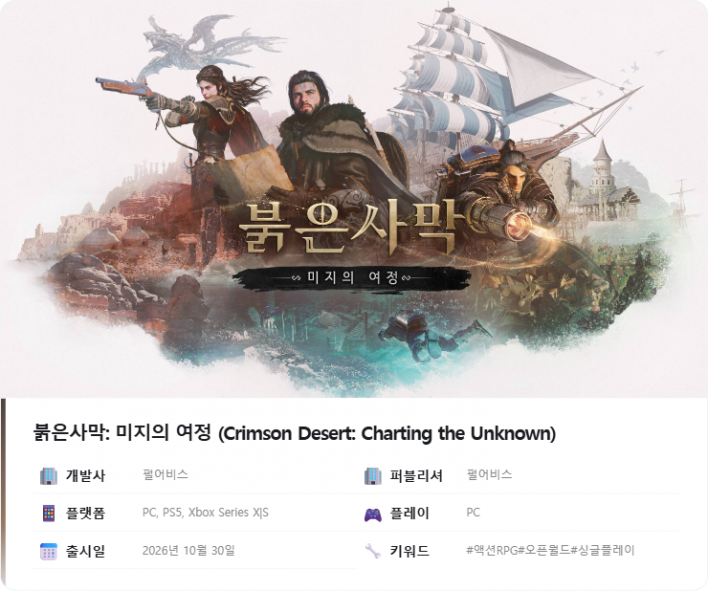
What Has Been Added? A Double-Sized Feast Centered Around the Sea
The biggest change in 'Charting the Unknown' is undoubtedly the addition of the ocean. While all other added content could pass for a free DLC or standard patch update, adding the vast sea as a new stage clearly demonstrates why 'Charting the Unknown' truly earns the title of an expansion.
Before Charting the Unknown, the sea in Crimson Desert was merely the edge of the world. Its role was limited to a few quests involving salvaging shipwrecks or serving as background scenery during the platforming sections, without functioning as an active playable region.
With 'Charting the Unknown,' however, the sea has become a stage as vital as the continent of Pywel itself.
Following the ending of the main story, peace returned to the world. Over the peace established as a bachelor Kliff aged into a weary middle-aged man (though reversible), the Greymanes became semi-unemployed mercenaries. With conflict gone from the Greymane camp, work dried up for the mercenaries—until they overheard rumors of islands overflowing with ocean treasure and convinced Kliff to join them, kicking off 'Charting the Unknown.' After securing a ship, Kliff builds a dock on the island of Auronui and embarks on his full-fledged oceanic voyage.
The naval content in 'Charting the Unknown' follows a distinct loop. Set sail for a new island, land on its shores, complete development missions, and once the island is settled, set out in search of another. Over a dozen such islands exist, with some hosting large-scale battles (with massive enemy forces) or boss encounters. Along the way, side content is plentiful, including underwater exploration for sunken treasure and fighting giant sea monsters.
When it comes to the feel of sailing itself, it leans further into realism than similar titles like Assassin's Creed IV: Black Flag. In the Assassin's Creed series, wind exists but does not heavily dictate movement, and ships move quite fast. In Crimson Desert, however, wind exerts a massive influence. Perhaps because the sails are predominantly square-rigged, sailing into head-winds slows the ship to an agonizing crawl, while catching a tailwind sends you gliding across the water.
While the ocean takes center stage, it is merely one of many features packed into Charting the Unknown. From expanded narrative arcs for the three protagonists—Kliff, Damiane, and Oongka—to romance and marriage with various NPCs, expanded housing, stronghold management, and facility management that goes beyond simple quests and fortress reclamation, Charting the Unknown boasts an enormous volume of content for a DLC.
What impressed me most at this point was Pearl Abyss's sheer ability to manifest ideas into reality.
As I felt when playing Crimson Desert for the first time—and as many gamers will likely agree—Pearl Abyss seems to interpret the phrase "focus and prioritize" a bit differently than most. By standard definitions, prioritizing means asking, "What should we include, and what should we leave out?" But Pearl Abyss's idea of selection stops at "What should we put in?" Put simply, if they want to add something, they just throw it all in.
And somehow, they manage to cram every single piece into the game. Because they pack so much in, elements sometimes collide like cargo spilling off an overloaded truck, or feature out-of-left-field content that makes you ask, "Why is this even here?" Yet it remains undeniable that they stuff an overwhelming amount of content into a single title—far beyond what other games would ever attempt.
The base game was already dizzying in its sheer volume, but 'Charting the Unknown' broadens that scope horizontally even further—and delivers on all of it. Regardless of the standalone value of each individual feature, pulling off this level of content creation and implementation is a remarkable achievement in itself.
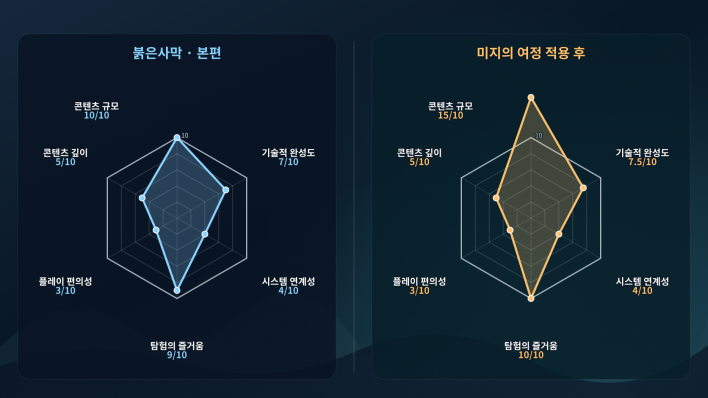
It is a fascinating approach. If you mapped Crimson Desert onto a radar chart, it would form a sharp, spiky shape. Its strengths—vast content and the sheer thrill of exploration—are undeniable, but so are its flaws, such as clunky quality-of-life features and weak systemic integration. I personally expected that any DLC release for Crimson Desert would focus on rounding out its weaknesses into a balanced, well-rounded game. The result, however, was the exact opposite: Pearl Abyss sharpened Crimson Desert's needle even further.
A Buffet With Every Dish Imaginable Except You Have to Eat It All Through a Straw
Let's shift our perspective for a moment. As mentioned, 'Charting the Unknown' pours a staggering heap of content onto a game that was already brimming with it. While this sharpens its extreme strengths in content volume and exploration thrill, it also highlights noticeable shortcomings. Despite undergoing considerable improvements, 'Charting the Unknown' inherits the same flaws as the base game.
Reviewing Crimson Desert was a major event for me personally, so even after publishing the review, I pondered the game for a long time. I conducted thought experiments asking where the root of my frustration lay and why these issues occurred, ultimately concluding that the game's core concept and its execution direction were fundamentally at odds.
Pearl Abyss's prior title, Black Desert, created a wildly eclectic world mixing everything imaginable to secure the massive content volume needed for an MMORPG. Though Crimson Desert features a separate universe, it inherited that world-building approach, crafting an unmatched mash-up setting where medieval knights, magic, and VR HMDs coexist. The problem is that a game built on such a vast, chaotic universe chose to pursue hyper-meticulous detail and realism.
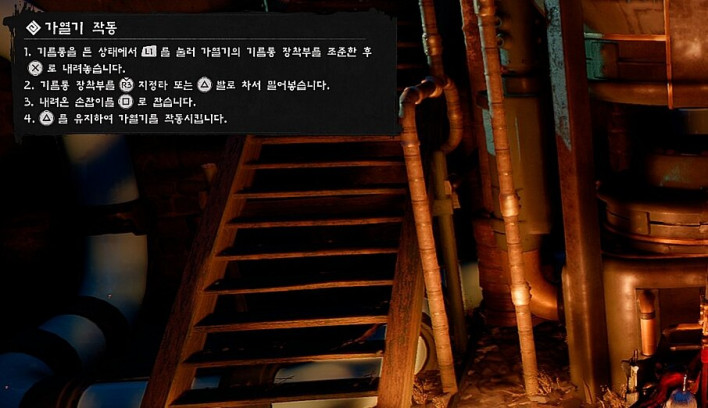
Acquiring new knowledge requires physically opening and turning book pages; numerous meat types used for cooking take up separate inventory slots; and every object interaction must be performed step by step. Compounded by complex controls for countless skills and actions, along with a UI/UX tangled under the weight of excessive systems, the resulting experience leaves a distinct impression: cumbersome and overly complex.
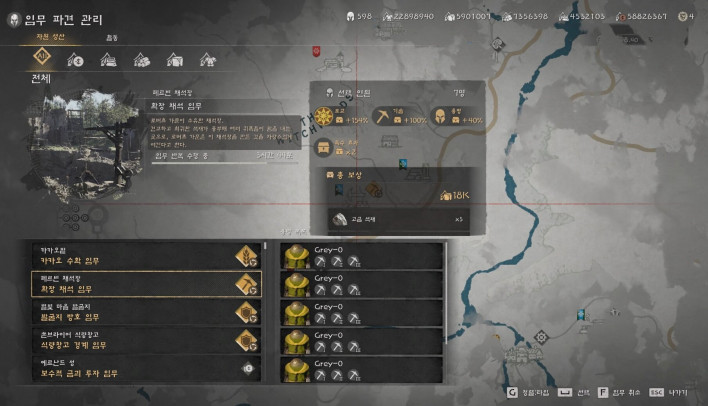
Take mercenary squad management, for instance, which sees demand surge in 'Charting the Unknown.'
In Charting the Unknown, there are far too many places demanding your already scarce Greymane companions. Depending on ship size, large sailing vessels demand a massive crew, while building docks and repairing strongholds also require manpower. If you manage business operations, you must hire resident staff as well—yet managing all of this proves excruciatingly tedious.
Granted, you can make things easier by visiting Rousseau, the camp's mercenary manager, but that means trekking back to camp just to perform basic upkeep. A minor tweak could easily allow full mercenary management from anywhere via a simple menu.
The insistence on detail and realism remains untouched, while the push for broad content expansion continues unabated. Naturally, the flaws inherited alongside the strengths stand out just as clearly—chiefly, an overbearing obscurity. While you can do almost anything, figuring out what to do or how to do it is absurdly difficult, and even when you decipher the method, an intricate execution process follows.
Crimson Desert is like a buffet. From kimchi to lobster, almost every dish imaginable is served. But it's a buffet where you are forced to eat everything through a straw. On top of that, finding where your desired food is located is a chore. While the 'Enhanced' patch smoothed over some rough edges, fundamental fixes remain unlikely for this inherent design issue, as resolving it would require overhauling the game's core direction entirely.
Paradoxically, for players already acclimated to Crimson Desert's intricate controls and friction, 'Charting the Unknown' is a deeply satisfying DLC. Inconveniences can ultimately be overcome through familiarity. For players who no longer feel that friction, this expansion's colossal horizontal growth presents an unblemished hoard of pure fun.
A Quintessentially Crimson Desert DLC Yet the Question Remains: Is It a Truly Good Game?
In summary, 'Charting the Unknown' is a DLC that is quintessentially Pearl Abyss and quintessentially Crimson Desert. At launch, Pearl Abyss raised eyebrows with its stubborn commitment to its vision, pushing through mountains of feedback. Seeing this expansion, one gets the impression that the studio aims to become master artisans of this specific philosophy. At this point, it is practically a worldview.
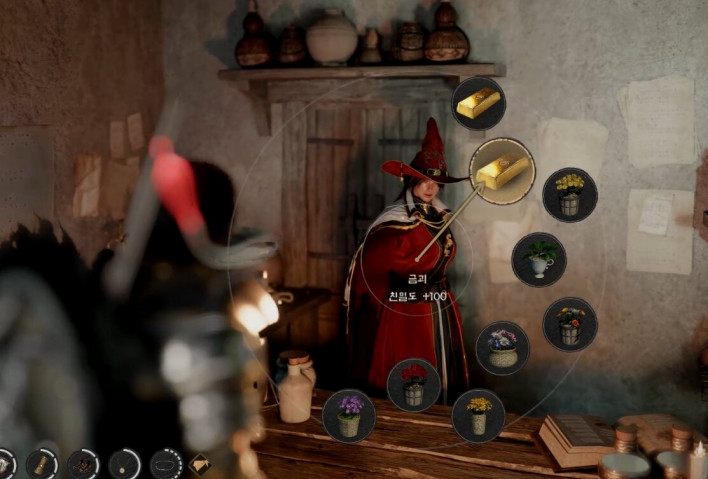
Of course, not all content is equally satisfying. The much-anticipated marriage feature takes far too long to progress and yields little practical benefit once achieved, leaving players wondering why they should bother. Meanwhile, trade and facility management are entertaining on their own, but lack compelling motivation within the systemic loop. While Charting the Unknown lets you earn staggering sums of money, there is simply nowhere meaningful to spend it.
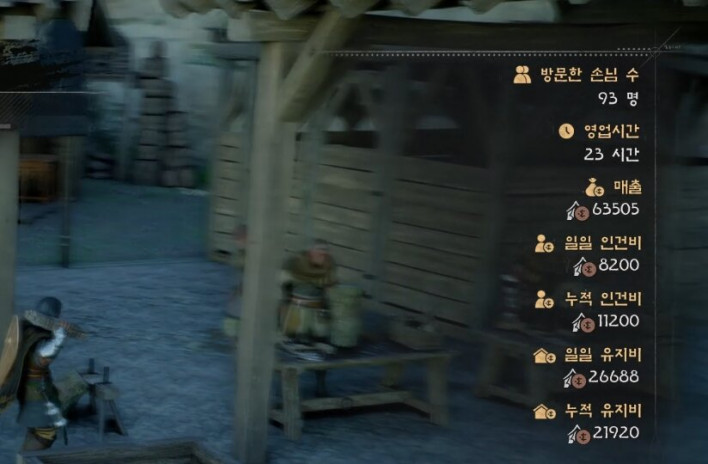
Had Pearl Abyss gone all-in and introduced a Romance of the Three Kingdoms-style grand strategy layer—allowing players to turn the Greymanes into a warlord faction using geography and political dynamics to conquer the world—that might have given purpose to all that hoard of gold (and knowing Pearl Abyss, they might actually add it someday). As it stands, however, the variety of content has simply expanded without building organic synergy between systems.
If there is one point worth emphasizing, it is that Pearl Abyss approaches player pacing far too much like an MMORPG. As players know, Crimson Desert does not allow freely skipping time; players must wait or utilize 12-hour skips and side quest workarounds, yet numerous activities still demand absurdly long real-world time commitments.
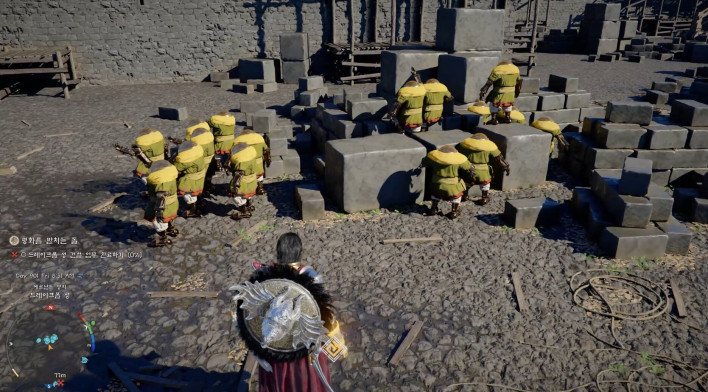
Organizing a festival to address labor shortages takes 18 in-game hours, while restoring Drakefall Castle requires 15 in-game days. Without relying on exploits, passing time naturally takes nearly 14 hours of real-time at best. Spending 14 hours skipping time once every hour just to construct a castle is time enough to complete most other games entirely.
Does a single-player title with zero online features truly need systems that forcibly pad playtime like this? I questioned it continuously, yet found no satisfying answer.
Nevertheless, 'Charting the Unknown' is a solid DLC. The new oceans, islands, myriad activities, and expanded systems are genuinely impressive, and packing content of this scale into a single DLC warrants praise. However, having abundant content is one thing; enjoying the process of playing through it is another. 'Charting the Unknown' achieves a clear triumph in the former, while leaving ample room for improvement in the latter.
Ultimately, 'Charting the Unknown' is an expansion that maximizes Crimson Desert's strengths rather than a definitive edition resolving its flaws. It inherits both the overwhelming potential and the equal measure of friction present in the main game, building another massive world on top of them. For some, it will serve as a playground to savor for months; for others, a game demanding too much labor to reach the fun. This dichotomy makes the expansion impossible to summarize through a single lens.
Back in March, evaluating Crimson Desert was extraordinarily difficult because it required binding countless elements pointing in divergent directions into a single conclusion. More than half a year later, after experiencing 'Charting the Unknown,' that dilemma remains largely unchanged. Yet one truth has grown clearer: Pearl Abyss knows precisely what kind of game it wants to make, and has no intention of pivoting easily. The remaining question is less whether that direction is correct, and more how many gamers will stay on that journey to the very end.
- Exploration expanded into the open ocean
- Overwhelming volume for a single DLC
- Expanded life content, including business and marriage
- A narrative strengthened through the Enhanced update
- Persistently clunky UI/UX
- Lacking systemic connection between content
- Excessive forced time commitments
Review Platform: PC (v2.04.08)