Grinding Gear Games (GGG) has officially revealed the new 'Shadow' class for 'Path of Exile 2'. Utilizing daggers and traps, the Shadow approaches enemies using a new Stealth system, quickly chaining attacks together as long as it successfully lands kills.
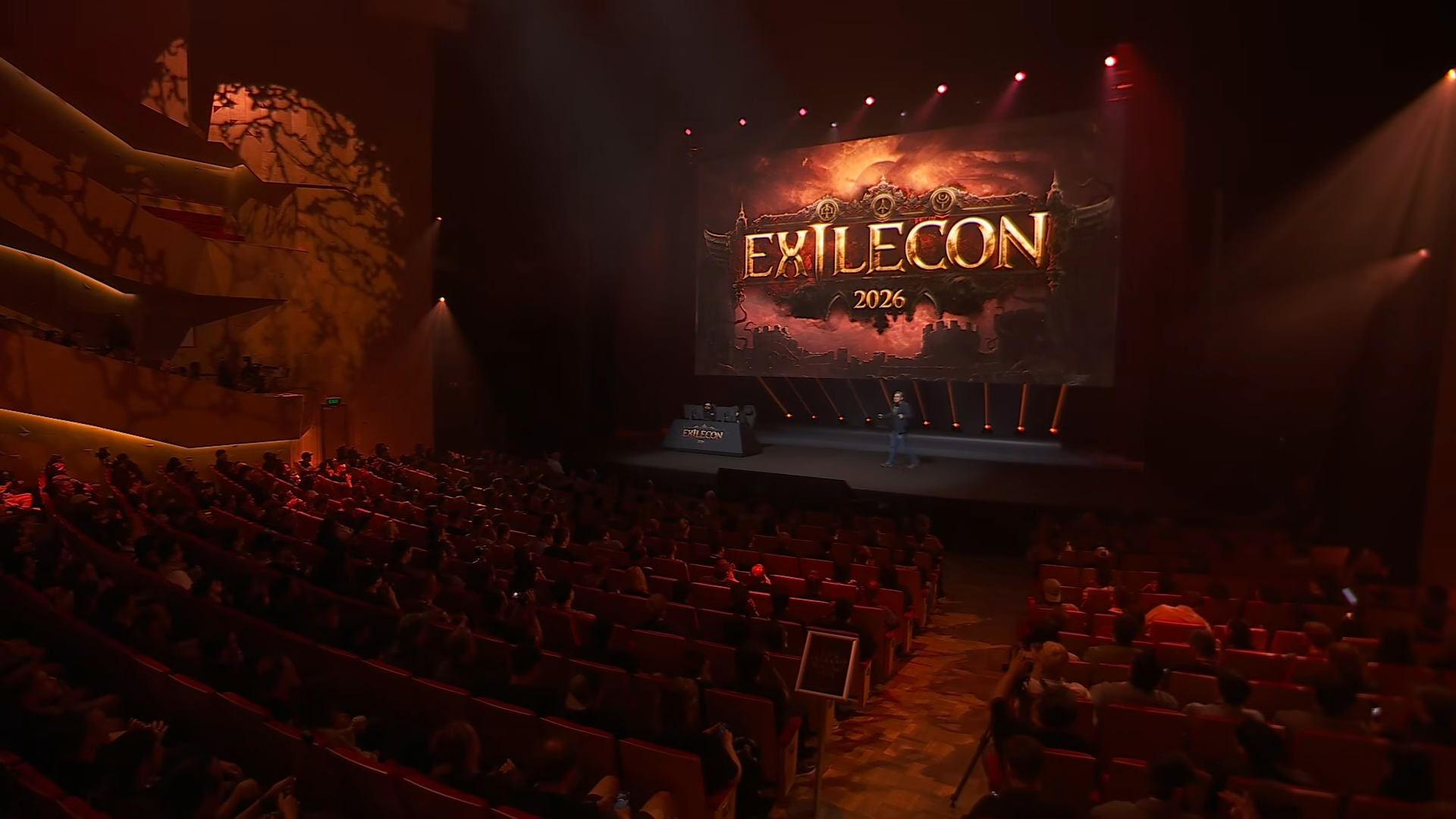
During the ExileCon 2026 keynote in Auckland, New Zealand on the 7th, GGG demonstrated the Shadow's core skills and combat style. Alongside the Shadow, GGG showcased 'The Knight', a new Ascendancy for the Duelist originally revealed back at Gamescom in August. Neither the Shadow nor the Duelist is currently playable in the Early Access version; both will be added upon full release on December 11.
Combining Assassination and Traps
The Shadow: Stronger in Stealth
The most defining system of the Shadow is 'Stealth'. While stealthed, monsters cannot detect the character until getting within a certain distance, and using an attack skill allows the character to swiftly close in on the target for a surprise attack. Stealth is not merely a movement tool for avoiding line-of-sight, but a system that dictates the initiation of attacks and the flow of combat.
Dagger skills in particular trigger special effects when cast from Stealth. Most notably, 'Viper Strike' imbues daggers with poison when cast while stealthed, causing subsequent chain attacks to trigger toxic explosions. Even with the same skill, its effect changes depending on whether the character is stealthed.
Although Stealth has a cooldown, securing a kill instantly resets it. As a result, players can approach in Stealth, take down an enemy, and immediately move on to the next target. The firepower to defeat enemies in a single burst directly translates to faster-paced combat. Conversely, failing to finish off a target forces players to wait out the cooldown, making target selection and the timing of ambushes crucial.
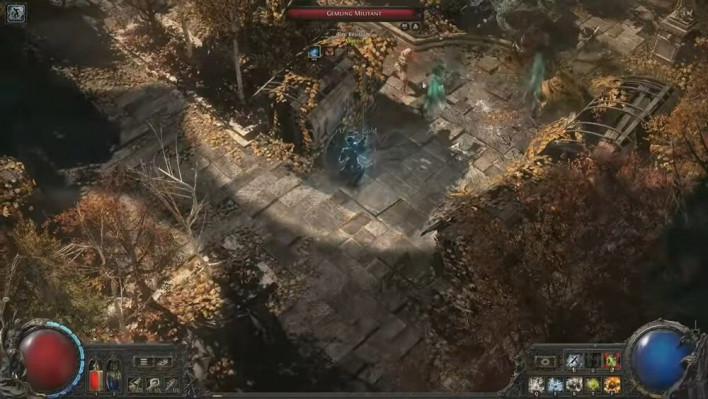
The trap system has also been designed differently from the previous game. Game Director Jonathan Rogers explained that in the original game, traps were functionally not much different from spells thrown directly under enemies' feet. Thus, this entry focuses on ambush combat—setting traps in advance and chaining multiple effects together. Traps placed while stealthed do not explode until Stealth breaks, and they detonate in the exact order they were set.
For example, embedding metal shrapnel into enemies with 'Shrapnel Trap' and then using 'Freezing Trap' causes the shrapnel to burst into ice shards. 'Concussive Trap' normally stuns enemies, but when used on frozen targets, it shatters the ice for extra damage. Each trap acts as an independent attack method while also serving as a catalyst to amplify the effects of other traps.
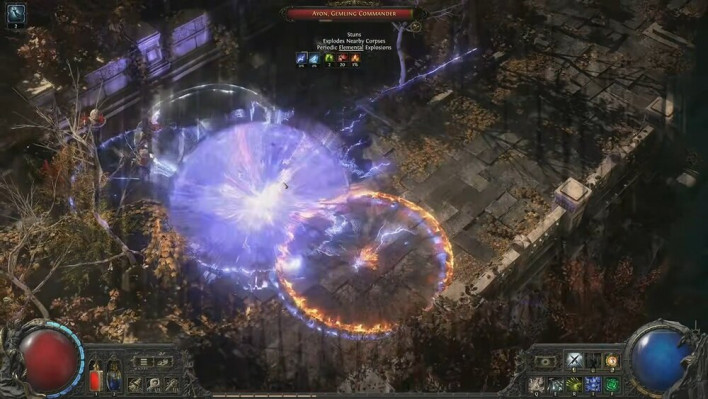
Synergies using poison and fire are also achievable. For instance, creating a toxic cloud with 'Poison Gas Trap' and igniting it into an explosion with 'Fire Trap'. Adding the wind effect from Concussive Trap spreads the poison gas over a wider area. Setting Poison Gas, Concussive, and Fire Traps in sequence while stealthed before triggering them generates a massive, wide-area explosion.
GGG stated that a total of 8 trap types have been prepared, with each trap designed to have meaningful interactions with at least 3 other trap types. Ultimately, trap placement order and combinations are just as crucial as raw trap power. The outcome of battle depends on which effect is triggered first and how its results are leveraged.
Flying Blades and Shadows
Another Way the Shadow Fights
Beyond stealth and traps, the Shadow features a combat style centered on embedding blades into enemies and chaining them with other skills. The live demonstration featured skills that leave blades and status effects on targets through various attacks, then pull them back or use them as fuel for follow-up moves. Even after one attack concludes, its lingering effects link seamlessly into subsequent abilities.
'Ethereal Knives' can be cast without breaking Stealth, lodging blades into enemies' souls. Attacking that enemy afterwards triggers additional Chaos damage from the embedded blades. 'Pestilent Volley' is a skill that throws multiple poisoned daggers while leaping backward, creating a cloud of chaos gas when hitting already-poisoned targets. 'Electrocution Trap' electrifies metal blades embedded in enemies to deal bonus damage.
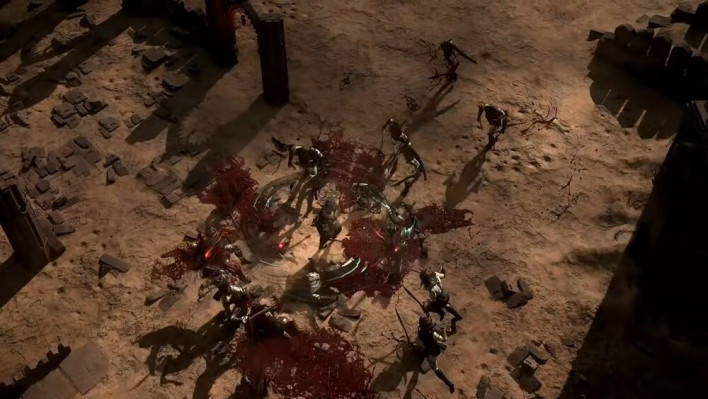
The culmination of this mechanic is 'Blade Vortex'. It pulls blades embedded in enemies back to orbit around the character, preserving the effects previously applied to those blades. Blades created by Ethereal Knives trigger Chaos explosions, electrified blades unleash lightning bursts, and poison-coated blades produce toxic attacks.
Blade Vortex's duration mechanics have also changed from the previous game. While blades previously expired after a set duration, in this title they vanish after hitting a set number of times. As a result, players can retrieve blades remaining in corpses after a battle and carry them into the next encounter, allowing them to prepare their offensive tools before approaching the next enemy in Stealth.
Another combat style presented involves utilizing 'Shade' clones and 'Darkness' resources. A Shade is a shadow clone mimicking the character's appearance. Entering Stealth blinds nearby enemies and leaves behind a Shade, causing monsters to attack the decoy instead of the player. Additionally, when the character uses a melee attack from Stealth, the Shade mirrors the skill to deliver supplementary strikes.
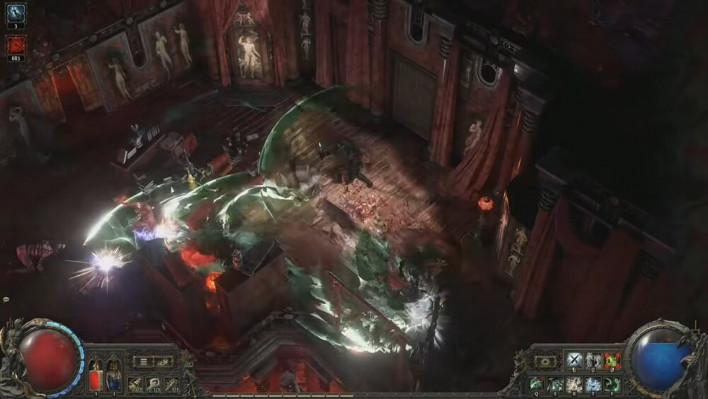
Darkness is a resource managed separately from Mana. Applying Darkness to enemies with 'Blade of the Night' and killing them triggers an explosion and awards Darkness resources. The accumulated Darkness is consumed when exiting Stealth to boost attack power. Director Rogers described Darkness as the opposite of Rage, introducing it as a resource that represents a calm, collected state of mind.
There are also skills that consume Darkness to create additional Shades. 'Shadow Extraction' strikes an enemy afflicted with Darkness, spawning a Shade that performs a surprise attack. Pairing this with 'Eclipse' allows players to enter a shadow realm when holding sufficient Darkness. In this state, every attack is counted as a stealth attack, triggering stealth attack bonuses on every hit while Shades join the assault. It is a powerful combat style that continuously unleashes effects normally reserved for specific conditions.
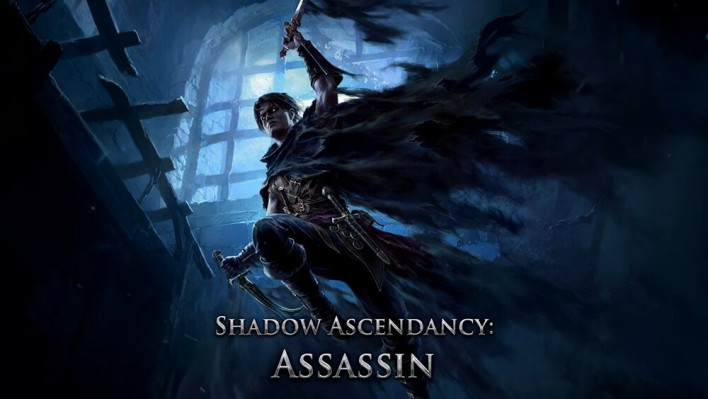
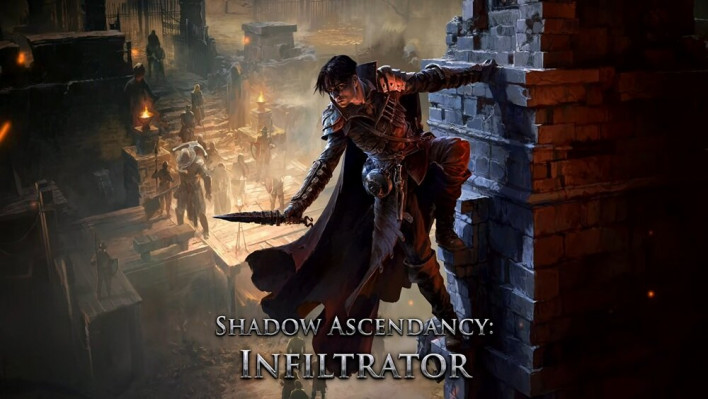
The Shadow will offer two Ascendancies: 'Assassin' and 'Infiltrator'. The Assassin returns from the original game, while the Infiltrator is a new option introduced in PoE2. However, GGG only revealed the names of the two Ascendancies today, with detailed exclusive abilities and passive node allocations to be shared at a later date.
Squires, Banners, and Chariots
'The Knight': A Fresh Take on the Duelist
Another class presented alongside the Shadow is the 'Duelist'. First revealed at Gamescom last August as a sword-focused melee combatant, its basic fighting style and initial skills were shown at the time. However, it is not included in the current Early Access build and, like the Shadow, will be playable starting at official launch.
At this ExileCon, the Duelist's first Ascendancy, 'The Knight', was revealed. While the previously shown Duelist focused on sword-based melee combat and Bleed skills, The Knight expands the playstyle by raising a companion and supporting combat with banners. The core feature is the 'Squire', a companion players can directly equip with gear and configure skills for.
Unlike ordinary minions, the Squire possesses independent equipment and skill setups. Players can hand their preferred weapons to the Squire and socket skills directly into its skill gem slots. During the live demo, the Squire was equipped with a spear and set to use 'Bloodhunt'. This skill consumes blood pools left by enemies to trigger explosions, pairing seamlessly with the Duelist's Bleed-based abilities.
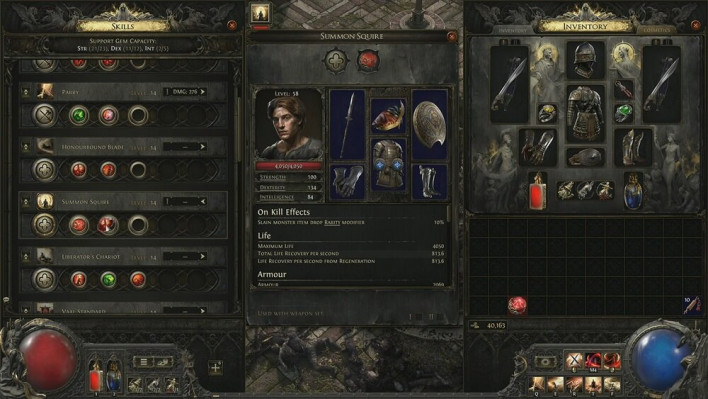
The demo also showed equipping the Squire with 'Bloodhound's Mark'. This skill applies a mark to enemies that enhances Bleed and stun effects while causing a toxic explosion when the target dies. Thus, the Squire serves not just as a companion that attacks enemies, but as an assistant that aids the player's attacks or sets up specific combos. The Squire's role adapts entirely to the gear and skills provided by the player.
The Knight also enhances the combat capabilities of itself and allies through 'War Banner'. By default, War Banner increases attack speed and damage for allies within its radius, and the effect applies to the Squire as well. Selecting the 'Bannerlord' Ascendancy node allows players to add special effects for banners representing various empires of Wraeclast. For instance, the Vaal Empire banner creates a patch of bloody ground, which when combined with 'Cyclone' creates a swirling vortex of blood.
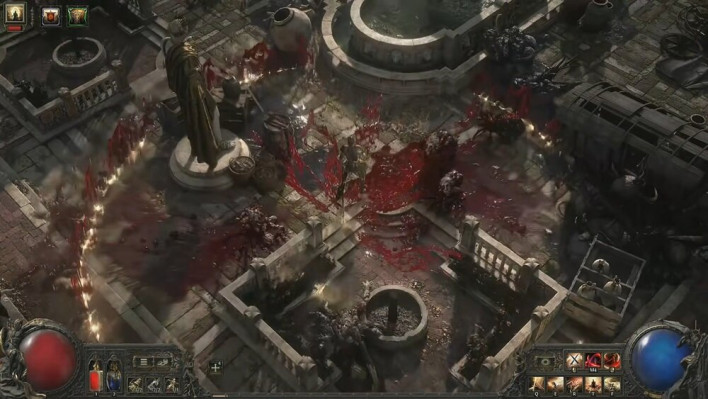
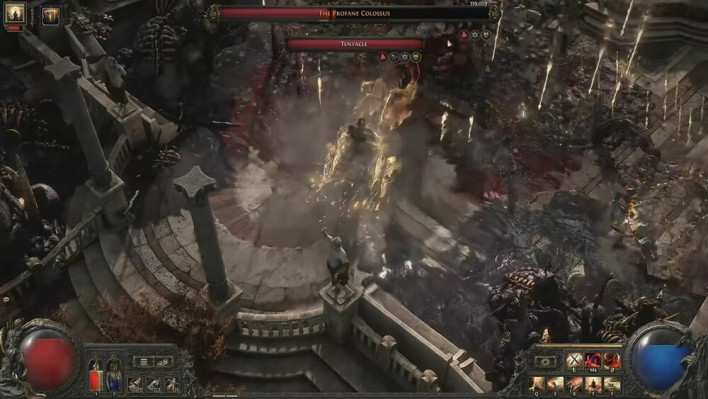
Planting a War Banner requires the 'Glory' resource. The Knight accumulates 'Valour' by spending Glory; reaching a certain threshold triggers the 'Honor Bound' state, releasing waves of justice with every attack. 'Mounted Charge' is a skill where the player charges forward atop a chariot, knocking back and stunning enemies before planting a banner where the charge ends. The knockback effect even applies to large enemies such as Rare or Unique monsters.
Ultimately, both the Shadow and The Knight emphasize skill synergy in distinct ways. While the Shadow maintains combat flow using stealth, traps, embedded blades, and Darkness, The Knight shapes the battlefield and empowers its attacks using its Squire and War Banners. Both share the core philosophy that combining multiple skills and systems maximizes effectiveness rather than repeating a single ability.
'Path of Exile 2' officially launches on December 11 (PST). The Shadow, revealed for the first time at ExileCon, and the Duelist, revealed back in August, will both be playable on launch day. A total of 10 classes including these two will be available at launch, with the remaining 2 classes originally promised to be added via future updates.