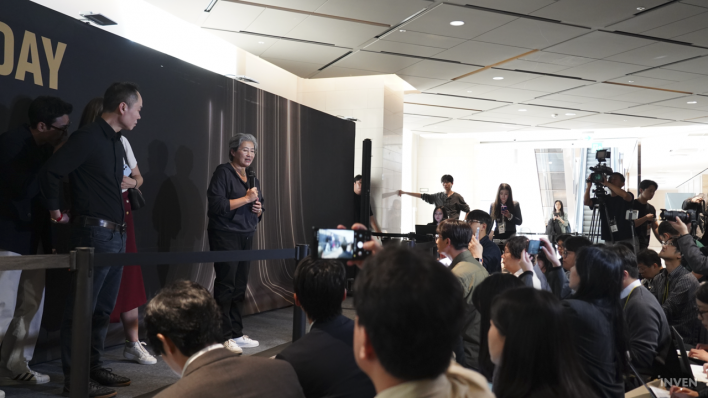
AMD Chair and CEO Lisa Su praised South Korea as a vital market not only in terms of the memory supply chain, but also for its AI development ecosystem. She expressed her intent to expand long-term collaboration with Korean companies including Samsung Electronics and SK Hynix, while actively engaging with the AI ecosystem spanning startups and universities.
AMD hosted 'AMD GAMERS DAY' on the 7th at Dragon City in Yongsan, Seoul. Following the event, AMD Chair and CEO Lisa Su and Jack Huynh, Senior Vice President and General Manager of the Computing and Graphics Group, attended a media Q&A session.
During the Q&A, a wide array of topics was addressed, ranging from collaboration with South Korean semiconductor companies to AI data center demand, HBM4 and next-generation AI systems, the Korean startup ecosystem, personal AI, and expanding FSR across APUs.
Throughout the Q&A, CEO Lisa Su repeatedly emphasized that "Korea is a crucial market for AMD in terms of both supply chain and partnerships." She explained that given the rapid increase in AI demand, companies must plan their supply chains together looking ahead three to five years, rather than just one or two years.
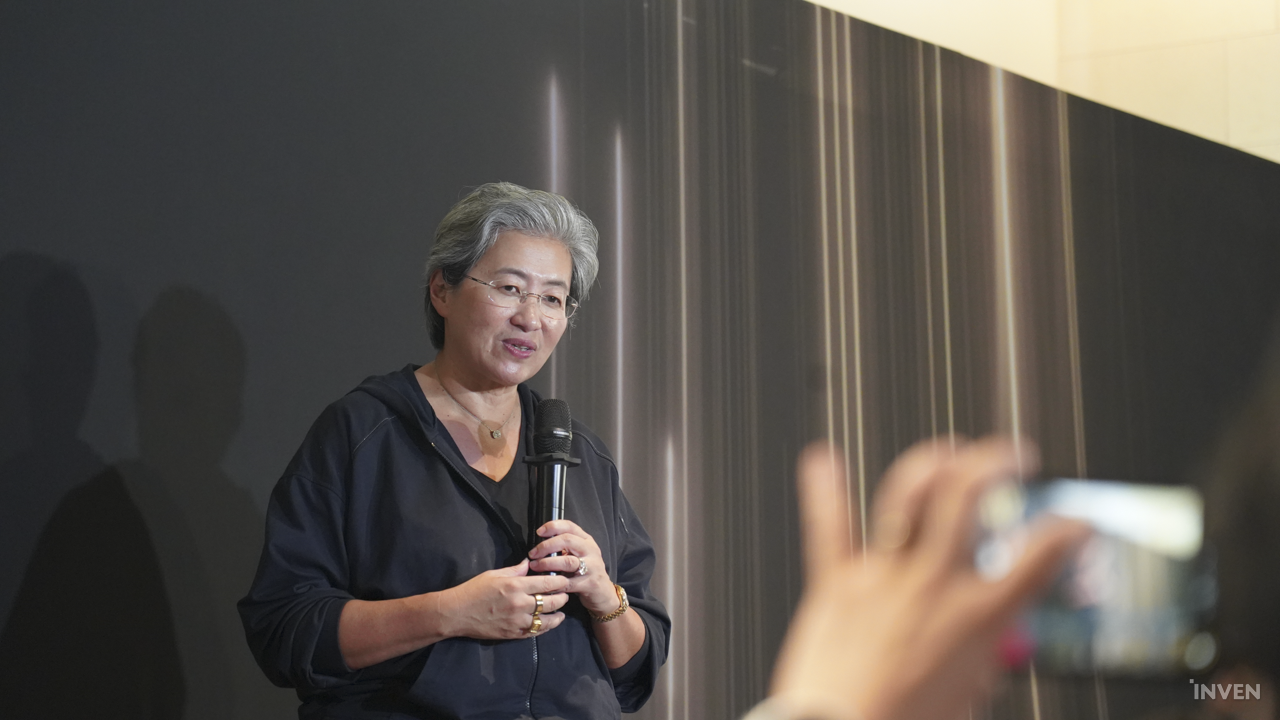
Q. Cooperation between AMD and South Korean companies, including Samsung Electronics, is expanding. How do you view the Korean supply chain?
Lisa Su: Korea has many great partners. Samsung, in particular, is one of AMD's most strategic partners across multiple technology areas, including memory.
In today's semiconductor industry, working closely with partners to plan long-term supply chains is extremely important. Demand in the AI sector is very high, and strong demand continues in the gaming and consumer markets as well. In that regard, collaborating closely with South Korean partners such as Samsung Electronics and SK Hynix is crucial.
Ultimately, I believe semiconductors are a 'team sport.' It requires many partners working together, and AMD regularly meets and communicates with key partners. AI is moving faster than any field I have experienced so far, so the more we communicate with partners, the better we can respond to market demand.
Q. How would you rate South Korea's AI startup and development ecosystem? What plans does AMD hope to pursue in Korea?
Lisa Su: What makes Korea special is the wealth of talent across various fields—from the supply chain to universities, startups, and major conglomerates.
AMD is heavily focused on AI right now. AI is one of the fastest-growing areas of AMD's business and is being rapidly adopted worldwide. Korea has many innovative startups in both hardware and software.
This morning, I met with government officials and several startups, and I was impressed by the culture of actively seeking new approaches. Beyond companies like Upstage that work closely with AMD, I met with various startups eager to join AMD's open ecosystem.
AMD plans to actively work toward establishing an AI 'Center of Excellence' in Korea while expanding collaboration with startups and universities. I believe Korea is a fantastic place to drive AI development.
Q. How do you view current demand in the data center market, including next-generation AI products? What is demand like specifically in the Korean market?
Lisa Su: Demand across data centers is extremely strong. In Korea as well, we continuously hear calls for more AI hardware and expanded AI computing capabilities.
The Korean supply chain is vital for AMD to achieve these goals. Samsung Electronics and SK Hynix are core partners and will play a critical role as we fulfill our objectives in data centers and AI. We see the current demand environment as very robust.
Q. With rising AI demand, memory supply is tight and cost burdens are growing. How is AMD responding?
Lisa Su: Memory is an essential component of the overall computing system. It is true that the current supply environment is quite tight.
AMD has built deep partnerships across the memory supply chain, which has also helped significantly grow our business recently. At the same time, we continue to look for ways to utilize memory more efficiently.
We are working with customers to optimize memory usage in each system so that more computing can be processed with the same resources. We are also asking our supply partners to expand production capacity as quickly as possible.
AMD itself has grown significantly over the past few years. Therefore, securing a broad foundation in the supply chain is essential, and we are continuing to explore new possibilities for collaboration with Samsung in various areas.
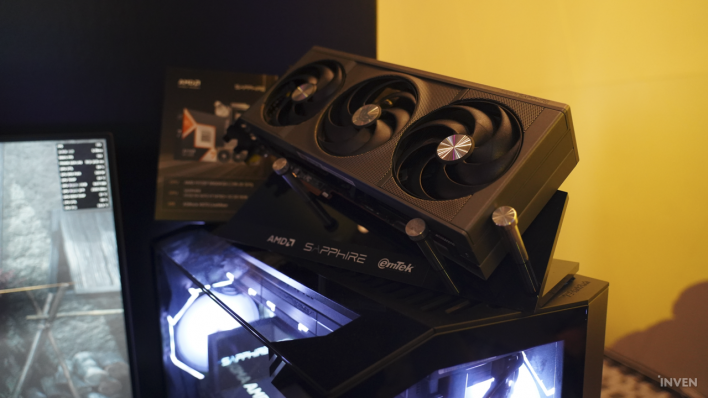
Q. Is your return visit to Korea this year due to the memory shortage, or did you have broader collaboration in mind?
Lisa Su: I wish I could visit Korea more often. The main reason for visiting Korea again this time is that Korea's ecosystem is immensely important to AMD, both on the supply side and in terms of partnerships.
In an environment like this, we cannot simply plan for the next one or two years with our partners. Because supply chains are so complex, we must look ahead three to five years and plan together.
Samsung Electronics and SK Hynix are highly critical partners in that regard. At the same time, Korea has many innovative companies. AMD wants to build a broader foundation in Korea and support the local ecosystem.
Q. I understand that a $10 billion collaboration plan was recently announced in Taiwan. Can we expect a similar scale of cooperation in South Korea?
Lisa Su: The semiconductor supply chain does not consist of memory alone. It encompasses wafers, packaging, memory, and various components that make up a system. Therefore, the supply chain must be built globally, and each area must collaborate.
Yesterday, I met with various customers and partners in Taiwan, and today I met with our partners in Korea. AMD will make investments worth tens of billions of dollars across the global supply chain.
The scale of business between South Korea and AMD is also substantial. In particular, I believe there are many areas across the supply chain, including memory, where we can work together.
Q. As demand for AI computing grows, both AMD and its competitors are strengthening cooperation with Korean memory makers. Do you see the competition for memory supply as a risk factor?
Lisa Su: What matters most in the market right now is that demand for AI computing continues to rise. Every company in the supply chain is moving quickly to meet that demand.
From AMD's perspective, how early and how deeply we share our plans with partners is what matters. The more we plan together, the better we can satisfy end-user demand.
The semiconductor industry is in a very dynamic period right now. Our goal is to meet as much demand as possible, and as demand continues to surge, we are considering every option to expand supply.
Q. How far along are the preparations for next-generation products using HBM4 from Samsung Electronics and SK Hynix?
Lisa Su: We have already begun shipments of our next-generation MI455X and AMD Helios solutions. These systems utilize HBM4, and we are receiving tremendous support from both Samsung Electronics and SK Hynix.
We view our HBM collaboration not merely as a single-generation effort, but as a partnership that spans multiple generations.
You might not know this, but AMD has been incorporating HBM into actual products since 2015. We have accumulated long-standing experience in integrating high-bandwidth memory and complex technology into a single system. We are currently very satisfied with the results of HBM4, and we are expanding production and deployment scale.
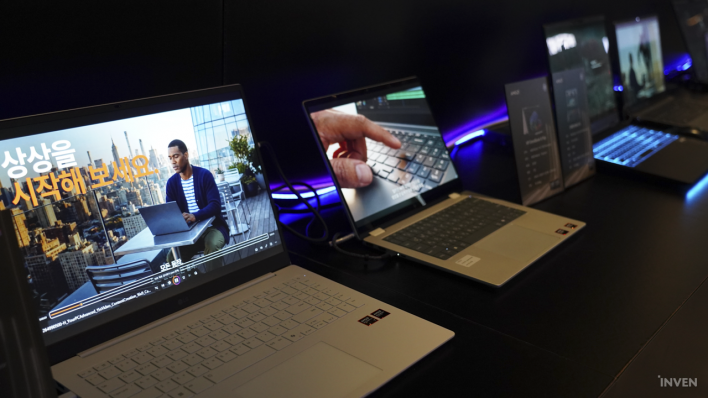
Q. For Senior Vice President Jack Huynh: You mentioned expanding FSR to APUs and handhelds. Will this support existing APUs, or do you plan to release new processors?
Jack Huynh: We intend to do both. Because AMD values gaming and gamers deeply, we plan to expand FSR technology across APUs.
We aren't simply expanding the reach of existing technology, either. We have also built a lighter new model tailored for APU environments. The goal is to provide solid visuals and low latency even in constrained hardware environments.
We plan to expand this across our APU lineup within this year, and you will see it in a variety of products, including gaming laptops. We will make further announcements on the details within the year.
Q. What are your impressions of Korea's AI technology, and how do you view the growth potential of personal AI?
Jack Huynh: The pace of technological advancement in South Korea is remarkably fast and impressive. At AMD, we see immense potential in personal AI and distributed AI.
While AI models can be trained in the cloud, the efficiency of open-weight models has been increasing at a rapid pace recently. Workloads of a scale that were difficult to run locally just a year ago can now be executed on increasingly smaller systems, and the innovation cycle is accelerating from six months down to three or even two months.
As a result, substantial AI workloads can now be processed locally. Local processing offers distinct advantages in privacy and security, while also reducing cloud operational costs.
That doesn't mean everything should be processed locally. We believe the best approach is to handle suitable tasks locally, and leverage the cloud when greater computing power is required. AMD envisions a direction that utilizes every available computing resource, from the cloud to the edge and the client.