A man with two swords strapped to his back stands before a village notice board. Someone searches for missing family, while someone else pleads for help hunting a monster that appears every night. He negotiates the reward, tracks the clues, and draws his blade. Yet by the end of the contract, a different question remains than at the start: Did he pick the right target to slay? How much of the caller's story should he have believed?
In 'The Witcher' series, monster hunting often leads to understanding human nature. Geralt of Rivia faces threats with exceptional swordsmanship, superhuman senses, and the dark fantasy equivalent of energy drinks, yet he cannot easily find answers when confronted with people's desires and fears. Players, too, hesitate alongside him, making choices amidst incomplete information.
'The Witcher 3: Wild Hunt — Remastered' provides ample reason to look back on this journey from the very beginning. The charm of the third installment, which represents the series today, took shape through the two preceding titles: 'The Witcher', a rough first step; 'The Witcher 2: Assassins of Kings', which delivered a political drama with bold branching paths; and 'The Witcher 3: Wild Hunt', which expanded Geralt's journey into a vast world. Each of the three games confronted players with the weight of choice in its own way.
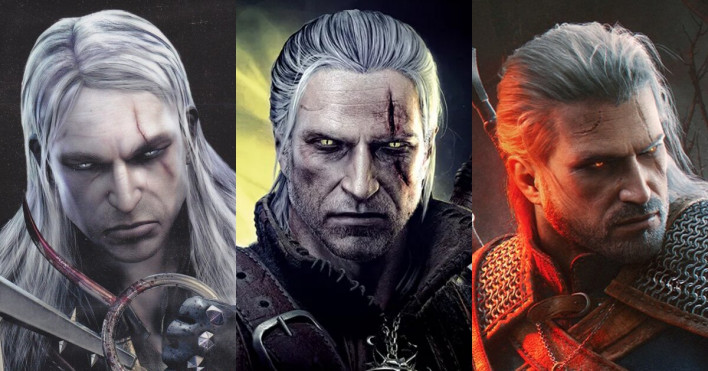
'The Witcher' A hunter with lost memories, an unforgettable world
In 'The Witcher', released in 2007, Geralt does not fully remember his past. This starting point also serves as a natural entry point for players new to the series. While Geralt retraces his relationships with those around him, players learn about the existence of witchers and the world they inhabit.
While recovering at Kaer Morhen, the stronghold of the Wolf School witchers, the amnesiac Geralt suffers an attack. His quest to track down those behind the incident leads him to Vizima and its surroundings. Monsters are not the only things awaiting him there. Hostility between humans and non-humans, religious fanaticism, and factions championing different causes consume the city's daily life. The deeper he dives to resolve the incident, the more he must decide whose words to trust and how far to get involved.
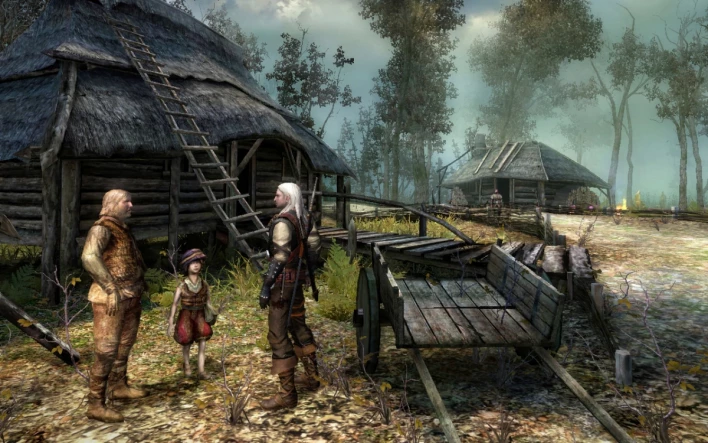
The distinct identity of the first game lies in the distance between choice and consequence. Actions that seemed like the best decision at the moment return with unexpected outcomes as time passes. Showing kindness to someone doesn't mean everyone ends up happy either. Rather than revealing the right answer immediately after a choice, the game leaves players to reflect on their decisions later.
Combat is also quite different from the sequels. The system of timing attacks to chain inputs together and switching combat styles depending on the opponent may feel unfamiliar to gamers used to modern action RPGs. Frequent zone transitions and clunky controls also show the game's age. For anyone playing it for the first time today, it is a title that requires time to adjust to.

Even so, the gloomy streets of Vizima, the swamps, and the stories hidden behind each contract in the first game remain memorable for a long time. The lingering feeling of unease even after slaying a monster, the doubt that acting out of goodwill might have still hurt someone—the unique atmosphere that would permeate the entire series was distinct right from the very first game.
'The Witcher 2: Assassins of Kings' A story changed by whose side you choose
Released in 2011, 'The Witcher 2: Assassins of Kings' thrusts Geralt into the center of a power struggle. Framed for regicide, he tracks down the true killer and the mastermind behind the assassination to clear his name, entangling the monster hunter's personal struggle with the interests of kingdoms and factions.
The defining feature that makes the second game memorable is its narrative branching. Deciding whom to accompany near the end of Chapter 1 dramatically changes the main setting and quests of Chapter 2. By viewing the same conflict from different factions, stories that couldn't be uncovered in a single playthrough come to light.
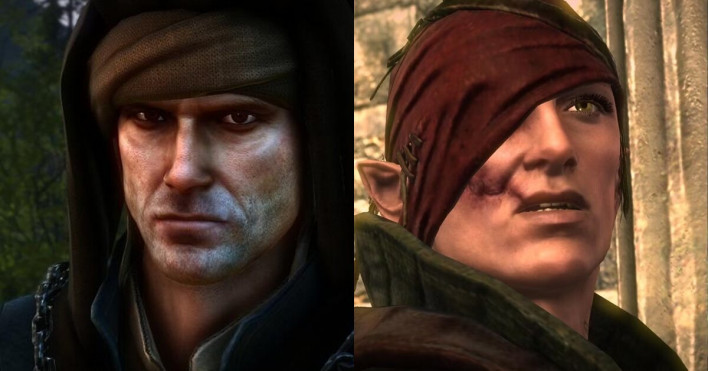
This structure aligns exceptionally well with the theme of political drama. Each faction presents its arguments from its own perspective, and depending on whom Geralt accompanies, the arguments players hear and the reality they witness change. Ultimately, choosing a side is not only deciding whom to help, but also determining through which lens to understand the events.
There were also major changes in presentation. Characters' facial expressions and dialogue scenes became more detailed, and combat shifted towards action that emphasizes manual movement, dodging attacks, and looking for openings. Utilizing swordsmanship, signs, and alchemy demanded both prior preparation and split-second reaction.
Of course, a dense political drama brings its own barrier to entry. If you lose track of the relationships between kingdoms and characters, the dialogue becomes hard to follow, and the early combat is quite punishing until you get used to it. On the flip side, paying close attention to the world's affairs reveals how events connect, making the significance of choices all the richer.
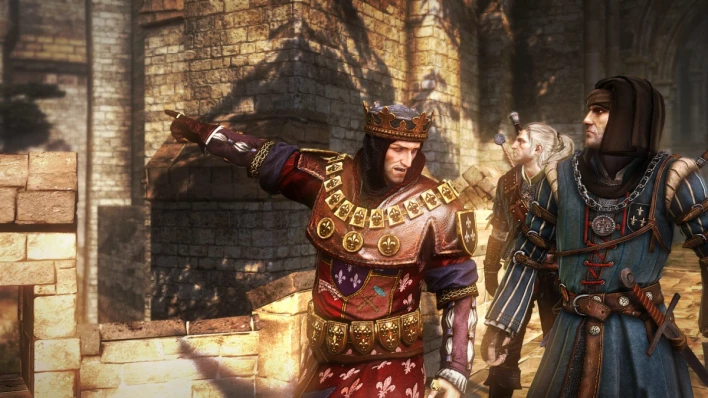
The second game gives plenty of reason to look back on it in its own right. Its structure of letting players experience a single event from different standpoints remains unique within the trilogy. In a different way from the vast world of the third game, it created a world that couldn't be fully understood in just one playthrough.
'The Witcher 3: Wild Hunt' Stories of the people filling an expanded continent
In 'The Witcher 3: Wild Hunt', released in 2015, Geralt's journey expands into an open world. Velen, scarred by war; Novigrad, a bustling city; and the Skellige Isles, surrounded by rough seas, each leave distinct impressions from their landscapes to their ways of life. The goal traversing this world is clear: Geralt must find Ciri, who is being hunted by the Wild Hunt.
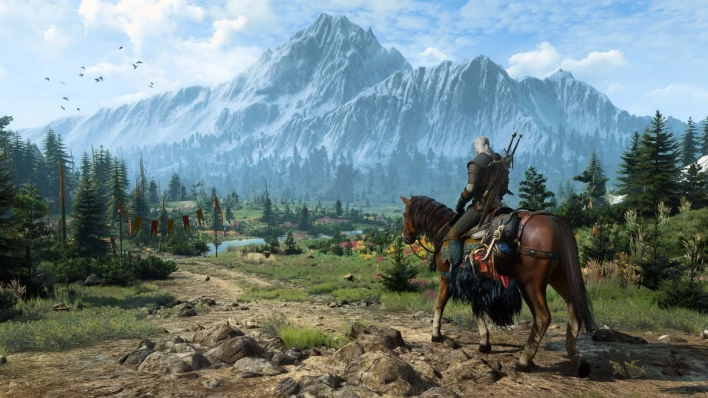
Geralt's personal motivation of searching for Ciri keeps the story anchored even within a massive world. To Geralt, Ciri is as dear as a daughter, while also being an individual who acts on her own thoughts and willpower. As he reunites with old companions and follows Ciri's trail, players witness the concern and affection the legendary monster hunter displays in his relationships.
The contracts placed along that path give the world a concrete face. While tracking the traces of a monster terrorizing a village, one might uncover secrets the villagers have been hiding, or delve into ancient grudges to lift a curse. This is why investigating the scene and talking through situations is just as important as combat.
The storyline involving the Bloody Baron encountered early in the game in Velen exemplifies this characteristic well. Attempting to get a clue about Ciri, Geralt becomes entangled in a family's complex history of trauma and violence. Understanding a character's past and forgiving what they have done are two separate matters. And the player must make a judgment in between. As the story deepens, it becomes difficult to judge someone solely on initial impressions.
The freedom of the open world changed the time spent between these stories. You can set urgent matters aside to solve a contract in a small village, or follow tracks discovered on the road and get swept into unplanned events. There are moments where the journey itself toward a destination feels like Geralt's everyday life.
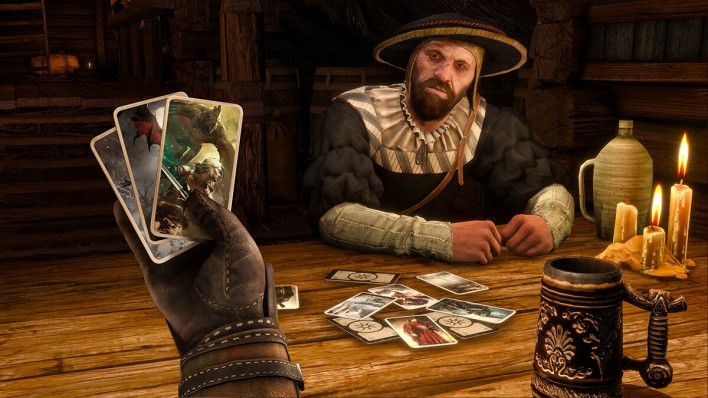
However, the expanded scale does not guarantee perfection in every area. Repetitive exploration and loot gathering can lead to fatigue, and a gap sometimes opens between the urgent main story and free-roaming activities. Even so, the presence of characters and stories everywhere that make you stop in your tracks provides reason to explore again.
The expansions 'Hearts of Stone' and 'Blood and Wine' are also hard to omit from a retrospective. A story relentlessly digging into desire and its price, and an adventure chasing secrets hidden beneath vibrant landscapes, expanded Geralt's world with emotions distinct from the main game. The two expansions demonstrated how wildly different atmospheric stories could be created using the same protagonist and setting.
Following Geralt's path once more The same journey, choices that will change
Placing the three games side by side reveals the evolution of graphics, combat, and world scale. Distinct features also emerge in how choices are experienced. In the first game, consequences encountered long after made players reflect on their decisions; in the second game, whom you joined altered your perspective on events; and in the third game, players felt the weight of choice amidst the stories and relationships of countless characters.
Geralt was always a powerful hunter, but he was never someone who could solve every problem as he wished. While some threats could be eliminated with a sword, there were also conflicts where finding an answer where no one got hurt was difficult. In players' memories, alongside the moments of vanquishing enemies, remain the times spent hesitating before dialogue options and the villages that were hard to leave even after completing a contract.
The newly returned 'The Witcher 3: Wild Hunt — Remastered' offers a chance to face those choices once more. As time has passed, your mindset in taking in the familiar story may have changed as well. Listening to words you initially passed by and empathizing with the circumstances of characters who were hard to understand might lead you to choose different answers than before.
For those taking up Geralt's sword for the first time, an adventure to find Ciri awaits; for those returning, a journey to reflect on their choices lies ahead. Starting by reading a contract in front of a Velen village notice board would be just fine. Discovering what story awaits at its end, and experiencing how a small contract leads to an unexpected narrative, will be thoroughly enchanting—even on a journey begun anew.