Meta has opened an early access waitlist for Horizon Create and Horizon Studio, two AI-powered tools that it said can turn simple text prompts into playable mobile games.
The tools were introduced at Meta Connect, the company's annual technology event. Both are built on what Meta described as the 'agentic creation capabilities' of its Meta Horizon Engine. Agentic AI refers to systems that can work through multi-step tasks on their own, with little input from the user.
According to the announcement, creators can describe a game in their own words and have the engine build a complete 2D or 3D title. Meta said this includes progression systems, difficulty balancing, art direction and multiplayer, with every element open to further changes afterwards.
Saxs Persson, VP of Horizon at Meta, said: "If you have a great idea for a game, you should be able to build it and get it in front of players without spending months navigating tools, hardware, and marketing. That's the future we're building."
Both tools are currently being tested with Meta's creator community. The company said early access will roll out gradually, with broader access opening 'soon', though no release date was given.
How Horizon Create and Horizon Studio work
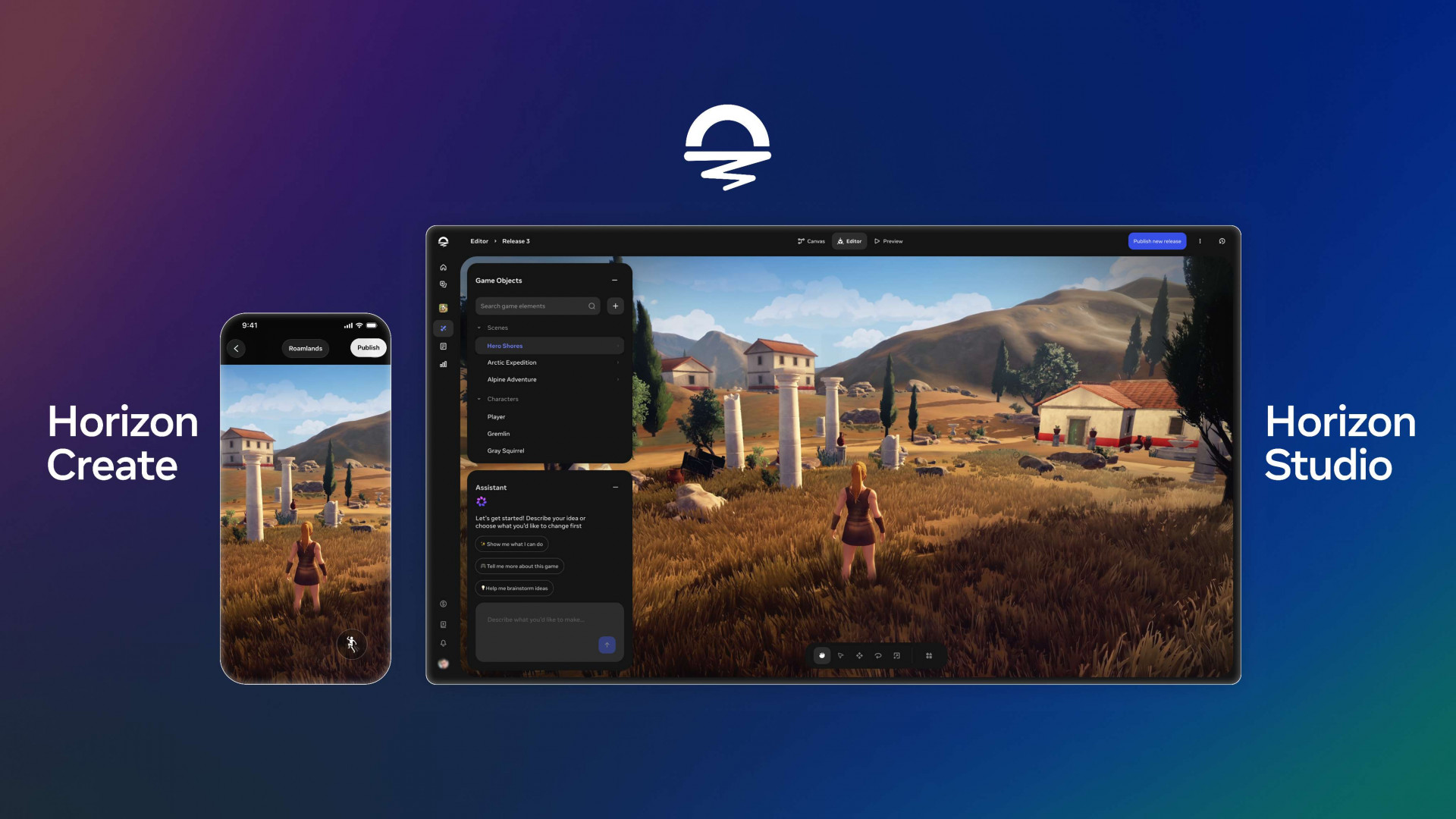
Horizon Create is a standalone mobile app. Users can start from a written prompt or a ready-made template, then change the art style, characters, story and progression by describing what they want. Builds run in the background, so users can play other games while one generates and get a notification when it is ready to test. The app also supports several projects at once.
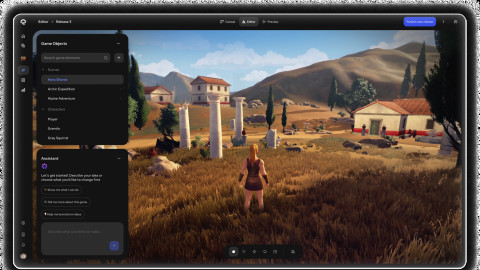
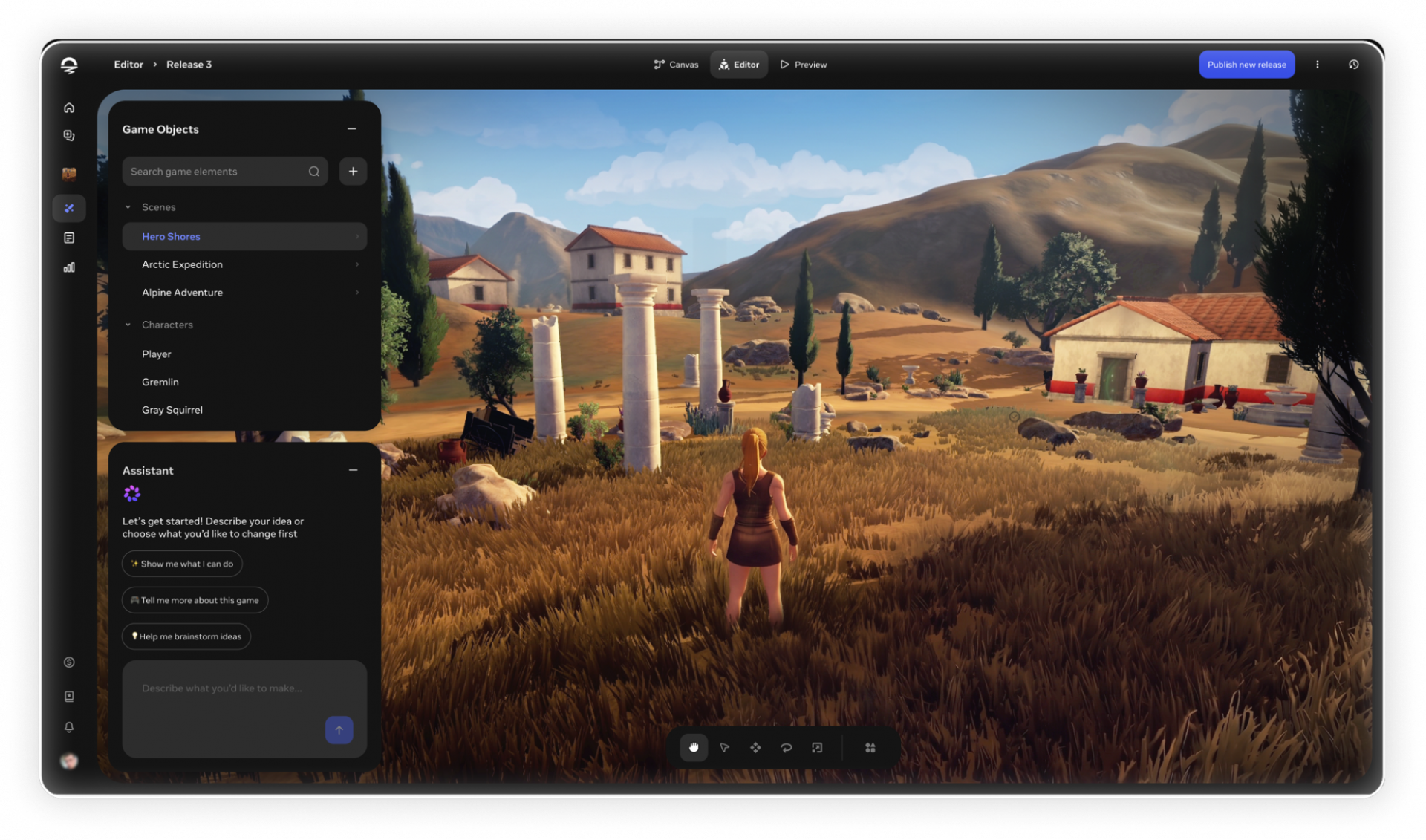
Horizon Studio runs in a web browser and requires no installation or gaming PC. It offers the same prompt-based creation as the app, along with visual editing tools. Users can arrange scenes by hand, swap out individual assets, tweak script parameters and lay out spaces themselves. Meta claimed a single prompt can restyle a scene's environment, characters and lighting in one go.
The two tools share a backend, meaning projects (including assets, systems and iteration history) move freely between them. Users do not need to begin in the mobile app to use Horizon Studio.
Distribution across Facebook and Instagram
Once published, games become eligible for distribution on Facebook, Instagram and Horizon, platforms which Meta said are used by billions of people. Meta gave the example of an Instagram user tapping a clip of a game and joining a multiplayer session within seconds. No download or redirect to another app would be needed.
The company said discovery will be driven by how fun a game is. Titles that are engaging, stable and culturally relevant, and that keep players returning, will be shown to more people. Those that fall short will be deprioritised. The announcement did not explain how Meta will measure these qualities.
Creators will be able to earn money through in-game monetisation and the Meta Horizon Creator Fund, with more details on monetisation options set to follow.
Safety measures and age ratings
According to Meta, all generated content passes through its content safety systems before it reaches players, and games are reviewed before they are published and distributed.
Each published game also receives an automated age rating and is placed into an age-appropriate tier before going live. Existing youth protections from Horizon, including parental supervision through Meta's Family Center, will also apply. Meta has shared recordings of several Meta Connect sessions for interested creators. These cover how the tools work, how games are discovered and grown on Horizon, and the Meta Horizon Creator Program.