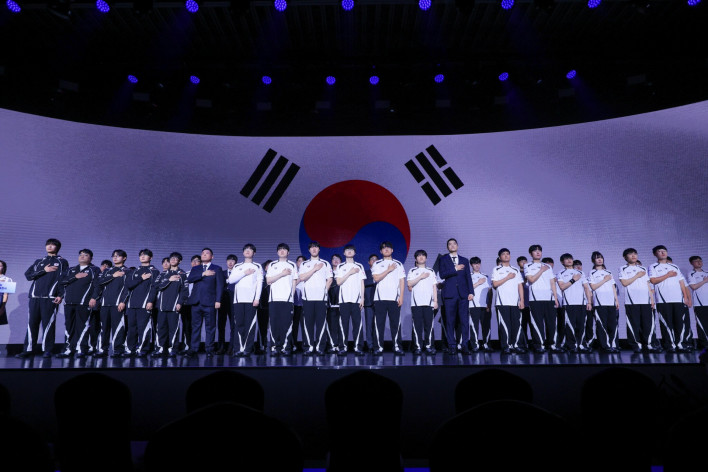
Esports is being removed from the Asian Games. Although it is a brief, single-line announcement, the fallout is far from minor. The weight and prestige of representing the national team—symbolized by the Taegeuk emblem on players' chests—has been shaken to its core.
The Olympic Council of Asia (OCA) has decided to remove esports as an official medal event from the Asian Games following the 2026 Aichi-Nagoya Games, separating it into a standalone multi-sport competition. Approximately 4,000 athletes are expected to participate in the inaugural Asian Esports and Mind Sports Games in Kuwait in 2027, but specific titles and operational schedules remain shrouded in mystery.
This decision will not immediately collapse the professional esports ecosystem. Major titles, led by League of Legends, have grown around publisher-led professional leagues and their own World Championships. The departure of the Asian Games stage will not dismantle the foundation of each league or team business models overnight.
Where the impact is concentrated is precisely in the symbolism and institutional status of representing the national esports team. The Asian Games served as the sole sanctioned stage where esports players wore the national flag and competed alongside traditional sports stars. Gold medals counted toward the official medal tally, and players stood on the same podiums. Through this, esports gained crucial legitimacy as a recognized official sport among the general public, the government, and the mainstream sports establishment.
Even if a separate multi-sport tournament carries the label of "national team," it cannot hold the same weight as the Asian Games. Everything from national team selection rules to boot camp training, performance support, awards, and post-tournament administration must be established from scratch on a clean slate. The national support framework previously provided by the Asian Games will by no means be automatically carried over.
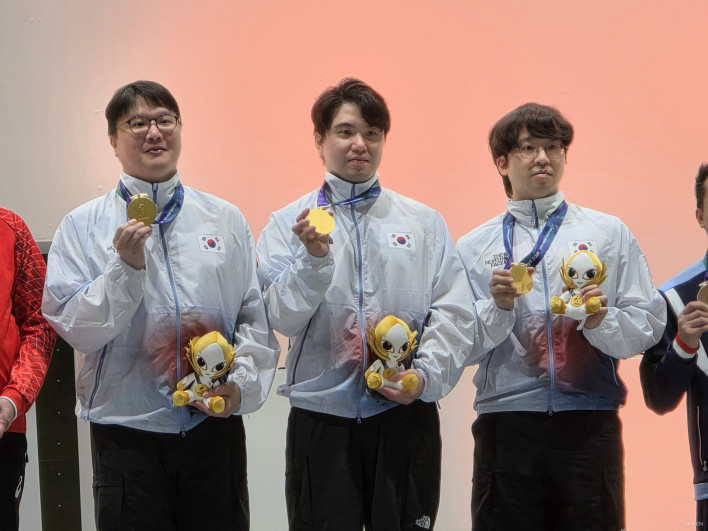
Above all, the most critical reality for South Korean players is the disappearance of military service exemptions. The current Enforcement Decree of the Military Service Act grants eligibility as arts and sports personnel only to those placing third or higher in the Olympics or first in the Asian Games. The newly launched Asian Esports and Mind Sports Games fall outside this criteria. Unless regulations are amended, the 2026 Aichi-Nagoya Games will be the last stage where top domestic players facing military obligations can earn alternative service opportunities through a gold medal. If the tangible reward disappears even for winning gold, players' willingness to be called up to the national team and their decision to participate will inevitably decline significantly.
This directly leads to the practical question of whether top-tier rosters can even be fielded. It was precisely because of the institutional authority of the "Asian Games" that publishers and professional teams could justify adjusting regular league schedules and cooperating with calling up key players. However, if the new event overlaps with global esports schedules or World Championships, teams and players will be forced to make a choice. Without securing standalone authority and incentives comparable to the Asian Games, the symbolic duty of representing the country alone will hardly overcome the realistic interests of professional leagues.
A reduction in mainstream reach and sponsorship value is also inevitable. The massive platform of the Asian Games served as a gateway bringing esports to mainstream terrestrial news and audiences who do not normally play games. While a standalone tournament may be advantageous for targeted broadcasting aimed at esports fans, the explosive public interest and expansion enjoyed within a multi-sport festival are highly likely to shrink significantly.
Ultimately, no matter how large-scale the separate event claims to be, it is no longer the Asian Games. The institutional validity and prestige of representing the nation that an Asian Games gold medal guaranteed will not automatically be granted to a new stage. Only if institutional backing from the government and sports authorities, concessions from game publishers and teams, and voluntary participation from top players come together completely can a minimum level of standing be maintained.
At present, only one fact is confirmed: esports has lost its status as an official medal sport in the Asian Games. On the other hand, the new event's game lineup, operational schedule, and institutional support measures remain unclear. What is to be gained is vague, while what has been lost is certain.
※ Article Update
Following the publication of this article, the OCA stated on its official website that esports will remain an official medal sport in future Asian Games. The OCA explained, "We have never decided or announced that esports will be excluded from the Asian Games after 2026." However, the decision document from the 90th Executive Board meeting released by the OCA in 2024 explicitly states that a proposal to remove esports from the Asian Games program following the Aichi-Nagoya Asian Games was unanimously approved. That decision document remains published without any indication of modification or revocation, and the OCA did not clarify when or through what process the previous decision was altered. Currently, the OCA's official position is that esports will remain in the Asian Games.