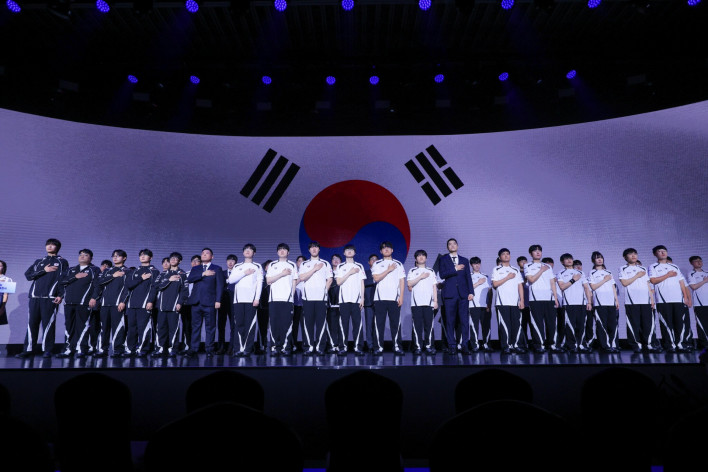
Esports is being removed from the Asian Games. While brief, this single line of news carries far-reaching consequences. The weight and prestige of wearing the national team badge on their chests—something esports players have carried until now—has been shaken to its core.
The Olympic Council of Asia (OCA) has decided to exclude esports from the official Asian Games program following the 2026 Aichi-Nagoya Games, separating it into a standalone multi-sport event. Approximately 4,000 athletes are expected to participate in the 1st Asian Esports and Mind Sports Games in Kuwait in 2027, but the specific events and competition schedules remain shrouded in mystery.
This decision will not immediately collapse the professional esports ecosystem. Major titles led by League of Legends have grown around publisher-driven professional leagues and their own World Championships. The disappearance of the Asian Games stage will not shake the foundation of each league or the teams' business models overnight.
The real impact is concentrated on the symbolism and institutional status of "national team esports." The Asian Games was a unique, officially recognized stage where esports players wore the national badge alongside traditional sports stars to represent their country. Gold medals were included in the official medal tally, and players stood on the same podiums. Through this, esports secured decisive legitimacy as a recognized formal sport among the general public, the government, and the sports establishment.
Athletes may still compete under the banner of the "national team" in a separate multi-sport event. However, the weight carried by that title cannot match that of the Asian Games. Everything—from national team selection regulations, training camps, and performance support to rewards and post-tournament management—must be established from scratch. The national support system previously provided by the Asian Games will by no means be automatically inherited.
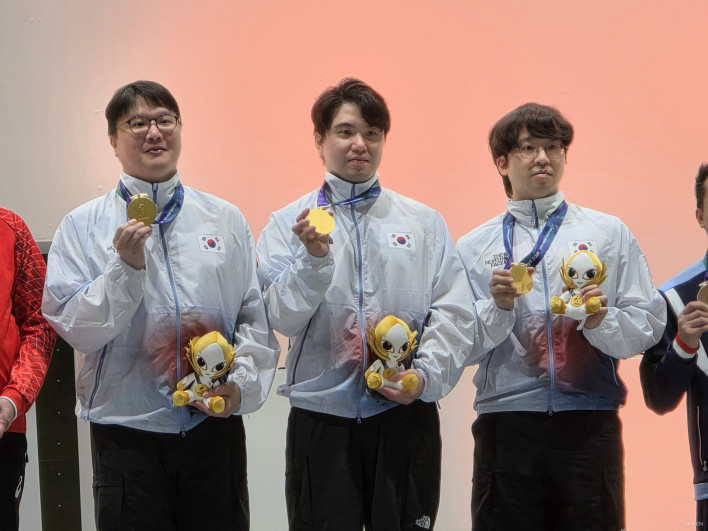
Above all, the most critical reality for South Korean players is the loss of military service exemptions. Under the current Enforcement Decree of the Military Service Act, eligibility for art and sports personnel status (alternative military service) is granted only to athletes who finish third or higher at the Olympic Games or first at the Asian Games. The newly launched Asian Esports and Mind Sports Games does not meet these criteria. Unless the regulations are amended, the 2026 Aichi-Nagoya Games will be the last stage where top domestic players subject to military service duties can earn alternative service opportunities by winning a gold medal. If tangible incentives disappear despite hanging the same gold medal around their necks, players' willingness to be drafted onto the national team and their decisions to participate will inevitably shrink significantly.
This directly leads to the practical question of whether a top-tier roster can even be assembled. Because the Asian Games carried institutional authority, game publishers and professional teams had justification to adjust their regular season schedules and cooperate in releasing key players. However, if the new event overlaps with global schedules or World Championships for individual games, teams and players will be forced to make a choice. Without securing independent authority and incentives comparable to the Asian Games, it will be difficult to overcome the practical interests of professional leagues through the pride of representing the national team alone.
A decline in mainstream reach and sponsorship value is also inevitable. The massive platform of the Asian Games served as a gateway bringing esports to mainstream news broadcasts and the general public, who do not normally play games. While a standalone event may offer advantages for targeted broadcasts aimed at esports fans, the explosive public interest and expanding outreach previously enjoyed within a multi-sport festival are highly likely to diminish significantly.
Ultimately, no matter how large a scale the separate stage claims to have, it is no longer the Asian Games. The institutional effects and weight of national representation guaranteed by an Asian Games gold medal will not be handed to the new stage for free. Only when institutional support from the government and sports authorities, concessions from publishers and teams, and the voluntary participation of top-tier players come together completely can a minimum level of prestige be maintained.
Only one fact is currently confirmed: esports has lost its status as an official Asian Games sport. On the other hand, the event lineup, operational schedule, and institutional support for the new tournament remain unclear. What is to be gained is vague; what has been lost is certain.
※ Article Update
Following publication, Xinhua News Agency reported that the OCA stated it "has never decided or announced the removal of esports from the Asian Games after 2026." However, the decision document from the OCA's 90th Executive Board meeting released in 2024 explicitly states that the board unanimously approved a proposal to remove esports from the Asian Games program after the Aichi-Nagoya Asian Games. That document remains available on the official OCA website without any indication of modification or withdrawal. Consequently, whether esports will be included in the 2030 Doha Asian Games requires further clarification from the OCA.