Everyone has their own way of enjoying games. Some people like casting a game onto a massive TV screen, clicking through QTE buttons, and soaking in cinematic scenes that feel like movies. Others thrive on the tension of using both a keyboard and mouse, demanding precise control and constant, high-volume keypresses simultaneously. And then there are those who think, "Who cares about graphics? I just want to lie down, roll around, and play."
Well, that happens to be me. Naturally, there are times I play open-world adventures set in stunning environments, or simulation games overflowing with information that are impossible without mouse controls, but more often than not, I just want to comfortably lie on the couch and enjoy AAA games.
That makes the Nintendo Switch 2 a pretty great choice. While handheld gaming PCs led by the Steam Deck are plentiful, they are simply too heavy, leaving your arms numb after holding them for just a short while. Plus, if you get drowsy while playing and nod off, dropping the device onto your face delivers a shock big enough to make you wonder if your front teeth were actually popcorn kernels waiting to be knocked loose.
To be fair, the Nintendo Switch 2 isn't exactly easy to call highly portable compared to previous-generation consoles given its size and weight, but its thickness and weight still feel like the final line of defense for true portability.
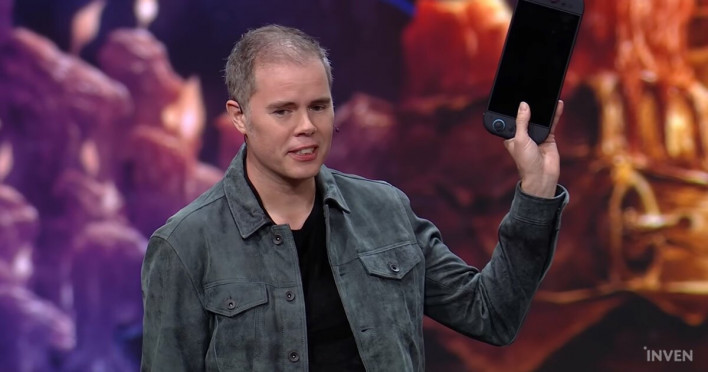
Diablo IV removes location constraints Complete gameplay anywhere
By now, you might wonder why I'm going into so much detail, but the reality is that Diablo IV was the game that accompanied me through all my traveling over the recent holiday. You might think it runs well enough on a Steam Deck—and indeed, I've spent plenty of hours playing it there—but the Switch 2 is at a level where you can casually whip it out on an express bus or in the backseat of a car.
As for why Diablo IV specifically, the Switch line has a deeper history with slaying demons. Personally, I put hundreds of hours into Diablo II: Resurrected on the Nintendo Switch 1, mostly on a Switch Lite. I didn't realize I had played it that much, but handheld gaming devices are inherently better suited for grinding games—or so-called "farming" games like Diablo.
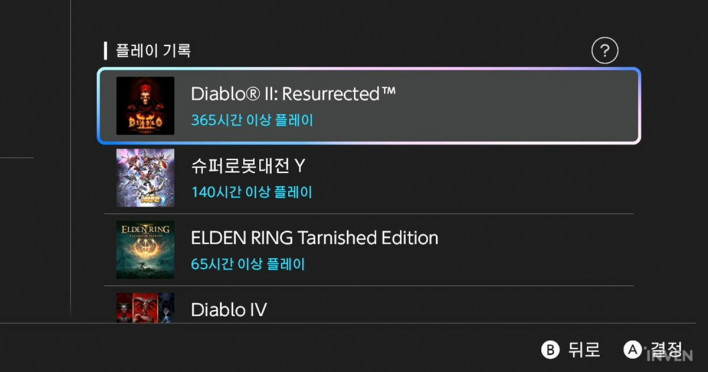
Grinding games can be deeply immersive for long sessions, but because they focus on repetitive farming, gameplay often centers on doing short, quick runs. Pulling out your device anywhere, doing a quick farm, and getting lucky with the exact piece of gear you wanted—that thrill is hard to put into words. At the same time, controls aren't entirely trivial, so a touch screen like a smartphone just can't deliver that satisfying tactile feel.
With that mindset, diving into the Switch 2 version of Diablo IV proved to be a game that delivered better-than-expected performance in many ways and satisfying gameplay, alongside some systemic disappointments that even the Switch 2 could not resolve.
Disappointing visual flair, satisfying smoothness Diablo IV on Switch 2: a single toggle changes everything
When looking at graphics on the Nintendo Switch 2, people generally take one of two perspectives: whether it maintains visually satisfying graphics, or whether it delivers smoother frame rates over graphical detail.
Early Switch 2 games lacked graphical flexibility. Aside from titles like Cyberpunk 2077, which had extensive multi-platform porting experience, most games simply took assets from existing console or PC builds and scaled down the settings. While the presentation remained similar, the hardware limitations meant you couldn't enjoy the game at playable frame rates.
However, thanks to DLSS utilizing the Nvidia Arm chipset, development optimizations in game engines, and optimization efforts that went beyond simple platform ports by shaving down object counts, it has become common to see AAA open-world games running relatively smoothly.
This matters because no matter how much frame interpolation technology you use to smooth out gameplay by generating extra frames in between, input lag inevitably arises during the generation and output timing of those artificial frames. Technical specifics aside, the core issue remains: the game itself needs to maintain a reasonably stable native frame rate for comfortable play.
Diablo IV divides its graphics setup quite simply: by toggling Enhanced Visuals on or off in the Graphics & Performance menu.
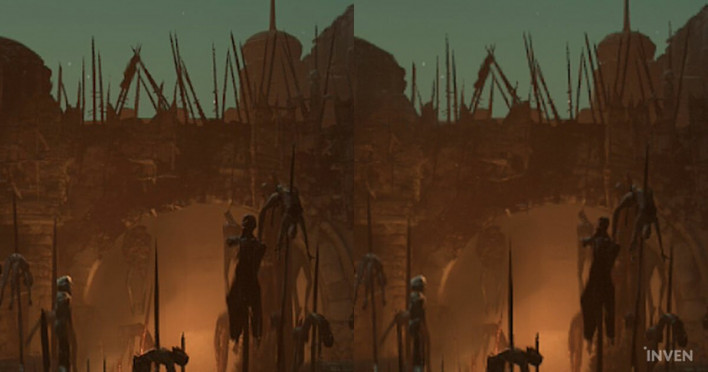
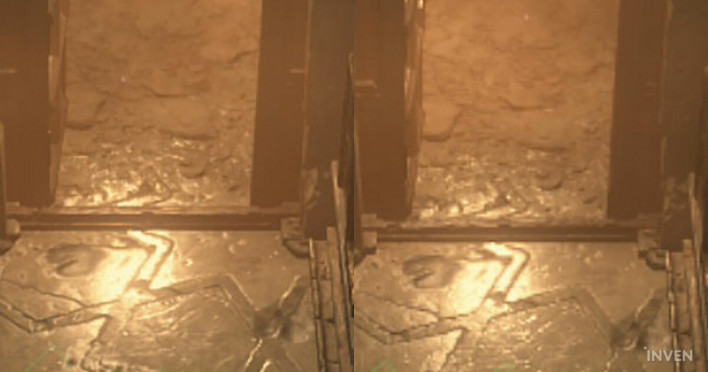
The default-enabled Enhanced Visuals option improves ray-traced shadows and reflections alongside fine details like hair and fur, but targets 30 fps. 30 fps is a standard console target for certain demanding AAA games, and once your brain adapts, it's plenty playable. Considering the Switch 2's low power consumption, the visual quality—especially the lighting—is quite impressive.
However, keeping this option on leads to occasional frame drops, making truly smooth gameplay difficult. The sluggish input response caused by higher frame times is also disappointing.
Conversely, turning the option off yields a fairly stable 40 fps. While 40 fps is only 10 frames per second higher than 30 fps, in terms of frame times it sits halfway between 30 fps and 60 fps, offering a distinctly smoother feel. If you primarily play in handheld mode, it delivers a more than enjoyable experience on the smaller screen.
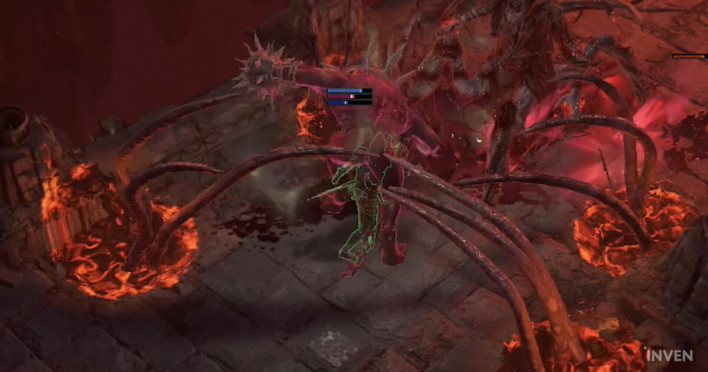
Although death penalties have lessened with each iteration of the Diablo series, a single mistake can still kill you on higher difficulties. Smooth frame rates and low input lag are crucial—and all the more so in Hardcore mode, where a single slip-up means permadeath for your character.
Of course, if your benchmark is PC, PS5, or Xbox Series X, the lower resolution and loss of detail from upscaling are inevitable drawbacks.
Finally able to slay Diablo Season 15 sneaks in 30th-anniversary nostalgia
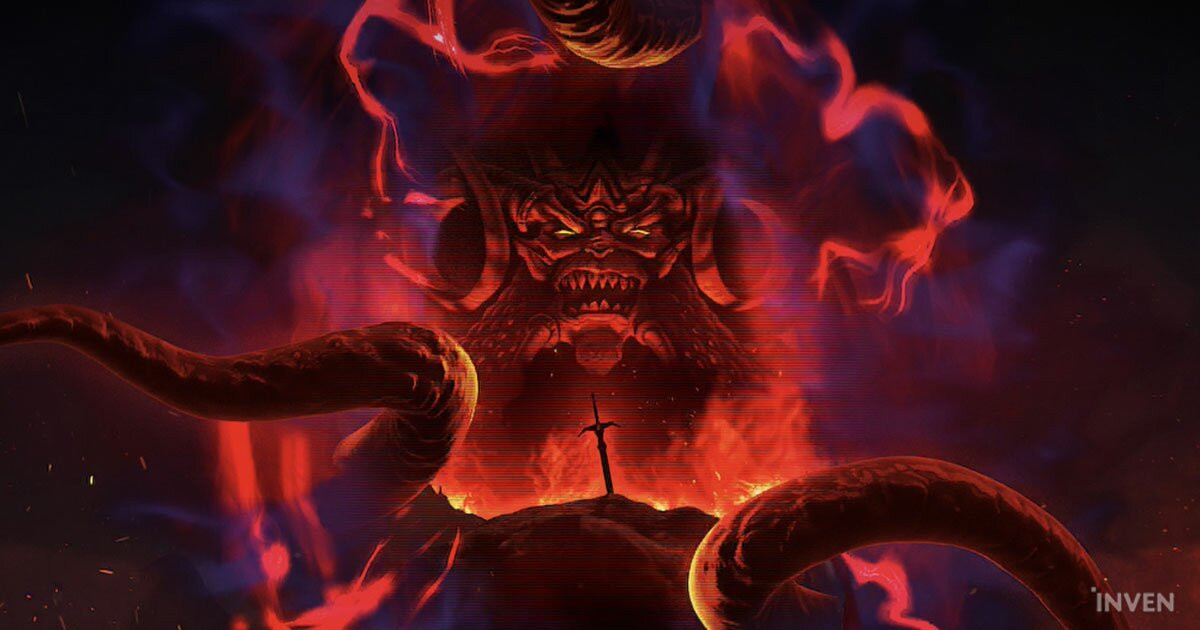
Anyway, you play Diablo, but as everyone knows, Diablo himself was nowhere to be found. The main overarching narrative of this installment revolved around the "Age of Hatred"—where Mephisto, the Lord of Hatred and one of the Prime Evils, resurrects using Akarat as a host before being banished by the protagonist's party.
The base game campaign ultimately never got around to Diablo's own story. That disappointment is addressed to some degree by Season 15, "Season of Hell's Legacy."
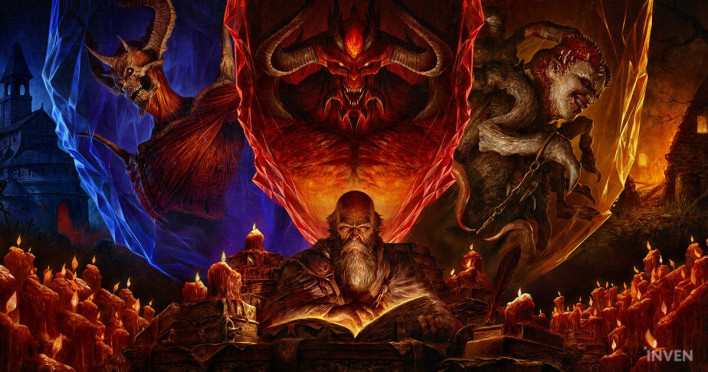
The late Deckard Cain appears as a spirit to kick off the main seasonal quest, alongside past hosts of the Prime Evils such as Aidan and Tal Rasha, as well as several legacy NPCs. Confrontations with the series' iconic demons have also been reimagined. Rather than directly continuing the main story, it serves more as commemorative content celebrating Diablo's 30th anniversary.
Yet facing Baal at the Worldstone Keep or visiting Tristram where long-deceased NPCs like Griswold are still alive naturally takes you back to elementary school days spent playing Diablo I. Filling a narrative that practically felt like "Mephisto IV" with nostalgia-inducing content helps make up for earlier shortcomings.
On top of the seasonal mechanics emphasized in each Diablo IV season, several key elements from past entries have been added—most notably the Splinters of Evil, which harness the powers of Diablo, Baal, and Mephisto and trigger various effects during gameplay.
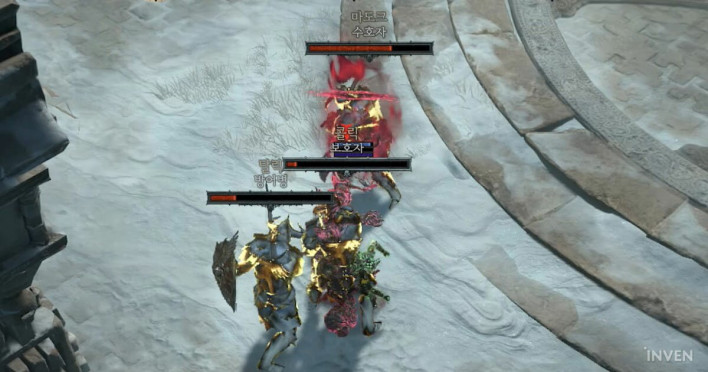
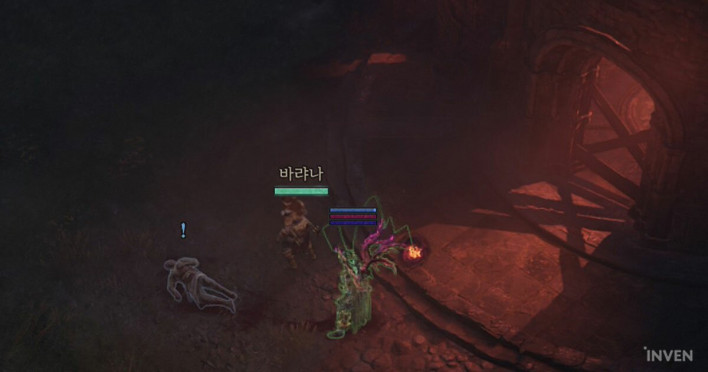
In addition, runewords like Stealth and Enigma—welcomed by any Diablo II player—have been introduced, along with familiar legacy items like the Stone of Jordan (better known to veterans as the SoJ). Mechanics like farming the three Prime Evils for Annihilus charms or Hellfire Torches bring back the vibe of classic Baal runs.
It might not push the main campaign forward, but being able to actually fight Diablo again makes this season meaningful in its own right.
Always-online required An internet connection that couldn't be dropped, even on handheld
Of course, there are downsides. The blurry visuals stemming from the Switch 2's hardware limitations are inevitable. The hazy image even prompted overseas gamers to coin the nickname "Diablur," though this difference largely stems from how the Switch 2 operates as a home/docked console vs. a handheld. In docked mode, where the resolution jumps up, the graphics actually look quite crisp—though uneven frame rates remain an issue.
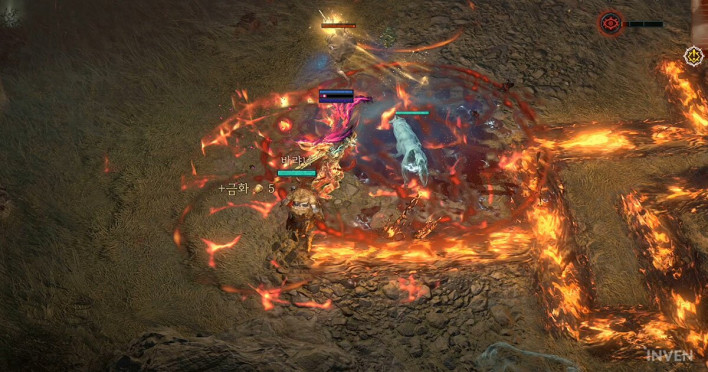
Ultimately, the value of the Switch 2 lies in playing freely in tabletop or handheld mode without remote play, rather than sitting exclusively in docked mode. A bigger disappointment comes from a systemic limitation of Diablo IV itself: the lack of an offline mode.
While the Switch 2 supports Wi-Fi 6 for solid connection speeds on portable networks—and tethering via smartphone works well enough for on-the-go play—the mandatory online requirement means playing on an airplane during international travel is practically impossible.
For stationary platforms like PC, this is less of an issue, but on a handheld device, it's a major shame. Online play enables seamless cross-platform play—letting you level a character on the go and continue playing in docked mode or on a high-end platform at home. Yet an offline mode could have offered a distinct experience untethered from internet connectivity, much like Diablo II: Resurrected did.
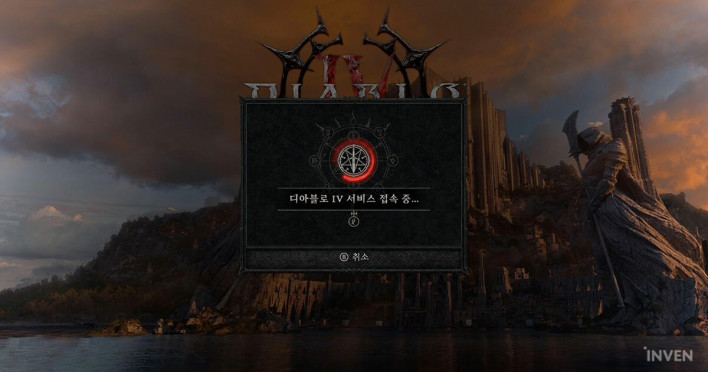
On the bright side, putting the system into sleep mode doesn't disconnect you immediately. In Elden Ring's online mode, entering sleep mode boots you straight to the main menu. Of course, like other versions of Diablo IV, idling without input for a while will still log your character off.
Three remaining years with Diablo IV The future matters even more for Blizzard
For fans, Diablo IV may end up feeling like a game with a somewhat disappointing conclusion. Even as the developers steadily refined the core farming and content loop to fit a new direction, the next story chapter is slated to jump to Diablo V in 2029. With the fall of Sanctuary already foreshadowed, there is little certainty over how deeply future Diablo IV updates will be able to flesh out new story arcs.
Still, between the Nintendo Switch 2 expansion, substantial updates like Season 15, and the upcoming addition of the Amazon, there is content both already delivered and still on the horizon. Keeping that momentum going is up to the Diablo development team and Blizzard.
Well, that future might still be a long way off, so for now, I'll just lie back down and slay a few more demons before worrying about it.