In the fighting game final at the 2026 Aichi-Nagoya Asian Games, held on the 26th at Aichi Sky Expo, South Korea defeated Japan 5-2. Trailing 1-2, South Korea rallied to win four consecutive sets in a dramatic comeback victory. Bae "Knee" Jae-min for Tekken 8, Lee Gwang-no for The King of Fighters XV, and Yeon Je-gil for Street Fighter 6 claimed the gold medal together. A miracle in Nagoya forged by a team with an average age of 41.
Bae Jae-min and Yeon Je-gil both faced opponents they had lost to in their initial matches and came out victorious in the rematches. Lee Gwang-no won both of his matches, holding the line to prevent the team from falling further behind. What did they notice in their initial losses that enabled them to triumph in the following games? Here is an in-depth look at their story—from character selections and opponent analysis to the players' mindset.
A Chance That Might Never Come Again: Wearing the Taegeuk Mark
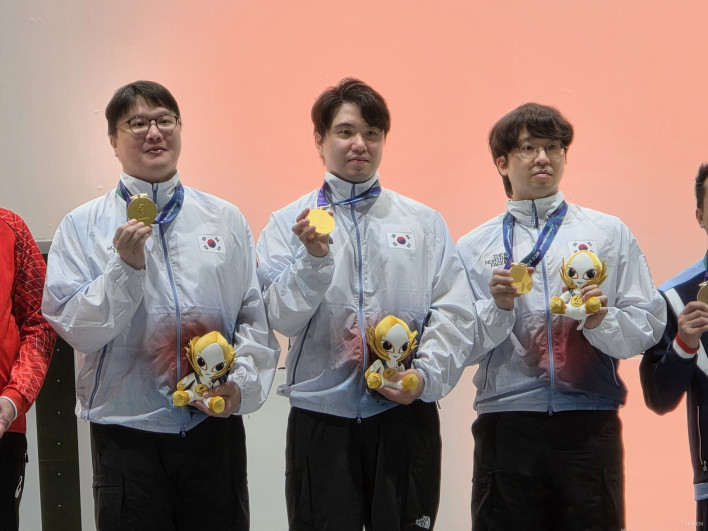
Bae Jae-min was pleased from the moment fighting games were included in the Hangzhou Asian Games. It was already a welcome development that Street Fighter continued as an official event following Hangzhou. But then came the news that Tekken and The King of Fighters would be combined with it for a team event. Combining three games into a single event was unfamiliar, but it gave "Knee" a chance to compete for the national team.
In the national qualifiers, he competed against his own DRX teammates. Bae had mixed emotions, but he was thrilled to earn his spot on the national team. He could not know whether his main title, Tekken, would return in the next Asian Games, so he had to make the most of this opportunity.
"You never know if there will be a next time. I really wanted to represent my country."
Wearing the national emblem held long-standing memories for Bae Jae-min. Whenever asked about his most meaningful and memorable tournament, he always pointed to WCG 2010 because of the overwhelming emotion of winning a medal as a South Korean representative. At this Asian Games, however, the pressure was even greater than back then.
"Back at WCG, I wasn't even competing under the title of a professional player. It felt more like an arcade player competing under the national flag," Bae explained. "Now, as an active pro player for DRX representing South Korea, the mindset felt completely different."
It was a stage watched by far more people, where even those unfamiliar with gaming could understand the significance of the result. For Bae, this gold medal was bound to be special.
The Strategy That Delivered Gold: Head Coach Kang Sung-hoon Assigns Distinct Roles to Three Players
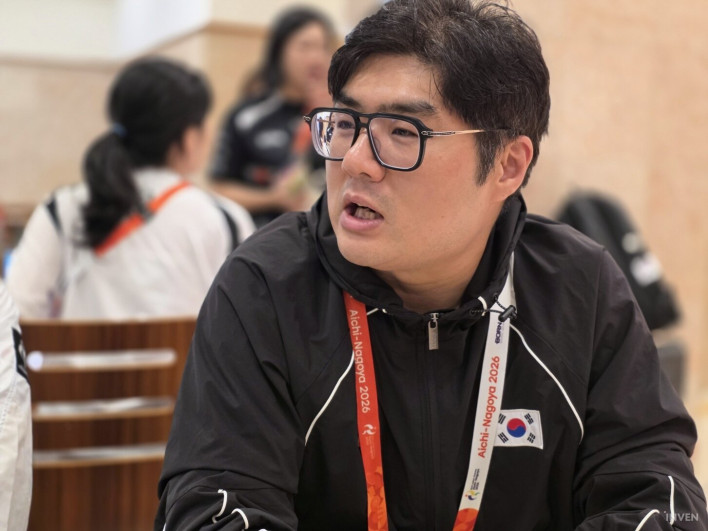
The final was played in a best-of-nine format, where the first team to win five sets claimed victory. Each set consisted of a best-of-three match in a single title. The three titles had to be featured once in every three-set block. The choice of the first title was determined by a coin toss, after which the team that lost the previous set selected from the remaining titles, or the final title was automatically assigned.
Head Coach Kang Sung-hoon believed that under rules where avoiding an opponent's strong title was impossible, the order of matches was crucial. Pushing back an opponent's strong title while securing the first two sets early would create an advantageous scenario. In his assessment, South Korea possessed balanced strength across all three titles. Ever since his appointment, he analyzed expected player rosters against the rules to prepare for every potential scenario.
Heading into the final, he planned to secure the first point with The King of Fighters XV if South Korea won the selection right, while expecting Japan to send out Street Fighter 6 first if South Korea lost it. While Coach Kang handled the complex calculations himself, he kept his instructions to the players straightforward.
He anticipated that early losses might occur for Bae Jae-min and Yeon Je-gil because both players excelled at forming a game plan after experiencing an opponent firsthand. Coach Kang described this as having "great downloading ability." The key was for the team to hold the line until they could figure out their opponents through the initial encounters.
He assigned that role to Lee Gwang-no, instructing him not to drop a single set against Japan's "SCORE." Coach Kang explained that Lee trusted his own skill and possessed the confidence to beat his opponent.
He asked Yeon Je-gil to secure just one win out of his up to three potential appearances. For Bae Jae-min, who was likely to have the chance to close out the match, Coach Kang asked him to finish the series when the time came. The concept was for Lee Gwang-no to hold down the scoring while the other two found the answers for their rematches.
After dropping the initial Street Fighter 6 set, South Korea saw Lee Gwang-no win the second set before falling behind 1-2 after losing the subsequent Tekken 8 match. This flow fell right into the scenarios Coach Kang had prepared for. The match unfolded entirely within Coach Kang's calculations, yielding the first eSports gold medal of these Asian Games.
Bae Jae-min: "When facing Japan, you have to perform"
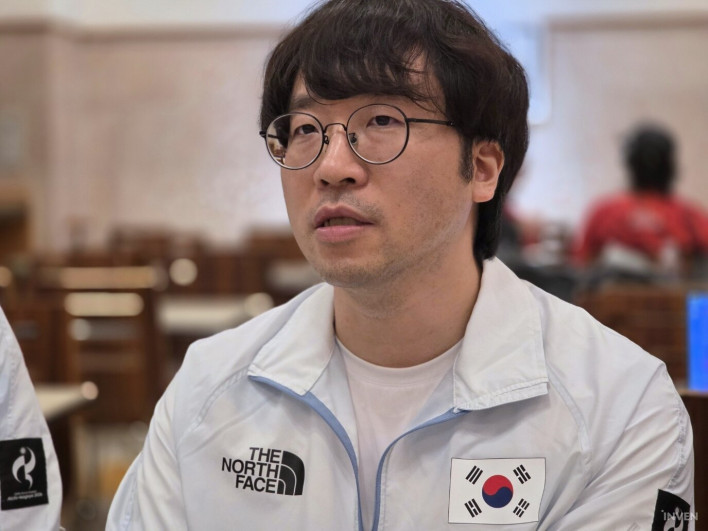
Stepping in for Set 3 with the team score tied at 1-1, Bae Jae-min anticipated that "Nobi" would pick Steve first and prepared Fahkumram. His reasoning was based on their previous encounter in Jinju, where Nobi had beaten him using Steve. His prediction proved correct. Bae took the first game with Fahkumram while also anticipating that his opponent might switch to Dragunov.
When Nobi claimed a game back with Dragunov, Bae deliberated between Bryan and Dragunov. He chose Dragunov, a character he had practiced for about a month, opting for a mirror match. However, nerves got the better of him in actual competition. He threw out more attacks than usual, but fewer hit cleanly. The momentum shifted against him.
Even for someone who had played in countless tournaments, the pressure of the Asian Games was on a different level. If he lost and gave a point to the opposing team, his teammates would have to make up for it.
"If I lost, the burden on the next player would increase. On top of that, because it was a match against Japan, the mindset that I absolutely had to perform well was overwhelming."
Returning for Set 5 after Lee Gwang-no leveled the team score at 2-2, Bae judged that his opponent would also be conscious of his Fahkumram. Expecting Nobi not to start with Steve, Bae started with Bryan while remaining prepared to counter with Fahkumram if Steve appeared. In practice, after defeating Dragunov with Bryan, he dropped a game to Steve, then brought out Fahkumram to win the final game, putting South Korea ahead 3-2.
After Yeon Je-gil won Set 6 to extend South Korea's lead to 4-2, it was Bae Jae-min's turn once more. In Set 7, after defeating Dragunov with Bryan again, Steve came out. Having learned what he got hit by most in the previous loss, Bae said, "I thought that as long as I didn't get hit by those same moves, I could easily win with Bryan."
If he failed with Bryan, he intended to switch back to Fahkumram. Even if he dropped the set entirely, another chance remained. Under the rules, South Korea would hold the choice for Set 8 and could pick The King of Fighters XV, which had not been used in that block yet. "I even thought that even if I lost, Lee Gwang-no would finish the job," Bae explained.
A next card was not needed. Bryan's counter hits landed repeatedly, and the final game ended in a 3-0 round sweep. Bae Jae-min won both of his rematches to secure the gold medal.
Lee Gwang-no: The Pillar Who Rescued the Team in Every Crisis
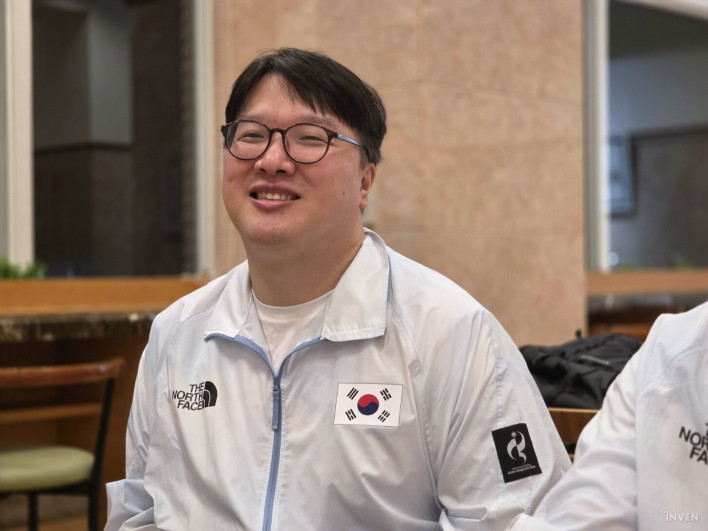
After South Korea dropped the first set, Lee Gwang-no was sent out for Set 2. Although he claimed the first game, "SCORE" took the next game to equalize the game score. When South Korea fell behind 1-2 overall, it was again Lee who stepped up. True to form, he equalized the score each time, serving as a reliable backbone for his teammates.
Lee observed that his opponent was well-prepared for his familiar character team. Since his main lineup was widely known, he anticipated they would prepare for it and felt that preparation during the match. He noted that his own condition wasn't bad; rather, because the opponent was countering his standard lineup effectively, he brought out a different prepared option.
That character was Najd. By deploying a character he liked and had practiced extensively, he reclaimed momentum. Taking the final game, he closed out the set 2-1, tying the team score for South Korea at 1-1.
Set 4 of the final was critical for South Korea. Had Lee Gwang-no fallen here, team momentum could have collapsed uncontrollably. Yet Lee stated that he felt no pressure stepping into the match.
"If I lose, I lose, and if I win, that's great—I've always played without pressure with that mindset," Lee said. "I have confidence in my skill. As long as I'm in good condition, I can beat anyone."
Lee Gwang-no showed tremendous confidence and backed it up with pure skill.
His confidence was tied directly to his preparation. He sparred against the characters his opponents used with multiple practice partners, repeatedly honing his block-punishing and defensive techniques. That was why, even when trailing 1-2, he remained confident he wouldn't lose as long as he played to his true level and condition.
Lee also won Set 4, tying the team score at 2-2. Both of his set victories came when South Korea was behind. Throughout the interview, Bae Jae-min and Yeon Je-gil repeatedly mentioned how amazingly Lee played and how reassuring his presence was.
Overcoming PTSD: How Yeon Je-gil Endured Driven by "Revenge"
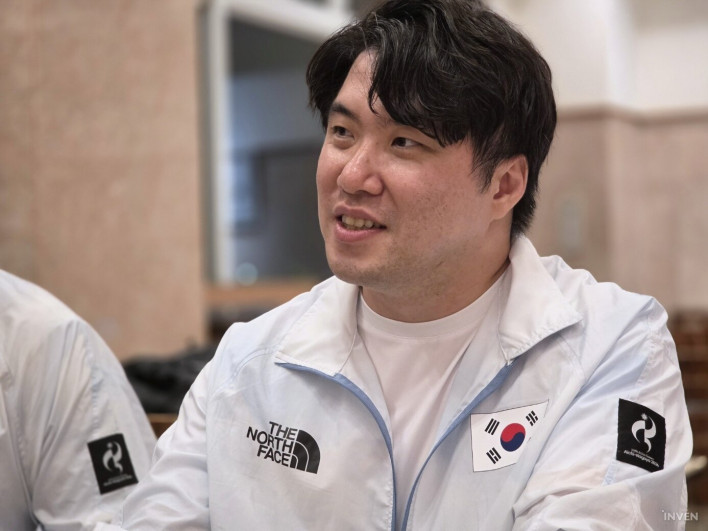
For about half a year after Hangzhou, he struggled to breathe whenever he lay down to sleep. He spent six months like that. Yeon Je-gil confessed that, looking back, those were symptoms of PTSD. What kept him from giving up was his desire for "revenge."
"I didn't want to remain defeated like that. And I had my wife, who supported me through it."
Although the Asian Games event transitioned from Street Fighter V to Street Fighter 6, Yeon Je-gil's skill remained top-tier. He admitted that compared to Hangzhou, his actual skill hadn't changed drastically. What had changed was his mindset.
He confessed that during Hangzhou, hearing others call him a gold medal contender led him to complacently assume he would land on the podium. This time, determined to become mentally tougher, he received more mental coaching than his two teammates. Psychological counseling proved to be an immense help to him.
When he lost 1-2 in game score to "Higuchi" in the final's opening set, Yeon was already thinking about the next match. Coming back to his teammates, he told them, "I think I can win next time." Having faced him directly, Yeon felt confident he could hold his own.
What he noticed were Higuchi's offensive and defensive habits. Observing that Higuchi frequently used invincible reversals, Yeon realized he needed to bait and block them. He also reflected on how he had rushed when he was just one hit away from winning. Remembering how his opponent walked backward, Yeon devised a plan to target low attacks in their next clash.
Bae Jae-min had noticed the same thing. Yeon shared that Bae advised him, "You had won that game, but lost because you couldn't stay patient." His teammate highlighted the same impatience Yeon had identified when reviewing the first match.
When he faced Higuchi again in Set 6 with South Korea leading 3-2, Yeon was confident he would win. By countering his opponent's habits and refusing to rush, he even picked up a Perfect Round without taking any damage. As Yeon pulled off the upset, momentum swung rapidly in South Korea's favor.
After winning, he felt he had done his part. "I believed the other two would get two wins each," Yeon said. Trusting in Bae Jae-min and Lee Gwang-no to win their matches, he aimed to contribute the single point tasked to him.
45 Sparring Partners Alone: The People Behind the Gold Medal
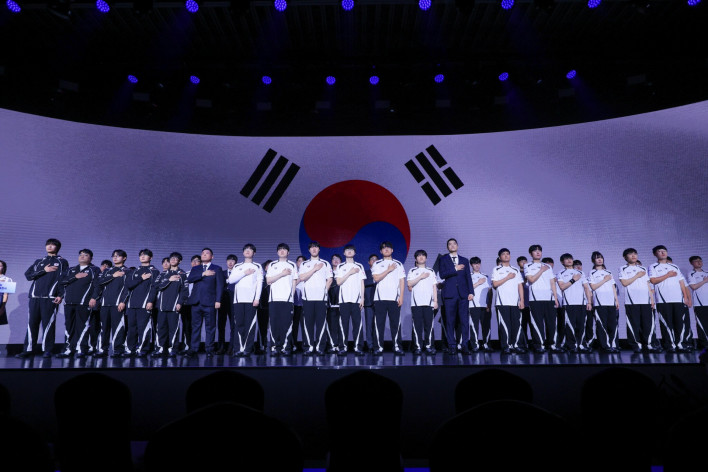
The preparation described by the players for the final incorporated the time and effort of many people. According to Head Coach Kang Sung-hoon, a total of 45 sparring partners across the titles personally visited the training camp in Busan. Top domestic players volunteered their time to serve as practice partners for the national team. Coach Kang expressed his gratitude to the players who readily traveled to Busan, especially Seo Jin-woo and Kang Myung-goo, who stayed for an extended period and remained until the end.
Bae Jae-min explained that top-tier players don't normally practice together all the time. He expressed his gratitude to those who gave up their own time for the Asian Games to act as practice partners and offer advice.
Support that enabled sustained training was also crucial. Bae noted that practicing eight hours a day for several days caused wrist pain that made playing difficult, but receiving physical therapy at the training camp allowed him to continue practicing. For Yeon Je-gil, mental coaching was key to refocusing after his initial loss. Managing both body and mind was an integral part of tournament preparation.
Lee Gwang-no stated that because the head coach handled all the preparations, he was able to focus entirely on playing without worry. He repeatedly expressed gratitude to the practice partners and three physical therapists who aided their training. Bae Jae-min expressed his thanks to association officials, support staff, his teammates at DRX and on the national team, and his wife, who trusted and waited for him for a month.
The first person Yeon Je-gil mentioned was also his wife. While he, who usually looked after their child, was away from home, his wife juggled working from home and childcare. He said that without her taking care of their child in his place, this challenge would have been impossible. He also expressed his thanks to Seo Jin-woo, who helped extensively with training, and to the physical therapists.
When he checked his phone after winning gold, congratulations from his family were waiting first. During a video call with his son, Yeon Je-gil saw him smiling and celebrating his father's gold medal. "Seeing my son so happy made me even happier," he said with a joyful smile.