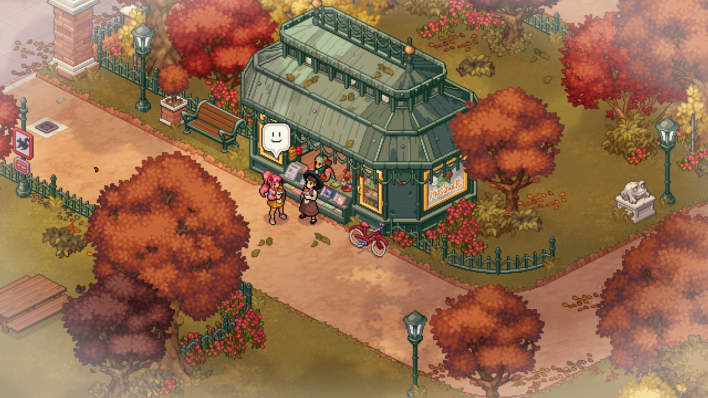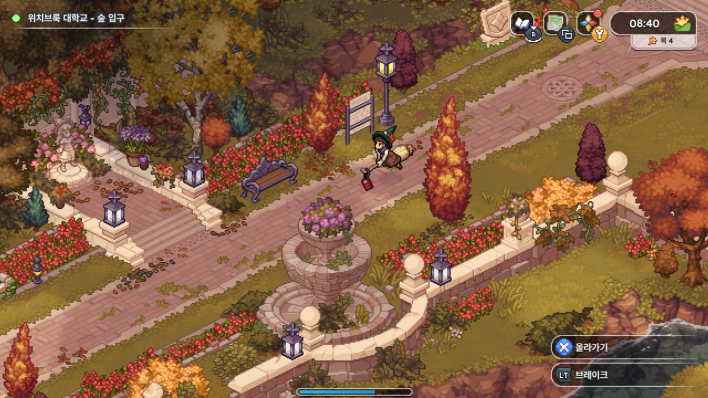
Chucklefish, well known as the former publisher of 'Stardew Valley' and developer of 'Starbound', hosted a hands-on demo session for its new title 'Witchbrook' targeting media and industry professionals at TGS 2026.
'Witchbrook' first drew attention by combining a Stardew Valley-esque life simulation with the setting of a magic school. Rather than depicting medieval fantasy wizards, it showed magic coexisting within modern life, bringing Harry Potter to mind. The trailer revealed during Nintendo Direct 2025 gave a clear taste of its unique atmosphere—showing players learning spells at magic school and socializing with fellow students, as well as flying through the sky on a broomstick before riding down roads on a scooter.
However, because it had been in development for a long time since its initial reveal in 2018, and its release—originally announced for 2025—was delayed, anticipation was mixed with concern. While the idea of living at a magic school is alluring, one couldn't help but wonder how that daily life would actually unfold in-game.
Lasting about 40 minutes, the demo was too short to answer every question. Though I moved between the magic school and town, meeting people and trying out various activities, it felt like I had only skimmed a fraction of its world. Still, I was able to catch glimpses of the care put into crafting a witch's daily routine.
The demo took place shortly after the protagonist enrolled in magic school, set during autumn. With a date scheduled with a classmate, players were given the freedom to spend their time leading up to and after the appointment however they wished. When hearing "magic school," one might expect a structure centered on attending classes and learning spells one by one, but in practice, it felt much closer to hands-on experiential learning through direct activity in school and town.
As a result, I was initially a bit at a loss as to where to begin. Direction wasn't immediately provided by going to the next class or completing set assignments in order. Browsing through the menus showed many empty spots yet to be filled since it was still early on. Sorting out what I could do right away from what I had yet to learn, I started by simply exploring the surroundings.
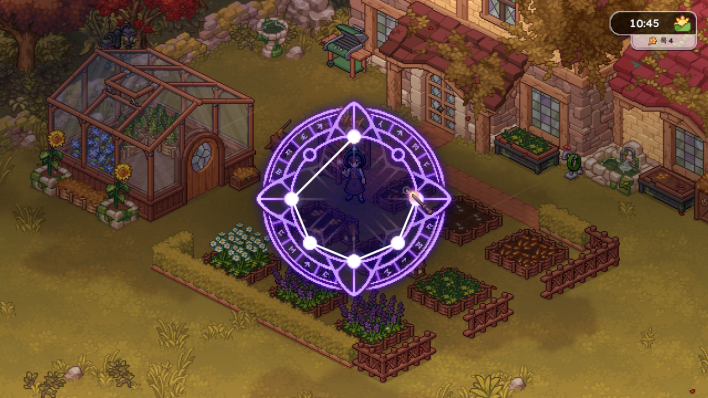
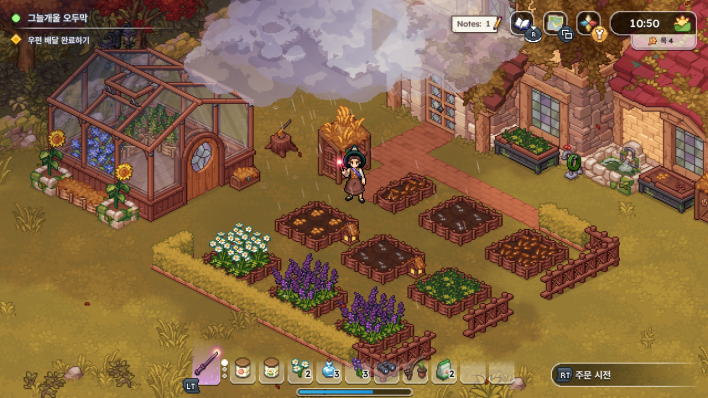
In doing so, the control scheme for casting spells was what first truly made me feel like a magic user. Spells are cast by moving the stick over a magic circle, capturing the feel of waving a wand rather than merely pressing a skill icon. Everyday magic—such as summoning a broomstick, scanning surroundings, or harvesting crops—also incorporated this process.
Of course, in terms of sheer convenience, it was more tedious than using a single button press. Casting spells interjected whenever moving around or examining something. Yet it was effective at conveying the sensation of working magic with a wand. While players initially learn the motions by looking at the magic circle, once accustomed, it feels like one could swiftly trace out necessary spells by muscle memory.
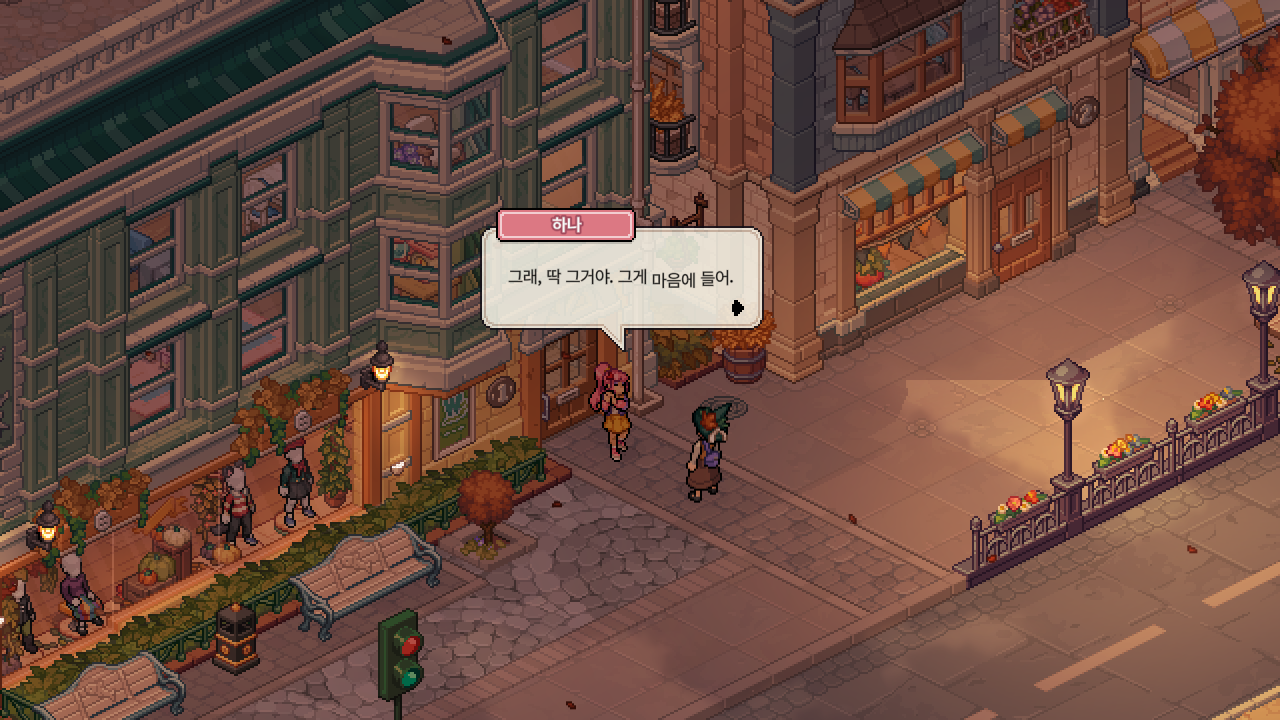
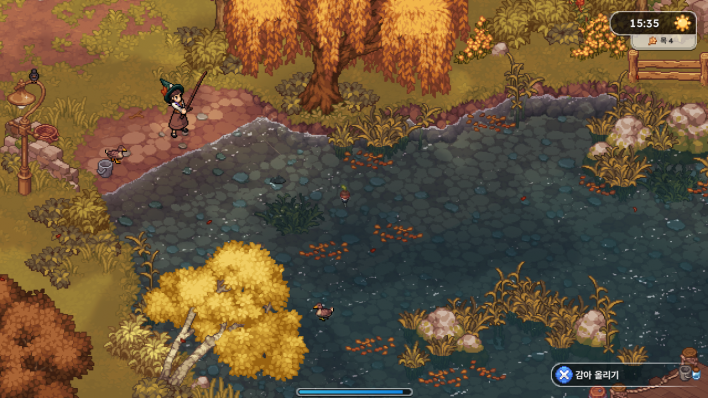
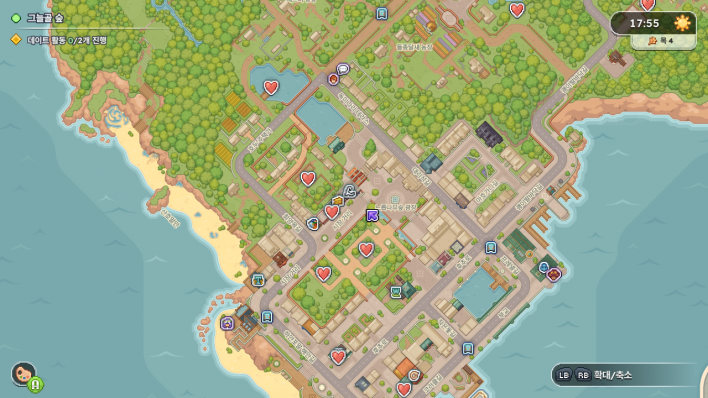
Magic's utility wasn't limited to combat or specific tasks, either. During unstructured time, players could roam freely around town to deliver mail for the post office, study with friends, fish, or catch bugs. These are familiar life-sim activities, but weaving magic into the process transformed them into something slightly different—starting with the fact that part-time delivery work is done aboard a broomstick.
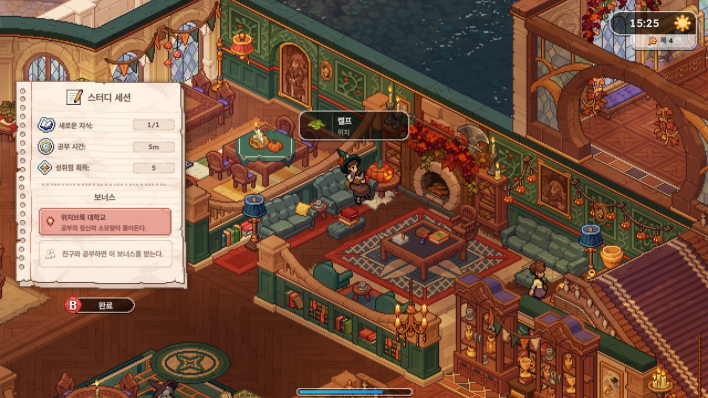
Beyond earning money or materials, these activities tied directly into magical training. Studying with a friend yielded different knowledge depending on who you studied with, where you studied, and that friend's specialty. Even for the same studying session, there was room to consider who to bring along and where to go. Socializing with fellow students wasn't just social interaction; it directly influenced what the protagonist learned.
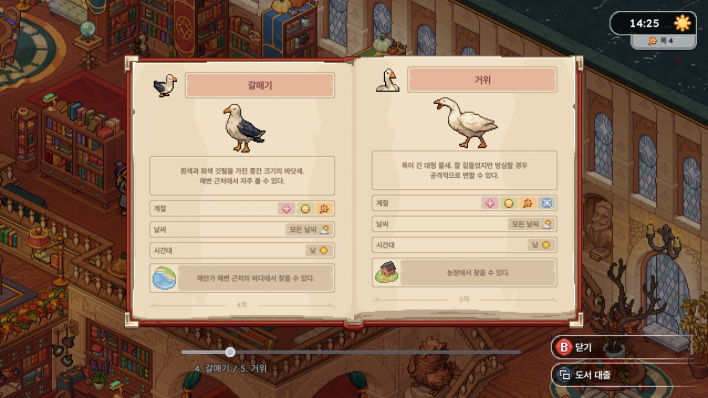
Fishing and foraging gathered materials needed to craft items with magic while also increasing stats in related schools. You didn't necessarily have to sit in a classroom to learn magic. Time spent with friends or gathering ingredients outside town served as part of your training. Using what you learned in school during daily life, and learning further through that daily routine, was the core loop of magical school life portrayed in 'Witchbrook'.
However, none of these activities were over with a quick click. Instead of instantly harvesting something upon discovery, intermediary steps were required—such as observing objects with binoculars to gain knowledge or casting specific spells. While one might expect magic to reduce effort, acquiring knowledge about spells and surrounding objects required its own share of effort.
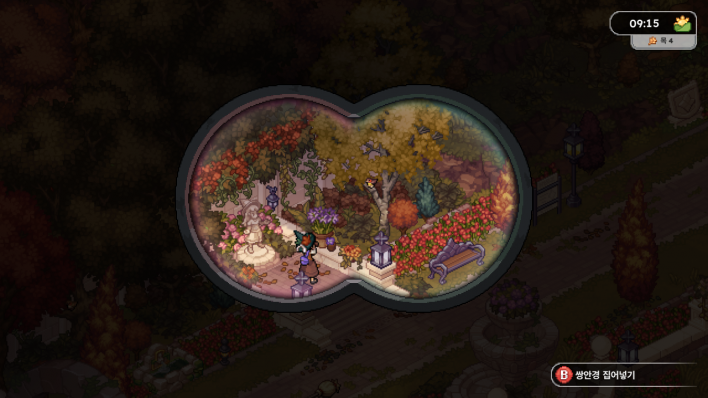
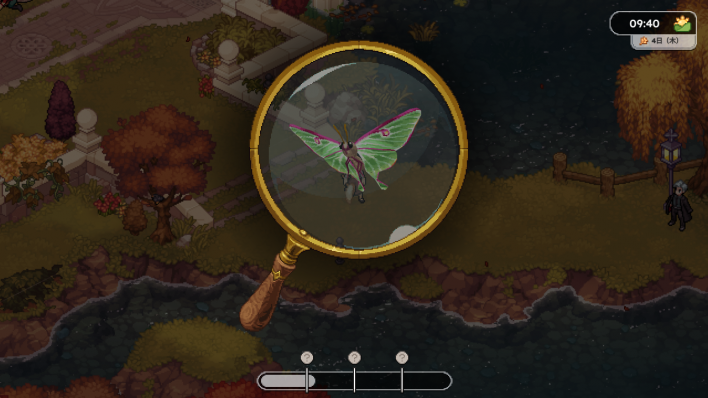
From the perspective of trying to test multiple features within a short demo session, these steps felt somewhat tedious. Getting familiar with what was possible while going through observation and spellcasting procedures meant progress to the next activity wasn't as fast as expected. Whether these controls remain an enjoyable part of daily life or become repetitive steps players wish to skip once accustomed will require longer play to evaluate.
Once I slowed down the pace and started observing my surroundings, however, other details caught my attention. I gained clues by conversing with town NPCs and built knowledge by re-examining the environment based on those conversations. It was less about rushing through immediate tasks and more about gradually learning who lives here and what can be done.
Magic worked the same way. Since spells have applications in various situations, learning more magic in the future promises new ways to interact with places or objects previously bypassed. Though many things could not be attempted in this demo due to unlearned spells, it meant just as much potential remained for fresh discoveries within the school and town.
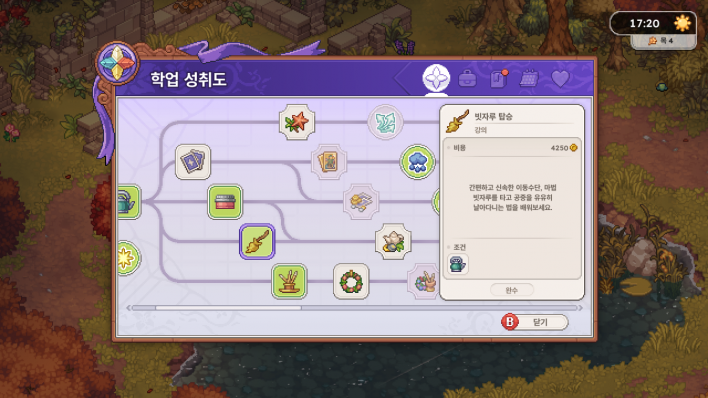
It also raised curiosity about whether this daily life would remain peaceful throughout. Among the spells were ones related to exorcism. While the demo didn't reveal their specific uses or associated events, it hinted that situations beyond wandering town and studying with friends await. The magic and knowledge quietly built up might eventually serve as a tool to uncover what lies beneath the surface of everyday life.
What I experienced in 'Witchbrook' was a game less about accomplishing a vast checklist in a short span and more about slowly settling in by observing your environment and socializing with people. Although finding things to do was initially tricky and casting spells or harvesting felt slightly tedious, the direction—connecting each individual action to the fantasy of living as a witch—was clear.
I left feeling a bit disappointed that my lack of magic training prevented me from exploring the world more thoroughly. Yet, delivering mail on a broomstick, studying with friends, and accumulating knowledge through observation offered a vivid preview of the daily routine to come. Adding magic on top of classic life-sim nostalgia, 'Witchbrook' raises high expectations for what kind of school life—and stories beneath the surface—it will deliver upon official release.