At the Japan Game Awards on September 15, 2026, Masahiro Sakurai—the renowned developer of the Super Smash Bros. series and head of the judging committee—took the stage for the final ceremony of the Game Designers Award, which spanned 16 years. After presenting the award, he explained why he was bringing it to an end. There was no grand reason. There was simply no one to replace him. That was truly all.
It is a simple statement. Yet it is also one that cannot be dismissed as mere personal circumstances. New games continue to come out even now. At the same time, the platform that recognized them and called them by name has vanished. And that space became vacant the moment one person stepped down.
Established in 2010, the judging process for the Game Designers Award was designed to be rigorous from the start. The main awards, which are generally based on voting, cannot be free from sales figures or trends, effectively making them popularity contests. Sakurai wanted games with high creativity and novelty to leave a lasting mark, regardless of sales volume or fad. The problem was how to evaluate them. A keen eye or mere knowledge was not enough. To evaluate creative game design, the evaluator themselves had to be someone who had personally created innovative designs—those within the game industry who had actually brought something new into existence. He believed only people with that experience could serve as judges.
That is why this award was never a one-man show from the beginning. Over the years, the panel of judges was formed with leading Japanese developers joining and rotating off, including Kazutoshi Iida (Aquanaut's Holiday, Tail of the Sun), Jiro Ishii (428: Shibuya Scramble), Shinji Mikami (Resident Evil), Goichi Suda (No More Heroes), Kazutaka Kodaka (Danganronpa), Fumito Ueda (Ico, Shadow of the Colossus), Hideki Kamiya (Bayonetta), Keiichiro Toyama (Silent Hill, Siren), Yoko Taro (NieR), and others. Toby Fox, famous for Undertale and Deltarune, also served as a judge. In its final year, eleven people sat together on the judging panel.
However, bringing those people together was Sakurai's responsibility. At times, he had to reach out personally to persuade them to become judges. He even stood on the award ceremony stage to present other creators' works on their behalf. He explained that in game development, there are frantic periods akin to preparing for college entrance exams. Yet, regardless of those intense periods, the work of a judge had to be done. As long as every judge was an active developer, he could not easily delegate this task to anyone. For years, he searched for someone to take over his role, but ultimately could not find anyone.
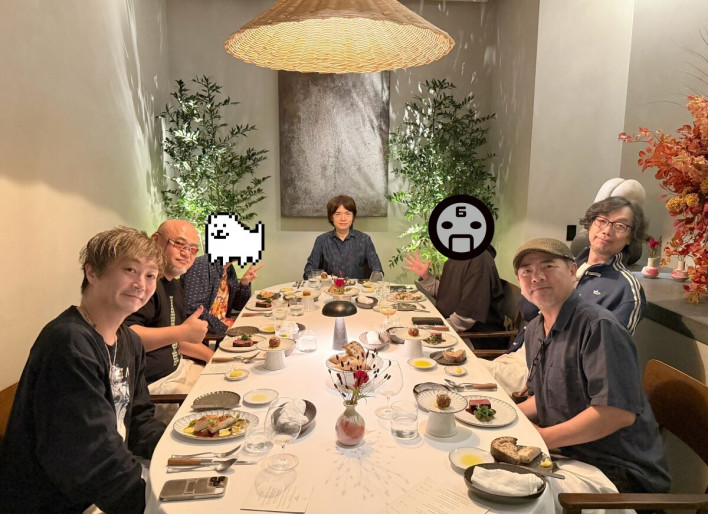
There was the platform of the Japan Game Awards and the framework of the association hosting it. However, there was no way to hand off the role of driving that engine to the next person. A track record of creating something new to prove oneself, and the trust among fellow developers who felt, "If that person asks, I'll go." That trust was tied to Masahiro Sakurai as an individual.
This is not merely about Sakurai's personal fatigue. Having no one to succeed him means that individuals possessing a specific eye for quality, industry trust, and active game-making capability all at once are exceedingly rare.
Sakurai did not stop at merely saying he would try. In 2022, he launched the YouTube channel "Masahiro Sakurai on Creating Games." He shared his expertise, planning methods, how to design fun, and practical production insights. By its final episode in 2024, the channel comprised over 200 videos and cost nearly 90 million yen to produce. Yet he did not monetize it. Knowledge he could have sold for money was offered at his own expense for anyone to take. However, trust could not simply be transferred through videos.
As Sakurai himself acknowledged as a harsh reality, originality surprisingly has little impact on sales. In terms of priority, it ranks low. As he put it, few people buy and try every new drink that appears in a convenience store refrigerator. As people grow familiar with something, they seek tastes that deliver expected results—flavors that do not deviate from expectations. Games are no different.
Yet today's familiar taste was yesterday's unfamiliar one. Kirby's mechanics of inhaling enemies to spit them out or swallowing them to copy abilities; fighting games in the style of Super Smash Bros., where damage percentages accumulate instead of health bars to launch opponents off the stage—when they first appeared, they were flavors no one might have imagined. Only after they sell, get copied by others, and become a genre do they turn into familiar tastes.
However, even those familiar things exist only because someone created them first. A market that survives on recombining ideas lasts only as long as there are ingredients to combine. When new invention stops, the industry is left merely reshuffling the ingredients it already has.
That is why Sakurai says: an industry that loses originality simply dies a slow death.
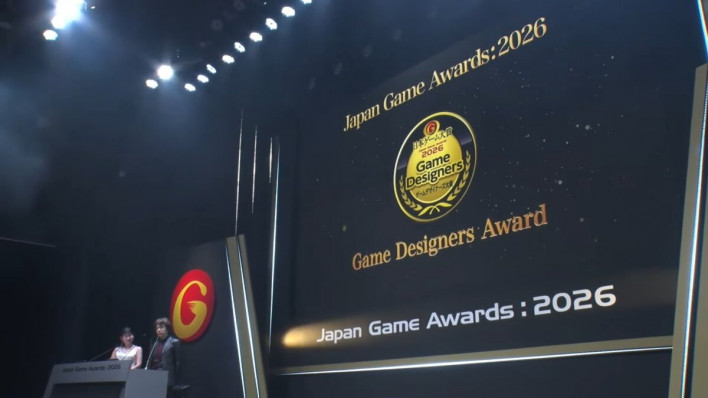
The market rewards what sells. That is the market's job, and a natural part of it. However, the market does not inherently reward innovation that does not sell. That is why mechanisms outside the market usually accompany such values—grants are one example, and awards commemorating achievements are another. Rewarding with honor what cannot be rewarded with money: that was what the Game Designers Award did. Telling a creator, "This was something only you could have made."
New games will come out next year as well. Voices hailing games through sales figures, review scores, and concurrent player counts will remain loud and plentiful. But the voice calling out to games for their novelty has unequivocally grown by one less.
Before stepping down from the podium, Sakurai spoke calmly. Yet his words ending the award carried both regret and concern. His final message on stage was a request—a plea to pay attention to novelty, originality, and what exists uniquely in a given work. That request was directed not so much at game creators, but at those who must recognize games for what they are. Games will continue to come out. The turn to call them by name no longer belongs to Sakurai.