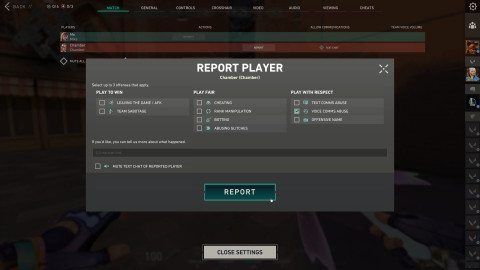
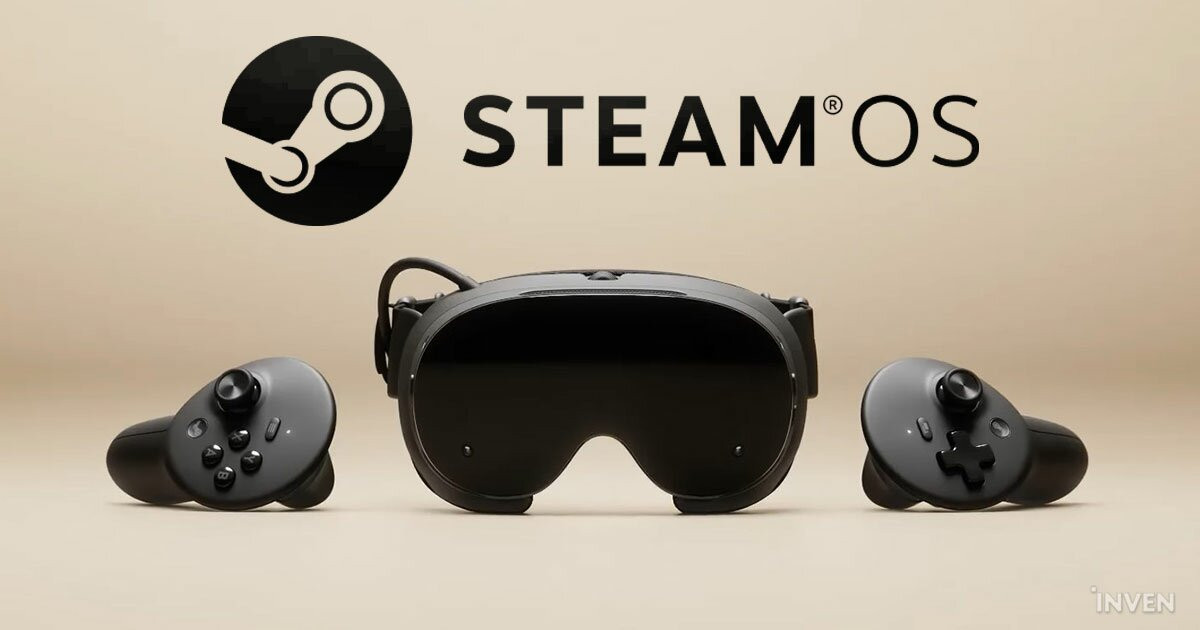
In the early hours of the 15th, Valve made a surprise announcement regarding the release of its VR device, "Steam Frame." Alongside the announcement, a wealth of details—including enhanced wireless streaming technology, a lighter headset design, and new gaming services—were unveiled, following its initial reveal in 2025.
However, what stands out even more in the unveiling of the Steam Frame is technology that goes far beyond a single VR headset. This is not a story about just one piece of hardware. It has been quietly in the works for nearly nine years without the world knowing. Furthermore, it is a technology that could crack the decades-long dominance of the x86 architecture. While it might not seem important to everyday gamers at first glance, Valve's preparation and results could prove to be more significant than anything else. We took a closer look at what this technology is, how it differs from previous attempts, and what questions it raises for the industry.
x86 Games, Arm Devices How the Handheld Gaming Era Changed the Equation
Most PC games released on Steam are built based on the x86-64 architecture used by Intel and AMD processors. Many devices classified as gaming hardware are launched with Windows OS running on CPUs utilizing this architecture. Arm, however, comes from a different root. Chips using the Arm architecture—which are commonly found in portable devices such as smartphones and tablets—include Apple Silicon and Qualcomm's Snapdragon.
The issue is that the two architectures cannot directly communicate with each other. To use a simple analogy, it is like two human beings speaking different languages due to different nationalities. x86 uses Complex Instruction Set Computer (CISC), where a single instruction can handle multi-step tasks at once. While complex operations can be performed with a single instruction, the chip architecture itself is complex and consumes more power.
Conversely, Arm uses Reduced Instruction Set Computer (RISC). This approach simplifies instruction decoding and processing by keeping instructions simple and of uniform length. Portable devices have traditionally used Arm because its low power consumption and minimal heat output make it ideal for achieving low power usage and high efficiency.
Because they speak different languages, games developed for x86 will not run if simply loaded onto an Arm chip. Traditionally, x86 was used for high-spec PCs, while Arm was used for smartphones and low-power devices. Since their use cases were divided this way, there was little need to run PC games on Arm devices.
However, the narrative shifted as Arm's power efficiency was matched by performance rising to the level of traditional x86 PCs. On top of that, running PC-scale titles such as Resident Evil 4 or Assassin's Creed Mirage on smartphones with high performance became possible. In particular, the expansion of the handheld gaming market driven by the Nintendo Switch and the Steam Deck created a market that demands both power efficiency and performance simultaneously.
And this is precisely why the technology behind the Steam Frame is drawing so much attention.
x86 Games on an Arm Chip Where the Steam Frame Takes a Step Beyond the Steam Deck
The Steam Frame primarily focuses on streaming games from a PC through various powerful wireless streaming optimization technologies. At the same time, however, it can run many games in the Steam library natively standalone without requiring additional work.
You might wonder what makes this so special given that the Steam Deck could already do standalone gaming. Unlike the Steam Deck, which houses a custom x86-based AMD APU, the Steam Frame is powered by Qualcomm's Snapdragon 8 Gen 3—an Arm chip designed for smartphones. In other words, it runs x86 games on an Arm chip. In a sense, as long as performance is sufficient, this opens the door to running x86-based PC games on smartphones or other Arm chips without any extra work required.
The key technology breaking down the language barrier between x86 and Arm is "FEX". FEX acts like a simultaneous interpreter, taking x86 code as it executes and converting it into Arm code that performs the exact same operation. FEX handles this translation in real time without touching the original game files. The moment a game calls a graphics API like Vulkan or DirectX, it immediately jumps to code compiled specifically for Arm, meaning only the game's unique code is actually translated. This process is designed to minimize performance overhead.
Accuracy is another area where FEX invests heavy effort. Certain games interact with the CPU in strict ways for anti-cheat or anti-tamper purposes. FEX was designed with the goal of achieving 100% accurate emulation to handle these requirements.
In fact, this can be seen as a case where Valve's long-standing strategy has finally come to fruition. Around 2016, Valve began gathering and funding open-source developers to run Windows games on Arm. Among them, FEX lead developer Ryan Houdek built the first prototype in 2018 and continued developing FEX under Valve's backing.
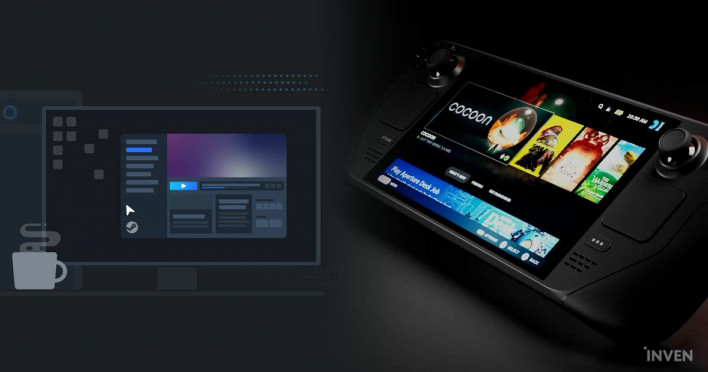
Together with Valve's existing translation layer, Proton, FEX enables an even broader scope of game execution. Proton is a compatibility layer based on Wine, which allows Windows applications to run on Linux or macOS. Utilized since the Steam Deck, Proton enables Windows games to run on the Linux-based SteamOS.
While some games could not run perfectly, a substantial number of Windows games ran on SteamOS without any modifications required. Some games even achieved higher frame rates on SteamOS. This was due to factors such as the lower background overhead of the Linux-based OS, driver optimizations, and the utilization of the Vulkan API—which carries lighter driver overhead than DirectX—via DXVK and VKD3D. On top of this, Valve added Lepton, which runs Android apps on SteamOS. This is because a significant portion of standalone VR games are developed for the Android-based Meta Quest.
Through this translation stack—where Proton adapts Windows games for SteamOS, FEX handles x86 code, and Lepton manages Android apps—all of these games are brought into a single SteamOS game library. The structure keeps a single operating system while the translation layers absorb differences in OS and architecture.
The Shaking Defenses of x86 How Chip Selection Criteria Change When Compatibility Barriers Disappear
Attempts to run x86 programs on Arm are not unique to Valve. Microsoft partnered with Qualcomm in 2016 to prepare Windows 10 for Arm. However, when the first devices arrived in 2018, they could initially only emulate 32-bit applications, and speeds fell short of expectations.
In the meantime, Apple was the first to execute a large-scale transition to Arm. In 2020, Apple switched Macs from Intel chips to its custom Arm-based Apple Silicon M-series, launching a translation technology called Rosetta 2 alongside it. However, Rosetta 2 was designed to run apps already built for macOS on Arm chips within that same macOS environment. It was a single-layer translation that kept the operating system intact while changing only the chip's language.
In gaming, a more noteworthy point of comparison is the "Game Porting Toolkit" unveiled at WWDC 2023. Based on the source code of CrossOver—a commercial product derived from Wine—it allows developers to run un-modified Windows games on Mac to evaluate performance. It resembles the Steam Frame in that it bridges both operating systems and chip languages. Notably, CodeWeavers, the developer of CrossOver, is also a long-time collaborator with Valve on Proton development.
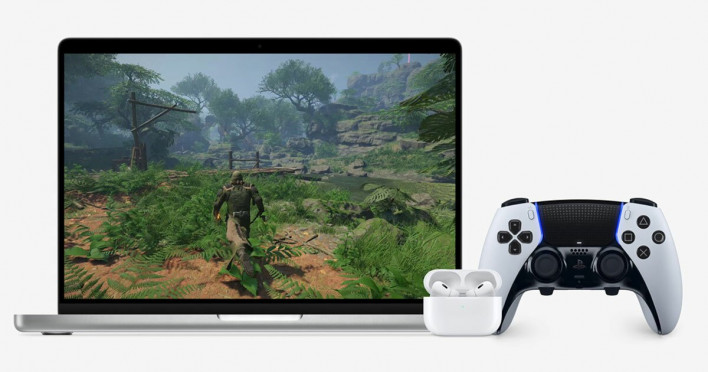
However, Apple's official stance on the Game Porting Toolkit is that it is an evaluation tool for developers. General users primarily access it through CrossOver, which integrates components of the Game Porting Toolkit.
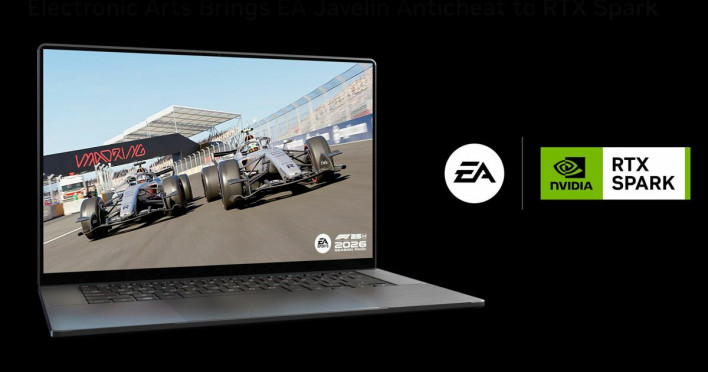
While gaming on macOS has improved significantly, it remains in a transitional phase. What is clear, however, is that Apple Silicon drastically elevated interest in Arm. As Apple Silicon chipsets maintained extremely high performance-per-watt levels, interest in Windows on Arm was reignited. Windows 11 utilizes the x86 emulator Prism, and building upon this ecosystem, NVIDIA has also promised high-spec x86 game execution via RTX Spark.
Arm, having largely shed its performance shortcomings in power-efficient smartphones and portable devices, has begun making a full-fledged impact on the gaming market. This trend is also influencing the semiconductor industry. The x86 architecture, led by Intel and AMD, risks losing its long-held advantage in game compatibility within the PC gaming market. If Arm's gaming limitations disappear, the criteria for choosing a chip could shift from compatibility to power efficiency, price, and form factor size.
Of course, this situation will not lead immediately to the end of x86. Frame stability in major AAA titles still lags behind on the Arm side. Considering the time required for hardware adoption and software ecosystems to catch up, the most likely scenario over the coming years is one where Arm expands its market share while coexisting with x86. Nevertheless, users who previously could not choose Arm due to gaming constraints will now have an alternative.
A Company Selling Neither Chips Nor OS Valve's Blueprint for Platform Expansion
When returning the focus to Valve, however, the picture changes slightly. Valve is neither a chip manufacturer nor an OS vendor. Valve makes its money from games sold on Steam. No matter which manufacturer releases what chip, as long as the Steam platform and Steam library sit on top of it, Valve makes money.
Lowering barriers so users do not have to worry about whether a game will run, while providing developers with a starting point for new devices—that alone allows Valve to win quietly. The fact that Valve released FEX (which it directly funded) under a license with almost no restrictions on commercial use, modification, or redistribution aligns directly with this goal of platform expansion.
One could also anticipate a next-generation Steam Deck powered by a highly efficient Arm processor. Valve has maintained the stance that it will not release a successor unless performance sees a generational leap. As such, Valve is unlikely to immediately consider Arm chips—whose current advantage lies in lower power brackets than the Steam Deck—for a next-generation Steam Deck. Still, depending on how circumstances evolve, it could certainly become a viable option, especially given that the Steam Frame already houses an Arm chipset.
Running games on smartphones is currently focused on Steam Link, which simply streams the game screen. However, the possibility of a native Steam app capable of running PC games directly—and executing x86 titles right on mobile hardware—is no longer entirely out of reach.
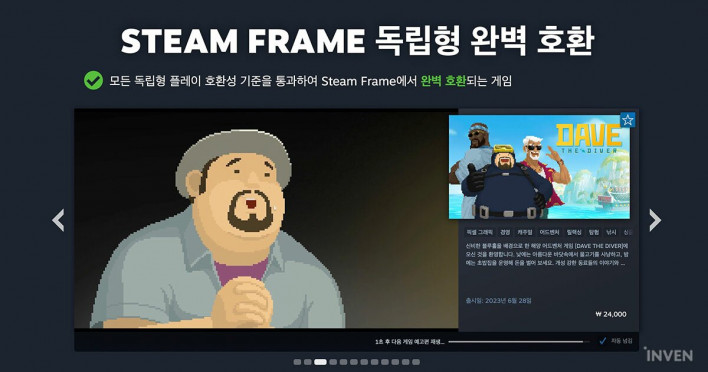
Of course, challenges remain. There is a performance loss that Valve estimates to be anywhere from 10% to 20%, alongside structural issues that need addressing, such as driver implementations and anti-cheat compatibility. Furthermore, with around 160 games certified for standalone play on the Steam Frame, it is only a start compared to the full Steam library.
Even so, the message delivered by the Steam Frame is clear: it has demonstrated that x86 PC games can indeed be played on Arm chips—not in an evaluation demo, but in a retail consumer product. As Arm PC market share steadily increases, market dynamics could shift dramatically based on who can deliver more games to developers and users with less friction.