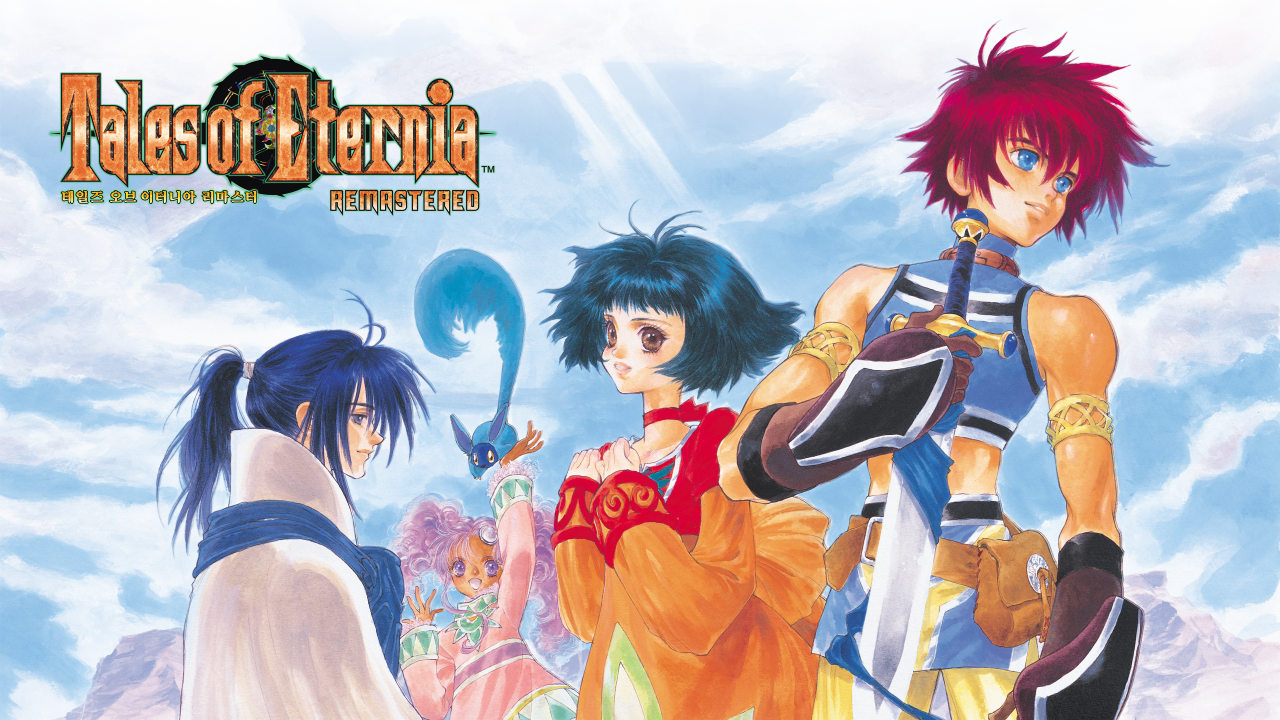
Tales of Eternia returns to players in a remastered version on October 15, after 26 years. To be precise, it would be more accurate to say that it is finally officially arriving in Korea. Neither the PS nor PSP versions were released in Korean. However, it was a title that was constantly talked about among old fans who remember RPGs of that era. This is because it laid the foundation for the Tales series, which has maintained its legacy for those 26 years. Prior to its official release, we had the opportunity to try out this monumental title at a TGS 2026 pre-event hands-on session.
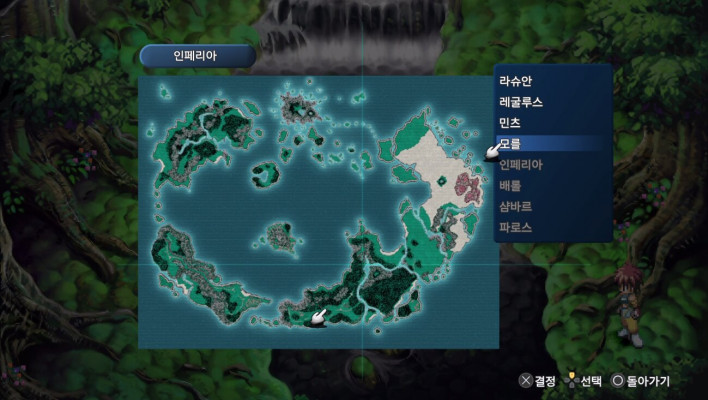
The original Tales of Eternia is set in Eternia, a world where the two realms of Inferia and Celestia face each other across the sky. Reid, a hunter from the outskirts of Inferia, and his childhood friend Farah encounter a Celestian girl named Meredy one day. At first, they experience various mishaps because they cannot communicate, but just as they start to speak each other's language and become close, they learn that a crisis called the "Grand Fall"—a collision between the two worlds—is approaching. To prevent this, Reid and his companions set out to find the Greater Craymels, which forms the main story of Tales of Eternia.
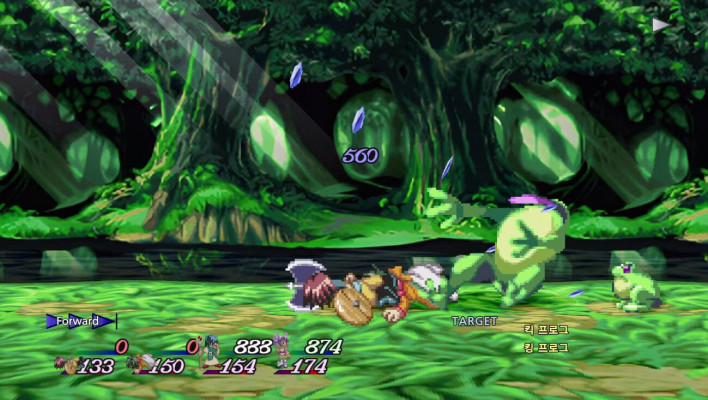

Another driving force that kept players engaged through the adventure to the very end was its unique battle system reminiscent of 2D side-scrolling action: the Aggressive LMBS (Linear Motion Battle System). The real-time combat—where players run around, jump on a side-scrolling plane, and enter commands to trigger skills—captured players' attention with its satisfying tactile feel. It wasn't just fast-paced; it presented well-structured action featuring animation cancels and combos that seamlessly transitioned between ground and air.

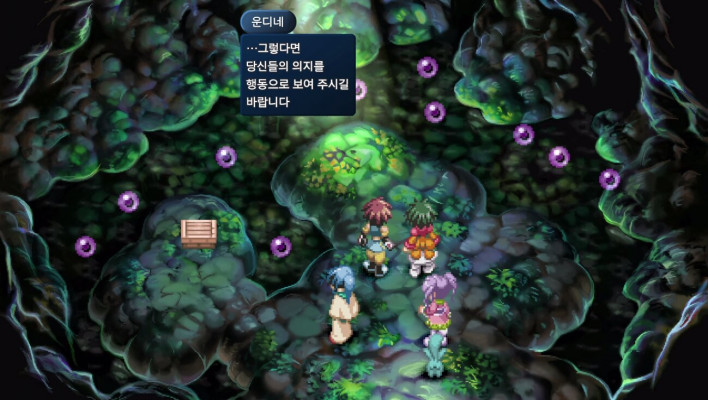
In this TGS 2026 hands-on demo, only the dungeon where players meet Undine was playable. While I didn't get to play Tales of Eternia myself back then and had only read strategy guides in gaming magazines, the 2D visuals immediately caught my eye, bringing back fond memories. Calling it a remaster when it looks just like the original might sound odd at first, but thinking deeper, achieving that is no simple task. There is a massive difference in picture quality and resolution between monitors and TVs 26 years ago and those of today. In fact, I've played ports of other 3D titles on modern consoles that weren't remastered, and they shattered even the powerful filter of nostalgia. Considering that, bringing the density of those memories intact to larger screens and higher resolutions is commendable in itself.
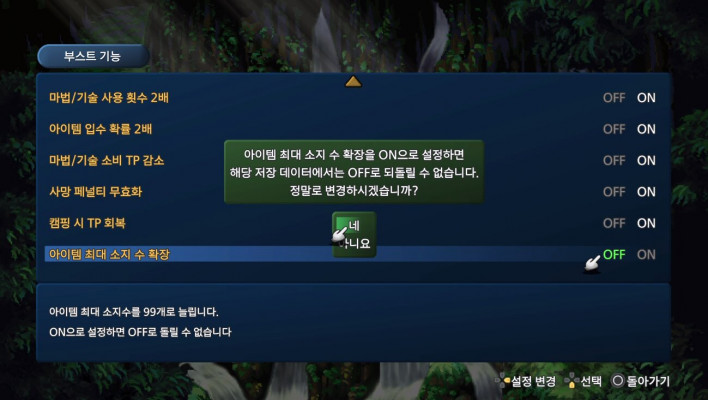
Another notable highlight is that convenience has been significantly improved. A prime example is Boost Mode, which includes destination icons to assist quest progression, an Enemy Encounters OFF option to reduce dungeon exploration fatigue, and various other features. Boost Mode goes beyond toggling encounters on and off; it allows players to customize 13 elements related to the game's pacing, including EXP gain, Gald gain, and damage multipliers. If you want to level up ultra-fast and breeze through the game, you can multiply EXP and Gald gains and even increase the damage multiplier.
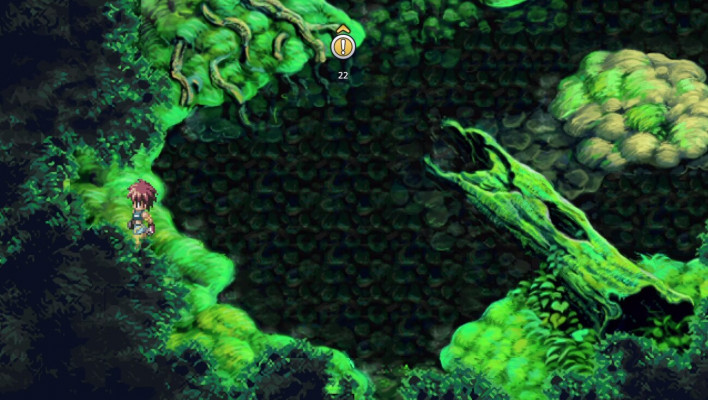
However, the damage multiplier doesn't apply only to party members—it applies to enemies as well. This means a single misstep can result in taking several times more damage. In fact, after carelessly cranking up the damage multiplier near the end to speed through, an unexpected strike from an enemy wiped out Reid and Farah in an instant. Since the demo's inventory lacked Life Bottles and visiting shops outside the dungeon wasn't allowed, the play session had to conclude after testing the Encounters OFF feature. Toggling Encounters OFF displays a prohibition icon on the right side of the screen, allowing players to search for treasure chests on the field without running into enemies.
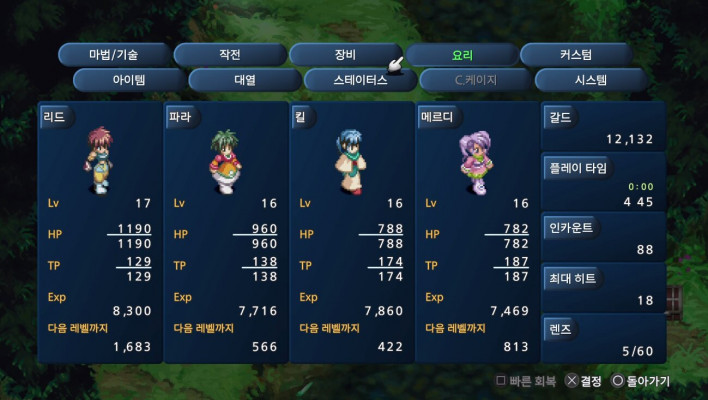
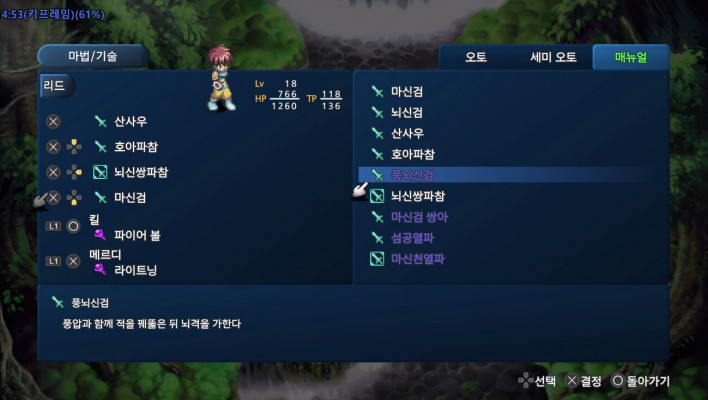
The action—busy with controller inputs to navigate the front-line system, skill instructions, and combos across the screen—remains top-tier even today. However, it also recalled how RPGs of that era required significant grinding for levels. That is likely why the developers allowed players to adjust EXP gain as well.
Going a step further, the developers increased the overall pacing by adding an Auto Battle feature that lets characters fight on their own based on preset instructions without player input, as well as a High-Speed Mode to accelerate combat. While hearing this might make it sound like the game gives up its classic flavor, it is better viewed as a supporting mechanism to handle meaningless repetition quickly. In practice, attempting to rely 100% on Auto Battle made health management rather difficult, meaning players still need to intervene periodically to use items or take manual control.
Because Tales of Eternia Remastered approaches players with such a flexible attitude, it was truly a shame that the demo time was so short. Beyond its distinct action, the characters and story are key highlights, and there wasn't enough time to enjoy them fully. Moreover, the satisfying combat truly shines when players learn various skills and experiment with different combinations, so not being able to check out that aspect was disappointing as well. Still, with the remaster launching on October 15, I look forward to seeing how this fun will carry through to the end.