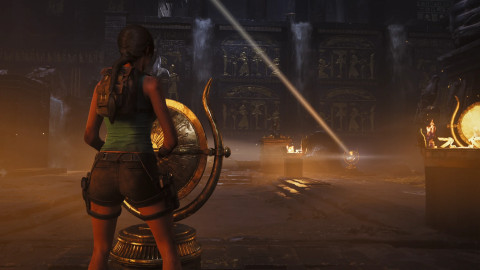
Live-action interactive games are steadily growing in number in South Korea as well. This genre stitches together video clips performed by actors, with story outcomes branching based on player choices. When developers of such games consider expanding overseas, the first wall they hit is China. For a foreign game to be serviced in China, it must receive an imported game publishing license (banhao), but predicting when it will be issued is difficult.
Within the same genre, a title has been identified that took a path different from conventional game licenses. That title is China's live-action interactive project Road to Empress (盛世天下), which has sold a cumulative 6 million units across the series. The work is sold as a game on platforms like Steam, and in South Korea, it went through self-rating classification and was rated 15+.

Cross-referencing Chinese public records reveals that the approval verified in China was not a game license (banhao), but a video content distribution permit. The local Chinese authority that reviewed and registered the title also called it a "mini-drama." A title sold as a game in other countries entered the video review track under China's regulatory framework.
China assigns different regulatory bodies depending on the type of content. For games, the National Press and Publication Administration (NPPA) issues publishing licenses, while video content such as TV dramas and movies receive distribution permits from entities under the National Radio and Television Administration (NRTA). Live-action interactive works lie in between. They resemble dramas in that they use filmed footage, but align closer to games in that users make choices and purchase them. Which agency oversees this genre is not explicitly defined in Chinese regulations.
Road to Empress is a work by New One Studio, the creator of The Invisible Guardian (隐形守护者). Set in the Tang Dynasty imperial court, the protagonist's life, death, and ending branch based on player decisions. The first installment, "Meiniang," was released in September 2025, followed by the sequel, "Empress," in June 2026. It is sold on Steam, Tencent's PC gaming platform WeGame, iOS, Android, and WeChat Mini Programs, and supports Korean subtitles.
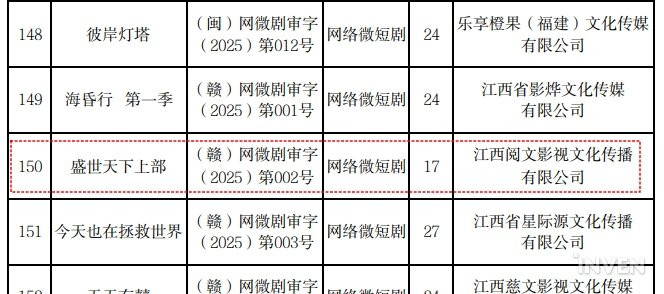
Entry No. 150 in the NRTA's published "Status of National Domestic Online Video Content Distribution Permits (April–June 2025)" lists "Road to Empress Part 1" (盛世天下上部). The approval number is "(赣)网微剧审字(2025)第002号", classified under the genre "Online Mini-Drama" (网络微短剧) with a length of 17 episodes. The applicant entity is Jiangxi Yuewen Film and Television Culture Communication Co., Ltd., based in Jiangxi Province.
Neither Road to Empress nor its Chinese sales title, Queen's Game (女王的游戏), could be found in the NPPA's pre-release public listings of "Approved Domestic Online Games."
Its distribution method also straddles the boundary between games and videos. As of August, the seller on the Chinese App Store is Tencent affiliate Shenzhen Tencent Tianyou Technology Co., Ltd., and the category is listed as "Entertainment" (娱乐) rather than "Games." The app follows a model where users download it for 6 yuan and then purchase the main story via in-app purchases, while the description counts the content in terms of "episodes" (集).
In March, Rao Rongcheng, Deputy Director of the Jiangxi Provincial Radio and Television Bureau, stated, "The live-action interactive mini-drama Road to Empress, reviewed and registered by Jiangxi, has adopted a 'mini-drama + game' format and become a rare phenomenal hit in recent times." Jiangxi Province, which is fostering mini-dramas as a regional strategic industry, highlighted Road to Empress as a flagship achievement on this occasion.
A representative from New One Studio stated, "Road to Empress is a live-action interactive cinematic work, and its content and distribution comply with applicable regulatory requirements in all markets." However, the representative did not give a detailed answer as to whether it is classified as a game or a video, or whether the video distribution permit covers the interactive version.

What the case of Road to Empress demonstrates first and foremost is that there is no fixed answer to how live-action interactive content is classified. The same work can be categorized as a game or as video content depending on the country and platform. Which regulatory window a title goes through in China is determined by the authorities rather than the developer, and those criteria are not publicly disclosed.
Even when considering the video distribution route, foreign developers cannot apply directly. The entity that applied for Road to Empress's permit was also a local video production company in Jiangxi Province. Under the "Administrative Measures for the Development of Mini-Dramas," which took effect on September 1, mini-dramas are categorized into three tiers based on investment size and subject matter. Tiers 1 and 2 can only be produced by entities holding radio and television program production licenses with registered capital of at least 1 million yuan. Partnering with a licensed local producer is effectively a prerequisite.
The rules themselves are also evolving. Under the new regulations, Tier 1 is reviewed by the NRTA, Tier 2 by provincial radio and television bureaus, and Tier 3 undergoes self-review by platforms followed by filing. However, there are no separate clauses addressing interactive or game-like content. How this genre will be handled under the new framework remains to be seen.
For South Korean developers waiting for game licenses, Road to Empress signals that another door into the Chinese market might exist. However, the conditions for entering that door are not yet clear, either in the regulatory framework or in statements from the involved parties. Studios preparing to enter China should first verify their work's classification and required qualifications with local regulatory experts.