Microsoft has published a patent application for a system that would pause a video game, play an advert, and then reward the player with more time to keep playing.
The filing is titled 'Contextually aware management of interactive software application access'. The US Patent and Trademark Office (USPTO) published it on September 3rd. It continues an earlier application, filed on May 1st 2023, which has since been abandoned.
Throughout the document, adverts are referred to as 'promoted content'. The basic idea is straightforward. A player watches an ad and earns a credit, which unlocks a set amount of play. When the credit runs out, the game is suspended and another ad appears.
How the credit system works
According to the filing, a credit could be tied to time, such as 15 minutes, 30 minutes or an hour of play. It could also be tied to progress, for example five rounds of a game, one completed level, three online matches or defeating a particular non-playable character (NPC).
The value of a credit could also change depending on how and when someone plays. In one example, a single credit covers an hour of a tutorial or practice mode, 30 minutes of a single-player campaign, or 20 minutes of online multiplayer in the same game. Another example suggests one credit could be worth an hour on a weekday afternoon but only 30 minutes on a weekend evening.
Unused credit carries over. If a player has 0.1 credits left when an ad plays, they would return to the game with 1.1 credits.
Choosing when to interrupt
Much of the patent deals with timing. The filing noted that many online games can't be paused, and that cutting off play at the wrong moment could cost someone a multiplayer match or get their character killed.
To get around this, the system would only look for a break inside a 'window' near the end of each credit. The patent gives several examples of how long that window could be, including the last 10% or 20% of the credit, or its final two or five minutes. Signals received before the window opens would simply be ignored.
Those signals could come from a few places. Developers could build in application programming interface (API) hints, which are markers in a game's code that flag a good stopping point, such as the end of a story chapter. Players could also pick the moment themselves after an on-screen countdown tells them an ad is due. If they don't respond before the credit expires, the ad plays anyway.
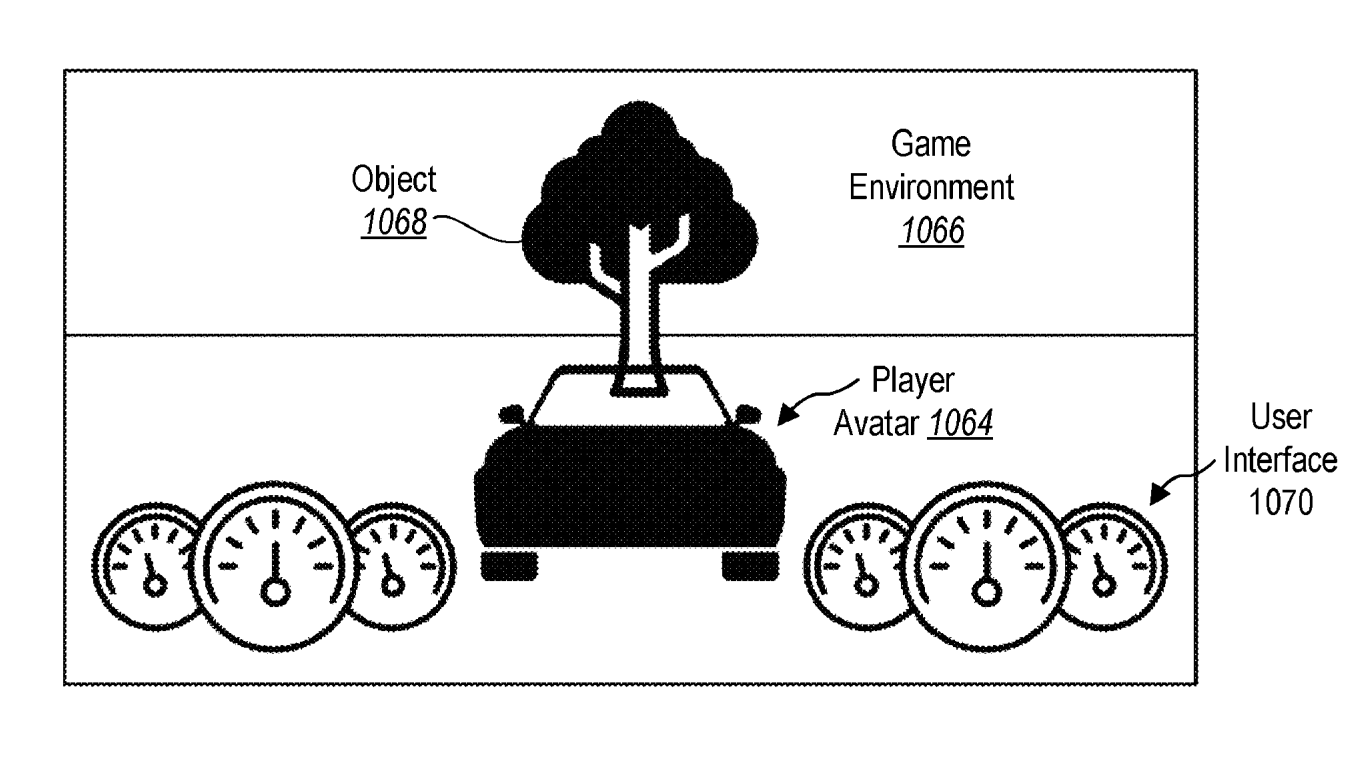
The third option is an event detection system powered by machine learning. It would analyse gameplay footage, audio and game data to work out what is happening on screen. The patent uses a racing game as an example: a speedometer dropping from 150 kilometres per hour to zero in under a second could be read as a crash. Loading screens, save screens, pause menus and end-of-round screens are all listed as possible moments for an ad.
The same system could also flag moments to avoid. The filing described 'popular events' and 'rare events', such as reversing a super attack in a fighting game or finding a hidden character, as points where the player is likely too engaged to be interrupted. Fortnite and Call of Duty are both named in the document, as examples of games whose art styles differ enough that a detection model may need training specific to each title.
While the ad plays, the game would be paused or 'constrained' so nothing happens to the player's character. The patent gave the example of stopping a player's car from crashing mid-race. It also acknowledged that some games may keep running behind the ad, which it said makes careful timing 'even more important'.
A patent filing does not mean a product is on the way. Tech companies regularly patent ideas that never launch, and Microsoft has given no indication that it plans to bring mid-session ads to any of its games.