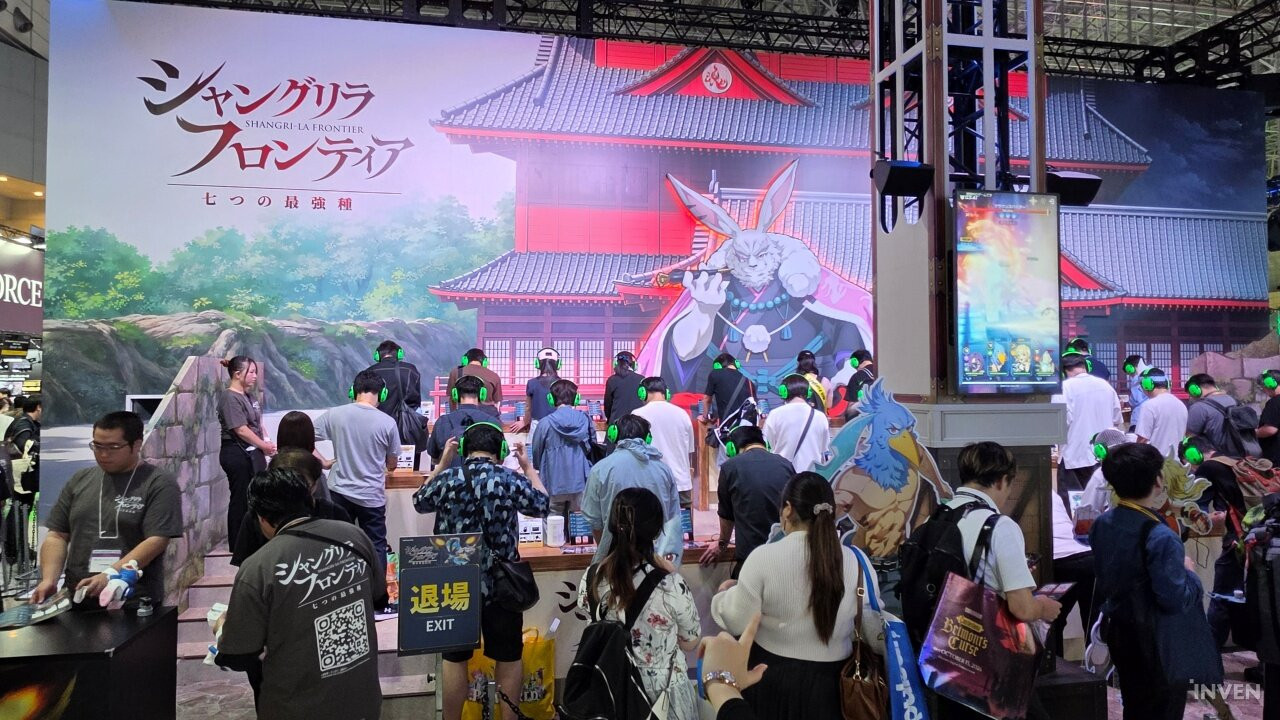
Netmarble set up a hands-on demo for 'Shangri-La Frontier: The Seven Colossi' at TGS 2026. The original work 'Shangri-La Frontier' tells the story of high school student Rakuro Hizutome, an avid player who sought out so-called "trash games," as he dives into the god-tier VR title Shangri-La Frontier. Expanding from a web novel to manga and anime, the series drew significant attention when Netmarble joined its anime production committee and announced a game adaptation.

Having faithfully brought original worlds to life across numerous IP-based games, Netmarble inspired little doubt regarding the quality of its character and scene recreations. True to expectations, the demo build opened with the battle against "Wezaemon the Tombguard," the highlight of Season 1 of the anime. From Wezaemon's entrance to the attack patterns that frustrated countless players in the original work, the demo showcased moments fans would instantly recognize right from the start.
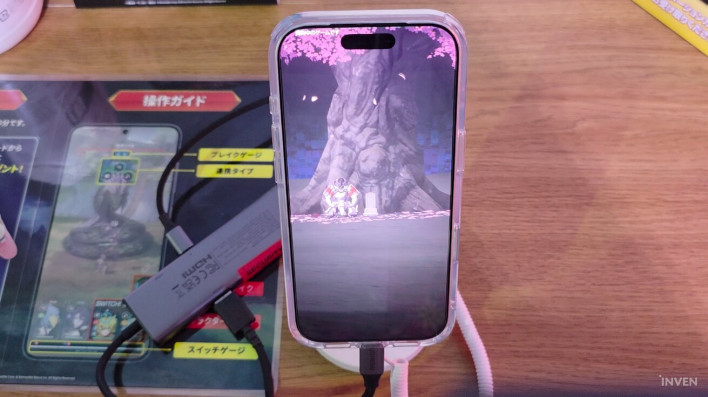
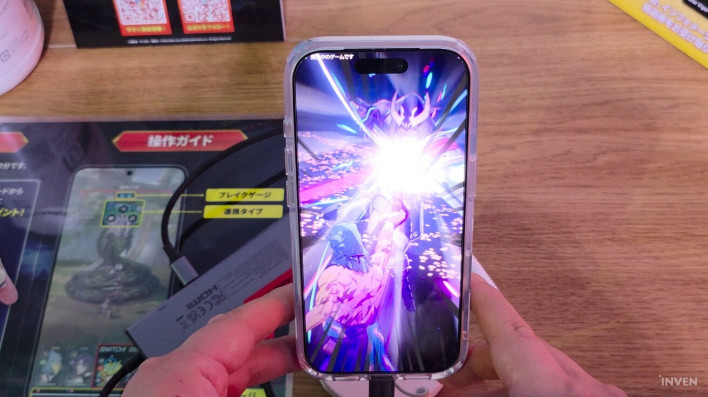
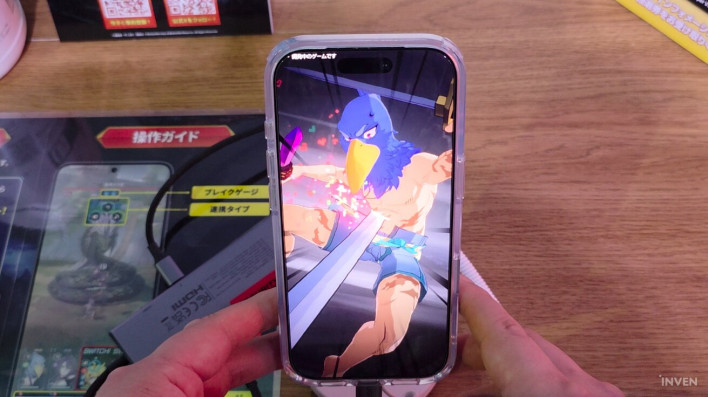
As players learn basic controls during this sequence, Sunraku falls, and right before reviving with the Tears of Reincarnation Jewel, the story transitions into a flashback. It retraces his journey from before starting Shangri-La Frontier up to that fight. It is a familiar mobile RPG storytelling technique—hooking players with a high-stakes boss battle before rewinding to build the story step-by-step. Even for those familiar with the original plot, following along firsthand proved engaging.
Apart from the visual fidelity, however, the main concern was the game's overall direction. In the original work, Shangri-La Frontier is an open-world MMORPG, and this title was initially announced as an open-world game before pivoting to a vertical-screen tag-battle RPG. This was not merely a matter of whether players could freely explore a vast world. The protagonist Sunraku himself is someone who ignores standard guidelines, skipping the starter town Firstia to head straight for Secundil. Despite his low level, he pulls ahead using mechanics mastery and gaming instincts forged in countless trash games, reading the attack patterns of formidable foes to find a breakthrough—a core appeal of the original work. Thus, beyond rendering characters and locations well, the key challenge was how effectively the game could convey that sensation of analyzing and overcoming enemies in direct combat. That first impression needed to land not only with late-game bosses after character progression, but right from the very first encounters.
Netmarble's solution to this challenge was relying on mobile standard controls: taps and slides. Rather than demanding complex inputs, the strategy of the original was embedded into deciding what and when to tap or slide. In the demo build, parties consisted of four characters, with one main and one sub-character on the field, while the other two waited on standby until tapped to swap into battle.

Because basic attacks occur automatically, the combat may initially seem distant from the action of the original. However, player intervention becomes essential as soon as enemies execute attack patterns. When an enemy launches specific attacks, an indicator appears above characters capable of parrying; performing a slide gesture before the prompt disappears executes a parry. Players can also tag out in sync with enemy attacks to dodge. Instead of manually moving characters out of an attack cone, players manage combat by choosing the exact moment to parry or swap in a character to absorb or evade the blow.
This is further complemented by matching combo types. When a combo type icon corresponding to an enemy's attack pattern appears, tapping the matching character neutralizes the attack and targets the enemy's Break gauge. This reduces the enemy's Break points, while sliding a character icon upward triggers skills to sustain the assault. Once all Break points are depleted, the enemy enters a Break state, creating an opportunity to dump burst damage akin to a Fever Time.
Entering a Break state did not mean simply watching characters attack automatically. Players had to continue combos by tapping characters according to elemental icons appearing at the bottom of the screen. Because damage output depended on how accurately and quickly players tapped, these moments demanded focused finger precision. On top of individual character skills, joint attacks like Tag Strikes and Link Strikes ensured that switching characters served a far greater purpose than merely swapping fighters. The core rhythm revolved around interrupting enemy attacks, depleting Break points, and pouring on damage during the resulting windows of vulnerability.

Up to this point, the combat mechanics might risk feeling repetitive, as they involve tapping and sliding in response to on-screen icons. Having mechanics that counter enemy patterns is one thing; making those counters challenging and fun is another. Indeed, in the early stages, once players get used to checking indicators and choosing the corresponding character, battles proceed with little pressure. Starting with the "Great Serpent of Gluttony," attack pattern intervals shorten, speeding up the tempo of reacting to attacks and spotting the next icon, which gets players' fingers moving quickly. Yet up to that phase, it mostly felt like performing the same controls faster, rather than fundamentally altering the sense of tactical boss clearing.

That impression changed dramatically during the demo's final segment with the encounter against "Lycagon." It allowed players to experience firsthand why Sunraku struggled so intensely without being able to defeat it in the original story. While previous fights allowed players to take their time selecting the right character after viewing an icon, the Lycagon battle flashed combo type icons only briefly before disappearing. Players had to make split-second decisions and execute inputs the moment the prompt flickered onto the screen.
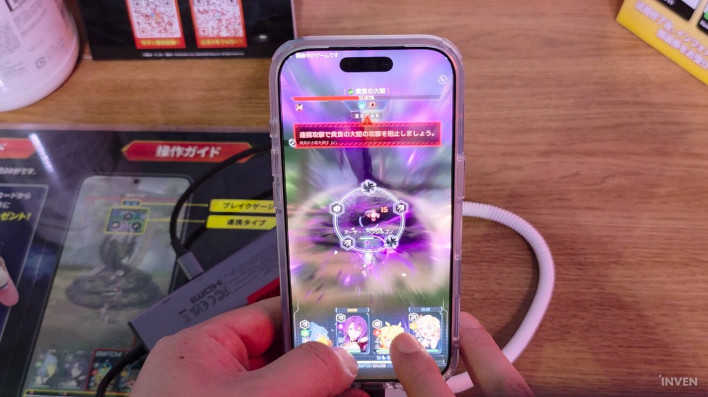
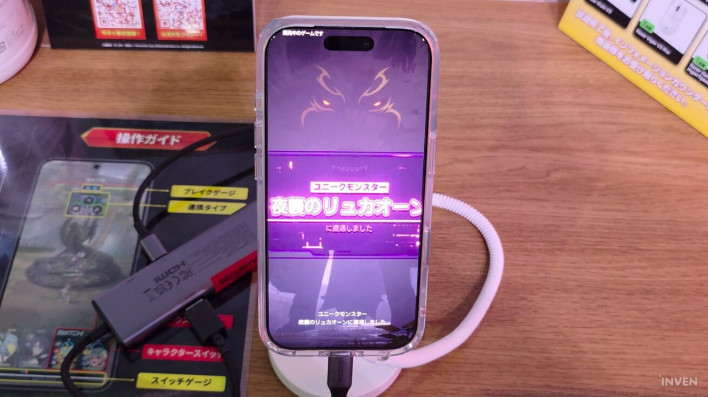
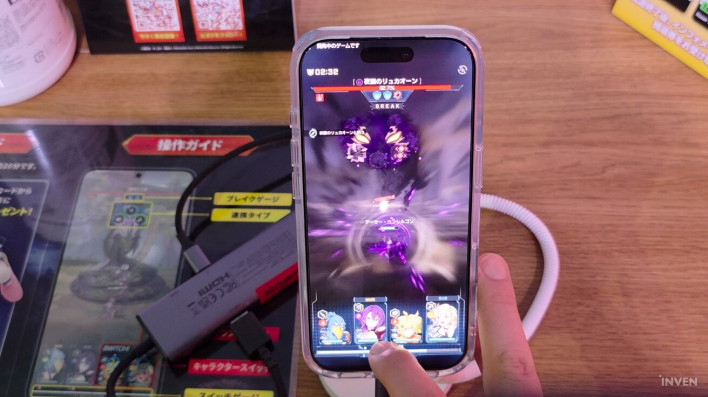
Coupled with timed QTEs requiring a binary choice, the same simple taps and slides suddenly took on intense tension. Even without introducing new control schemes, adjusting the information display time and choice mechanics proved capable of creating demanding combat scenarios. By conveying the daunting presence of powerful foes while preserving simple controls, the game offered a glimpse into how it aims to translate the original work's tactical boss-clearing experience onto a vertical screen.
Of course, players familiar with the original work would expect this battle to serve as a scripted defeat. For players unfamiliar with the story, however, the sudden spike in difficulty might feel somewhat forced. While effective as a narrative device to demonstrate Lycagon's overwhelming power, it remains to be seen how future defeatable bosses will strike a balance between high tension and fair counterplay.
In this hands-on demo, 'Shangri-La Frontier: The Seven Colossi' demonstrated its new focus following its shift away from an open-world design. Rather than free movement and precise manual character control, the game emphasizes reading enemy attack patterns, swapping party members at critical moments, and opening up windows to strike back. Instead of merely playing back iconic scenes from the original work, it provides mobile-optimized gameplay mechanics that demand active player judgment and tactical response. While deep systems such as character progression, gear, and party compositions were not showcased in the build, the game's reinterpretation of flash-heavy party action and pattern counters onto a simplified vertical screen was undeniably impressive. Attention now turns to how the game will refine its core systems following TGS 2026 based on these initial impressions.