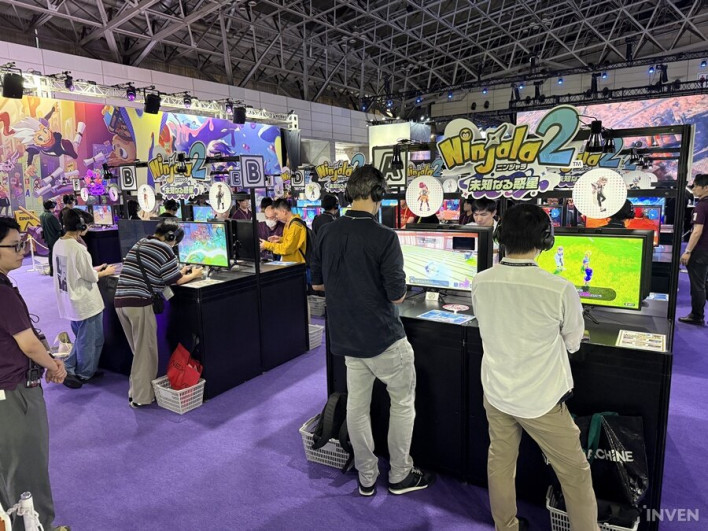
At TGS 2026, an unexpected new title made its appearance: 'Ninjala 2', the official sequel to 'Ninjala', one of GungHo's flagship titles.
'Ninjala' is a free-to-play PvP game built around unique elements like ninjas and Ninja-Gum, and has been consistently loved since its 2020 launch for its charming character design and distinct gameplay. As the official sequel to that title, it was easy to expect 'Ninjala 2' to be a PvP-based game as well.
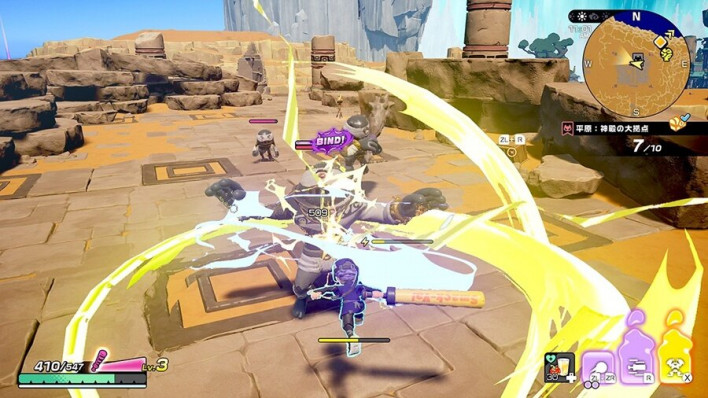
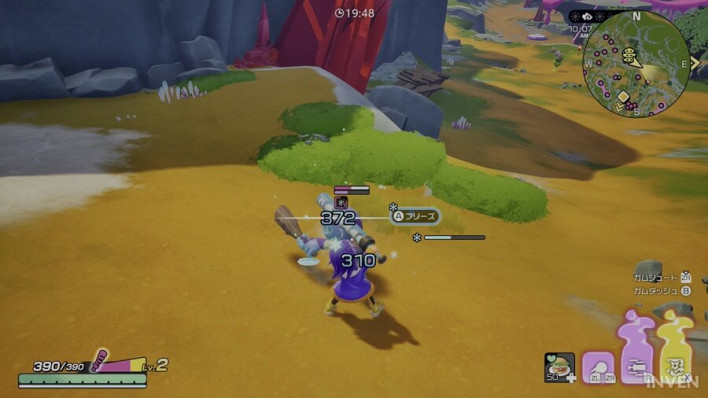
However, the actual reveal of 'Ninjala 2' was different from expectations. While inheriting core elements of 'Ninjala' such as ninjas, Ninja-Gum, and chambara weapon combat, the game completely shifted its genre to open-world PvE. Rather than sticking to the framework of its predecessor, the sequel opted for a bold transformation.
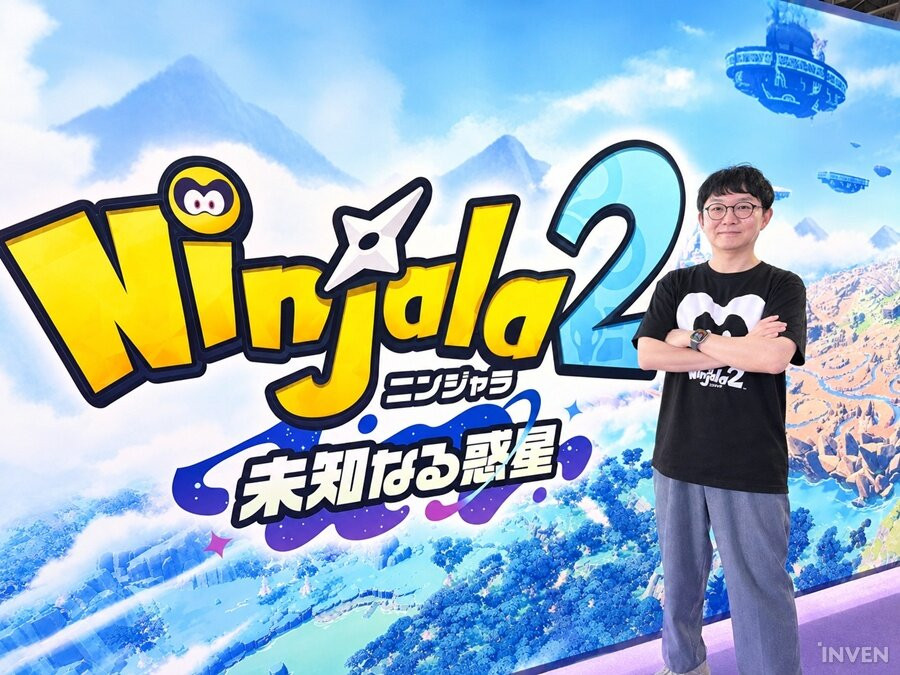
Why, then, did 'Ninjala 2' choose open-world PvE over PvP? At TGS 2026, we sat down with GungHo Director Motoki Kaneda to hear in detail about 'Ninjala 2'—from its development background and combat system to its open world and co-op play.
A considerable amount of time has passed since 'Ninjala' was released. When did development on 'Ninjala 2' begin?
"Full-scale development began around 2024. 'Ninjala' has remained in active service since launching in 2020, and during the first few years in particular, the team poured all its energy into updates for 'Ninjala'.
Unlike the original game, which was PvP, this sequel shifted to an open-world PvE game. Is there a specific reason why you chose PvE?
"There are two main reasons. As I mentioned earlier, 'Ninjala' has received a vast number of live-service updates since its release in 2020. We didn't just add stages; beyond battle royale and team battles, we added various battle rules. To give some slightly unusual examples, we included modes like tag and even soccer. Rather than focusing solely on battle royale, our intention was to provide a wide variety of content for players to enjoy.
Along the way, we also added a separate single-player Story Mode package. It was content that allowed players to enjoy the story while playing solo.
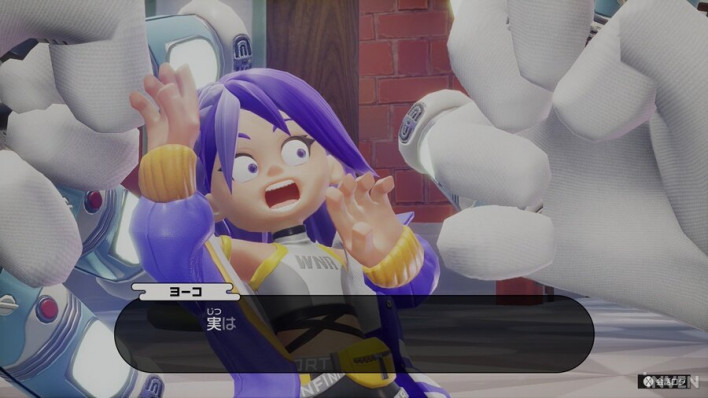
Additionally, 'Ninjala' has always been a franchise that expanded its IP across various media. In Japan, it was serialized in the manga magazine 'Monthly CoroCoro Comic' and broadcast as a TV anime series, which is still ongoing today. We also introduced content beyond the game itself, such as YouTube anime shorts, and through that process, 'Ninjala' established a rich world filled with diverse characters.
However, because the original game was focused primarily on battles—especially battle royale—even when characters appeared, the spotlight was strictly on enjoying the combat. While working on this sequel, there was a shared desire within the development team to expand the 'Ninjala' IP even further. So we contemplated how we could introduce the world of 'Ninjala', along with its many anime characters and lore, to a broader audience, and what genre would be best suited for that.
As a result, while that doesn't mean we are ruling out PvP, we found that PvE was a fitting genre to better convey 'Ninjala''s lore and characters, and ultimately chose an open-world setting.
The other reason is a bit simpler. We once conducted a survey among players asking what kind of game they would like to play in the future. Naturally, quite a few players answered that they wanted to play PvP, but among the top responses, a significant number of people said they wanted to cooperate with friends to defeat enemies or quietly enjoy a solo mode and story on their own.
These player requests were very close to the direction we were envisioning, which also influenced us to move forward with creating this project.
'Ninjala 2' has shifted to a PvE focus, but how do you plan to handle PvP modes going forward? Could you tell us whether you plan to add a separate competitive PvP mode or integrate PvP elements into the existing PvE framework?
"We are currently reviewing options while listening to player feedback. Since this series was originally built on PvP, we are also considering PvP in a positive light. One concept we are reviewing is allowing players to enjoy PvP within the current game structure as well.
'Ninjala' has expanded into media mix adaptations like anime and manga, but in Korea, watching this content on YouTube was sometimes difficult to follow because Korean subtitles weren't provided. Are there plans to support Korean or actively enter the Korean market in the future?
"This is the first time I'm hearing about that today, so I will review it with our marketing team.
Compared to the original, the combat style also seems to have changed significantly. Could you explain in detail what has changed completely and what has been carried over?
"'Ninjala' can be described as a game built around ninjas, sword fighting (chambara), and Ninja-Gum. Because these elements are the core foundation of the 'Ninjala' IP, we inherited them as they are. Utilizing chambara combat and Ninja-Gum remains an essential priority for us.
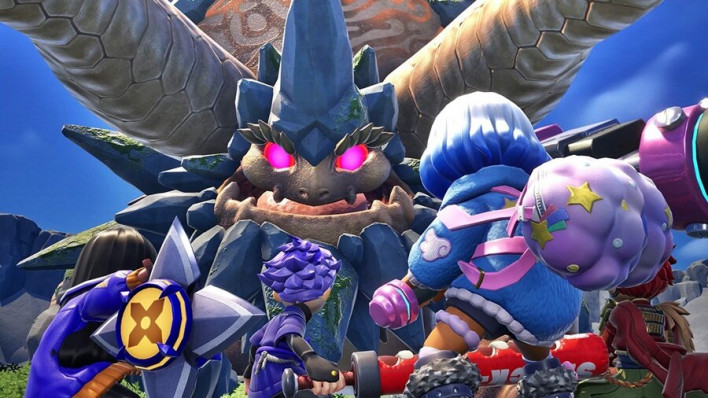
On the flip side, what has changed is that fighting against players in PvP and battling enemies in PvE require fundamentally different playstyles. Sometimes you fight huge bosses, and other times you battle multiple enemies simultaneously. The techniques you use when facing a single player naturally differ from those you want to use when multiple enemies appear.
Therefore, in this title, we are putting a lot of thought into what actions players can perform specifically against these enemies.
In the original game, there was a rock-paper-scissors matchup system in sword clashes. Is a similar system included in this game?
"We did not include a rock-paper-scissors mechanic in this title.
The previous game featured a mind-game element, offering a different kind of fun compared to pure skill-based combat. For example, even if there was a skill gap, winning that rock-paper-scissors clash could create an opportunity. However, since 'Ninjala 2' is built around PvE, we excluded that type of mind-game mechanic.
You mentioned earlier that a PvP mode is also under consideration. Does that mean the rock-paper-scissors matchup system from the previous game won't be in PvP either?
"That is something we consider important internally and are currently reviewing. However, because the mechanics of 'Ninjala 2' are fundamentally tailored for PvE, any PvP system would likely take a form suited to that foundation.
This title focuses on single-player gameplay. How long is the estimated playtime?
"Since it's an open world, playtime can vary significantly depending on how you play. Part of the fun of an open world is exploring various places and engaging in different activities. You might end up doing something completely different while heading to a destination, and how much you enjoy that is up to the player.
If you barely engage with those elements and head straight through without taking side trips, we currently estimate around 20 hours based on our current balance tuning. Conversely, if you explore around or tackle various content, the playtime will keep increasing accordingly.
For instance, including both large and small ones, there are around 100 side stories and sub-quests that are unrelated to the main story.
There are also progression elements, so it depends on your playstyle. A highly skilled player could, to take an extreme example, play all the way to the ending with starting equipment, whereas another player might max out their character to deliver high damage. Spending time developing your character will naturally lengthen playtime.
Through media mix adaptations like the anime and manga, many characters from the previous game are well known. Why didn't you make an existing character the protagonist in this game, choosing instead to structure it around an original protagonist who summons them?
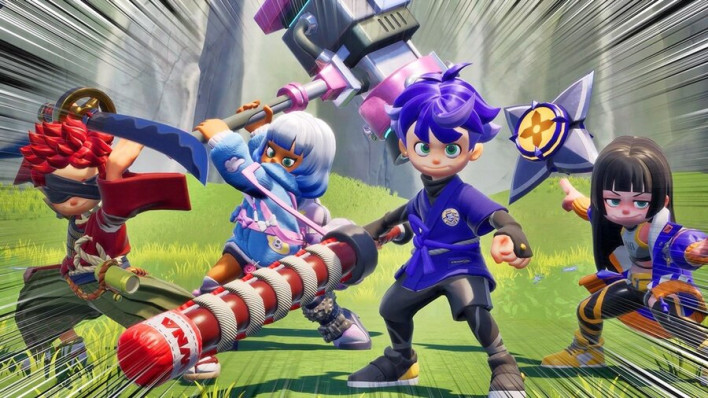
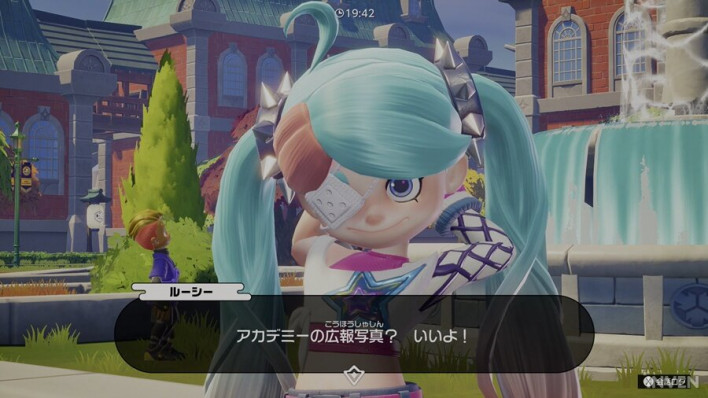
"Basically, all characters from the previous game appear, as well as a large number of anime characters. Most of the characters introduced in 'Ninjala' so far will make an appearance in this title.
Of course, this game also introduces just as many new characters as the previous work, and they play similar active roles within the game.
However, the main protagonist is a bit different. Although the 'Ninjala' IP features a wide range of characters, avatar elements have existed since the first game, allowing players to customize their own character. For this game as well, while key visuals feature a default, recommended avatar character, that character itself doesn't have a separate distinct persona or backstory. It is, first and foremost, an avatar.
Therefore, players can freely customize their character's appearance to their liking. For example, the character riding a frog shown in this title is also an avatar. It might be easiest to think of it as similar to the concept of the player-created hunter in the Monster Hunter series.
A major advantage of the previous game was that it was free-to-play, but we understand this title is taking a different approach. You must have given a lot of thought to this decision.
"The business model for the previous game was F2P (Free-to-Play) combined with gacha mechanics. However, for this game, from the early stages when we decided on an open-world PvE direction, we resolved not to include gacha mechanics. While we plan to introduce monetization elements like item sales, gacha mechanics were excluded.
In particular, 'Ninjala' has a significant young player base in Japan, such as elementary and middle school students. In that situation, when an elementary school student wants to purchase a game, parents naturally want to know clearly, 'How much will this game cost?'
While we haven't announced the price yet, we designed it at a reasonable price point that parents can accept, ensuring that once purchased, players can enjoy a substantial amount of content for a long time as mentioned earlier. We also took into account that parents can feel reassured after purchasing.
Additionally, considering the game's direction as a PvE open world, we chose a standard packaged pricing model rather than combining free-to-play with gacha.
Given that it is on a Nintendo platform like its predecessor, a packaged release with clear financial limits must be reassuring to parents.
"That's right. While there will naturally be digital downloads, we also plan to offer physical packaged sales. Going to a store, purchasing a game, and having that be the complete purchase fits very well with the Nintendo Switch.
In that sense as well, we felt it was best to choose a sales format that is as accessible as possible.
This game centers on co-op play. Is it possible for two players to play together on a single split screen using two controllers?
"That feature is not supported. We actually considered it, but displaying two players on a single screen proved to be quite difficult in several respects.
We understand multiplayer is supported. In PvE, is it simply a matter of inviting friends to take down a boss together? Or are there strategies tailored for cooperative play, such as one player drawing boss aggro while another attacks from behind?
"While the game can naturally be fully enjoyed solo, as mentioned earlier, the strength of Switch hardware lies in enjoying games together with friends, so we place immense importance on making co-op seamless and accessible.
We plan to support local wireless as well as online play, allowing players to cooperate in various ways.
If two players have the same progression, they can play through the story together, or someone can jump in just to assist with a boss fight. If siblings or friends want to experience the story together, they can progress side-by-side; conversely, if their progress differs, one player can flexibly help the other through a specific segment.
Meanwhile, as the player count increases, enemies also become stronger in terms of health and attack power, so fighting cooperatively will be essential to handle the challenge.
You mentioned the development team is also testing co-op. What is the atmosphere like when playing together in practice?
"The development team is actively testing it right now. When playing solo, everyone plays quietly, but during co-op sessions, you can see people chatting, laughing, and sometimes even shouting "No way~!" as they play. We think that kind of fun is one of the game's greatest strengths.
In the demo played earlier, we only got to see a portion of the mine area. How large is the actual map?
"The mine area you played today is also just a section of the full map. In reality, a much broader world exists.
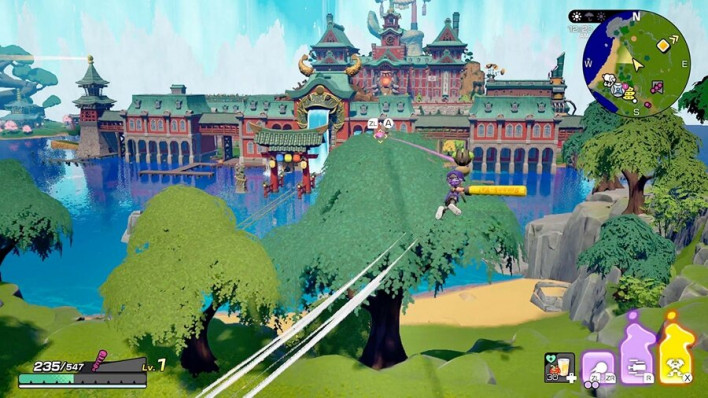
The regions—what we call biomes—are richly varied. There are grassy plains, completely different terrain types, and significant vertical variance. The map is vast, featuring structures and elevation reaching hundreds of meters high.
It is well known that the 'Ninjala' IP is quite popular. How do you feel about its popularity firsthand at events?
"While we haven't checked exact figures yet, our first public showcase was actually at Anime Expo in Los Angeles. We set up a booth in a very similar format to this TGS.
Since Anime Expo is primarily an event for anime and cosplay fans, we initially worried about how many people would come to play the game. However, it was a massive success, and the demo stations were packed at all times.
In fact, some players who enjoyed 'Ninjala' in the United States traveled all the way to Los Angeles specifically to play the game. We were able to see an amazingly enthusiastic response.
During hands-on play earlier, recovering health required taking time to eat a bento box. Many recent games eliminate healing animation time and instantly restore health upon picking up items. Is there a reason you intentionally introduced this delay when players can still be attacked?
"We felt that deciding when to heal can itself serve as a gameplay element. So we included it as a mechanic that forces players to judge the right timing.
However, as you grow your character, you can consume recovery items faster. We hope players enjoy faster healing speeds as one aspect of character progression.
During hands-on play, parrying felt so powerful that it seemed like experienced players could play without guarding at all. Was that intentionally designed that way?
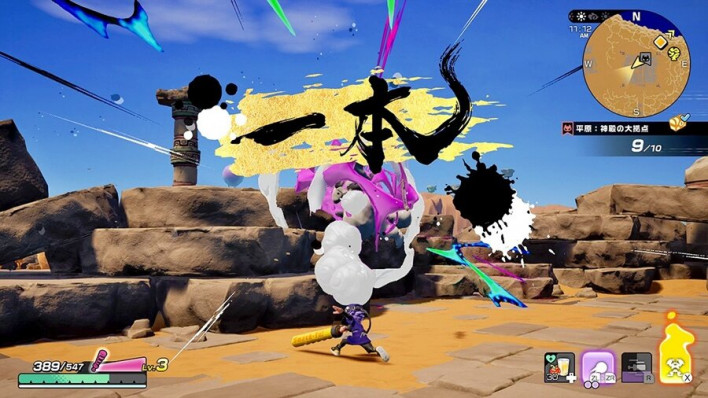
"Yes. We wanted players to fully enjoy tactile action combat, so we placed high importance on elements like parrying and precise dodges.
In this game in particular, pulling off a successful parry triggers a gum pop that wraps the opponent in gum. By infusing these distinctively 'Ninjala' elements, we turned parrying and dodging into signature Ninjala actions.
We plan to continuously polish the game until release, so we want to refine it into an even more satisfying experience than the version played today.
What would you say is the appeal of this game for both returning fans of the original and newcomers who haven't played 'Ninjala' yet?
"This game was created so players can thoroughly enjoy the world and character charm of the 'Ninjala' IP. If you give it a try, we believe you'll truly enjoy experiencing the world of 'Ninjala'.
Furthermore, as an open-world PvE game, being able to roam a vast world and engage in battles while enjoying Ninjala's signature action is a key attraction. Since movement and action are fast-paced, we hope players freely explore this expansive world and experience Ninjala's unique combat.
This article was originally written in Korean and translated with the help of AI. It was then edited by a native English-speaking editor. All AI-assisted translations are reviewed and refined by our newsroom.
[Read Original]