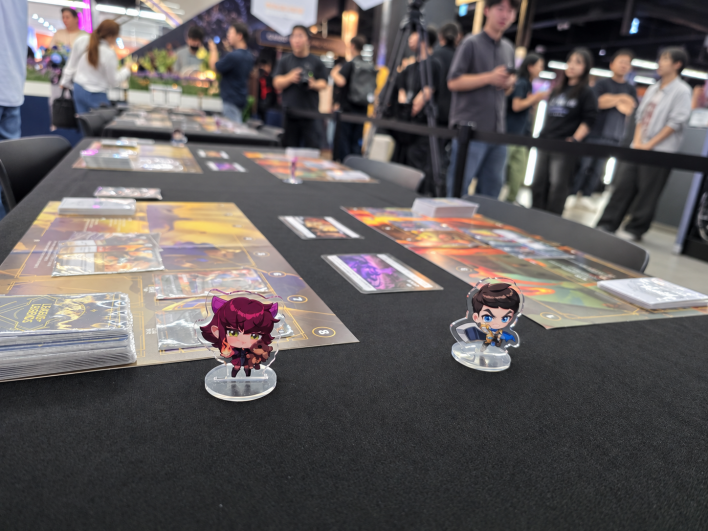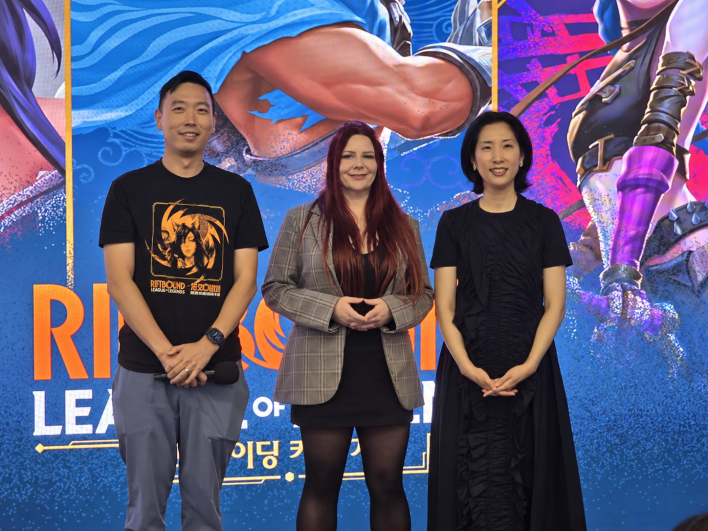
Riot Games held a Korean launch showcase for 'Riftbound' at GGX in Dongdaemun, Seoul on September 18, followed by a media Q&A session. Marking the release of 'Origins', the first set for the Korean edition, the company introduced the game's key features and domestic roadmap while answering questions regarding product supply, tournament operations, and subsequent set releases.
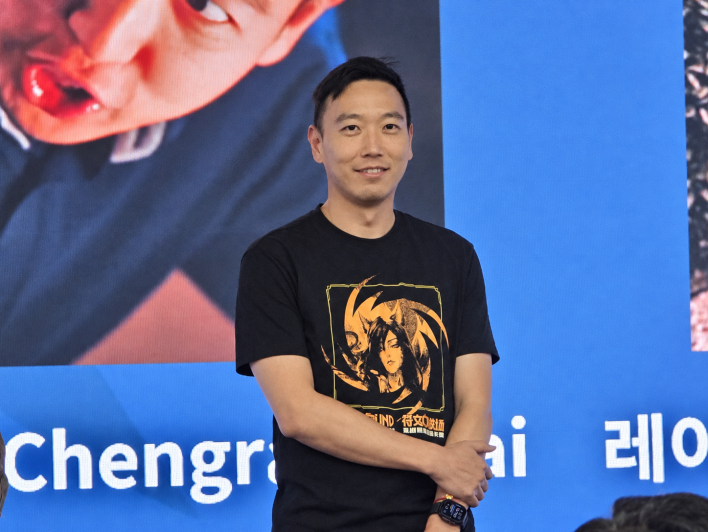
'Riftbound' is a physical trading card game (TCG) where players build decks and conquer the battlefield based on the 'League of Legends' universe. Chengran Chai, Executive Producer for Riftbound at Riot Games, shared an optimistic outlook for the Korean launch, noting that actual demand has surpassed expectations, and committed to supplying sufficient inventory moving forward. He explained that the Korea-exclusive Overnumber Ahri card will be included in 'Origins' booster packs sold in Korea, symbolizing the special connection between Riot and Korean players.
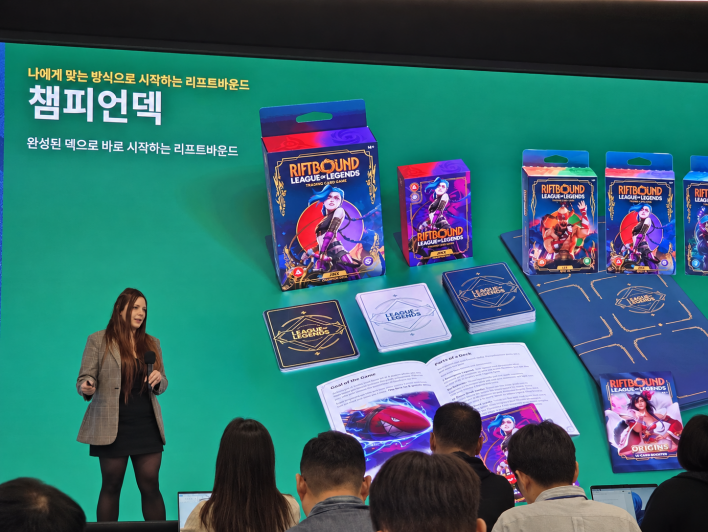
The Korea Major is being prepared for a player scale of more than 500 competitors. Byeong-yoon Shin, APAC OP Lead at Riot Games, explained that 150 to 200 players will qualify through slots awarded to the top two finishers at store events, while the remaining roughly 300 spots will be open for general registration with no entry fee. He added that they are currently reviewing whether to process general registration on a first-come, first-served basis or through a lottery, noting that given current application numbers, a lottery seems likely.
Rachel Unruh, Global Publishing Lead for Riftbound at Riot Games, stated that as Korea's set releases catch up to the global schedule, the team carefully balanced giving players enough time to familiarize themselves with the first set against the release intervals between sets. She also explained the direction of offering sets at reasonable price points and the ultimate goal of simultaneous global releases. Executive Producer Chai shared that lessons learned from 'Legends of Runeterra', particularly regarding learning curve and monetization systems, were incorporated into 'Riftbound'.
Executive Producer Chai, Global Publishing Lead Unruh, Ji-soo Lee, Head of Publishing Strategy & Operations at Riot Games Korea, and APAC OP Lead Byeong-yoon Shin attended the Q&A session. The following is a summary of the questions and answers regarding the Korean market, game direction, player experience, and competitive environment.
Supply seems insufficient compared to demand at domestic TCG stores. Are there plans to address this situation?
" Chengran Chai, Executive Producer for Riftbound at Riot Games: While preparing for the initial Korean launch, we made every effort to accurately forecast demand. Although we projected high numbers, demand still appears to be outpacing supply. It is exceeding our already optimistic projections. We will ensure that sufficient supply is provided in the future.
When 'League of Legends' launched in Korea, Ahri was revealed for the first time, and 'Riftbound' also features a special Ahri card. What does Ahri mean to Riot Games?
" Chengran Chai, Executive Producer for Riftbound at Riot Games: The Overnumber Ahri card shown during the presentation can only be found in 'Origins' booster packs sold in Korea. Ahri seems to symbolize the special bond between Riot Games and the Korean market. We hope to deepen this connection even further through 'Riftbound'.
The top two players at each store will receive qualification slots for the Korea Major. It was mentioned that general registration is also available alongside these qualification slots. What is the specific participation method?
" Byeong-yoon Shin, APAC OP Lead at Riot Games: The Korea Major is planned for a scale of over 500 players. Qualified players from taking 1st and 2nd place at stores will account for between 150 and 200 participants. The remaining roughly 300 players will be recruited through general registration without any entry fee.
We are still weighing whether to accept general registration on a first-come, first-served basis or via a lottery. However, looking at the current volume, it seems registration will likely take place through a lottery.
How do you view the current size of the Korean TCG market? In a market with powerful IPs such as 'Pokémon', how do you evaluate 'Riftbound's growth potential?
" Chengran Chai, Executive Producer for Riftbound at Riot Games: We were optimistic when launching 'Riftbound' globally. Looking at the results since then, we achieved higher numbers and operational performance than expected. We saw so many people—from existing 'League of Legends' players to fans who arrived through 'Arcane'—playing the game and collecting cards.
We have high hopes for Korea as well. Korea is one of the largest markets for 'League of Legends', with so many people enjoying the game. We believe they will enjoy 'Riftbound' just as much.
In the process of closing the gap between the Korean launch and global releases, players' spending on card pack purchases could increase. Are there measures in place to address this?
" Rachel Unruh, Global Publishing Lead for Riftbound at Riot Games: We put a lot of thought into launching in the Korean market and how to introduce the game. We also studied carefully how to catch up to the global set release schedule. First, we felt it was crucial to give players enough time to become familiar with the first set while balancing the release timing of each set.
We aimed to foster this through a healthy competitive ecosystem. We plan to offer each set at reasonable price points to help players collect cards and enjoy the experience.
Riot Games previously released the digital card game 'Legends of Runeterra', which saw somewhat disappointing results. What was the background behind deciding to launch an offline card game under these circumstances?
" Chengran Chai, Executive Producer for Riftbound at Riot Games: 'Legends of Runeterra' is a fantastic game in its own right, but it did not unfold entirely as intended. We prepared 'Riftbound' while reflecting on the lessons and considerations gained from that experience. In particular, the key lessons we worked to incorporate were the learning curve for the game and the monetization system.
When planning 'Riftbound', we received a tremendous amount of internal support. Even now, we receive strong backing to tackle new genres and attempt new endeavors.
Whenever an opportunity arises, Riot Games is always ready to bet big and take on challenges. The fact that a past attempt didn't achieve grand success doesn't mean we stop trying new things. We will continue to make more attempts in the future.
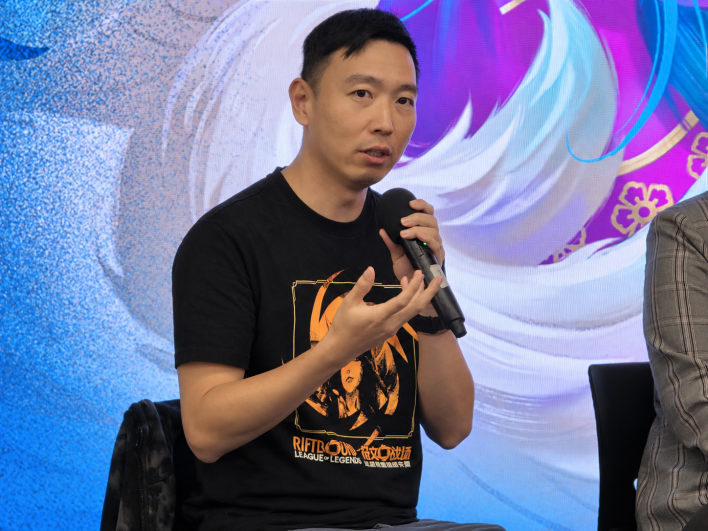
How does it differ from Riot Games' other card game, 'Legends of Runeterra'? Are there elements that players who played that game will find easy to adapt to when picking up 'Riftbound'?
" Chengran Chai, Executive Producer for Riftbound at Riot Games: 'Legends of Runeterra' was the first game I worked on at Riot, and it really is a wonderful game. At the time, I wondered if there could ever be a game I loved more. So serving as Executive Producer for 'Riftbound' now feels a bit surreal.
A very unique aspect of 'Riftbound' in terms of game mechanics is the tabletop element of physically moving pieces across a table. Unlike many other TCGs or digital card games that rely on lines or rows, having a board where combat elements are expressed through physical placement is a major point of differentiation.
I believe one of the most important aspects of physical card games is the social experience. Playing against an opponent across the table creates genuine social interactions—reading their expressions, noticing their movements, and anticipating their next play. This adds an entirely new dimension of mind games and strategy that can only be experienced when playing a physical TCG.
There is a perspective that the TCG genre is in decline and that many players prefer digital TCGs. Under these circumstances, what inspired the decision to launch a physical offline card game, and how do you feel about it?
" Chengran Chai, Executive Producer for Riftbound at Riot Games: I view the premise of the question a bit differently. Based on what we have observed, especially considering community reactions and anticipation for 'Riftbound', we believe the physical TCG market is actually experiencing a major renaissance. In particular, following the pandemic, people truly crave in-person experiences, tactile sensation, and the social interaction of sitting face-to-face with someone to connect.
When considering bringing 'League of Legends' back in card game form, that is exactly what we wanted to focus on—the feeling of gathering with friends and the excitement of opening physical card packs. There is a distinct tactile joy in collecting physical items, building decks by hand, and playing a game across a table. We see tremendous player passion and a massive opportunity for this kind of experience.
There was a time gap between the global launch and the Korean release. Do you plan to align the release schedule for upcoming expansion packs or new sets with the global timeline?
" Rachel Unruh, Global Publishing Lead for Riftbound at Riot Games: 'Origins' had a slight time gap compared to the global launch due to the localization process and work to tailor it perfectly for the Korean market. However, our goal moving forward is to synchronize release schedules globally. We want Korean players to experience new sets, champions, and cards at the exact same time as players in other regions. Therefore, future sets will be released simultaneously.