"Diablo 5," which finally made its appearance at BlizzCon 2026, does not remain a simple continuation of its predecessor. Set in Sanctuary 100 years after Mephisto's defeat, it begins a new story in a world that has collapsed once again after a long golden age. With even the balance maintained between the High Heavens and Burning Hells broken, players must once again shoulder the fate of Sanctuary.
Changes to the game's structure were also teased. Safe towns and villagers welcoming players no longer exist; instead, players must gather survivors into a "caravan" and navigate a perilous Sanctuary. In addition, familiar elements from past titles in the series return in new forms, including runes and set items, along with a new class, the "Plague Knight," who wields plague and disease as weapons.
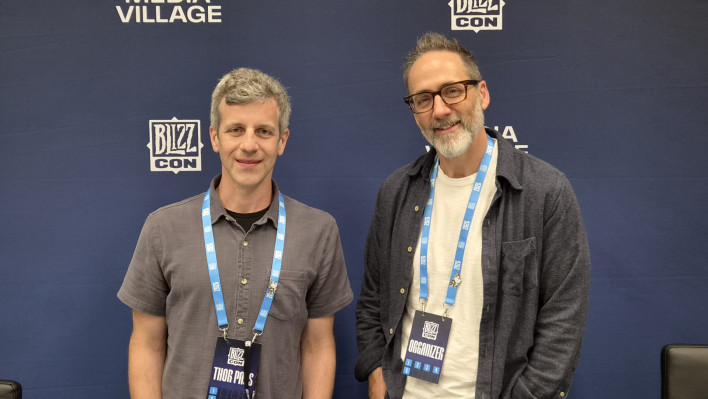
At a joint Korean media interview held at BlizzCon 2026, Diablo 5 Executive Producer Matt Zitterman and Senior Art Director John Mueller attended to explain the background behind these changes. The two developers emphasized their direction of inheriting the legacy of past games in the franchise while crafting a brand-new story through Diablo 5.
Diablo 4 is currently continuing its live service. With Diablo 5 revealed under these circumstances, many players are curious about what will happen to the service of Diablo 4. Will the two games be operated completely separately, or is there a succession relationship leading from Diablo 4 into Diablo 5?
Matt Zitterman: That's a good question. At today's panel, we announced a new season for Diablo 4 and introduced content bringing back elements loved in past Diablo games. The Amazon will also be showcased soon.
However, regarding specific plans for Diablo 4 after that, we want to leave that for the Diablo 4 development team to talk about directly. Diablo 5 also has a huge amount left to discuss separately in the future.
At the starting point of Diablo 5, Diablo is depicted as having already won. So with the fall of Sanctuary already predetermined, what meaning do the actions of Diablo 4 players hold? Are the settings of the two games separated into different regions, or does it eventually lead to a situation where all of Sanctuary falls?
John Mueller: First, what I can say is that Diablo 5 is set 100 years after Mephisto was defeated. And at the time the game begins, there is an additional "lost 7 years." The process of finding out what happened during that time and what was lost forms an important part of this game's storytelling.
What's important is that those 100 years were not simply an era where bad things kept happening continuously. At the conclusion of Diablo 4, players actually saved the world, and Sanctuary recovered. As a result, there was a kind of golden age spanning 100 years. Because of that, the moment you face a collapsed world again in Diablo 5 will feel even more dramatic.
Matt Zitterman: At the core of Diablo is the "Eternal Conflict" taking place between the High Heavens and the Burning Hells, and humanity and Sanctuary are always caught in between. When we craft a new story in the Diablo universe, we always start from here.
For better or worse, that is the fate given to humanity. Sanctuary is always caught between two overwhelmingly powerful forces. What's interesting in Diablo 5 is that this time, the story begins with Diablo having already won. From the very beginning, the balance of power is completely broken. Players become the central figure in such a world, moving in a direction to restore that balance—or otherwise.
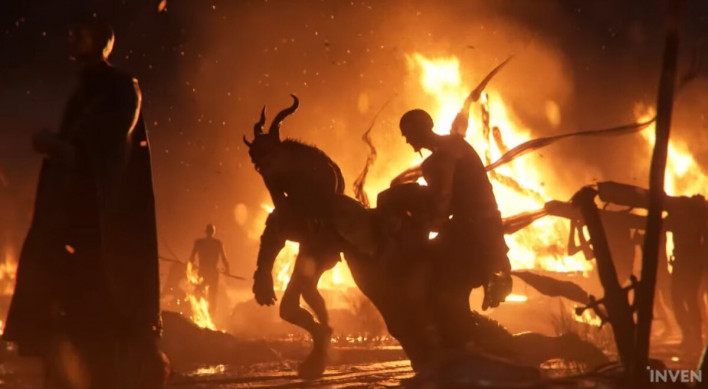
This time, the number "5" is attached to the title. As a franchise with multiple entries built up over a long time, creating the fifth numbered title must come with significant weight and responsibility.
Matt Zitterman: Whenever we work on a new numbered sequel to a beloved franchise like Diablo, we always feel a heavy weight. We feel a great deal of responsibility toward the community and players, and above all, we strongly want to make it right.
From the early stages of Diablo 5's development, we recognized that what we needed was not merely an expansion for Diablo 4, but a new full sequel. So we spent a lot of time understanding what players want from a Diablo game. Rather than just a continuation or reinterpretation of the previous entry, we wanted to build a game that, on its own, feels like a true Diablo game.
To achieve this, we revisited all previous Diablo titles. After identifying what aspects left a deep impression on players and what they loved in each game, we aimed to bring those elements into Diablo 5 while also paying homage to the past entries.
Personally, I hope that whether a player's favorite is Diablo 1, 2, 3, or 4, when they play Diablo 5, there will be something that makes them feel, "This part was made for me." Our goal is to create moments that resonate with every Diablo player.
John Mueller: I also enjoy that kind of challenge. The moment you declare that you are creating a sequel to a legendary franchise, the development team is required to have boldness, ambition, and creativity. That in itself becomes a challenge for us.
I was also involved in Diablo 4's development from start to finish, and the question we kept asking back then was, "What is the best Diablo we can create right now?" We are asking the exact same question for Diablo 5. I love the challenge that question poses to the team, and we intend to keep that same approach this time as well.
Based on what has been revealed, Diablo 5 seems to center on a world that has already lost and fallen, and the process of searching for hope once again within it. How is this overwhelming sense of defeat and the process of overcoming it specifically expressed in the game?
John Mueller: One of the biggest changes is that safe towns and villagers welcoming players no longer exist. The destruction of Sanctuary is that absolute. Of course, survivors remain, and each of them has a meaningful, tragic, and memorable story.
One of the things we consider extremely important in this title is creating iconic and memorable characters. Just as Lilith was a very striking character in Diablo 4, we want to build memorable figures in Diablo 5 that players can form an attachment to.
And what travels through such a world together with the player is the "caravan." The caravan is where hope resides, and it is a space that shows there is still reason to save this world. As players progress through their journey, they will meet survivors and bring them into the caravan, with each character possessing their own deep story. Our goal is to craft a story that stays long in players' memories through these characters and moments.
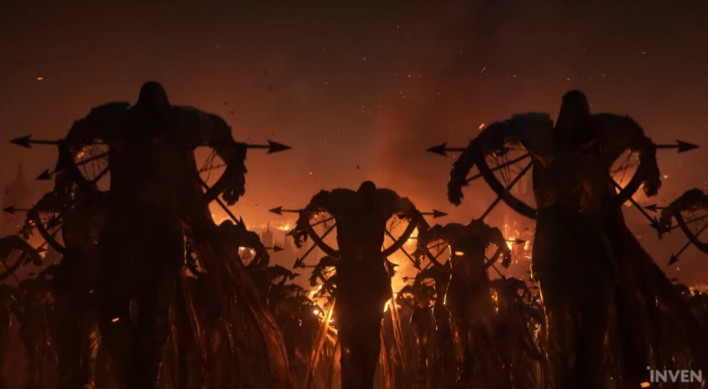
The caravan seems to be one of the elements that sets Diablo 5 apart most from previous entries. Is it simply a structure where survivors or merchants join as you progress through the story? Or is there additional systemic depth, such as growing the caravan or securing safe footholds?
Matt Zitterman: First, what I want to emphasize is that every single character who joins the caravan has a deep and meaningful personal story. If we've done our job right, after hearing their story, players will become curious about that character and want to learn more.
So I hope people don't think of it as simply a recruitment system. We aim for the story carried by each character who joins the caravan to feel like a mini-campaign in itself. They will also play their own roles in the main story.
Also, because Sanctuary itself has become an extremely dangerous world, you cannot move the caravan wherever you want at will. Players must personally venture out into the world and secure safe spots where the caravan can travel. Only after securing a safe space can you bring the caravan and your companions there.
In the end, the main campaign itself is a story of the player and survivors traversing a highly dangerous world together, bringing hope to every corner of Sanctuary. The caravan is not merely a companion recruitment system; it is the foundation supporting this title's storytelling.
Our goal is to create the best Diablo story we've ever made. During development, someone once stuck a Post-it note in my office that read "Best Campaign Ever," and at some point, that became one of the key standards for our team. We want to take the campaign and storytelling we created in Diablo 4 to the next level in Diablo 5, and the caravan and its characters will serve as a crucial foundation for that.
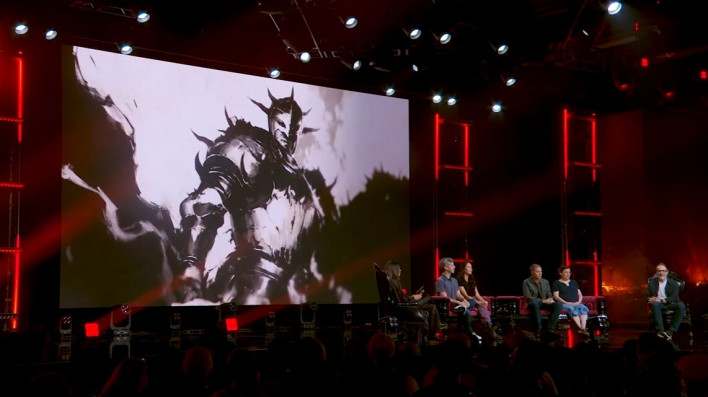
In this panel, a new class called the "Plague Knight" was revealed for the first time. Since it is a class that didn't exist before, please explain a bit more about its lore and how it compares to other classes.
John Mueller: We like dark-themed classes. True to its name, the Plague Knight is a class that uses disease, plague, and contagion as its weapons. At the same time, because it is a knight, there is also a noble aspect to its purpose.
They do not merely accept the disease, plague, and darkness present in the world. Instead, they find ways to absorb and manipulate that power to slay demons. We wanted to showcase that contrasting nature of embracing darkness to punish evil with it.
Matt Zitterman: We also want to talk as soon as possible about the specific mechanics and playstyles of the new classes. Returning classes will be back, and new classes will offer playstyles different from what we've had before. However, it's not quite the stage yet to detail each class and its mechanics.
As mentioned at the panel, we want to involve the community in the process of making this game. Starting in 2027, we plan to reveal more specific details bit by bit and discuss certain elements at quite a granular level while receiving feedback from the community.
So far, your answers have heavily emphasized the lore, story, and campaign. However, many players continue to enjoy seasonal and endgame content repeatedly even after finishing the campaign in Diablo. Is Diablo 5 also being planned with ongoing live service in mind as before, or are you aiming for a direction closer to a single self-contained game?
Matt Zitterman: Today, we are not going to talk specifically about live service or post-launch plans for Diablo 5. However, what we continuously consider important is creating the Diablo game that best fits our players.
We know that many players enjoy playing Diablo on a periodic basis. Some players like the various mechanics introduced each season in Diablo 4, while others enjoy creating a new character and starting over from scratch. We want to properly satisfy these players' needs.
Therefore, whatever choices we make regarding live service or post-launch content after Diablo 5 launches, the starting point remains the same: providing the most fitting experience for the diverse players who enjoy Diablo. While we cannot share specific plans yet, our post-launch direction will also be decided based on this principle.
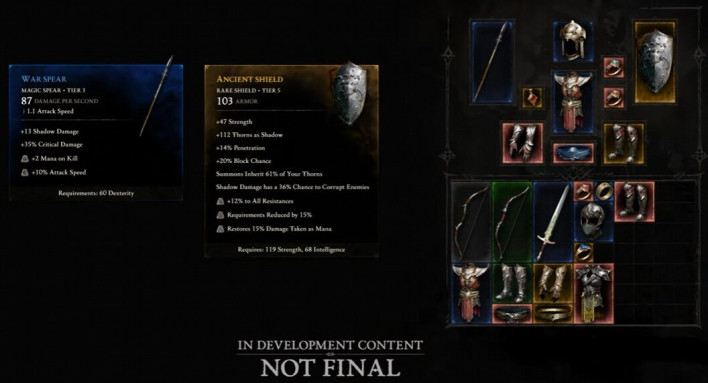
Looking at the revealed game information, there are quite a few elements reminiscent of Diablo 2, such as item grid sizes, runes and runewords, and set items. The itemization system of Diablo 2 had distinct drawbacks alongside its strengths; what made you decide to head back in this direction?
Matt Zitterman: As I mentioned earlier, while building Diablo 5, we are looking back at all Diablo games. We pondered how to bring in elements from previous entries so that regardless of which game a player loves most, they can find something they enjoyed in Diablo 5 as well. It's true that much of what we revealed today draws inspiration from Diablo 2.
One key concept here is what Game Director Joe Shely often calls "Deferred Complexity." There are players in Diablo who want a deep and complex endgame. They are people who enjoy hunting for vast amounts of loot, utilizing crafting systems, researching their characters and game systems, and theorycrafting the most efficient builds. Diablo 5's systems support that kind of play as well.
Conversely, there are players who play the game to enjoy the story and atmosphere and to see how the campaign concludes. They might enjoy the process of their character growing stronger, but have less interest in diving deep into intricate systems.
So rather than overwhelming players with every complex system all at once from the beginning, we aim to gradually add depth as they progress through the game. When players who want complex systems reach the endgame, they should be able to experience a game with sufficient depth, while players who don't want that level of complexity should be able to enjoy the game more easily during the campaign.
Our reference to Diablo 2 is also because there are many elements worth taking from the depth that title possessed. However, it is key that we do not simply revert to the old systems as they were, but rather evolve them into new forms suited for Diablo 5.
John Mueller: One more thing I'd like to add is how players discover the world of Diablo 5. While there are areas where we are advancing technology used in previous Diablo games, this time we are creating a world where not only dungeons but also the overworld are procedurally generated. We are taking the size and scale of the world shown in Diablo 4 while making the world itself constantly change.
There is a concept we internally call "Constant Discovery." Every time you move your caravan to a new location, the fog of war spreads out again, and players must explore the area themselves to see what is there.
This is an element that wasn't present in Diablo 4, and we view it as an attempt to advance the technology the Diablo series has used for a long time by one step further. Every time you move the caravan, you explore a new area, resolve problems that have arisen there, and discover something new once again. Keeping players constantly curious about what situation they will encounter next is something we consider essential in Diablo 5.
We know it's still early in development. Nevertheless, an essential aspect of Diablo is the fast combat and impactful feel often described as "game feel" or "hit feedback." From an actual gameplay perspective, what kind of action is Diablo 5 aiming for?
Matt Zitterman: One of the most important characteristics of Diablo in our eyes is that it is a fast, intuitive, and instantly responsive action RPG. When you use an ability, you should be able to directly feel the impact it has on the world.
We believe this playstyle evolved significantly in Diablo 3 and took another step forward in Diablo 4. In Diablo 5, we see an opportunity to innovate and build upon that foundation once more. Our goal is to create the game where you can feel the action most intensely among all Diablo titles to date.
John Mueller: One phrase we frequently use internally is "spectacle." We want to provide players with incredible scenes and action that are enjoyable just to look at.
Of course, it's not the stage yet to talk in detail about specifically what this entails. However, we consider it an important aspect for fans who have enjoyed Diablo for a long time. While continuing to evolve the fast combat speed and intense action carried over from Diablo 3 and Diablo 4, we also view accessibility as crucial so that anyone can pick up the game without difficulty and enjoy that action.