4A Games' flagship franchise, the Metro series. Its latest title, 'Metro 2039,' recently revealed new details through an online hands-on preview. Simultaneously, 4A Games provided global media with their first opportunity to experience a hands-on preview build of 'Metro 2039.'
Played via GeForce NOW, the preview build lasted about two hours and appeared to cover the early-to-mid section of the game, with a fair amount of equipment and features already unlocked. Designed so that players could directly experience several newly added elements, the build offered a taste of various survival mechanics—including combat against mutants, outdoor exploration using UV lights, crafting medkits and gas mask filters on the fly from raw materials, and making ammo based on ball bearings.
Since it was a restricted build, the accessible locations were limited. Nevertheless, one thing was unmistakably clear: 4A Games' claim that they aimed for the darkest story in the series and the most advanced combat system was by no means an empty boast.
※ Please note that gameplay screenshots from the GeForce NOW session could not be used.
A Minor Yet Crucial Matter: What About the Translation?
Looking at recent releases, it is not uncommon for even AAA games to suffer from localization controversies. Thus, among gamers waiting for 'Metro 2039,' some are likely concerned about translation quality. Considering that its predecessor Metro Exodus faced significant criticism over its initial translation quality at release, these concerns are hardly unfounded.
To those gamers, rest assured: there seems to be no need to worry. Although it is not yet a finished build given its scheduled release in February 2027, the translation quality was virtually flawless, aside from a few untranslated portions. While it was hard to call it perfect, it was well within an acceptable standard considering it was a preview build.
Considering that 'Metro 2039' is not a simple rail shooter following a linear story, but requires players to explore various places, find hidden locations to acquire blueprints, crack locks, and consult various clues to do so, the importance of translation cannot be overstated. Even so, in this preview build, players rarely lost their way in most translations, from clues to dialogue.
Deeper Exploration and Survival Mechanics
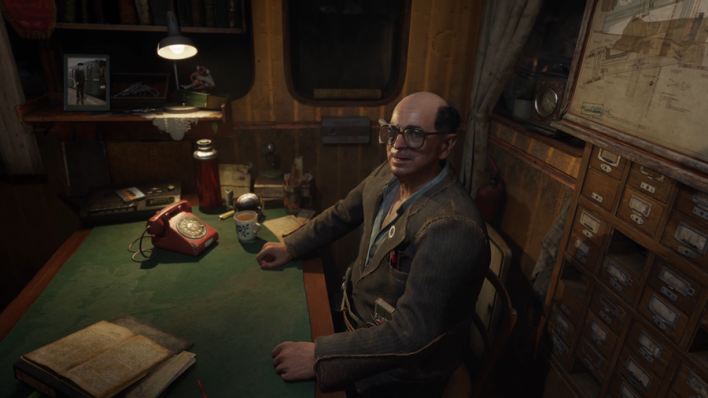
The preview build begins with a conversation with the Station Master at Sevastopol Station. Outside the Metro, raiders backed by the Novoreich constantly threaten the station. The Stranger offers to clear out the raiders in exchange for information on Hunter, and as the Station Master accepts the terms, the story kicks off in earnest.
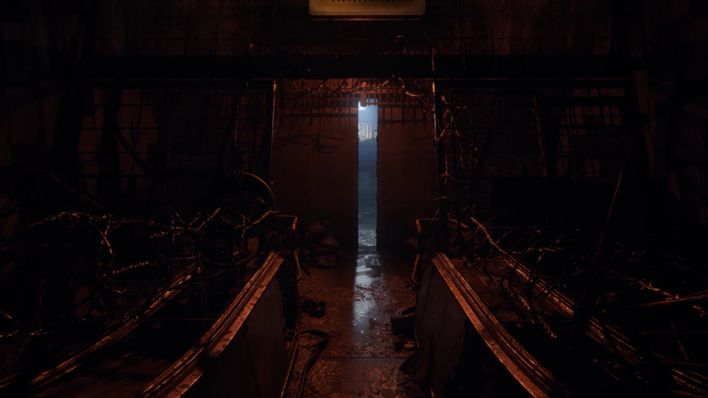
After stepping out of the station to pursue the raiders, the Stranger finally ventures onto the radiation-contaminated surface. While humanity took refuge underground in the Metro, the surface became overrun by irradiated mutants. From radiation to mutants, the battle for survival begins the moment you step foot on the surface.
The most vital element is the filter. Except for underground tunnels and a few select areas, most of the surface is irradiated, making simple exploration life-threatening. While such constraints might seem like they would hamper gameplay, that was thankfully not the case in 'Metro 2039.' Instead, this pressure meshed with the game's setting and lore, pulling the player deeper into immersion. In fact, I found myself instinctively checking my remaining filter time while walking around, much like glancing at a watch.
Because filters are so crucial, they demand constant attention throughout exploration. The easiest method is searching the surroundings for filters, but given how essential they are for surface activity, finding fully intact filters is no easy task. In such cases, you must craft them using materials, and the same goes for other equipment. From medkits to ball bearings used as ammunition, players can self-supply many items.
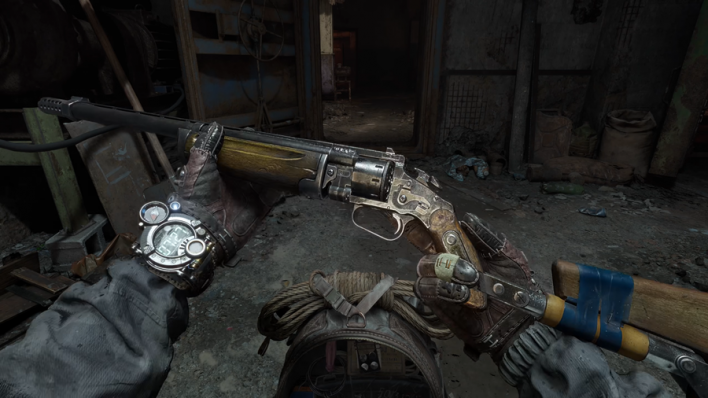
Of course, crafting in itself is not brand new. It existed in its predecessor Metro Exodus, and 'Metro 2039' feels more like an expansion of that system. The main difference is that while Exodus required workbenches scattered across maps, basic tools like filters, medkits, and ball bearings can be crafted anytime, anywhere in 'Metro 2039.' Although workbenches are still needed to craft firearms or attachments unlocked via blueprints, being able to make basic gear on the go allows for much freer exploration.
At this point, a question might arise: given that the game fundamentally follows a linear structure guided by objectives, is exploration truly necessary? Indeed, in the preview build, following main story objectives without roaming around presented no major issues. However, if there is a reason to explore, it is because it makes the gameplay experience far richer. In terms of combat and survival, acquiring blueprints allows for more efficient battles, while improved filters grant more breathing room during exploration.
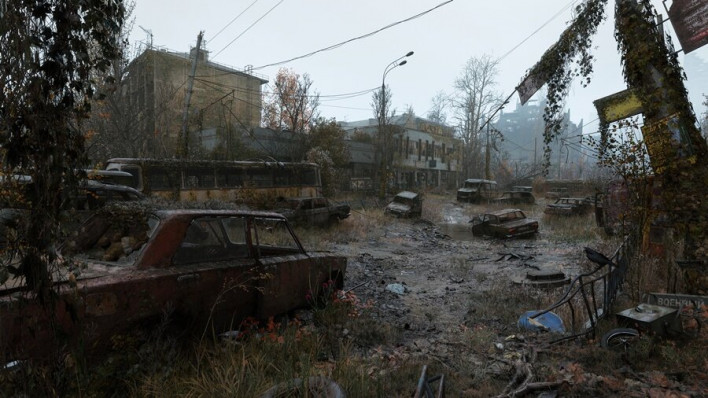
Another aspect that cannot be overlooked is how it enhances immersion. The Stranger is not alone in this desolate world. Traces of countless people who have already fallen or departed linger everywhere. Reading their final logs gradually draws you deeper into the bleak world of the Metro.
Though called exploration, it does not throw you into an open sea and leave you to figure things out on your own. Opening the map reveals ruined locations like pharmacies, shops, and hospitals alongside main story areas marked in green. Exploring these areas yields various survival materials, as well as blueprints if you are fortunate.
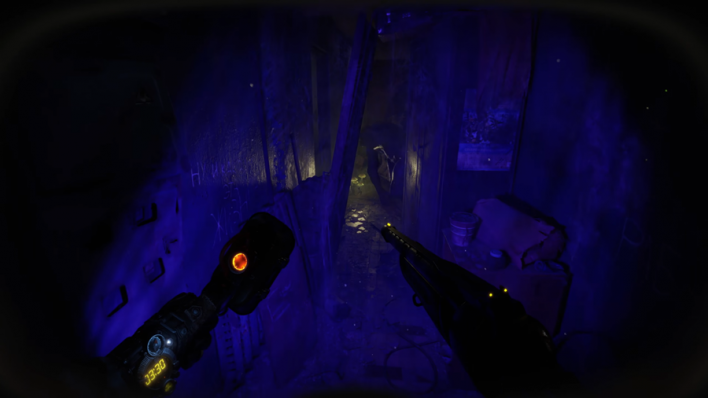
While blueprints can sometimes be obtained simply by defeating mutants, other times you must crack lock combinations. This is where the newly added UV light in 'Metro 2039' shines. Shining the UV light near a lock reveals clues to the combination. Rather than being a simple matter of visibility, it adds depth to exploration in various ways.
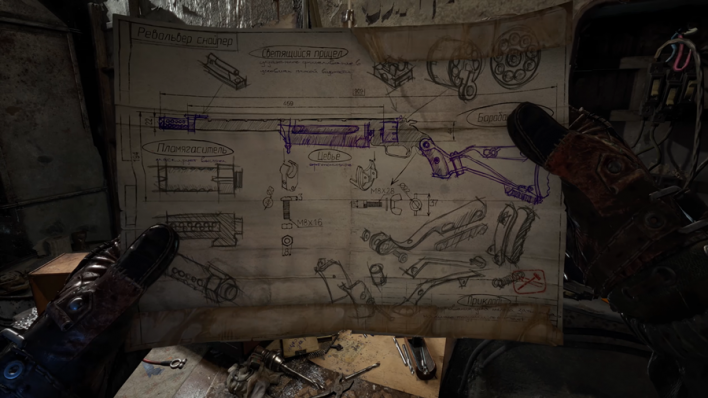
The cutting torch and breaching charges are also worth noting. The cutting torch can sever door latches to access previously inaccessible areas, while breaching charges can be placed on walls to forge new pathways. However, the concept of 'creating a path' here differs somewhat from sandbox games. For instance, you cannot cut through just any razor wire with the cutting torch, nor can breaching charges create a path on any arbitrary wall. In that sense, their applications felt somewhat limited compared to the UV light.
Of course, this is merely an impression from the preview build. As mentioned earlier, since it covered roughly two hours from the early game—and that was with roaming around—it is premature to judge their true utility.
Even so, it was hard to deny that all these elements multiplied the fun of exploration and survival. One might suspect that adding on-the-fly crafting would make the game feel lighter, but the reality was the exact opposite. With these added mechanics, exploration and survival felt richer and more intense.
A Familiar Yet Evolved Combat System
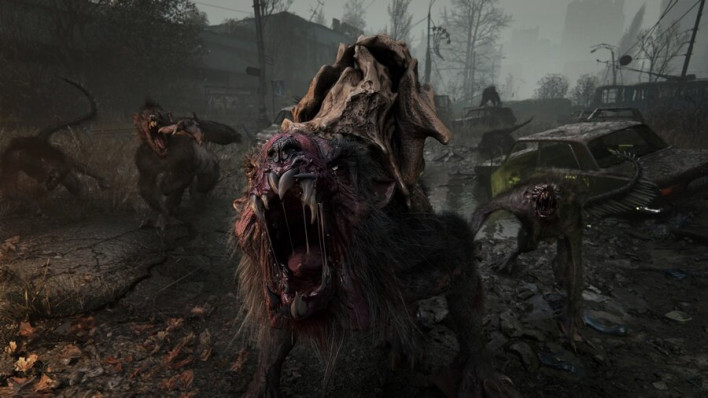
The combat system builds upon previous entries in the series, polishing existing mechanics further. Simply put, it did not feel drastically different from its predecessor. While continuing the predecessor's legacy is a strength, it might feel slightly disappointing for those expecting complete novelty. Nevertheless, it was hardly a drawback.
Combat is broadly split into fighting mutants and human enemies. Mutant encounters rely heavily on raw firepower. Whether in open surface spaces or relatively wide underground areas, combat revolves around focusing all available firepower. Shotguns are used for close-range aggressors, while machine guns deal with distant targets.
Mutants attacking from all directions exert intense pressure, but clearing them out delivers a proportional sense of catharsis. The greater the tension, the sweeter the thrill of victory.
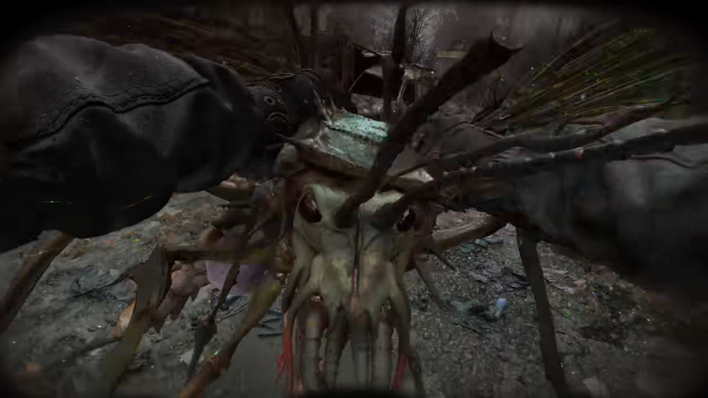
This combat loop shines even brighter when facing boss-tier formidable foes. Although only one or two types of tough enemies were featured in the preview build, encountering them in confined spaces proved to be a major threat regardless of numbers. Taking down such foes requires more than accurate shooting; the trick lies in selecting context-appropriate ammunition. In 'Metro 2039,' secondary ammo types have been added for weapons, which are scarce but deliver powerful results. Incendiary rounds were used most frequently during the preview build, demonstrating outstanding performance against standard mutants and tough foes alike.
The downside was that only a handful of mutant types were available in this build. Outside of dragonfly-like insectoid mutants, Humanimals, Shrimps, and what appeared to be Lurkers, there were few others, making it difficult to verify the varied behavioral patterns mentioned by the developers.
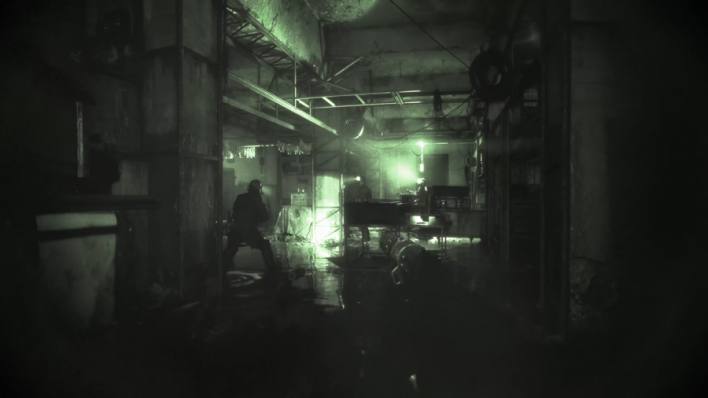
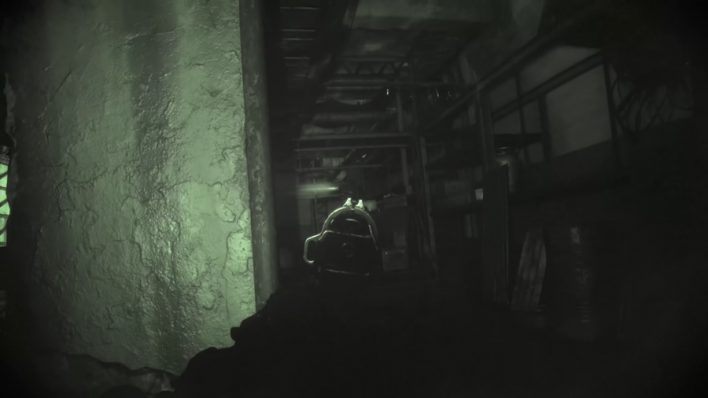
While combat against mutants relies on overwhelming firepower, fighting humans revolves around stealth and assassinations, as getting spotted causes enemy reinforcements to swarm. This flow remains largely unchanged from previous Metro games. However, one notable addition was made: leaning from cover. Previously, observing enemies from corner stealth required stepping entirely out of cover, but 'Metro 2039' adds a leaning mechanic, allowing players to peek out naturally while remaining concealed.
In the preview build, the raiders threatening Sevastopol Station were the only human faction available, and the difficulty was low enough that charging in head-on posed little challenge, rendering leaning unnecessary. However, as the Novoreich, which essentially controls the entire Metro, will appear later, players will likely need to actively utilize mechanics like leaning when taking on combatants from such a formidable faction.
A First Impression Made Strong by a Brief Hands-On
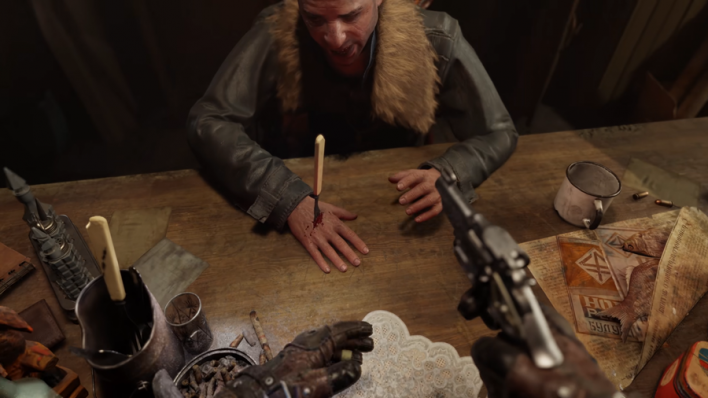
Although this preview build only scratched the surface, it was nevertheless satisfying in many ways. The darker atmosphere felt noticeably different from the somewhat hopeful journey of Artyom and his companions in the previous title, and combat against mutants and hostile factions was generally gratifying.
However, on a personal note, the scheme felt somewhat overcrowded on a controller. This discrepancy might have stemmed from skipping the tutorial section that would normally be present. Still, with medkits, gas mask filters, and the portable light mapped to the directional d-pad inputs, and additional items like the lighter, night vision goggles, and UV light mapped to LB + d-pad directions, inputs sometimes felt tangled.
In addition, throwing weapons such as knives, explosives, and distraction cans were mapped to LB + ABXY buttons; having so many input combinations was personally not entirely welcome. While expanding controls allows access to various features, streamlining them to some degree felt necessary.
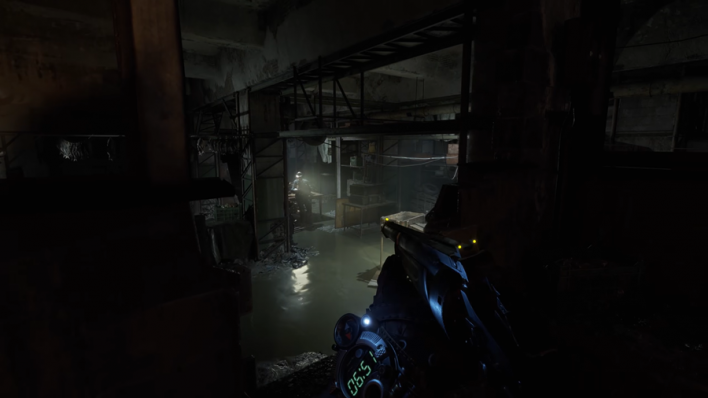
Even so, expectations for 'Metro 2039' have not diminished. On the contrary, anticipation is higher than ever. Though only a fraction was shown, it was enough to spark genuine curiosity about what lies ahead.
Excitement for the new protagonist, the Stranger, is also worth highlighting. Glimpsed briefly in the preview build, his demeanor is distinctly cynical. In some ways, he carries a badass edge that, combined with the darker world and narrative, exerts a compelling appeal.
What kind of story will 'Metro 2039' unveil in the future? And why did Hunter turn into a ruthless dictator, and why did the Stranger return to the Metro? All of these secrets are set to be revealed in February 2027.

Sort by:
Comments :0