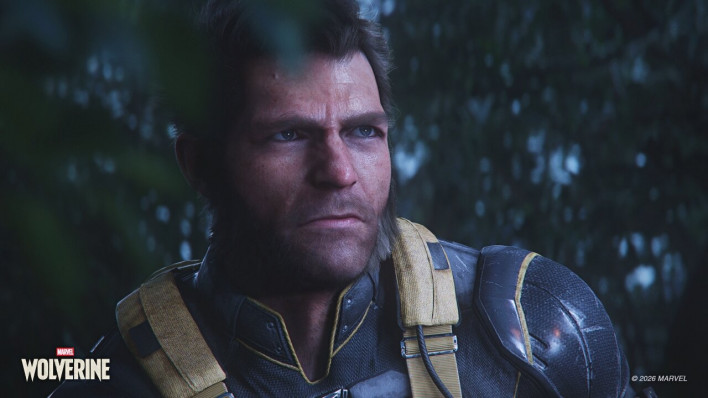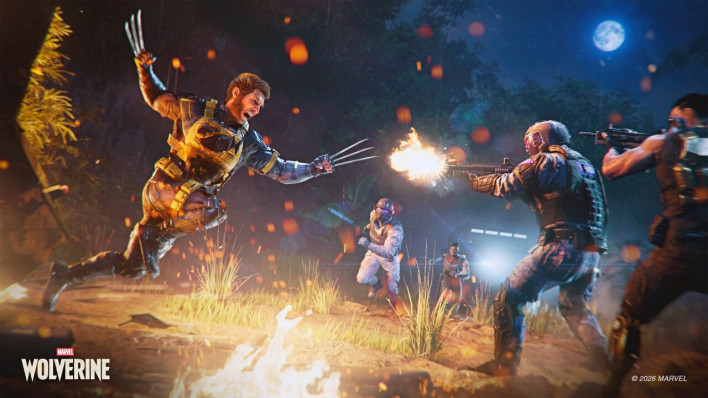
Insomniac Games' new title, 'Marvel's Wolverine,' is a single-player action-adventure game releasing for PS5 on September 15. While sharing the same universe as the 'Marvel's Spider-Man' series, it opts for a more linear structure instead of an open world, following Logan's journey across various regions of the world and telling the story of mutants whose existence is not yet widely known. Combat also focuses on Wolverine's signature heavy and brutal action fought up close against enemies, rather than Spider-Man's style of moving freely through broad spaces.
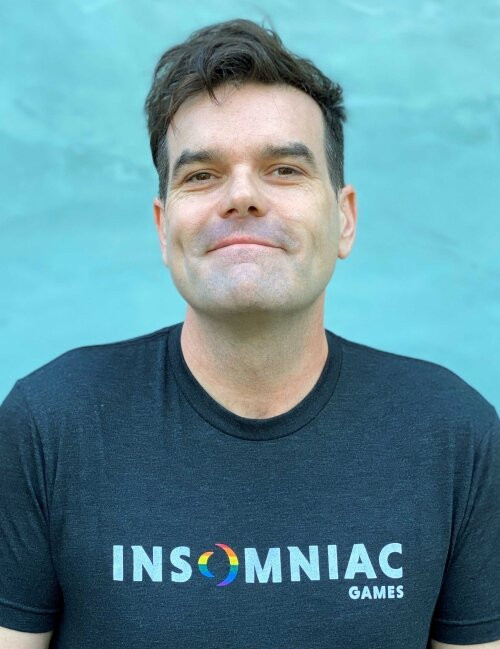
When bringing Wolverine—who has been depicted countlessly in comics and movies over decades—into a game, what was the core essence Insomniac wanted to uphold? And among the experience built through years of developing 'Marvel's Spider-Man,' what did they keep, and what did they discard? Ahead of the launch, we sat down with Creative Director Marcus Smith to ask about the story, characters, and combat system of 'Marvel's Wolverine.'
'Marvel's Wolverine' is both Logan's personal story and a story about mutants. In dealing with the conflict between humans and mutants, what influences did you draw from existing 'X-Men' lore, and how did you approach crafting a story unique to this game?
" Just like with 'Marvel's Spider-Man,' our top priority was to properly capture the essence of the character first, and then build an original story on top of that. Wolverine's origin has been covered so many times in comics and movies, so we didn't want to repeat that again.
In the world of this game, we look at the conflict between mutants and humans from a slightly different perspective. In the world we're depicting, the X-Men do not yet exist, and most humans are completely unaware of the existence of mutants. Only a few know about mutants and view them as a threat. And mutants are very vulnerable to those people.
So with this title, we wanted to place Wolverine at the center of the story and depict a time when the world is just starting to learn about the existence of mutants. Team X also appears in this environment as a group that searches for and protects mutants hiding across the globe. Through this setup, we were able to tackle the conflict between humans and mutants in our own distinct way.
Insomniac spent years developing the 'Marvel's Spider-Man' series. When shifting focus to Wolverine instead of Spider-Man, what was the first development approach you had to change? On the flip side, what lessons or experiences from 'Marvel's Spider-Man' carried over directly?
" The biggest principle carried over from 'Marvel's Spider-Man' was that "the essence of the character must be translated into the gameplay experience." With Wolverine as well, players need to immediately feel like the character the moment they start playing.

However, once we started comparing the two characters, almost everything else turned out quite different. Spider-Man is closely tied to the setting of New York, an agile character who moves rapidly above the city streets. Logan, on the other hand, carries immense weight due to his Adamantium skeleton and isn't someone who zips around quickly. Because he fights enemies with sharp claws, we also needed to bring the camera much closer.
Furthermore, Wolverine isn't a figure bound to a specific city. Instead, he travels to various locations around the world following the story. Combining these elements led to a much more dense, intimate experience, and gameplay took on a more linear, grounded form. Because we wanted to create an intimate character experience across multiple global settings, an open world naturally fell off the table.
Ultimately, only the principle of 'staying true to the character' carried over, while almost everything else changed.
'Marvel's Spider-Man' balanced serious storylines with energy and humor. In contrast, 'X-Men' stories tend to be relatively dark. How did this difference influence the storytelling in 'Marvel's Wolverine'?
" Here again, the most important benchmark was the character. Wolverine has issues with his memory and constantly struggles with his identity. He's a character grappling with complex questions about whether he is a weapon, a human, or a mutant.
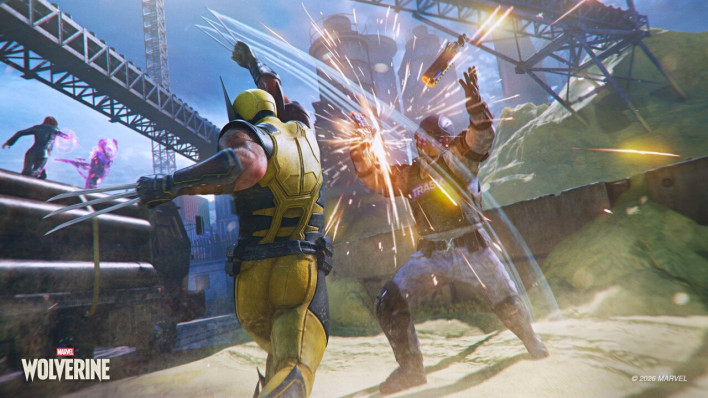
We decided that to properly portray characters like this, the story needed to match that mature level. The violence committed by someone with razor-sharp claws follows the same context. So from a very early stage, we knew this title would be a more mature and darker game.
That didn't mean we could compromise on the fun expected from a Marvel game, though. Logan isn't someone who cracks jokes while fighting like Peter Parker, so instead, we aimed to generate fun and emotional friction through his relationships with other characters. Placing a character like Sabretooth—who holds different moral standards and approaches from Logan—on the same team, with Mystique playing a more neutral role in between, is one example.
As a result, embracing darkness and maturity actually allowed us to delve into even deeper, more emotional moments.
This title features fairly explicit blood and violence as Wolverine slashes and stabs enemies. What was the most important criterion when determining the appropriate level of brutality?
" We felt that staying true to Wolverine as a character meant blood and violence were unavoidable. However, we didn't set a hard line right from the start. There were instances where we saw scenes created by animators and felt 'this crosses the line,' and we analyzed one by one why it felt that way.
One of the most important criteria we realized during that process was that Wolverine 'must not look like someone who enjoys violence.' Logan isn't a sadistic person. If someone stands in the way of his objective, he can kill them with extreme violence, but he doesn't inflict pain on purpose or toy with his opponents. He is someone who acts with extreme efficiency.

The same applied to the amount of blood. If it went to an overly exaggerated level, it actually started looking comical. So we pursued a sort of 'hyper-real' direction that remains grounded while being slightly heightened.
We also cut down on enemy dialogue that made them appear overly humanized. Making players grapple with moral dilemmas like 'is it really okay to kill this person?' by thinking about an enemy's family or daily life was not the direction we wanted. They are explicit threats trying to kill the player, and we needed to remind players that Wolverine doesn't exert more violence than necessary.
Of course, we also offer accessibility options for players who feel uncomfortable with brutal depictions. Blood, gore, and dismemberment expressions can be toggled off at any time.
'Marvel's Wolverine' shares a universe with 'Marvel's Spider-Man.' Will there be elements where players can feel the connection between the two titles?
" Both games take place in the same Marvel universe, 'Earth-1048.' However, we aren't currently planning a direct crossover where Spider-Man and Wolverine meet.
Instead, attentive players will be able to spot familiar lore and traces of the shared universe scattered throughout the game. Because we built them to share the same world, the foundation is set to explore more connections in the future if an opportunity arises.
Beyond simply making combat more brutal, what was the single most important element in giving players the sense that 'I am truly controlling Wolverine'?
" It's hard to explain with just a single element. First, we wanted to capture Wolverine's resilience and relentlessness. Logan has a healing factor, but he isn't someone who feels no pain. He feels every punch, kick, and bullet, yet stands back up and keeps pushing forward. That relentlessness is one of the reasons Insomniac loves Wolverine as a hero.
His animalistic senses were also key. Wolverine is a master tracker and an apex predator who can detect things ordinary people can't smell, hear, or see. Stealth reflects these traits as well. Players can pop their claws and charge right in, or stay hidden and pick off enemies one by one. This stealth gameplay is optional, rewarding quiet takedowns with extra Rage or special cinematic takedowns.
Beyond that, Rage, the healing factor, fragmented memories, complex emotional states, a rough personality, and the heavy weight coming from his Adamantium skeleton all had to mesh together to complete what we envision as the true Wolverine experience.
'X-Men' has a long history and an expansive cast of characters. Were there specific criteria when deciding which characters to include in this game?
" It was actually a fairly complex process. At first, we created a list based on 'who must appear to realize the core Wolverine fantasy.'
However, as we fleshed out the story, some characters we initially thought were essential ended up being cut. Including certain characters required explaining their relationship within Marvel lore at too great a length, or didn't fit well when balancing the narrative dynamic with Logan.
Conversely, characters we originally envisioned in minor roles grew in importance as the overall story developed. Like many other aspects of game development, it was a highly iterative process. We kept experimenting and revising, adding or removing characters as needed.
Wolverine is fundamentally a melee-focused fighter. What combat systems and enemy types did you prepare to prevent gameplay from feeling monotonous?
" The core claw combat itself felt very true to Wolverine relatively early on. The challenge was maintaining engagement as the game progressed, evolving the combat and introducing new enemy types.
In solving that, the healing factor and Rage system underwent major changes. Originally, health regenerated automatically over time like in other games, but playtesters ended up backing away during combat to wait for health to refill. That was completely out of character for Logan.
Rage was also initially designed so players could pool it and activate it whenever they wanted. While strategic, it proved too powerful and disrupted combat flow. Most importantly, Logan isn't someone in complete control of his rage, so letting players control Rage freely didn't fit the character.
In the current system, fighting aggressively builds Rage, and when health is low, that Rage can be converted into health. It encourages pushing forward continuously while providing a safety valve in crisis situations.

Enemy composition was equally crucial. Shield-bearing enemies require breaking their guard, while ranged attackers force you to close the distance quickly. When different enemy types appear simultaneously, it creates a dynamic where players must constantly judge which threat to prioritize.
Combat strategies also shift depending on enemy factions. Basic Trask forces are relatively easy to handle but can wield heavy-damage weapons like shotguns. Reavers withstand more punishment with cybernetic enhancements and cooperate with one another, while The Hand pressures players with organized movements and mobility—targeting what could be considered Logan's weaknesses. Combining these enemies maintains Wolverine's power fantasy while keeping tension high.
Wolverine's iconic outfits evoke classic comic book designs, while movies have also established a strong image over time. What process led to the designs seen in the game today?
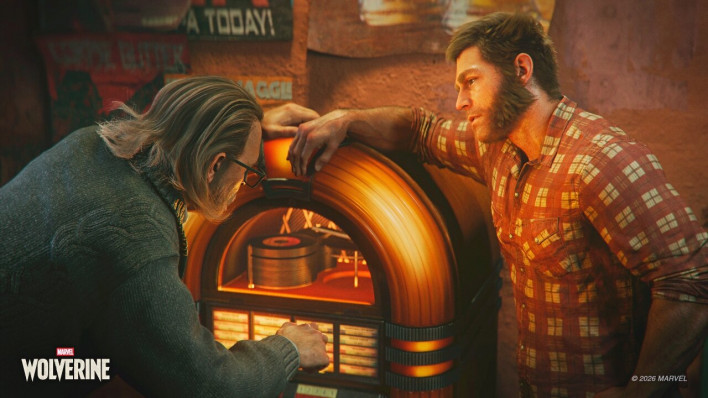
" The most important thing was giving players choice. Personally, I like Logan in casual clothing. Having grown up in the Pacific Northwest myself, I wore a lot of cheap, warm flannel shirts, so I have a personal fondness for Logan in that look.
Ultimately, we wanted players to choose the version of Logan they envision. We prepared a wide range of outfits inspired by comics, TV, and films, alongside suits designed exclusively for the game. Even when creating original suits, we maintained iconic color schemes and key character traits. In particular, we focused on making the mask and claws offer a fresh design without losing that familiar feel.
In addition to our internal designs, Marvel artists also created suits specifically for this game. We hope players enjoy both the new designs and classic looks fans have loved for years.
Like 'Marvel's Spider-Man,' this title tells an original story centered on Logan. Among the many interpretations of Wolverine over decades, what elements did you feel were essential to preserve, and what did you want to re-interpret in Insomniac's unique way?
" The non-negotiable traits were clear: short, hairy, and Canadian. Having claws, animalistic senses, and a healing factor. Memory issues that also make him an unreliable narrator.
Wolverine is also rough around the edges and doesn't easily let people close. That stems from past trauma where his uncontrollable rage hurt those close to him. If you're making a game centered on Wolverine, those elements must be represented.
The real question was how to build a fresh story around a character that has existed in various iterations for over 50 years. One key focus was asking, "What are the goals of the enemies Wolverine faces?" Using that as a foundation, we pondered how to craft an original story while retaining the complex character depth built by comics and films.
As a result, while set in the modern era, we changed how mutants are perceived by the world. Mutants are not yet widely known, and the X-Men do not exist. The only entity offering practical help to mutants in hiding is Team X. Through this, we elevated the significance of Team X and developed the human-mutant conflict across the overall narrative.
Unlike 'Marvel's Spider-Man,' 'Marvel's Wolverine' adopts a more linear structure rather than an open world. How did this shift affect content and level design?
" The main reason for moving away from an open world was Wolverine as a character. Fortunately, Insomniac has spent 30 years building diverse game structures, with experience creating games like 'Ratchet & Clank' or 'Spyro' in the past that offer room for exploration within linear progression.
This title isn't a strict straight-line game either. Collectibles exist, and players can gather materials used for suit crafting. 'Nightmare Door' challenges are present, and Mission Replay unlocks early in the game. If you missed items after completing a mission or want to retry on another difficulty, you can jump right back in. We also offer New Game Plus.
Most importantly, a linear structure allows narrative and level design to mesh far more seamlessly. We can precisely control pacing—opening up wider arenas for massive battles, then transitioning smoothly into breathing room to focus on story beats. While predicting player positioning in open worlds is always difficult, linear environments allow us to craft mission and story pacing much more tightly.
Jean Grey is a character whose immense powers make her tricky to balance in 'X-Men' narratives. What is Jean Grey's status in 'Marvel's Wolverine,' and how powerful is she?
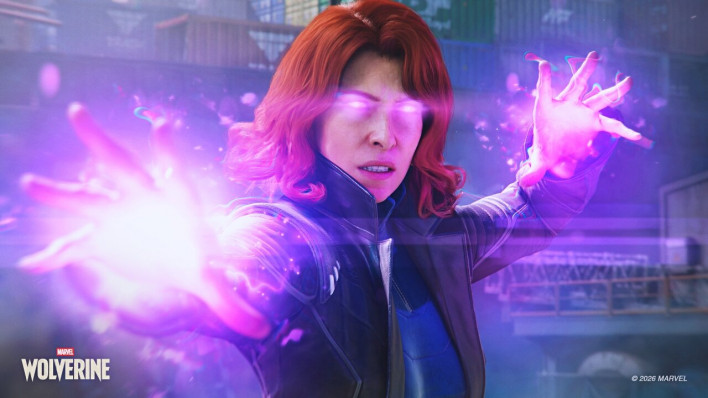
" Overly powerful characters, especially Omega-level mutants, are definitely a tricky design challenge when making superhero games.
When players first meet Jean Grey in this game, she isn't fully comfortable with her powers yet. Some time has passed since she gained her abilities, but the world isn't an environment where mutants can easily reveal themselves. Fearing the retaliation they might face if exposed, she hasn't had many opportunities to display or hone her powers.
So Jean Grey, at the point of initial encounter, hasn't fully mastered her strength. She grows as the story progresses, but when she first appears, she isn't an overwhelming mutant with godlike powers.
Combat seems to inherit elements of Freeflow Combat, but in practice, the flow feels quite different from 'Marvel's Spider-Man.' While Spider-Man leaps toward enemies meters away to chain attacks fluidly, Wolverine feels heavily focused on fighting in his immediate vicinity. Was there an intentional reason for narrowing the engagement range?
" Exactly. This too was a decision to remain true to the character. Spider-Man is an agile, acrobatic fighter. He can battle mid-air and feels like he's toying with enemies. He can wrap them in webs to throw or web them to walls, and he has a variety of gadgets.

Wolverine, by contrast, is essentially a heavy 'weapon.' He uses his fists, claws, and head (he headbutts too). He literally lunges with his feet and body, fighting directly at extremely close range. So combat strategy focuses less on traversing broad spaces and more on how to manage multiple enemies, sustain health, build Rage, and eliminate threats faster.
Environmental takedowns are also present. As shown in the trailer, you can kick an enemy onto forklift tines. While options extend beyond basic punches and kicks, Wolverine is fundamentally someone who pummels opponents up close, and both combat systems and enemy designs were built around that premise.
As a more linear, story-focused game compared to 'Marvel's Spider-Man,' how long is the overall playtime? What scale can players expect?
" At this stage, it's difficult to give a specific average playtime because playstyles vary significantly from player to player.
However, the length required to complete the main narrative is comparable to what you would expect from a standard high-quality, narrative-driven game.
Playing the game firsthand, perhaps due to the healing factor, even when near death, the impulse was to keep fighting to regain health rather than creating distance to recover. If he's too strong, he feels invincible; if he's too weak, it doesn't feel like Wolverine's healing factor. How did you balance this dynamic?
" As mentioned briefly, we initially adopted a mechanic where players retreated from combat to recover health. However, we felt that behavior was far from true Wolverine fashion.
Currently, health is regained through aggressive actions, combined with a structure where fighting builds Rage. This encourages players to keep pushing forward while ensuring enemies remain a genuine threat. It sounds simple when put like that, but this process required an extremely long time. If a single enemy type became overly potent, we had to go back and adjust attack patterns and health pools.
For Wolverine, combat holds the same foundational position as web-swinging does in 'Marvel's Spider-Man.' It was something we had to get right, and in fact, combat was where we invested the most time throughout development. Even afterwards, we repeatedly validated it through playtests, tuning it continuously to strike the sweet spot that is neither too easy nor too punishing.
Finally, do you have any message for fans in Korea eagerly awaiting 'Marvel's Wolverine'?
" Everyone at Insomniac is incredibly excited to bring this game to players around the world. We hope players in Korea enjoy what we've created, and that they can resonate with the human side of mutants and Logan as a character. We can't wait for you to experience it firsthand.