If you take an interest in clothing, you might come across stories about Japanese denim reproductions (repros). The main idea is that Japanese denim enthusiasts, driven by nostalgia for vintage American jeans, recreate past garments by replicating everything from looms and buttons to other materials as close to the originals as possible. Rather than chasing the latest trends, people who are drawn to retro charm show keen interest in these reproduction goods.
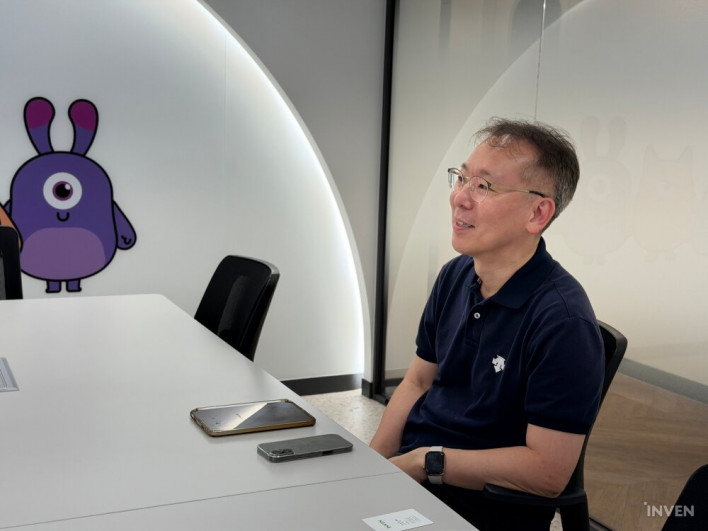
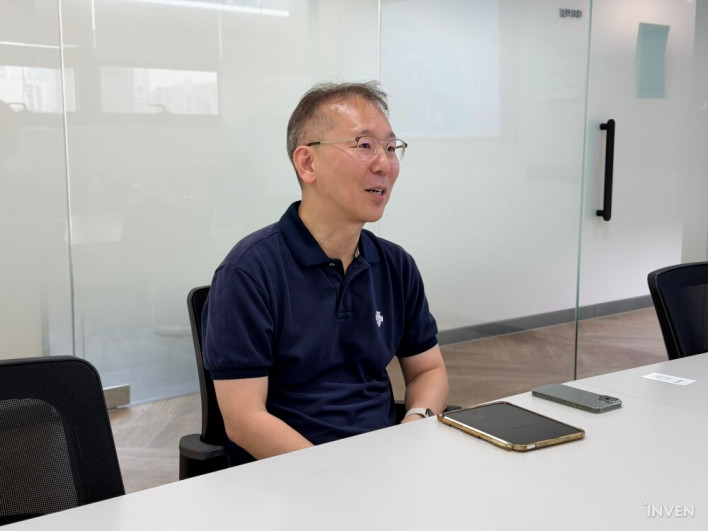
Speaking with VALOFE CEO Shin Jae-myung left the impression that the company's defining characteristic resembles reproduction more than mere republishing. It unearths games that have disappeared yet retain a dedicated fanbase, faithfully restoring them as close to the original as possible to release the version players enjoyed most—and then going one step further.
When told that "players used to think VALOFE was an undertaker, but these days they see you as a healer," CEO Shin felt somewhat aggrieved by the "undertaker" label. He admitted it hurt a bit because VALOFE had never intentionally brought in a game only to kill it off. Still, he smiled at the fact that players now view VALOFE as a healer.

How would you introduce VALOFE?
“We define ourselves as a global game publishing platform company. When we founded the company, we started as a conventional publisher. If there was a distinguishing feature, it was that we focused more on overseas markets than domestically. When we discovered republishing in 2017, the company grew based on that model, and we built a platform called 'VFUN' based on the users we gathered.
Ultimately, we define ourselves as a platform company. We view republishing as a strategic sourcing method toward becoming a platform company.
How does this differ from standard publishing?
“Technically, it is identical to publishing, but with the key difference that we handle development directly. Standard publishing does not handle development. The technical difference for VALOFE is that we obtain the source code and handle development ourselves.
From a business standpoint, the difference is that we target IPs that were popular in the past rather than new titles.
What made you start republishing?
“It happened purely by chance. A developer suggested taking over everything, including development, for their games, so we took on about three games from that company. As we ran them, the business turned out better than expected.
Thinking other companies might have similar needs, I started reaching out to developers. I created proposals and pitch materials, and surprisingly, there was a response. That demand really existed. So we decided to formalize it into a business, and we defined the term 'republishing.'
Your previous experience at NHN and Neowiz must have helped.
“It helped immensely. I worked at both Neowiz and NHN. At NHN, I headed the publishing business division, and toward the end of my time at Neowiz, I focused mainly on overseas game sales.
Some of the games we brought in are 10 or 20 years old, which were active during my tenure at those companies. I knew which countries those games did well in and where they were well received. When scaling up the business, knowing 'that game did well in that country back then' helped us do pinpoint marketing.
What criteria do you use to choose games to take over?
“The most critical factor is how large the core player base is. It doesn't matter if it's not Korea. Whether it's Germany or Türkiye doesn't matter at all. As long as there is a core fanbase in any country, we consider it suitable for republishing.
What kinds of companies usually hand over their games?
“Initially, I thought smaller, underfunded studios would respond best. But surprisingly, selling to smaller companies was harder. Because they only own one or two games, they face a dilemma: 'If I pass this to VALOFE, what do I do?' Persuading them was actually tougher.
Major companies had far greater demand. No matter how big a company is, resources are limited. That means they have to focus and prioritize, and the key to prioritization is giving things up. But there are titles that are awkward to give up. In the past, shutting down was the only option, but now VALOFE is an alternative.
The biggest need came from companies wanting to hand over a project to VALOFE and redirect those resources into areas they truly wanted to focus on.
What's in it for the company handing over the game?
“Resource commitment is zero. All they have to do is issue a monthly tax invoice. The royalties we pay them are 100% net profit. On top of that, they aren't giving up IP ownership, only development and operating rights, which is also beneficial for preserving the IP.
So there is no reason for major companies not to do it. I think both sides' needs align perfectly.
Where are royalty rates typically set?
“It varies case by case, but it generally ranges between 10% and 15%. We rarely experience much stress over this during deal negotiations.
Generating a 10% to 15% profit margin from a game with zero resource input is a figure most companies would struggle to achieve on their own. IP holders seem to recognize that as reasonable.
I heard that companies sometimes approach you first these days.
“It's true that it's happening more and more. In the past, I had to pitch aggressively, but nowadays many companies approach us directly. We receive quite a few proposals asking us to take over games.
Previously, I had to explain our business model in detail, but now people are usually already familiar with it. As our company gained visibility and built a track record, word of mouth spread, creating a virtuous cycle. 'Zenonia,' which we took over last year, is one such case. They received offers from several other places besides us, but they entrusted it to VALOFE believing we would do the best job.
Why it's hard to copy: "Developers who like touching code written by others are rare"
The model itself seems simple, but it doesn't appear easy to replicate.
“That was a question I got a lot during IR presentations when going public. It's like Columbus's egg—a business model that seems unknown until done, but obvious afterward. The model itself is simple. I believe all successful models should be simple. The issue is execution, and execution is not easy.
There are a few key points. First is development. The games we bring in were built up to 10 or 20 years ago, so they run on legacy code. Many game engines used back then are discontinued, or they use proprietary engines. Most were developed in C++.
Nowadays, developers who can handle this virtually don't exist. Finding C++ developers is tough, and by nature, developers dislike working on source code that others have touched. They prefer building from scratch instead. Assembling developers with this mindset is surprisingly difficult. VALOFE has been doing this for nine years, so we have such developers in-house. They have no resistance to adopting external code and have built up know-how in analyzing it.
I'm curious how you gathered developers like that.
“At first, it wasn't easy. Even when we hired developers, many left saying, 'I want to work on new titles.' But after several years, developers whose tendencies aligned with our work naturally joined.
The age demographic tends to be slightly older. Quite a few are industry veterans who have seen it all and realized 'new titles aren't everything' when rejoining. When hiring, we avoid candidates with a strong desire for new game development, as they are likely to leave soon. By clearly explaining what our company does and hiring those who are committed, it created a snowball effect that shaped our development team and culture.
What are the other two points?
“Second is development costs. Domestic development costs keep rising. To streamline operations, we expanded our studios from Korea into China and Vietnam. We have around 100 developers in China alone, and about 200 developers company-wide.
Third is live operations and publishing services. Even if you secure the development rights, you still have to operate the service, but the global publishing market today is nearly dead. In the past, there were several prominent local publishers in places like Thailand, Indonesia, or Germany, but those companies have now pulled out of publishing or gone out of business. For developers, Steam is practically the only option left to publish.
However, Steam only provides users; it doesn't provide infrastructure. It doesn't provide customer support or operations, so the developer ultimately has to do it. In contrast, VALOFE possesses all the infrastructure needed to run services in-house. Having a system capable of handling both production and distribution makes it very difficult for most companies to easily replicate us.
Your organizational structure must also differ from typical game companies.
“We don't have a Producer (PD) role. The head of a team is the team leader, and each leader manages and operates two or three games. Art is handled as a shared central organization.
Art talent is also distributed across Korea, Shanghai, and Vietnam. For roles that are hard to find in Korea, like pixel art or 2D art, we hire and train personnel in China or Vietnam, while higher-difficulty or premium-quality work is done internally in Korea.
How do you manage your overseas entities?
“In most cases, overseas branches operate independently, but for us, while they are legally foreign entities, we operate as a single organizational chart. We don't have branch managers; instead, responsibilities are divided.
Japan handles operations, the Philippines manages English-language operations, Shanghai in China serves as a development studio, and Vietnam is also a development studio. Korea oversees both service operations and development. Hong Kong exists as a strategic position for Chinese market business.
Are you also utilizing AI?
“We use it extensively, and the ratio is increasing. While revenue is one thing, our operating profit has improved significantly, and AI has helped a lot with that.
In the past, when we took over a game—especially large-scale ones—it took a long time to analyze and understand the project. Documentation was often non-existent. But now, if we train AI for about five days, it generates a wiki covering the game's entire structure. If a human were to do that, it would probably take a year. This isn't a 20% or 30% improvement—it's game-changing. Having it documented in a wiki makes it easy to understand the game structure even when developers change.
For art, we've also adopted generative AI to streamline production. However, for 'Last Origin,' anime/subculture players dislike AI art, so we craft every single asset by hand, whereas we utilize AI for our other RPG titles.
From undertaker to healer
Players have started calling VALOFE a healer rather than an undertaker.
“I'm deeply moved. I'm grateful that they view us positively. Honestly, the 'undertaker' tag stuck to us for quite a long time. Even back then, I felt it was unfair. We have consistently kept games alive and have never killed one off to this day. (Laughs) We never killed any, so I wondered why people called us undertakers and felt like arguing our case, but I just accepted it. Now, seeing players view us more positively makes me truly grateful.
Was there a specific turning point that changed this perception?
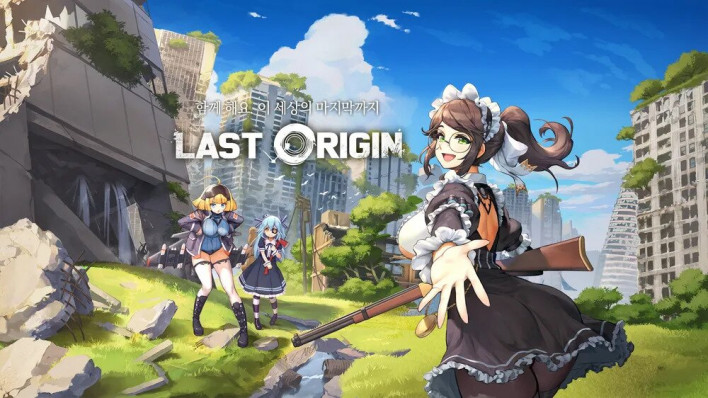
“I think 'Last Origin' played a huge role in shifting our company's image. Before we acquired it, the operator had changed once or twice, leaving players anxious. Especially when VALOFE took over, there were negative rumors at the time, so player anxiety peaked with worries like, 'Is VALOFE going to shut this down?'
We worked hard to convey the message that "We will not shut this game down; instead, we will manage and update it even more actively." We pushed out content aggressively and actively communicated with players through livestreams. Player perception didn't change overnight. But after a few months, players gradually realized, 'VALOFE isn't going to shut this game down—they're really putting in the work,' leading to positive feedback.
When taking over a game, what do you focus on most?
“When a game comes to us, development resources have usually been largely pulled. Updates are often non-existent, so after acquiring it, our primary focus is to deliver as many updates as possible to build trust that the game will not be shut down.
Unlike games that have already shut down, fixing issues on live titles is tricky because active players are using the service. During such times, many players worry nervously about whether the service will end. That's why establishing trust that the game won't close is crucial.
On the other hand, reviving an already shut-down game has advantages. Since it was operated in the past, its issues are well known. There are clear records of which bugs caused trouble or which patch cost player trust. That helps immensely when rebuilding. We focus on launching without repeating past mistakes, almost like using a time machine.
It's known that original developers of 'Last Origin' joined as well.
“That's not true. Percentage-wise, hardly any of them came over. Most left to make other games. We didn't exclude them, but our stance was that we welcomed those who wanted to join and didn't push those who didn't.
There was also a misconception that you would squeeze out the last bit of profit from acquired games.
“As a prime example, 'Last Origin' has almost no gacha mechanics. Some suggested we should naturally introduce gacha, but we chose not to. Squeezing existing players like that might boost short-term revenue, but it would drive a huge portion of players away.
Fundamentally, when we republish a game, we actively expand not only in previously served regions but also into regions where the game was never available before. Our strategy is to grow revenue by expanding the pie, not by milking existing services.
Cost-cutting has its limits. Profitability was already poor when games came to us, and efficiency gains can only go so far. To break through, we need upside. We believed that upside lay in overseas markets. In the past, ARPU in countries like Thailand was low, making expansion unappealing, but the situation has changed. Markets in South America and Turkey have grown, and infrastructure has improved so much that games considered high-spec back then are now low-spec titles.
How long does it take to recover your investment?
“There are two cases. For live games, most are unprofitable from the IP holder's perspective when transferred. The first thing we do upon acquiring them is optimization. We optimize servers and networks, switch to more efficient cloud solutions, or reduce bloated server architectures to a third of their original size. Since we need to pay royalties and turn a profit, optimization is the top priority. The fact that our development teams in China and Vietnam provide more cost-effective development capabilities than the original IP holder also plays a big role. By doing this, we turn a loss into profit in about six months.
For games that were previously shut down, rebuilding and launching takes about a year. That represents the investment cost. While we haven't compiled internal statistics on the exact recovery rate per game, cost recovery usually happens in about six months post-launch. Depending on performance, titles like 'R2Beat' recouped their investment within almost one or two months.
How did 'R2Beat' perform?
“It was a game that had been completely shut down, so its revenue was zero. When we relaunched it in Korea, it generated nearly 8 billion won in annual revenue in its first year alone. We essentially created something out of nothing.

Your marketing approach must also differ from that of brand-new games.
“Because these games already have a core audience, marketing efficiency is high. Simply publishing news articles and building word of mouth about a launch generates significant attention.
For 'R2Beat,' we opened a message board 4 to 5 months before launch. Many players visited, saying things like, 'This game is actually coming back! I was a high school student back when I played it, but now I'm an adult with money to spend,' and a community organically formed around it. The marketing spend at that point was close to zero won.
Of course, we also run UA ads at launch. However, allocating billions of won in marketing budgets like new titles do isn't realistic. We focus on reaching as many potential players as possible to inform them of the launch, with a heavy emphasis on viral marketing. We put effort into targeted marketing by locating where core players gather.
Player communication is becoming increasingly important in the gaming industry.
“Personally, I believe we still need to develop further in that regard. There are many companies that do it better than we do. We started livestreams a few years ago, and thankfully, more teams have colleagues voluntarily appearing on streams to communicate with players.
This year, we also launched an open community platform. It's still in its infancy, but post volume is growing, so we plan to communicate more through that channel.
Are there any memorable player reactions?
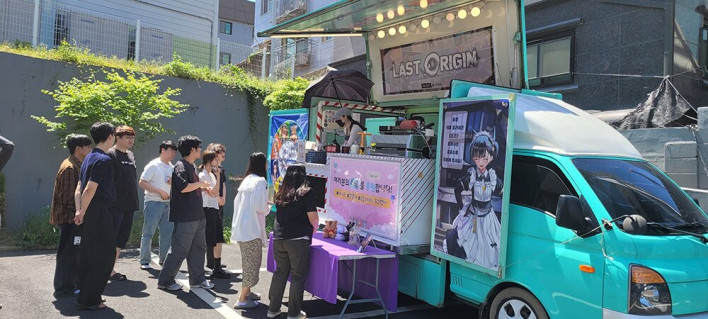
“Recently, players sent a coffee truck to treat our staff, and some even delivered gifts in person. Others sent fan art they drew, which we display in our hallways. These are reactions you rarely see with other games.
During our pop-up store event, I also felt the passion of our loyal fans. A regular player—not an event staff member—came in cosplay for three straight days and handed out drinks bought with their own money to visiting players. I thought they were our employee at first. I was shocked to find out they were a regular player. (Laughs)
Games that couldn't be saved: The difficulties of republishing
There must be games you wanted to acquire but missed out on.
“There are cases where bringing in a title would clearly succeed, make financial sense, and satisfy players who desperately want a relaunch, yet the owner declines due to internal logic like, 'This IP is important to us, so we can't share it.'
What's unfortunate is that private servers exist for those games anyway. I believe that if you truly cherish an IP, you need to keep operating it. Leaving an IP idle doesn't preserve its value. An IP stays alive only when touchpoints with players are continually maintained. Some seem to think that keeping it locked away is better than operating it imperfectly to preserve its value.
In other cases, we want to acquire a game, but the rights structure is overly complex. The company might have closed down, or ownership shifted so many times that no one knows who holds the rights. We don't even know who to talk to, and they don't know where the rights sit either. It's tragic to see games buried like that.
Are there cases where the source code itself is missing?
“Thai players pleaded with us to revive a certain game, and even a local publisher came asking if we could bring it back. When we looked into it, it was a game from a famous company, but even they didn't have the source code anymore. They only held the IP rights.
So we obtained the source code ourselves. We secured code from a private server and restored it via reverse engineering. After confirming we could proceed as long as we obtained licensing rights, we approached them, but the company refused, so it fell through.
Private server issues must follow; how do you deal with them?
“When we acquire a game, there are often numerous private servers. We receive power of attorney and crack down on them on their behalf. We believe that is essential for our service to succeed and for preserving the IP's value.
Older games had weak security, leading to many private servers. However, IP holders rarely crack down on them. Finding that unfortunate, we aggressively block and take down private servers once we bring a title over.
Do players also request that you revive specific games?
“Requests come in through community forums and via partnership emails. Global players also ask if we can revive certain titles. Based on player requests, we've even approached IP holders.
We haven't had a successful acquisition driven purely by player requests yet, but one is currently under discussion. Past attempts failed unfortunately because rights were untraceable, the company went under leaving no contact, or source code was completely unobtainable.
VALOFE's next step
How do you see the company's next phase?
“We define our company as a platform company, and republishing is part of our sourcing strategy. The advantage of republishing is low-cost, stable business, but the downside is that upside potential is capped.
That aspect shows up as a limitation for VALOFE in the stock market, and I believe it's why our financial performance isn't fully reflected in our valuation. Therefore, we've begun developing new titles by acquiring IPs, filling in areas we couldn't address before. We are also aggressively pursuing non-gaming business initiatives.
What is the schedule for new titles?
“'Last Origin 2' is actively in development, and we plan to reveal a portion of it to players at this year's AGF. The concept and worldbuilding should be revealed within this year, and we are targeting a release window in the first half of 2028.
'Kritika 2' is expected to launch in the first half of next year. As for 'Kritika Mobile,' which is being developed through Jiangsu Huanyu, we expect to receive a Chinese publishing license within this year.
Your secondary derivative IP licensing business also seems active.
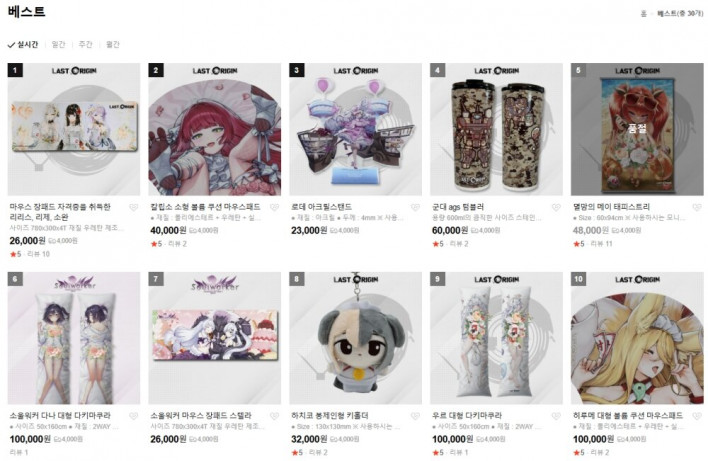
“Subculture/anime games are well suited for One Source Multi Use (OSMU). Japan is the home of subculture, and its derivative business market is much larger than Korea's. While 'Last Origin' performs far better in revenue through Korean and global live services, its secondary derivative business is performing best in Japan.
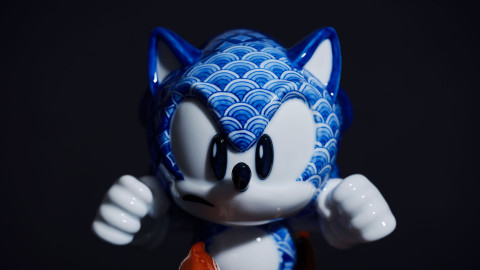
We already have 19 figure licensing contracts signed. In Japan, figure manufacturing alone takes a year. Prototypes come out a year after signing, and the quality is exceptional. The first product among the 19 was released recently and hit #1 on a major marketplace. It sold for 30,000 yen, with thousands of pre-orders alone.
Ultimately, our model is to expand the 'VFUN' platform through games and secondary IP business. Right now, we reach out to others, but making it an open platform where developers and content creators can freely host services on our platform is the ultimate direction we must pursue.
Are you also looking into overseas IPs?
“In Japan, we are preparing to publish one acquired title, and we continue tapping into China and Japan. Demand in China and Japan remains constant.
This isn't unique to Korea. As the global gaming market becomes a red ocean, the demand for republishing naturally arises everywhere. In China, there are about two companies operating similar businesses to ours.
There seem to be moves attempting to replicate VALOFE.
“There are people trying to do it. But with all due respect, it's hard to find anyone doing it well. They seem to hit the same entry barriers we experienced.
Building our dev team wasn't easy initially either. We would recruit heavily only for groups to leave en masse after a year, and forming that initial snowball took a long time. Even if you assemble a dev team, a game needs a degree of commercial success before you can secure a second or third title. From the IP holder's perspective, placing games with an experienced company offers peace of mind. We already have a track record of over 30 titles.
Why do you think interest is returning to classic games?
“Retro trends exist not just in games, but in other fields as well—in movies and music alike. There comes a point where retro trends return to the spotlight, and I think gaming has reached that moment. We started republishing nearly a decade ago.
Another factor is that as hit rates for new releases continue to fall, developers are returning to past hits to pursue stable development.
Personally, I feel games back then had much more varied themes. Games were made with diverse subjects regardless of guaranteed commercial success, but speaking as a gamer myself, looking at recent games feels like thematic variety has narrowed. To me, classic games often feel more original.

What games are you planning to unearth next?
“Just off the top of my head, there are three or four unannounced titles currently in internal development. We are continuing to unearth games even now.
Lastly, do you have any final words for the players?
“I hope you view us warmly. We will work hard. There are still many areas where we fall short, and we are well aware of those shortcomings. We are continuously striving to improve. While we are still small and weak compared to major companies, we will build ourselves up rapidly.