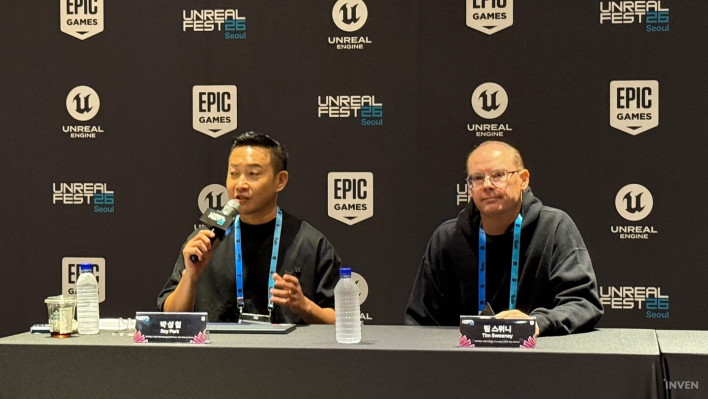
Epic Games hosted Unreal Fest Seoul 2026 at the Westin Seoul Parnas on August 20 and 21. Following the brief outline shared in June, this year's Unreal Fest Seoul 2026 teased engine-level architectural innovations, moving away from past events that primarily highlighted flashy graphical technology.
As we draw closer to the era of Unreal Engine 6, currently in development with a target Early Access release in late 2027, how is Epic Games preparing? CEO Tim Sweeney, who visited Korea, shared more details during a roundtable with local media regarding what changes to expect in the Unreal Engine 6 era.
Q. To start off, what are your thoughts on the recent changes in the gaming market and Epic Games' future vision?
Sung Chul Park: The gaming industry is truly in an era of transformation. We are preparing Unreal Engine 6 accordingly, and I believe it will be of immense help to developers.
Tim Sweeney: As I mentioned in the keynote, the gaming industry as a whole is undergoing massive changes. In particular, ecosystem games—including Fortnite and Roblox—are growing rapidly. On the other hand, AAA game development costs now exceed hundreds of millions of dollars, yet failures are becoming more frequent. I believe it is time for the global gaming industry to rethink traditional models.
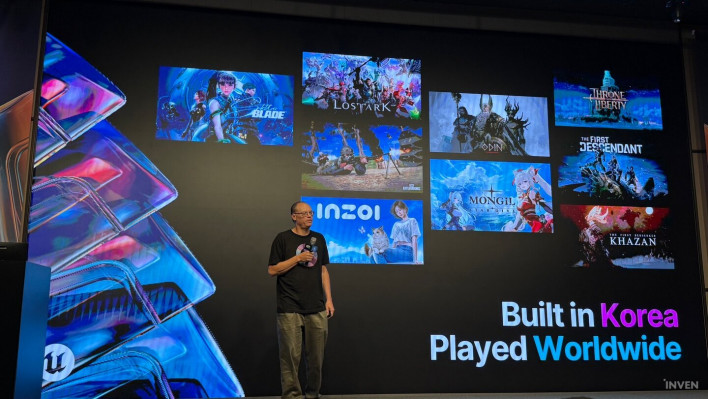
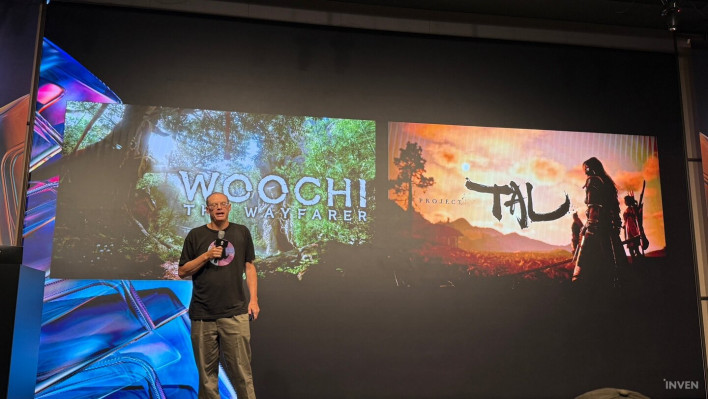
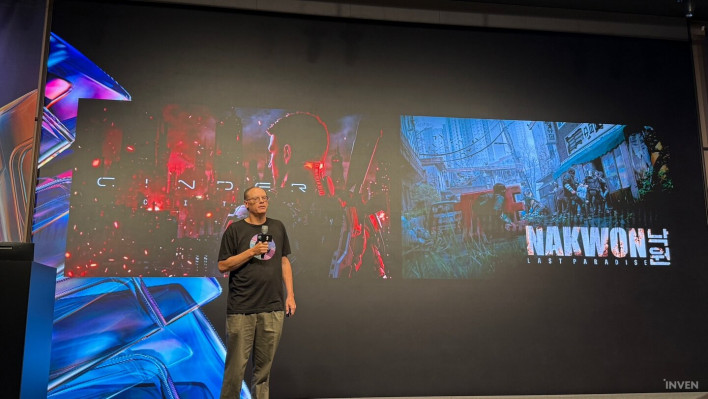
Even in this climate, Korean companies are doing exceptionally well. Many developers are leveraging Unreal Engine effectively and achieving substantial financial growth. Furthermore, many studios are actively taking steps to reposition themselves for the future.
In the past, people viewed gaming as simply playing solo or playing online games, but we see ecosystem games as the next-generation model. People might think of the metaverse when hearing this, but taking it a step further, digital ownership will be able to move and be shared seamlessly across games and platforms. That process must be free and without heavy processing overhead, and Unreal Engine 6 will provide that technical foundation. Unreal Engine 6 is still early in development, so we will need to observe its progress over the next year to a year and a half. We are targeting Early Access by late next year, and we will have opportunities to share more details after that.
We will also continue to fight for developer freedom and work to end app store monopolies. We reached an amicable agreement with Google and Samsung, allowing unrestricted access to the Epic Games Store on Android devices. However, Apple is a different story. iOS is particularly closed off in Korea. Third-party stores outside the App Store are allowed in Japan, so why not in Korea? This shows a lack of respect for the Korean market. Even in Japan, where it is somewhat open, Apple charges a 15% fee on third-party stores and third-party payment systems. It is unfair for Apple to collect fees when they contribute nothing to game developers, third-party stores, or third-party payments. The fact that Korea is denied even that opportunity makes it even more unfair.
Q. Following the settlement, Google agreed to reduce its commission rate to around 10%, while disputes with Apple are still ongoing. By comparison, do you consider Google's policy fair?
Tim Sweeney: iOS and Android are different systems, so I would rather not compare them directly. First of all, Google allows competing stores and does not charge fees on transactions made through those stores, which I think is a decent policy. Apple talks about a 15% fee, claiming it is fair to recover their costs. But suppose a Korean developer generates revenue using a Korean payment system. What significant role does Apple play in that transaction? Is it right for them to collect money on it? Charging fees under those circumstances is unfair.
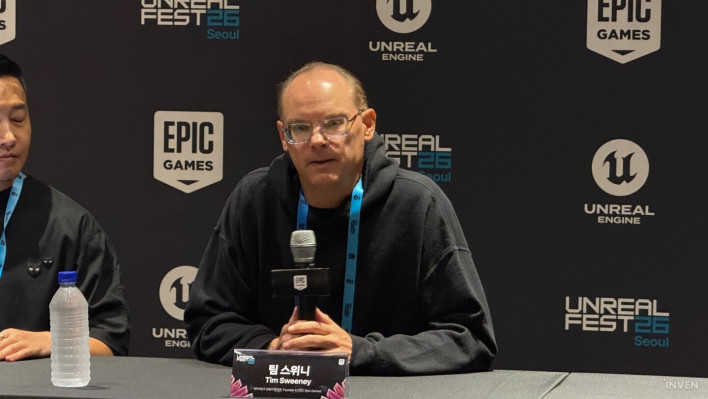
Q. You mentioned earlier that discussions are underway with AI companies like Claude and Codex to support Verse-based development. Are you also in discussions with Korean companies?
Tim Sweeney: Through reports, I am aware that companies like NC and others are interested in AI. However, I have not yet heard of Korean developers actively stepping in regarding connecting engines with AI and utilizing parameters. We are considering various models such as Claude, Gemini, and graph models, and we hope Korean AI companies will participate and engage in development more actively. Since voice and 3D modeling do not require billions of parameters, we hope to see progress there first.
Q. Now that we are in the era of AI, what changes do you foresee for real-time 3D technology in non-gaming industries?
Tim Sweeney: AI is already heavily used in real-time 3D. Autonomous driving and robotics are prime examples. It is also a very economical choice. Wouldn't it be far more efficient to first run simulations using real-time 3D engines with vivid modeling and physics?
Taking automobiles as an example, most autonomous vehicle developers spend significant time training inside game engines. This is especially true when analyzing scenarios, as they can simulate extremely dangerous situations. For example, testing actual collisions or rear-end accidents in real life is extremely dangerous and difficult. I believe real-time 3D has a massive advantage in designing for those scenarios.
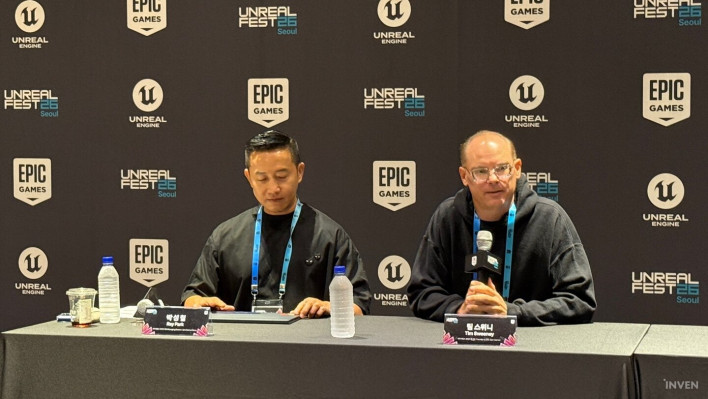
Q. Korea has become the third-largest market for the Epic Games Store and its ecosystem. How long do you expect this growth trend to continue? Also, after Unreal Engine 6 launches in Early Access next year, how much growth do you project for the ecosystem compared to Unreal Engine 5?
Tim Sweeney: Right now, we are focused on integrating the Epic Games Store and our ecosystem to make it truly open. I view Fortnite and various collaborations as the starting point, and we aim to build a foundation where multiple games can generate substantial revenue and share profits.
Our ultimate goal is to break down barriers within games. We want to enable trading of outfits and items, as well as go beyond traditional voice chat to achieve true cross-platform communication. I believe Korean developers will be at the forefront of this movement. Part of this has already been realized through UEFN, as content can be accessed directly across PC, console, and mobile without restrictions once created. From there, we want to move toward truly breaking down these boundaries.
Regarding the growth of the Korean market, the gaming industry has gone through several revolutions over time. There was the shift from arcade games to online games, and then the transition to mobile. I believe we are now taking the first step toward an open ecosystem. Currently, platforms like Fortnite and Roblox fit into this category, but we aim for an ecosystem where developers can participate more actively and reap greater rewards. We expect Korea to play a central role in this.
Korea has produced many outstanding online game developers over the years, but their games were mostly consumed domestically. Now, however, there is an opportunity to reach global players far more easily. With Western audiences responding so positively to Korean culture, including K-pop, I believe this presents a great opportunity for Korean game companies to grow further.
Sung Chul Park: Up until now, ecosystems were completely controlled by platforms. We are creating an open ecosystem entirely from scratch. Beyond our own Fortnite ecosystem, connected experiences with multiple games inside it are possible. Moving to the next step, as seen with Honkai: Star Rail distributed through the Epic Games Store, we are taking step-by-step progress, such as introducing IP characters directly into Fortnite.
Furthermore, the native ecosystem of Unreal Engine 6 will showcase possibilities where even standalone games can interact and intermingle with other titles by utilizing Epic Online Services. An open world driven by developers and players was impossible before, but we are steadily laying the groundwork with tools like 'Verse.' When we explained this direction to local Korean developers, the response was extremely positive, and expectations for the Unreal Engine 6 era are very high.
Q. When discussing the ecosystem, Roblox is frequently mentioned as a competitor, but generative AI like ChatGPT could also be a competitor. What are your thoughts on this?
Tim Sweeney: Roblox, Netflix, and TikTok are all competitors. From a development tool perspective, open-source AI and various other technologies can also be competitors. When looking beyond game engines to content creation and 3D creation in general, that is certainly the case. Given these circumstances, it is difficult to point to one specific competitor in the short term. So many new use cases are emerging that it is hard to predict how things will unfold over the next three years.
However, we need to move quickly. The key is offering something that truly captures the audience. As technology transitions to the next generation, our core strategy of delivering what firmly appeals to customers remains unchanged.
Q. As part of the settlement with Google, there was reportedly a clause stating that Epic Games cannot criticize Google Play until 2032. Could you elaborate on the background of this?
Tim Sweeney: We did reach a commercial agreement with Google. However, that is separate from regulatory authorities addressing antitrust issues. There have been significant shifts in antitrust matters, and Google is adjusting its platform policies accordingly. Regulations vary by country, but I believe regulatory bodies need to adapt in favor of consumers. The details of our settlement with Google have already been made public, and there is nothing out of the ordinary.
Apple, on the other hand, collects fees even on transactions they have no direct involvement in. It is truly bizarre. Furthermore, I cannot understand why third-party stores are not permitted in Korea. Even though Japan allows them, forcing additional fees on top of that is equally strange. I hope right decisions will be made in the best interest of consumers. That is what we strive for. Our philosophy is simple: there must be a free-market competition, and delivering the best products to consumers within that market is the right way forward.
Q. You have spoken about placing the Epic Games Store on other platforms. What is your stance on other platform stores joining the Epic Games platform?
Tim Sweeney: We offer our open ecosystem under the banner of 'Team Open.' Whether it is Steam, console platforms, or any other company, as long as there is an agreement to open everything up to this broad ecosystem, we have no objection to them joining. We have no intention of exercising control within a specific system, as this is a peer system where everyone participates on equal footing.
Sung Chul Park: What we have fought for was never solely for our own benefit. Now, anyone can establish a third-party store on Google Play without Google taking a fee. It is not just Epic that benefits; other companies can now launch their own stores and retain more revenue.
With Unreal Engine 6, multiple platforms will connect at an equal peer-to-peer level. People might wonder how item trading and similar features will work, and we have prepared tools like 'Verse' to provide technical support for exactly that. Beyond graphical advancements, I want to emphasize again that features enabling social platforming and building an open ecosystem are at the core of Unreal Engine 6.
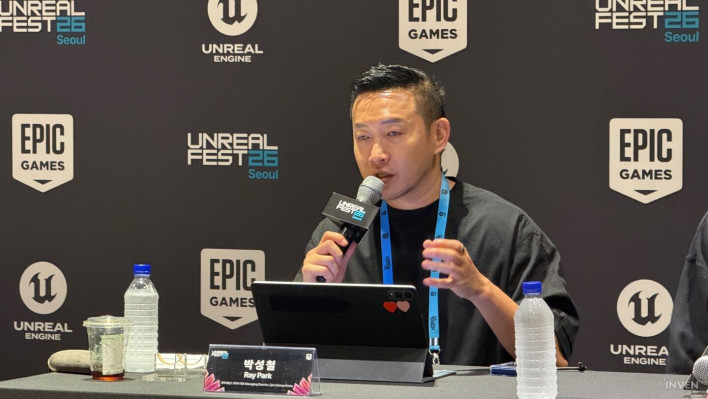
Q. Epic Games Korea is seen as being at the forefront of Epic Games' technical and strategic initiatives. What is the vision for its future direction?
Sung Chul Park: It has been 18 years since the Korean branch was established. Up to now, it has played a vital role in enabling Korean developers to adopt and utilize Unreal Engine in versatile ways. Looking at the sheer number of projects built with Unreal Engine by developers here, Korea surpasses other regions like China and Japan—and at times, even the US. Mobile adoption in particular has been unrivaled since the Unreal Engine 3 era. That trend started over 13 years ago, and other countries are only now catching up. In Korea, I would estimate that 9 out of 10 AAA mobile games use Unreal Engine.
Going forward, we hope to see Korean developers excel not only in traditional development methods but also within our open ecosystem. We are in discussions with various studios, including indie developers, and we hope Korea will make a strong mark in the UGC space as well.
Q. (To CEO Tim Sweeney) How do you anticipate the Korean gaming landscape will change, and what role do you expect Epic Games Korea to play in response?
Tim Sweeney: The market today is fiercely competitive with the rapid rise of China and restructuring in US studios. I believe this presents a massive opportunity for Korean developers. Throughout this time, our Korean branch has provided excellent support across various areas, and I expect it will continue to fulfill that role faithfully.
Q. IP collaborations like Barbie are actively taking place within the Fortnite ecosystem. Could you share more details about these examples?
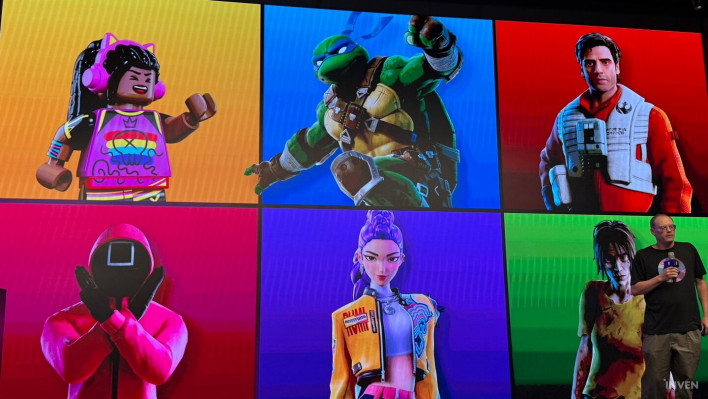
Tim Sweeney: These examples will become increasingly common as the ecosystem grows. Beyond physical channels, developers can leverage this to reach broader audiences while sharing revenue, creating a win-win structure. Major IPs with established fan bases like Barbie, LEGO, and Star Wars will continue to expand and create diverse derivative content within the ecosystem. As that expansion continues, I foresee even more IPs joining our ecosystem.
Q. Persistent issues in UGC, such as discriminatory or abusive content, raise concerns that similar problems could occur in the Fortnite ecosystem. Although internal moderation tools have been introduced, could you elaborate on how you are handling these issues to prevent them?
Tim Sweeney: We are actively monitoring those issues as well. Moderation personnel inspect every island as it is created, and we use AI agents for additional monitoring. Furthermore, our reporting system filters out inappropriate behavior in voice and text chat, and we have established automated detection mechanisms. Additionally, for content accessible to children, we have put in place all required mandatory systems.
An open ecosystem can be broadly divided into two components: building and hosting systems, and open-web-like systems. For open-web-like systems, a clear rating framework must be provided to allow parents control and to specify whether content is appropriate for young children. While content remains open for adults, action is still required against illegal material. We are addressing that aspect in accordance with current open web standards as well.