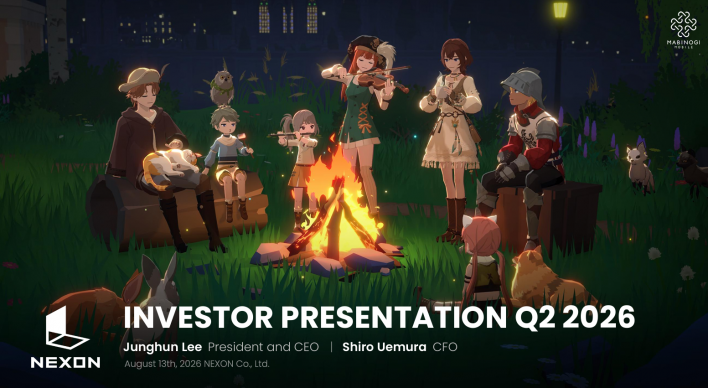
Date: Thursday, August 13, 2026, 17:00
Attendees: Patrick Söderlund (Chairman), Lee Jung-hun (CEO), Shiro Uemura (CFO)
Agenda: Nexon Q2 2026 Earnings and Future Strategy
■ Summary of Nexon Q2 2026 Earnings and Status
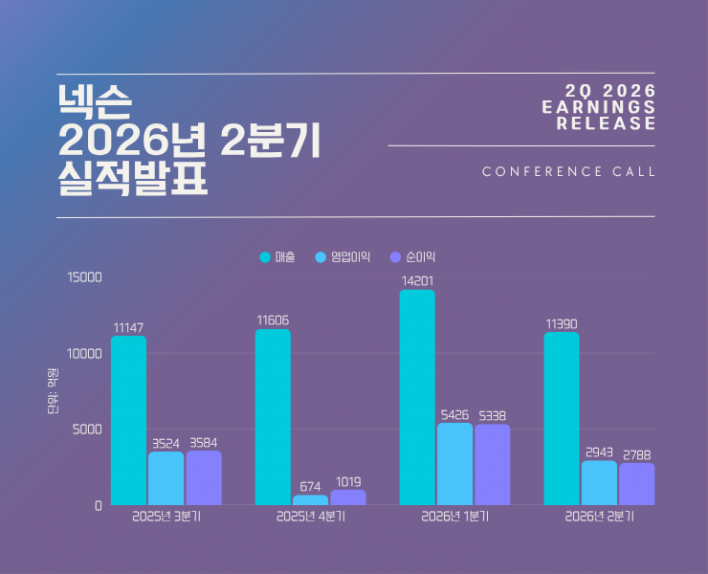
▣ Q2 2026 Earnings Summary (Exchange rate: 10.63 JPY per ₩100)
- Q2 2026 Revenue: ₩1.139 trillion (+2% YoY, -20% QoQ)
ㄴ 'MapleStory' franchise revenue increased 63% YoY, marking an all-time quarterly high
ㄴ Growth in 'MapleStory Worlds' and 'MapleStory: Idle RPG', alongside contributions from 'ARC Raiders'
ㄴ Conversely, revenue from 'Dungeon & Fighter', 'FC' franchise, and 'Mabinogi Mobile' declined YoY
ㄴ 'ARC Raiders' recorded 18.3 billion JPY in Q2 revenue, accounting for approximately 15% of total revenue
- Q2 2026 Operating Profit: ₩294.3 billion (-17% YoY, -46% QoQ)
ㄴ Decline YoY due to increased variable costs, including creator fees and user acquisition (UA) expenses
ㄴ Cloud service and software service costs also rose due to the expansion of global live services
ㄴ However, results exceeded company forecasts due to a one-time reversal of stock-based compensation and lower-than-expected royalty and marketing costs
- Q2 2026 Net Profit: ₩278.8 billion (+77% YoY, -48% QoQ)
ㄴ Reflects 5.5 billion JPY in fund valuation gains
ㄴ Foreign exchange losses decreased from 17.5 billion JPY in Q2 2025 to 1.7 billion JPY in Q2 2026
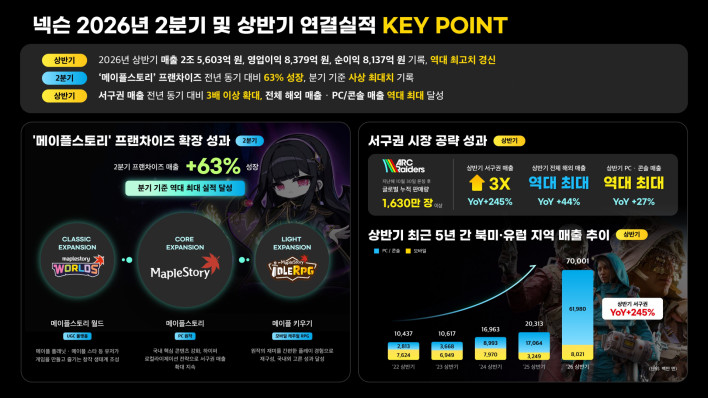
▣ Q2 2026 Cost Summary
- Q2 2026 Operating Expenses: ₩833.6 billion (+7.5% YoY, -4.8% QoQ)
ㄴ Labor costs, royalties, and PG fees decreased QoQ, while marketing and other expenses increased
- Labor costs: ₩326.9 billion (+0.1% YoY, -9.3% QoQ)
ㄴ Decreased QoQ due to a one-time reversal of stock-based compensation and lower bonuses, despite an increase in headcount
- Royalties: ₩109.2 billion (-25.9% YoY, -22.1% QoQ)
ㄴ Decreased YoY due to lower revenue from 'Mabinogi Mobile' and the FC franchise
ㄴ QoQ decline primarily driven by lower FC franchise revenue
- PG fees: ₩105.4 billion (+9.4% YoY, -16.7% QoQ)
ㄴ Increased YoY due to revenue growth in 'MapleStory Worlds' and 'ARC Raiders'
ㄴ Decreased QoQ due to the normalization of 'ARC Raiders' revenue and lower FC franchise revenue
- Marketing expenses: ₩95.6 billion (+81.5% YoY, +16.4% QoQ)
ㄴ Increased due to UA costs for 'MapleStory: Idle RPG' and promotions for the FC franchise and Korean 'MapleStory'
ㄴ QoQ increase reflects higher marketing spend for the FC franchise and Korean 'MapleStory'
- Depreciation: ₩13.1 billion (+21.1% YoY, +0.7% QoQ)
- Other expenses: ₩183.5 billion (+29.6% YoY, +19.4% QoQ)
ㄴ Increased cloud service costs due to global live service expansion and higher data usage
ㄴ Increased creator fees and software service costs due to the growth of 'MapleStory Worlds'
ㄴ QoQ increase also primarily driven by higher creator fees for 'MapleStory Worlds'
▣ New Title Lineup
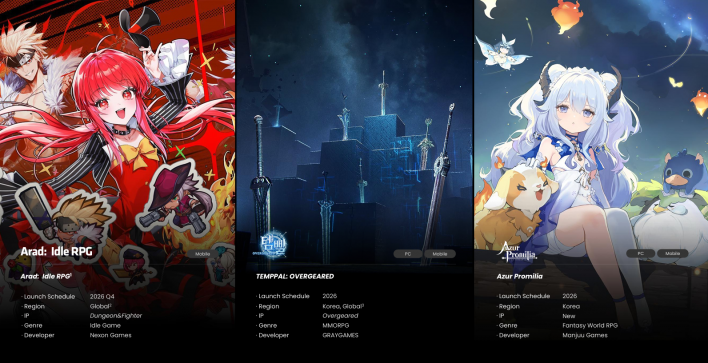
- New titles scheduled for 2026 release
ㄴ 'DAVE THE DIVER Mobile' (September 17)
ㄴ 'Arad: Idle RPG' (Q4 2026)
ㄴ 'Azur Promilia' (2026)
ㄴ 'Overgeared' (2026)
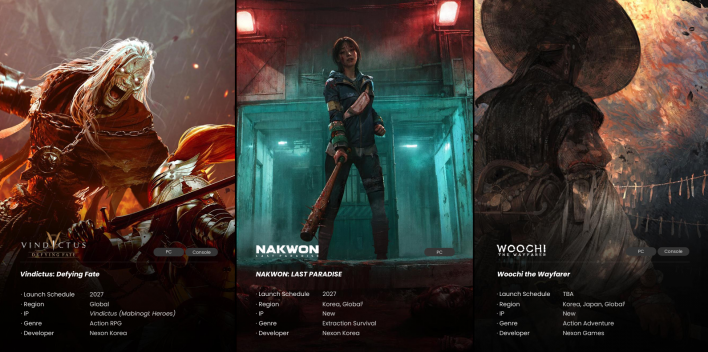
- Major 2027 lineup
ㄴ 'Vindictus: Defying Fate' (2027)
ㄴ 'Nakwon: Last Paradise' (2027)
ㄴ 'Godzilla Defense Force: X' (Q1 2027)
ㄴ 'Dungeon & Fighter Classic' (2027)
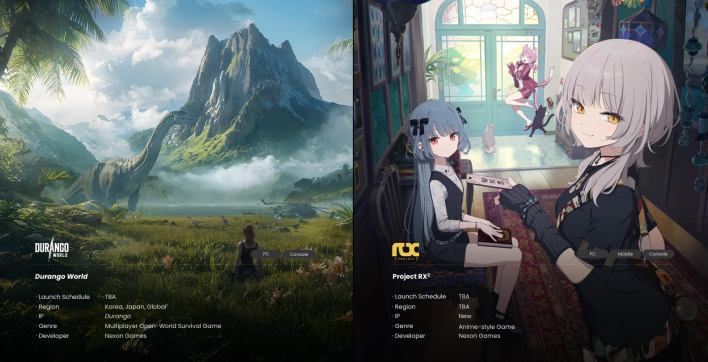
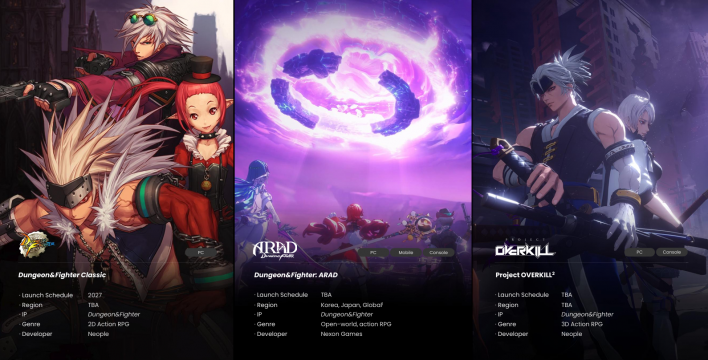
- Titles with TBD release schedules
ㄴ 'Witch the Wayfarer'
ㄴ 'Durango Worlds'
ㄴ 'Project RX'
ㄴ 'Bancho the Chef'
ㄴ 'Dungeon & Fighter: ARAD'
ㄴ 'Project Overkill'
▣ Presentation by Chairman Patrick Söderlund
I took on the role of Chairman at the end of February with the realization that we must fundamentally change how we work to leverage new technologies and avoid industry-wide stagnation. At the capital markets briefing in late March, I made several promises to our investors.
We pledged to review our product portfolio and pipeline to create fewer, but larger and higher-quality games. We also set a goal to ensure each game generates a minimum contribution margin.
We promised to improve our work processes to enable faster decision-making and integrate new technologies across all business areas. Above all, I committed to re-establishing strict principles through company-wide cost management.
It was natural for investors to be skeptical of our innovation plan. At the time, Nexon had not yet demonstrated results worthy of trust. Now, we are in the phase of building that trust.
We are in the early stages of a multi-year transition and are still building credibility. However, initial results are already appearing, and the outlook is positive. Both Q2 revenue and operating profit exceeded our initial forecasts. Notably, fixed costs, including labor, are being maintained at levels similar to last year.
'MapleStory' is still breaking revenue records 23 years after its launch. It continues to grow by offering diverse new experiences, such as 'MapleStory Worlds', which has gained popularity through user-generated content (UGC).
'ARC Raiders' has sold over 16 million units, primarily in Western markets where existing franchises are dominant, and has built an active user community.
Of course, one quarter's performance does not define the entire year. However, various indicators show that our plan is working.
This does not mean everything is going exactly as we want. 'Dungeon & Fighter' is going through a period of reorganization this year. We are pursuing a plan that prioritizes the right direction over speed. 'Dungeon & Fighter' remains one of the largest and most resilient franchises in the gaming industry.
Overcoming current challenges is not easy, but our belief that we can return this franchise to a dynamic growth trajectory remains unchanged. We plan to focus even more on cost management over the coming months.
In a broader sense, the gaming industry is experiencing its most difficult period in about 30 years.
Western markets are shrinking, and the console market is also in a downturn. Games in the $60–$100 price range are collapsing under the weight of skyrocketing production costs. As a result, games and projects have been canceled, many famous studios have closed, and tens of thousands of talented developers have lost their jobs. This is painful, and we take no satisfaction in the difficulties others are facing.
However, we must clearly address what this situation means for our company.
Nexon is a company that many in the industry aspire to emulate. We have a business model based heavily on recurring revenue rather than one-off sales, and we have built our own intellectual property (IP) based on massive, loyal communities that grow across generations over decades.
Furthermore, instead of gambling on a 5-year development period and a $500 million budget, we operate with an efficient development method that assigns a target contribution margin to each product. We also have a financial structure that does not rely on venture capital, private equity, or a single blockbuster hit to pay our employees' salaries.
Today, many companies are desperately trying to pivot to the business model Nexon has operated for decades. Even with the slowdown in investment in the gaming industry, Nexon is not relying on external capital; we are using funds generated from our Asian business to drive growth plans in Western markets.
We do not make games that people buy, play, and then switch to another game. We create worlds where people want to stay for a long time.
A user who started 'MapleStory' at 15 is still enjoying the game at 40. Nexon's user community and the revenue they generate are sustained year after year through new content updates that keep the experience fresh and fun.
The recent success of 'ARC Raiders' demonstrated how the 'fewer but larger' strategy can be effective. It presented a new development model where a small team utilizes new technology and fresh ideas, achieving over 16 million units sold in nine months. It is not difficult to envision what the next three years will look like.
This downturn will separate companies that need time and capital to fundamentally change their business models for survival from companies like Nexon, which already possess the business models and strategies that align precisely with what users, talent, and investors want.
As we enter our 40th year, Nexon's greatest, most exciting, and most successful period is still ahead of us. It has been six months since I took on the role of Chairman, and I am well aware that there is an enormous amount of work to be done.
I will not ask investors to trust us. Trust is earned through results.
However, I want to say that we are writing the first chapter of a story that begins in 2026. We will report on the progress and achievements of our innovation every time we write a new chapter each quarter. We expect the results to manifest as growth in revenue and operating profit, and an increase in returns to investors.
■ Q&A
Should the cost increase reflected in the Q3 guidance be viewed as a one-time event? How do you plan to balance cost control and investment for growth moving forward.
Shiro Uemura (CFO) = It is more appropriate to understand the costs in the Q3 guidance as an impact of current changes in revenue composition rather than as one-time factors. 'MapleStory M' and 'MapleStory Worlds' are currently performing well, and these titles have a structure where variable costs increase alongside revenue growth. Accordingly, we have reflected a certain level of cost increase in our guidance.
This also includes proactive investment. In particular, for marketing, we have reflected the necessary costs for the four-title pipeline scheduled for Q4. Therefore, the current cost increase is not limited to Q3.
We are approaching our cost structure more strictly to ensure that new game development provides high economic returns to investors and enjoyment to users in the long term. At the same time, we will allocate necessary resources to areas where we can expect clear returns, such as marketing to support new releases. While variable costs may increase due to revenue diversification, we believe that as this diversification expands, our operating profit margin will also improve in the long term.
Your title portfolio is much more diversified than in the past. Should we assume that we should forecast performance in a different way than before, given that the cost structure has also changed.
Shiro Uemura (CFO) = That perception is correct, considering that 'Dungeon & Fighter' is currently somewhat sluggish. However, Nexon aims to build a more stable business structure by diversifying its revenue sources. In the process, we plan to strictly control costs to expand profits in the long term.
You focused on expanding user engagement for FC during the World Cup, but you did not secure as many users as expected. How do you analyze the cause? What is the timeline and strategy for the regrowth of the FC franchise.
Lee Jung-hun (CEO) = In Korea, the expected World Cup effect did not fully materialize. Interest in the World Cup tournament itself was lower than expected domestically, and as a result, the influx of returning and new users and the traffic growth we expected through in-game World Cup events fell short of our initial plans.
However, we are seeing improvements in traffic and revenue trends following the TOTS update in late June. Given this, we expect Q3 revenue to be at a similar level to the same period last year.
For the remainder of the year, we consider strengthening traffic and engagement and re-solidifying the foundation of the franchise to be our top priority, rather than short-term revenue expansion. Our current goal is to ensure the FC franchise can finish the year on a more stable foundation.
In our last earnings call, we also announced a long-term contract with EA for FC. This shows that both companies are confident in the long-term growth potential of the FC franchise. EA and Nexon are actively discussing concrete execution plans to ensure the FC franchise maintains its unrivaled position in the genre in Korea and further expands its user base.
You presented 'context capital' as a core competitive advantage in the era of generative AI. Do you believe this can be used for regrowth in 'Dungeon & Fighter', which is currently facing difficulties? How can the know-how accumulated so far be used for a performance rebound.
Lee Jung-hun (CEO) = 'Context capital' can be simply described as the 'capital of time' created by Nexon's game development teams and user communities living together for decades.
Even in an era where AI writes code and draws pictures, the context built by the long-running live service titles that Nexon has maintained for decades cannot be easily replicated by competitors.
The same applies to 'Dungeon & Fighter'. All of Nexon's long-term live service titles, including 'MapleStory', are striving to create more diverse content that accurately captures user preferences based on this context capital. We expect the results of this to appear as a steady upward trend in the long term.
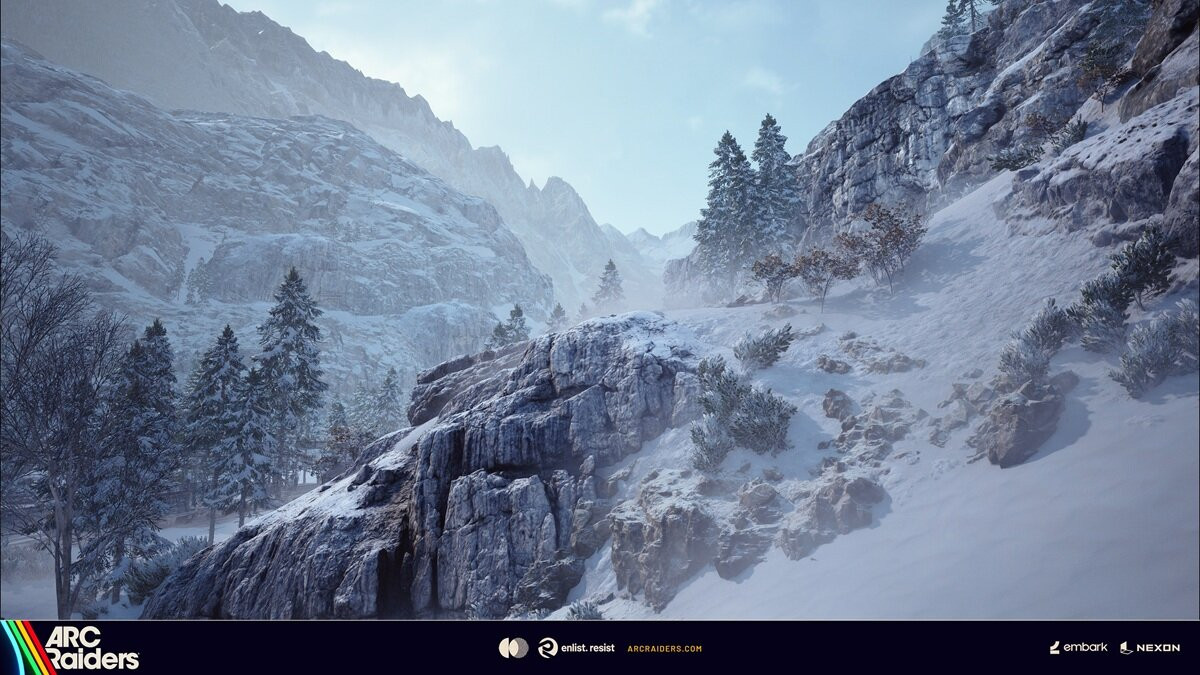
What kind of effect do you expect from the major update 'Frozen Trail' for 'ARC Raiders'? I am curious if the goal is to expand new sales or to reactivate existing users.
Patrick Söderlund (Chairman) = To be honest, 'ARC Raiders' has performed beyond our expectations. Based on a strong launch, it has established itself as a global hit.
The development team is focused on preparing 'Frozen Trail', the largest content update since launch. It was designed to not only revitalize the existing core user base but also to attract new users into the 'ARC Raiders' ecosystem.
We have seen cases where other games in similar situations succeeded through such large-scale updates. We also expect good results and believe we can present a very strong package. 'Frozen Trail' is targeted for release in early October as planned.
We are currently reviewing various scenarios for the future development of 'ARC Raiders'. The basic plan is to introduce two major updates per year. We plan to combine this with the relatively small-scale, continuous updates we have been conducting on a weekly or bi-weekly basis.
This special dividend was a decision that the market did not expect. What is the background behind the decision on the timing and scale of the special dividend? It is expected that about 500 billion JPY in cash will remain after the dividend; what are your plans for future cash holdings and shareholder return policies.
Shiro Uemura (CFO) = First, I will explain the background and scale of the special dividend. Nexon has accumulated a significant amount of cash while generating stable profits over a long period through existing franchises and new games. Recently, we have also generated over 140 billion JPY in profit through investment assets in listed companies, and our cash holdings at the end of Q2 were 842 billion JPY.
As mentioned at the CMB last March, Nexon's transformation initiative covers the entire business. The board decided to use a portion of our current surplus funds for a special dividend, comprehensively considering that we can secure sufficient capital to invest in future growth opportunities.
This decision reflects our strong conviction that existing businesses and new games will continue to generate cash flow. At the same time, we are improving our cost structure and profitability in the long term through the transformation initiative and increasing the sustainability of our earnings by diversifying our revenue sources.
Even after implementing the special dividend, we will have sufficient funds for our business. Therefore, investment in organic growth will continue. The same applies to our M&A strategy. We believe that the remaining cash balance of approximately 500 billion JPY after the special dividend is sufficient and will not affect our ability to respond to future growth investments or potential M&A opportunities.
If cash accumulates again beyond the level necessary to secure strategic growth opportunities, we will actively consider additional shareholder returns.
Then, can we consider approximately 500 billion JPY as the appropriate level of cash holdings? Also, you used share buybacks in the past, but this time you chose a special dividend. Is there a criterion for choosing between dividends and share buybacks.
Shiro Uemura (CFO) = Nexon has set a policy to return at least 33% of the previous year's operating profit as shareholder returns and to maintain an ROE of 10% or more, with a target of 15%.
Assuming that an amount of the same scale as this special dividend is used for share buybacks, it would take about 25 months based on past buyback speeds. In addition, since it would amount to approximately 18% of the total number of issued shares, it could raise concerns about stock liquidity.
In this situation, we judged that it was appropriate to return these surplus funds through a special dividend to faithfully implement our shareholder return policy. This is because we can return value to all shareholders quickly and fairly without affecting stock liquidity.
Considering the current business environment and various conditions, we judged that a portion of our current capital could be used for shareholder returns. However, we will make flexible judgments based on the business environment in the future. We plan to continue managing our balance sheet and implement shareholder returns in the most optimal way by combining dividends and share buybacks.
'Dungeon & Fighter' also conducted large-scale updates in Q2 and July. How do you evaluate the recovery of the user base and its sustainability? Collaboration with Tencent is also scheduled; is there any change in the overall outlook for this year.
Lee Jung-hun (CEO) = First, I will explain from the perspective of the 2026 annual flow of the 'Dungeon & Fighter' franchise. Consistent with the stance I mentioned at the last CMB, we expect stable performance for PC similar to last year, and a decline for mobile compared to last year.
'Dungeon & Fighter' has a structure where user reactions to large-scale updates at the beginning of the year and on a seasonal basis significantly influence annual performance. Indicators also move according to seasonal events and updates on a quarterly or semi-annual basis, but the most important thing is the large-scale seasonal update. The major seasonal updates for PC and mobile conducted in the first half of 2026 all fell short of our initial expectations.
There are two key tasks that must be solved from a long-term perspective.
The first is to increase the variety of large-scale seasonal updates and the volume of content supply. We intend to raise the basic content production volume itself higher than it is now and expand the large-scale updates, which were previously provided centered on a single piece of content, into more diverse forms.
The second is to continuously create new ways to play in parallel with this. Familiar updates that users have experienced for a long time, such as level cap expansions or raids, are important, but it is necessary to add new ways to play that have not been experienced before while maintaining the fun of action, which is the core of 'Dungeon & Fighter'.
In particular, since mobile has a relatively higher proportion of casual users than PC, we believe that creating these new experiences is even more important.
On mobile, please also note that content supply due to the transfer of development to Tencent has been in full swing since Q3. Through this, content supply has been more dense since the second half of this year. It may take a little more time for this collaboration process to be fully established and lead to actual results.
However, we expect that a closer and more solid collaboration with Tencent in the process of solving the two tasks mentioned above will play an important role in accelerating the pace of change.
To improve the operating profit of the entire group, both managing the transition costs incurred in the process of portfolio diversification and gradually recovering the performance of 'Dungeon & Fighter' in China are important. We will improve the profitability of the entire group by pursuing these two axes together.
From that perspective, 'Dungeon & Fighter' is still an important priority for the company. In Q3, we are preparing updates and events in line with the National Day, a major momentum in the Chinese market.
The franchise's new title, 'Dungeon & Fighter: Idle RPG', is being developed smoothly with the goal of release within the year. We also plan to sequentially introduce new titles that expand the franchise, such as 'Dungeon & Fighter Classic' and 'Project Overkill', starting next year.
'Dungeon & Fighter: Idle RPG' has a similar direction to the franchise expansion strategy being pursued by 'MapleStory'. However, the difference is that 'Dungeon & Fighter's' major expansion titles can expect a relatively higher profitability structure in that they are based on internal development.
To increase the content supply of 'Dungeon & Fighter', does the development workforce also need to increase? It seems that productivity could be increased by using AI; is there no possibility that content expansion will lead to cost increases.
Lee Jung-hun (CEO) = Regarding the service in China, we are maintaining the same scale of personnel creating content at NeoPle even while conducting joint development and development transfer with Tencent. As a result, it can be seen that the total development workforce has increased.
In the process of increasing content production, we must also proceed in a direction that reduces repetitive work by utilizing AI solutions for simple repetitive tasks such as pixel art, and increases the time developers can invest in creation.
However, you do not need to worry that costs will increase significantly to expand content production right away. We are managing related costs appropriately.
You have started publishing Blizzard Entertainment's 'Overwatch'. What level of revenue and operating profit contribution do you expect.
Shiro Uemura (CFO) = The 'Overwatch' service started on August 12. As it is a title with high recognition, it had a smooth start, but it is still too early to talk about specific results at this point.
We have not significantly reflected the contribution of 'Overwatch' in our Q3 outlook and expect it to be at a relatively limited level. However, we expect to be able to gradually grow the title in the future.