
On September 4, 'Onimusha' returns with its first completely new title in over 20 years. Based on a reimagined worldview, the game features Miyamoto Musashi as the protagonist and blends dark fantasy with bizarre legends from Kyoto, the thousand-year capital. While it retains the series' iconic soul absorption and 'Issen' (critical strike) mechanics, it adds modern sword-fighting actions such as parrying, deflecting, and using the surrounding environment to one's advantage.
With this title, the development team aimed to create a samurai action experience where players choose how to respond to situations, rather than repeating a fixed clear strategy. We spoke directly with the developers about elements inherited and evolved in the new 'Onimusha,' from motion capture involving real sword-fighting experts to the relationship between Miyamoto Musashi and Sasaki Ganryu, boss and difficulty design, and the newly introduced 'Break Issen.'
The combat in this title is not only impactful but also visually engaging. In particular, the various motions using dual blades highlight the character's personality. What combat motions is the development team most proud of, and which action sequences required the most time and effort.
" We put a lot of effort into character design. For the protagonist, we focused on expressing 'Musashi-ness' in everything from his idle animations to the way he shakes blood off his blade after a strike. Since the character is Miyamoto Musashi, we were conscious of making his motions feel somewhat rough rather than overly polished.
Furthermore, to implement realistic samurai movements, we invited masters of sword-fighting and iaido to every motion capture session. I consulted with them on how they actually move to build the animations. We avoided leaning toward any specific school of swordsmanship, prioritizing the realism of the samurai above all else. We also developed a real-time calculation system to ensure that actions like sword-locking on sloped terrain look natural.
The demo build ends with a battle against Sasaki Ganryu. Players new to the series might find it difficult to understand the relationship between the two or the background leading up to the fight. Will these relationships and conflicts be fully explained in the full version.
" Playing the full version will allow you to grasp the relationship between the two characters much more clearly.
As you saw in the trailer, Ganryu wears the 'Oni Gauntlet.' This time, we thought about the fun of a storyline that feels like an 'Onimusha vs. Onimusha' confrontation. We intentionally set up a character who might make you think, 'He's wearing the Oni Gauntlet, so is he an ally?' as an enemy, making him a compelling antagonist for Musashi. Ganryu is a crazed, psychopathic character who seems to mock Musashi with his genius-level movements, designed to contrast with the more human-like Musashi.
The delicate facial expressions and movements of Musashi and Ganryu were impressive. It seems closely tied to gameplay, with different parry motions for each boss and the ability to seal patterns by cutting specific parts. What was the process for completing these facial animations and motions, and can we expect this in other Capcom titles in the future.
" All characters use face models of real people. Lead characters, excluding Musashi, were chosen through auditions. For the other 100 or so characters, we mostly scanned the faces of our own employees.
We wanted to portray Sasaki Ganryu as a character driven by madness, so we chose a model who fit that mysterious atmosphere. Since the old reference materials for Toshiro Mifune's face were black-and-white photos, we confirmed skin tone, mole placement, and tooth structure with Mifune Productions before creating the model.
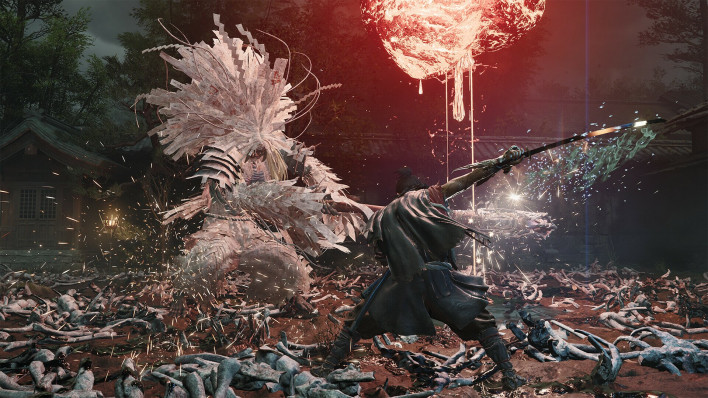
This title features Miyamoto Musashi as the protagonist and is set in Kyoto. Why did you choose this setting? Also, is this Musashi the same character who appeared in the 'Onimusha' anime.
" Miyamoto Musashi is one of the most famous samurai, making him easy to introduce to a global audience. Beyond that, I wanted to depict a samurai who fights desperately using whatever is at hand, someone who fights fiercely even while covered in blood and mud. Miyamoto Musashi was the perfect fit for the protagonist we wanted to portray.
We chose Kyoto because it is known as the 'thousand-year capital' and is rich in history and folklore, including real legends and terrifying anecdotes like Minamoto no Yorimasa's slaying of the Nue. We felt it would be unique from an entertainment perspective to add a setting where the Genma are actually involved in these stories. Also, this is a completely new title with a reimagined worldview and is set apart from the anime version.
Unlike recent action games, this title does not have a jump action. Is this an intentional design choice.
" It is intentional. We prioritized depicting a samurai-like 'chanbara' (sword fighting) and focused on the ground-level clashes between blades. We structured the game to be a sword-action experience where you can have new encounters, such as successfully deflecting an enemy so they crash into a wall or collide with other enemies.
For the feel of the sword action, I felt the vibration could be stronger. Do you have plans to add options to adjust vibration intensity or enhance it.
" The vibration has been adjusted to provide the most appropriate intensity for various situations. While you can toggle the vibration function on and off, we designed it to be enjoyable even without step-by-step adjustment options.

The 'Onimusha' series was a pioneer of the evasion/parrying-based play common in today's action games. How did you reimagine the Issen, counter, and deflect systems for this new title, and what is your unique reinterpretation.
" As we are releasing a new title after 20 years, we started by defining 'what makes a Onimusha game.' The 'soul absorption system via the gauntlet' and the thrill of the 'Issen' were present in every series entry, so we faithfully inherited them. In this title, we emphasized not only the 'Issen' triggered by timing your attack button, but also actions like deflecting or parrying enemy attacks.
We implemented a 'Just Action' system where you can use enemy attacks to your advantage to gain the upper hand and transition into your next move. We also added a 'Dynamic Gauge' that allows you to chain these actions together, eventually leading to a powerful 'Break Issen.' This was designed so that more people can experience the satisfying thrill of the Issen, which was previously accessible only to those highly skilled in action games.
Are there any connections or links to the previous games.
" Since we reimagined the worldview from scratch, the settings have changed. There are no direct links to the past 'Onimusha' series, but the 'soul absorption system' and the thrill of the 'Issen' ultimate skill are present, as they are staples of the series. There are homages to previous titles within this game, so I hope you check them out while playing.
The parrying is quite powerful, allowing me to handle early bosses using only parries. Will there be bosses later on that require different clear strategies.
" In addition to parrying elements like deflecting, there are enemies that use grab attacks that cannot be countered with parries alone, so the skills and strategies required of the player increase as the game progresses.
There are various types of bosses, such as Byakue, where group combat is important, and Dohatsuten, who moves quickly. We designed the boss battles to be satisfying, so I hope you enjoy fighting the various bosses.
In this demo, the 'Action Assist' feature, which shows the keys to respond to enemy attacks, was on by default regardless of difficulty. This is different from the trial version; is this the difficulty the developers intended.
" In the default settings, the Action Assist guide appears in 'Action Mode,' but not in 'Sword-Fighting Mode.' However, since even those who prefer Sword-Fighting Mode might find it easier to enjoy with a guide, we made it possible to toggle the guide display in the options.

The questline with its cruel story was impressive. How did you set the overall tone of the story compared to previous 'Onimusha' games.
" We created the story and enemies based on gloomy and bizarre anecdotes and legends to ensure the dark fantasy elements of the 'Onimusha' series carry over to the Kyoto of this title.
This title is divided into 'Action (Easy)' and 'Sword-Fighting (Normal)' difficulties. What are the systemic differences and design intentions behind these two? Are there separate rewards or elements for multiple playthroughs.
" 'Action Mode' and 'Sword-Fighting Mode' differ in more than just enemy health or damage. In Action Mode, the Action Assist guide is displayed by default, and the timing for 'Just Actions' is easier to grasp.
In Sword-Fighting Mode, the Action Assist guide can be displayed, but it is not on by default, and you must fight more based on your own judgment. The guide display can be toggled in the options, and the difficulty can be changed mid-game. I believe there should be things to enjoy after clearing the game once, but I'll keep how we implemented that a secret for now to leave it as a future surprise.
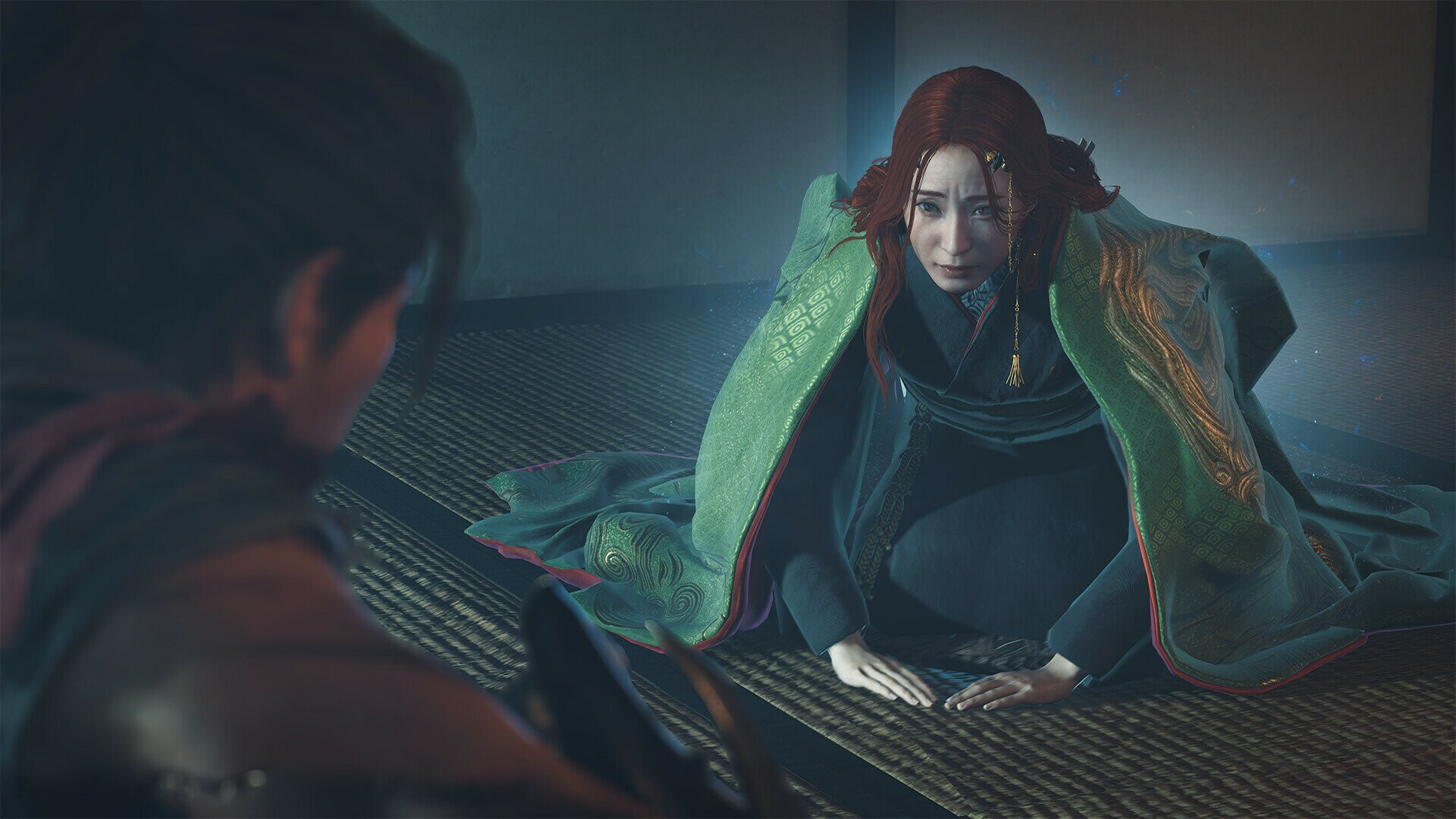
Shizuka Gozen inside the gauntlet praises the player in real-time for actions performed correctly, such as sword strikes, archery, and evasion. What is the background behind introducing this reaction system, and what is the range of actions and volume of dialogue in the full version.
" This title is premised on telling the story of Miyamoto Musashi in depth, so there is no character-switching system. However, if only Musashi appears, the gameplay would just be constant action. Therefore, we made it so that you can learn about the world and story more deeply and naturally by interacting with the gauntlet as you progress.
The setting of the gauntlet talking is fresh and provides a good stimulus as an 'Onimusha'-like expression. Musashi and Shizuka don't know each other well at first, but Shizuka wants to support Musashi's mission, and from there, their relationship deepens.
What parts were inherited from the 'Onimusha' series and what parts were evolved.
" The inherited elements are the 'soul absorption system,' the thrill of the 'Issen,' and the 'satisfying feel of the blade.' The evolved element is the thrill of 'free cutting' (the ability to cut based on the direction the sword is swung) that you can feel in systems like the Issen.
There are also new actions like deflecting to create openings, environmental actions (using tatami mats or large carts to attack enemies), and technology that calculates in real-time to make sword-on-sword clashes look natural even on sloped terrain. We also faithfully included 'Onimusha'-like elements, such as using a skill tree to absorb souls while attacking or gaining the power of awakening.
What does the late-game action look like that players can reach through the skill tree and upgrades.
" There are growth elements where you can acquire new skills or increase attack power and health. Through the skill tree, you can upgrade to absorb souls while attacking. There are also several 'Oni Weapons,' and you can upgrade various types, such as group attacks or area-of-effect attacks. Even if you get stuck in a combat section, you can gain an advantage by growing your character.
Some boss patterns require continuous evasion or defense. What was the most difficult part of designing boss patterns.
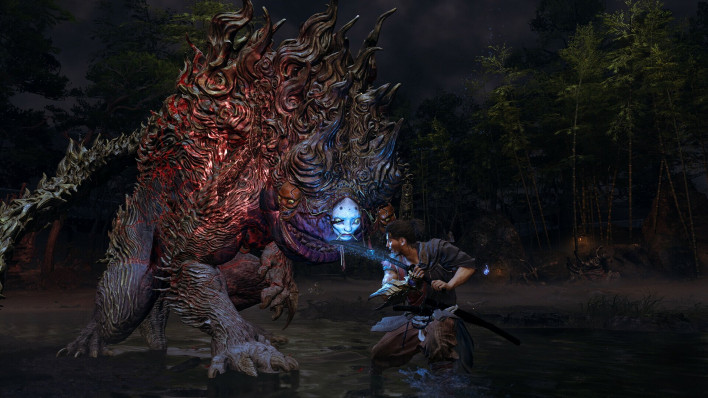
" We designed boss battles to ensure you experience a fight against a character full of personality. Byakue is a boss focused on group combat who becomes stronger as his white body is stained with blood when he takes damage. Dohatsuten was designed for fast-paced one-on-one combat, so he has a setting where he becomes stronger as the player takes damage.
We designed it so that you can feel the fun of changing your clear strategy depending on the boss, such as fighting mainly with deflections against armed enemies, or focusing on evasion against unarmed ones.

It seems to be a structure where you respond to enemies with one weapon and various abilities rather than using multiple weapons by attribute. Why did you design it this way.
" To express Miyamoto Musashi as a master of the sword, we designed it so you can experience various actions centered on the sword. Also, since Musashi is a character who fights desperately using the surrounding terrain or environment, we made it possible to fight using tatami mats or large carts. Musashi's signature dual blades can be used as a ultimate skill.
Also, there are several types of 'Oni Weapons,' such as group attacks or area-of-effect attacks, which you can use according to the situation to broaden the range of your actions.
The enemy's motion changes depending on the counter method, and you are given multiple choices rather than a specific command. What did you focus on most when designing the action choices.
" We made it so that you can experience action that makes you feel like a cool samurai by choosing from various options, rather than repeating only one clear strategy. I hoped that different combat styles would emerge for each player, with the feeling of 'If it were me, I would defeat them like this.'

Are there any opinions from the feedback received after the demo release that were reflected in the full version.
" We made detailed adjustments, but there are no major changes. Looking at the reactions of those who actually played it, some said it was too easy, but the demo was an excerpt of the early part, and it was adjusted so that you can use action elements that you learn gradually from the beginning. In the full version, we have properly built a wide range of satisfying action.
Is the intention behind adding 'Break Issen' to be considerate of players who find the Issen timing difficult, or is it for the diversity of play styles.
" We added 'Break Issen' so that anyone, even those not used to 'Just' inputs, can experience the thrill of the Issen.
Looking at the appearance change menu, it seems possible that other playable characters exist. If it's not a spoiler, can you tell us about it.
" In this title, the premise was that we wanted to properly tell the story of Miyamoto Musashi alone, so there is no character switching.
Lastly, please say a word to the Korean players looking forward to the release of this title.
" I am very happy that we have reached the stage where we can finally present the work. If you haven't played the demo yet, please try it once and experience the fun of this title.
It is a title where you can enjoy sword action that could only be made because it is the current Capcom, and a dark fantasy unfolding in an 'Onimusha'-like Japanese-style world. I would be happy if both those who have been waiting for the series and those who are encountering 'Onimusha' for the first time play it.