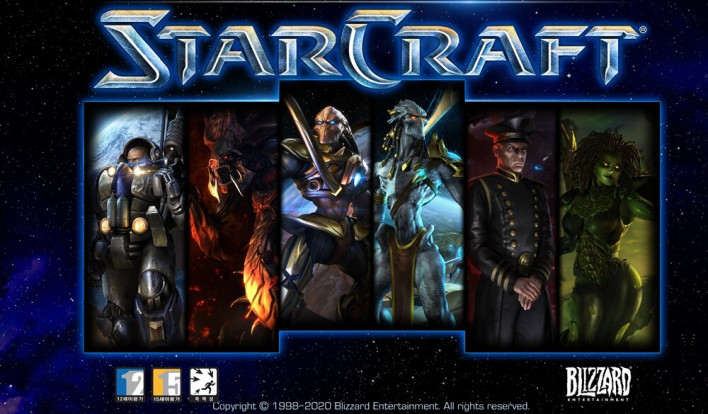
Recently, the hottest topic taking over the YouTube channels of former StarCraft: Brood War pros and top ASL players is undoubtedly their showdowns against the AI 'Pluto'. Prominent players such as Kim Seong-hyun ("AlphaGo"), Do Jae-wook, Lim Hong-gyu, and Park Sang-hyeon ("Soma") have all succumbed to Pluto's bizarre playstyles and razor-sharp control, becoming a major talking point. After nearly 30 years of human-developed build ecosystems suddenly suffering defeat at the hands of the newly emerged AI Pluto, it almost feels as though decades of history have been invalidated.
However, the fundamental question surrounding this phenomenon is whether this match-up can truly be called an equal "competition" between human and AI.
Back in 1998, when players first went 1v1 against the computer in front of bulky CRT monitors, hitting an enemy building just once with a scouting worker would cause all enemy forces to chase that worker with a reaction speed impossible for humans. Both then and now, this is closer to a basic baseline spec expected of a computer.
"Perfect optimization"—never losing sight of vision, sending workers to resources without a 0.1-second margin of error, and being utterly immune to supply blocks. This is not because AI has surpassed humanity intellectually, but rather the natural weight class advantage inherent to a computer operating directly inside the motherboard.
The only difference now is that while computers previously relied on a few rigid early-game builds according to pre-scripted rules, AI has now broken out of that mold. For humans who have spent over two decades struggling against the physical limits of their fingers and eye fatigue, struggling physically against a machine pouring out thousands of calculations per second is an entirely natural outcome.
This gap becomes even more glaring in combat and multitasking. Humans perform multi-pronged harassments specifically to induce "multitasking overload and mistakes" in their opponent. However, Pluto maintains a 100% reaction speed even during simultaneous multitasking scenarios, individually focus-firing Dragoons or Marines to extract maximum efficiency. What creates chaos for a human is merely a concurrently executed calculation algorithm for AI Pluto.
Looking back a decade ago to when AlphaGo defeated Lee Sedol (9-dan), the shock to the Go world was literally a defeat of intellect and strategy. AlphaGo shattered the Joseki that humans had firmly established over hundreds of years using pure computational power, leading to a complete paradigm shift where Go players now learn from and review AI moves. In a perfect-information game like Go, AI was literally a master and ruler offering "new right answers."
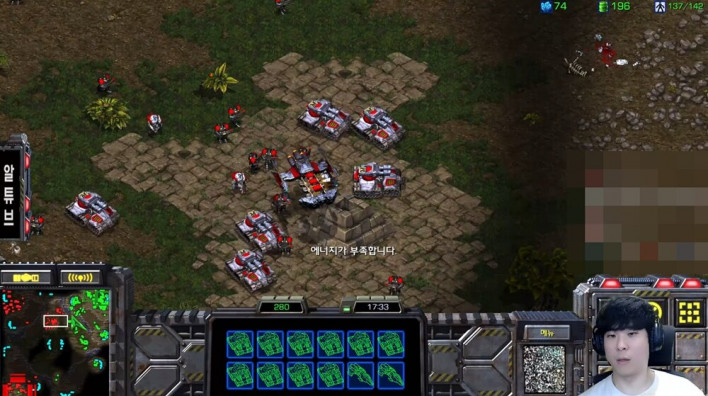
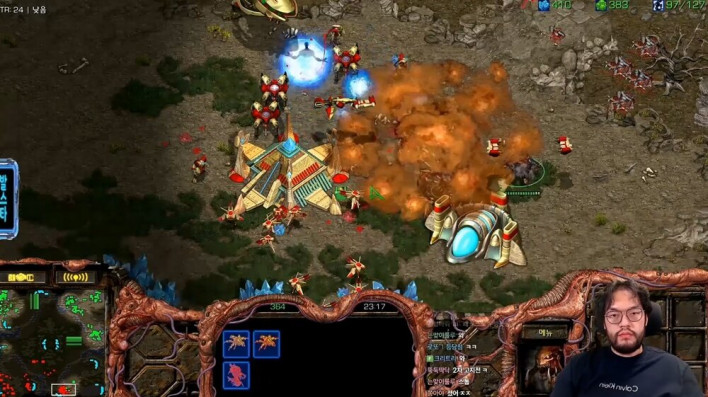
However, in StarCraft—an imperfect-information game that demands real-time reaction—the mechanism through which Pluto wins is completely different.
Some observers look at Pluto's bizarre play and claim that it has "surpassed the build ecosystem researched by humans for decades," but that is far from the case. AI Pluto's true weapon for bringing former pros to their knees is not a creative, brilliant "strategy" that rewrites 20 years of history, but simply the "brute force of mechanics" that overwhelms human biological limitations.
Anyone who has watched StarCraft for a long time and plays at a certain level can tell that AI Pluto's builds, strategies, and SimCity are almost archaic. It is just that its mechanics and optimization are overwhelming enough to overcome those shortcomings.
Genuine competition is established only under the premise of "equal conditions." To make it a true "battle of strategy and builds," AI should be subjected to constraints such as physical limits achievable by humans (APM limits), camera view limits that restrict sight to one screen at a time, or cognitive limitations like manually monitoring the minimap.
Unless a humanoid robot were sitting in front of a computer, physically operating the same keyboard and mouse while visually taking in the monitor screen like a human, current showdowns remain unfair event matches between an AI controlling the game engine directly from inside the motherboard and humans bound by physical limits of fingers and eyes. Thus, it seems best to enjoy these matches as entertaining content rather than taking them too seriously.