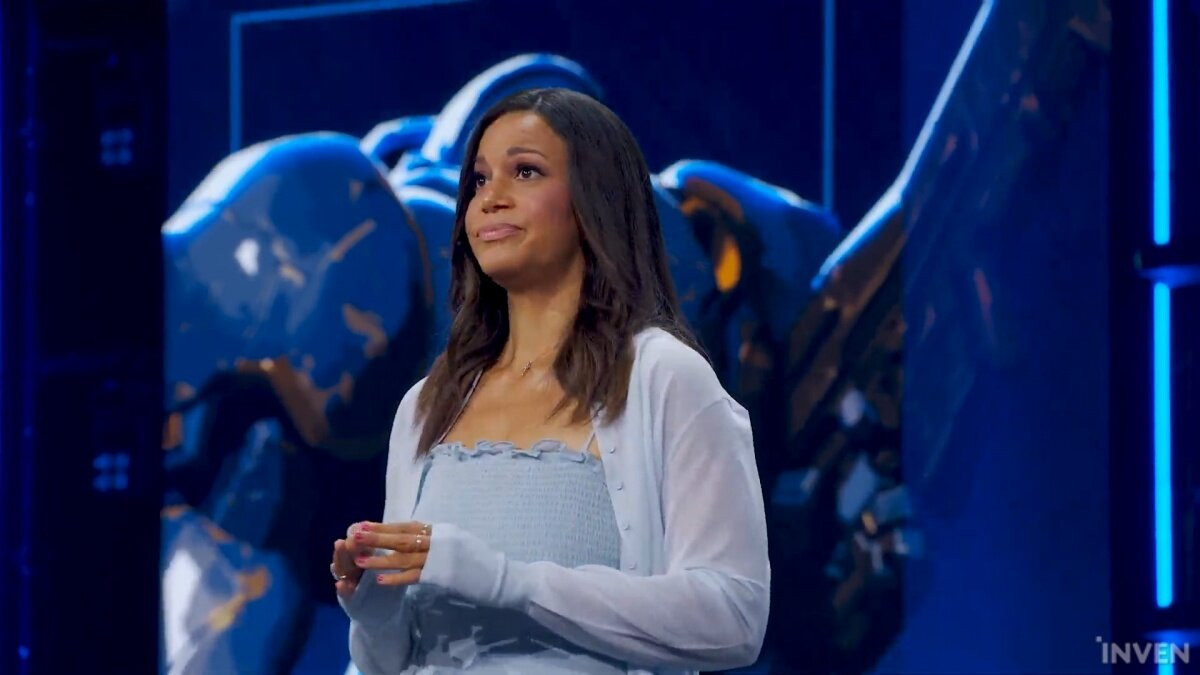
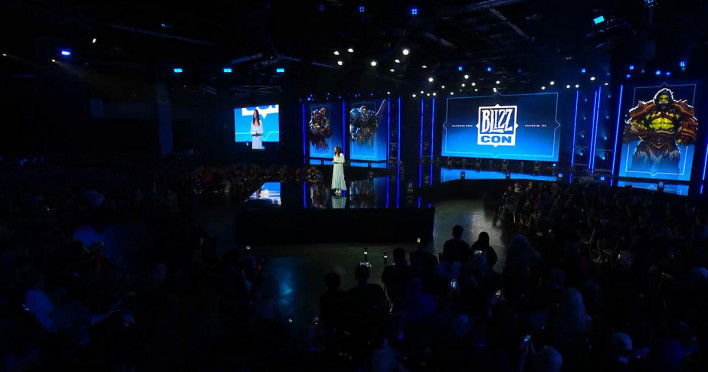
For President Johanna Faries, who took the helm of Blizzard Entertainment in February 2024, BlizzCon 2026 is a special occasion in many ways. It marks her first BlizzCon since taking office. The event itself has returned after a three-year hiatus, coinciding with major milestone anniversaries including Blizzard's 35th, Diablo's 30th, and Overwatch's 10th.
Above all, Blizzard used this event to focus on the future rather than the past. StarCraft, which had gone without news of a new entry for a long time, returned as an open-world shooter, and Diablo 5 was revealed for the first time. Notably, Blizzard announced targeted release years for major projects that still have a long way to go before launch. Considering how Blizzard historically adhered to its principle of "When it's ready" and rarely committed to specific timelines early on, this represents a remarkably unusual shift.
Speaking with Korean media at BlizzCon 2026, President Faries explained that this was an intentional change. Over the two and a half years since taking office, she focused on transforming Blizzard into an organization capable of building and executing long-term plans, wanting to show confidence that the company can now attach dates to major targets and deliver on those promises. What kind of Blizzard did Faries want to present at her first BlizzCon as president? From her assessment of the event to a new development strategy, the future of Blizzard IPs, and the direction of BlizzCon, we sat down to hear her thoughts.
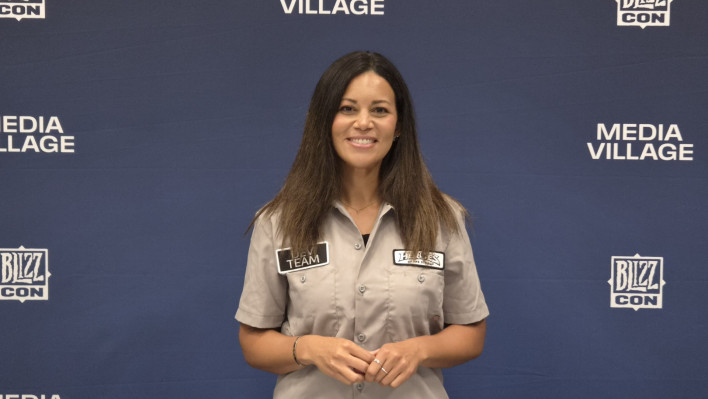
The BlizzCon 2026 Opening Ceremony was broadcast live globally, including in Korea, drawing a wide range of reactions to the announcements. Do you feel you received the response you were hoping for? What was it like seeing the reactions firsthand?
Johanna Faries: We are truly thrilled by the response coming from around the world. Every single development team did a fantastic job, and above all, I feel they presented with genuine heartfelt passion. Our goal was to create joy and deliver that to people.
Every team across Blizzard takes genuine pride in the projects revealed this time. Soaking in the energy on site throughout the weekend and meeting face-to-face with the community to share our mutual passion was an immense joy for us in itself.
It is also great to see so many people around the world watching the stream and discussing the announcements, because that process generates new feedback. It is wonderful when people tell us they love what we showed, but it is just as good when they give us honest feedback on how they felt. Those conversations and feedback make us a better, stronger organization.
BlizzCon is a truly precious event for Blizzard. Connecting directly with the community in real life is vital, but it is also a place where we can spark a broader conversation around our numerous games and projects. If people are interested and want to know more, we need to actively engage in that dialogue as well. Based on the insights we gain from that, we want to deliver even better and bolder results when we actually launch the games.
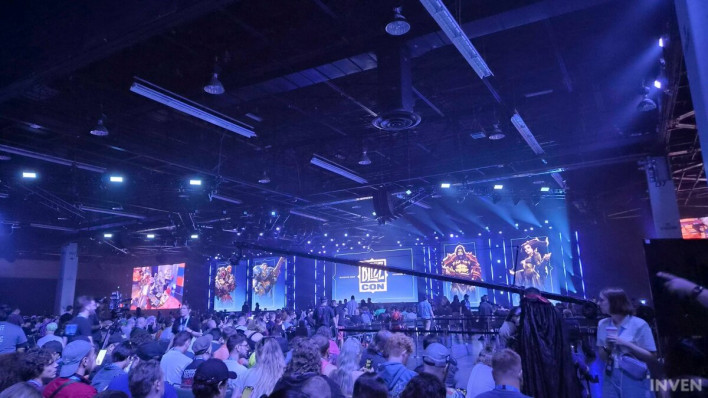
This BlizzCon marks a return after three years, coinciding with multiple anniversaries including Blizzard's 35th, Diablo's 30th, and Overwatch's 10th. Given that, you likely wanted to present something grand. What aspect of Blizzard did you most want to showcase through this BlizzCon?
Johanna Faries: What we wanted to demonstrate was confidence and inspiration. We knew there was enormous anticipation and demand from people who had been waiting for BlizzCon to return. Since it had been a long time, we felt that when everyone gathered again, we had to present something in a powerful way to the community, and I believe each of our teams truly accomplished that.
At the same time, we wanted to showcase our future across multiple dimensions through this BlizzCon. It served as a starting point to reveal the ambitions that the entire Blizzard organization holds moving forward.
We are also glad to have shared news across almost all of our core franchises, IPs, and universes. There were massive announcements and relatively smaller ones, but that is not what matters. We were able to showcase a broad spectrum of content and news, and above all, we hoped that each player community would leave BlizzCon taking home something to look forward to, feeling that "they are listening to us" and "they know what matters to us."
In that sense, I consider this event a success. I am immensely proud of the teams and the effort they poured into making this event happen. This experience will also serve as an important benchmark as we consider how to shape future BlizzCons.
Among the most surprising announcements were the new StarCraft project and Diablo 5. Even though both titles are still quite far from release, targeted launch years were revealed in advance. In the past, Blizzard often refrained from specifying launch dates at reveal under the philosophy of "When it's ready." Does this change represent a resolve to fulfill publicly stated commitments, or has the underlying way development and planning are conducted fundamentally changed?
Johanna Faries: I think it's both. When I assumed this role about two and a half years ago, one of the key priorities I set out was "planning." We must deliver high-quality products, and we must attract and empower top talent capable of making the best games. The third critical piece was for the entire organization to plan very strategically together.
As that approach took root, I believe we gained a high level of confidence in sharing launch timelines. When we state that a specific game will come out in a certain year, we say it with the confidence that we can actually launch it that year. We also embrace the ambition of having confidence in those dates and executing at a world-class level.
At the same time, it is also true that we wanted to change the way we announce major projects. Previous generations of Blizzard leaned closer to the "When it's ready" approach. From a player's perspective, they might see something incredibly exciting and visually stunning, yet have no idea when they would actually get to play it.
This time, we wanted to attach dates to our grand ambitions and major projects. We want to be a Blizzard that players can trust and look forward to. Of course, that comes with a deep sense of responsibility for me as well. I need to give the development teams enough time and space to deliver their best work, and the developers themselves must feel confident about the targeted timeline.
Ultimately, this was an intentional decision. It also signals that Blizzard as an organization is planning in a somewhat different way than in the past.
Since taking office, you have highlighted unlocking the potential of existing franchises and building long-term development capabilities as major priorities. This time, efforts prepared over time—such as StarCraft's genre shift and Diablo 5—have begun to take center stage. Looking back, do you evaluate that this organizational evolution and IP growth strategy are moving in the intended direction?
Johanna Faries: Yes. I take immense pride in how multiple teams working together have reached a point where we can confidently present high-quality games and major announcements.
Of course, this has been a journey over the past two and a half years. We held deep conversations and worked together to ensure we were thoroughly prepared. It was crucial to empower dev teams to unleash their creative ambitions on a large scale while taking a strategic approach to how those creations are brought into the real world.
Now that we have established a foundational capacity to view Blizzard from a long-term perspective, we must also think about how what we do today connects to what players will want to see from Blizzard five years down the road. And what things look like five years from now could be very different from today.
That means we have to juggle multiple things simultaneously. We must continue supporting our active live games to meet player expectations, prepare games launching anywhere from a few days to a few years out to ensure they deliver great experiences, and at the same time look even further into the future.
In particular, we cannot simply rely solely on the IPs we already know. We must consider where else Blizzard can go and how far we can expand our reach from an entertainment perspective. Some of yesterday's announcements reflected that exact direction.
I believe these discussions are taking place effectively within the organization. When teams, planning, and resources are aligned toward the same direction over time, everyone can act with strong consensus when the moment for execution arrives.
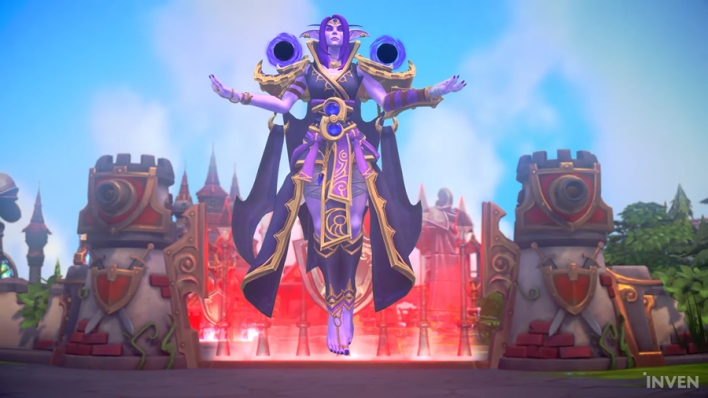
At this BlizzCon, Heroes of the Storm also re-emerged. Beyond revealing Xal'atath, do you plan to continue supporting and developing Heroes of the Storm going forward?
Johanna Faries: Beyond revealing Xal'atath, we are continuing to discuss and exchange ideas at an organizational level about what the future of Heroes of the Storm could look like. However, I also want to give the development team enough room to freely explore possibilities and enjoy the creative process.
At the same time, I want the community that has supported this game to know that we will continue to support Heroes of the Storm in the future. We are delighted to showcase Heroes of the Storm once again, and we are equally thrilled by the positive response. Beyond Xal'atath, we look forward to players experiencing the game in various ways and sharing their feedback with us.
With initiatives like the recent Overwatch collaboration with Netflix, moves to expand game IPs into other media such as animation and video are gathering full momentum. As many game companies dive into transmedia projects, what are your short- and long-term plans to expand the value of Blizzard IPs in the global media market?
Johanna Faries: We do have plans. It was something I wanted to signal a bit during yesterday's Opening Ceremony, and there will be much more to come in this area. We are currently actively discussing what forms new media partnerships might take.
What matters most ultimately comes down to creation and storytelling. Both internal Blizzard teams and our entertainment and media partners must deeply understand the IP to tell the best possible stories. We need to feel that our IPs are in the right hands, and the work must resonate with existing fans and players. At the same time, if it welcomes new players and fans, Blizzard's footprint within culture and entertainment will expand even further.
You can expect more in this space going forward. However, reaching an actual announcement requires an incredible amount of preparation. We shouldn't announce too early, nor should we wait until it's too late. Finding the right timing to share news responsibly is key.
Personally, enabling these projects to move forward is a major priority for me. I believe Blizzard holds some of the finest IPs in the world. We have every right and potential to step into these new spaces and build an even broader fanbase.
You emphasized quality and community during the Opening Ceremony, and this time you met fans in person. What do you see as the essence of BlizzCon? How does BlizzCon hold unique significance compared to other gaming events?
Johanna Faries: To me, the essence of BlizzCon is connection with the community. I hoped that would naturally come through from the Opening Ceremony all the way through the weekend events.
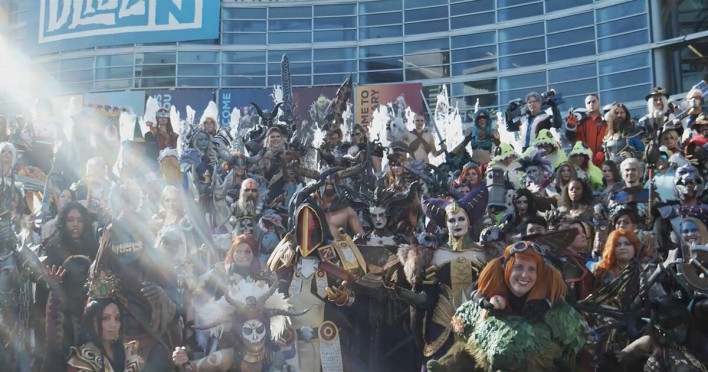
I think BlizzCon is a truly unique event. It is deeply rooted in Blizzard's culture, and even across the broader gaming and entertainment industry, it stands out as a distinct kind of community gathering. Some people met at past BlizzCons and built lifelong relationships, while others might be meeting for the first time here, forming friendships and memories that will last a lifetime.
Above all, everything starts with the player community. The fact that players can share experiences directly in the same room with the developers of the games they love is a very special element of BlizzCon. No matter how we shape BlizzCon in the future, I believe this aspect will never change.
To set ourselves apart from standard conventions or gaming showcase events, we must always put players and community front and center. If we do that, BlizzCon will continue to succeed.
Another key element is authenticity. Online channels alone cannot fully recreate the emotions and connections forged when people meet face-to-face. Gathering in person creates a fresh energy and memories that last a lifetime. We view Blizzard's ability to host such a space as immensely important, and we will continue to fulfill that role.
Given how much news was unveiled this time, some are already asking, "Will there be anything left to show next year?" Will BlizzCon return to being an annual event, or will it follow a specific cadence?
Johanna Faries: As of now, there is no set cadence for future BlizzCons. However, we are actively discussing how to make each BlizzCon an outstanding event whenever we host one. We will continue to invest in the future of BlizzCon.
We learned a lot while preparing for this event. It is true that a three-year hiatus was quite long in many respects. But when I first took on the presidency, I spoke extensively with the staff who run BlizzCon, and one piece of feedback I heard over several months was that preparing an event every single year can exhaust the team. That's because as soon as one BlizzCon ends, you immediately have to start prepping for the next.
In some years, you can pack a tremendous amount of major announcements into one show, but if you host the event on an annual cadence, there will be years where that isn't the case. So the guiding principle for us moving forward is that if we decide to host BlizzCon, it must be an event packed with content.
We want to pack it with big reveals, fresh information, hands-on playable games, and everything the community looks forward to. We know fans spend their valuable time and resources to come here. If so, we must go beyond meeting those expectations to deliver an experience that exceeds them.
We will share more about the event cadence at the appropriate time. However, whether we have sufficiently strong games and content to unveil will serve as a key criterion determining when BlizzCon takes place. The development teams should also look forward to and enjoy preparing for the event. When we show up at BlizzCon, it should be a show where everyone comes together in great spirits.
It has been about two and a half years since you assumed the presidency. From a media standpoint, opportunities to visit Blizzard headquarters or meet developers directly have increased noticeably, and there is a tangible sense of having access to far more information than before. What did you want to change most when taking office, and looking back, what do you see as the biggest shift within Blizzard?
Johanna Faries: Speaking first from a media perspective, one priority I cared deeply about was a "global perspective." I felt it wasn't just about how we launch a game, but also how that game is discussed and covered worldwide.
Just because many developers are based on the U.S. West Coast doesn't mean we should only look at North America or the West Coast. Blizzard has offices all across the globe and players worldwide. Each region also has fantastic media partners with whom we should engage in a more strategic and structured manner.
The Media Village at this BlizzCon is an example that grew out of that thinking. I took a bit of inspiration from my past experience working in the NFL, specifically the Super Bowl. At the Super Bowl, dedicated spaces are set up so media from around the world can cover the massive event in depth. I wanted to ensure global media partners at BlizzCon had dedicated opportunities to properly cover the event and meet with developers. Arranging visits to Blizzard headquarters ahead of the event shares that same context.
As for how the entire organization has changed, it might sound a bit odd, but I would rather ask our employees. Of course, as a leader, I have my own thoughts on what I sought to change. However, how the teams actually feel about those changes matters much more.
I constantly try to check whether employees feel positive changes have taken place and whether they believe Blizzard is moving in the right direction. I create spaces for candid conversations with staff across different regions, continually asking, "Are we doing well?", "How are you holding up?", "What are we missing?", and "What can we do better?"
Any organization inevitably experiences both good times and challenging moments. That is why it is so crucial to keep listening to our colleagues. I hope that a culture where people talk openly across the organization, where teams operate empowered, and where departments collaborate toward ambitious goals feels like a fresh and somewhat different approach than before.
Ultimately, however, I believe the most accurate answer regarding real change lies within the teams. That is why I will continue to stay close and listen to the voices on the ground.