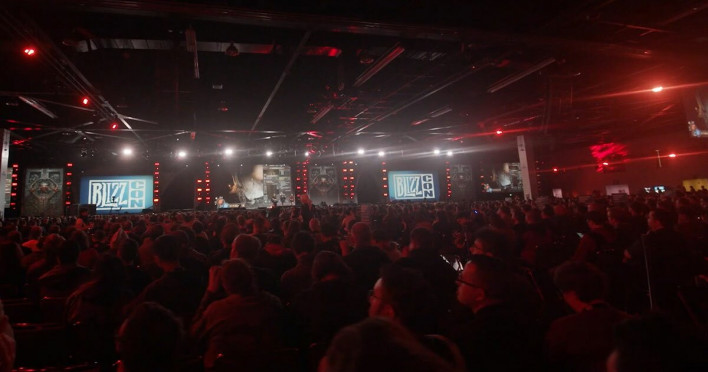
The doors of BlizzCon have opened once again.
September 12, Anaheim. It has been three years. Even before 2023, various issues led to transitions to online events like 'BlizzConline', cancellations, and non-hosting, making 2019 the last in-person event before that. As a result, this marks only the second BlizzCon of the 2020s.
Naturally, interest in BlizzCon centered on anticipation for new games, as it always has. It makes sense. In the past, Blizzard satisfied fans with brand-new title reveals, where "what gets announced" was paramount. However, what made BlizzCon's return possible isn't simply new releases. We must ask: "Who made it possible to open these doors again?"
The answer isn't just the company. It's the fans who arrived at the Anaheim Convention Center at dawn to form long lines, and the players around the world staying up all night to watch the live stream. The doors of BlizzCon opened because they were there.
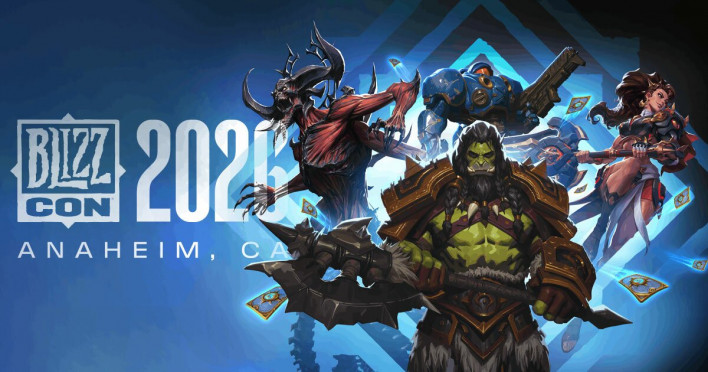
Three Years of BlizzCon Absence Blizzard, Returning to Its Franchises
While BlizzCon took a hiatus, time weighed heavily on Blizzard. Internally, leadership changed amid various issues, and Microsoft's acquisition of Activision Blizzard, attached to a massive $68.7 billion figure, signaled major shifts in company strategy. During that time, the company's top decision-makers changed multiple times. Some projects were canceled, and while rumors swirled about new entries in established franchises, actual reveals for new games were hard to come by.
Blizzard may have been losing fans' trust. But in 2026, when BlizzCon's return was decided, efforts emerged to change that narrative. Teams joined forces to focus on a long-term vision. At the center were the franchises Blizzard built over its 35-year history. The developers didn't hide that they were passionate gamers themselves. They spoke openly about how long they had played Blizzard titles and how they approached game development with a fan's heart.
From Warcraft, StarCraft, Diablo, and Overwatch to various classic series, Blizzard boasts a diverse lineup of franchises. What made these franchises what they are today was not just the people who created them, but the players and fans who continue to love the games.
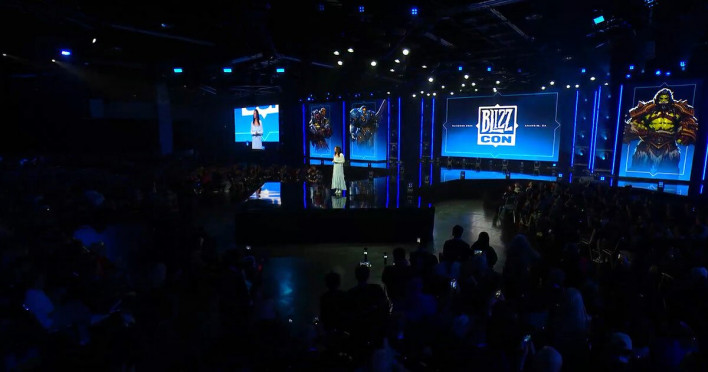
Refocusing operations around core franchises means returning to the stories and gameplay fans love. That holds true for BlizzCon as well, a venue where all of Blizzard's franchises gather under one roof. Indeed, that direction was clearly evident at this year's event.
The StarCraft IP, dormant for a long time, announced an expansion into an open-world shooter, while Diablo revealed plans to extend Diablo IV to new platforms alongside roadmap details leading into Diablo V. Overwatch continues its Reign of Talon season, while Warcraft presents World of Warcraft: Midnight at the core of its main narrative, a new Warcraft III campaign that revisits established stories from a fresh perspective, and player-centric World of Warcraft narrative experiences. Three years of silence were filled not just with a single new game, but across every franchise the company owns.
Participation, Not Spectatorship The People Who Fill BlizzCon
And in the end, it was the people who came to watch all these announcements. The lines to enter BlizzCon form in the early hours of the morning. Hours before opening time, crowds line up outside the Anaheim Convention Center. This year was no different. The opening ceremony was set for 10:30 AM. Fans waiting to secure a spot closer to the front behaved no differently this year. Photos rushed back by reporters on site in the US showed massive crowds lined up, all gathered to enjoy BlizzCon.
Furthermore, their experience doesn't end with watching new game announcements or trying hands-on demos for the first time. Of course, new reveals and gameplay experiences hold immense significance, which is why Blizzard built this year's BlizzCon around its core franchises. At the same time, however, players experiencing Blizzard's iconic game universes outside the games themselves in various ways and expanding them into a distinct culture—that is what sets BlizzCon apart from other gaming conventions. From the opening ceremony to developer sessions, new game details and development insights are shared online. Yet the richer stories unfold below the main stage.
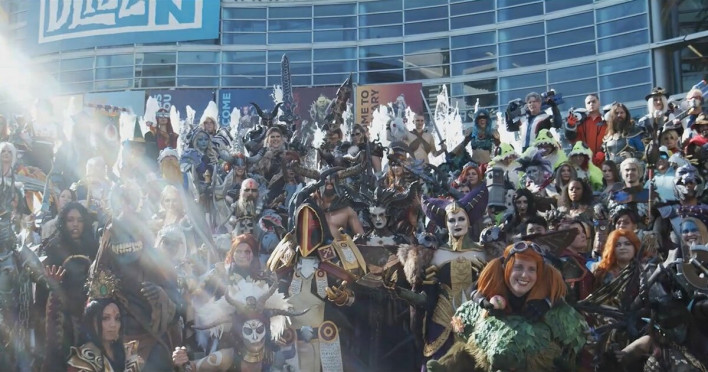
From art contests where talented fans add their own personal touch to game universes, to short digital films that deliver new stories in under 3 minutes; talent contests featuring witty humor and impressions of in-game characters; and cosplay where fans embody the characters themselves. Visitors at BlizzCon reinterpret Blizzard's games and franchises in their own ways while directly taking part.
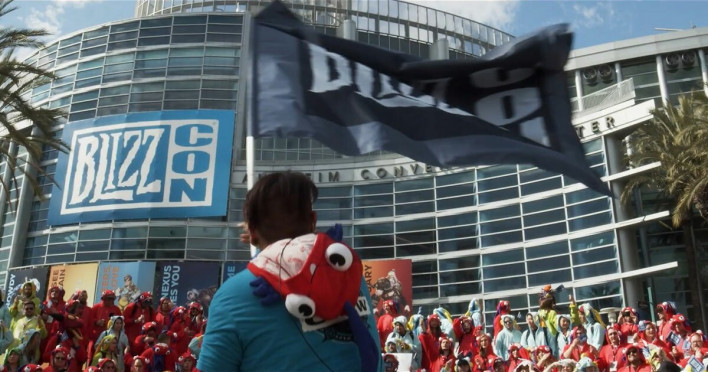
Many fans craft massive Reinhardt armor or dress up as Diablo—down to every spine on its back—capturing everyone's attention with striking cosplay. Even without competing in contests, real-world WoW and Overwatch characters casually dressed in costume can be spotted all over the venue floor. And it's not just cosplay. The Murloc March, where countless fans in Murloc suits march and gurgle through the convention center together, has become an iconic BlizzCon staple.
Rather than simply consuming Blizzard's franchises as video games, fans actively experience and enjoy them in positive ways.
A Festival Beyond Competition BlizzCon Culture Built on Cheer and Camaraderie
The esports tournaments held each year have long served as core events where fans celebrate Blizzard games together. Given that Blizzard games effectively laid the foundation for modern esports, BlizzCon serves as a hub to enjoy various esports tournaments under one roof—from the Overwatch World Cup, World of Warcraft Arena Championship, and Hearthstone Masters, to special showcase events for classic titles like StarCraft.
While the essence of competition is testing skill against opponents, what transforms that competition into a festival is ultimately the crowd. Fans wearing national team jerseys, roars erupting over a single brilliant play, and spectators lingering after the matches to share the lingering excitement—they have built a cheer culture without barriers, shouting for their favorite players, teams, countries, or factions. It elevates esports beyond mere competition and broadcast into a unified celebration.
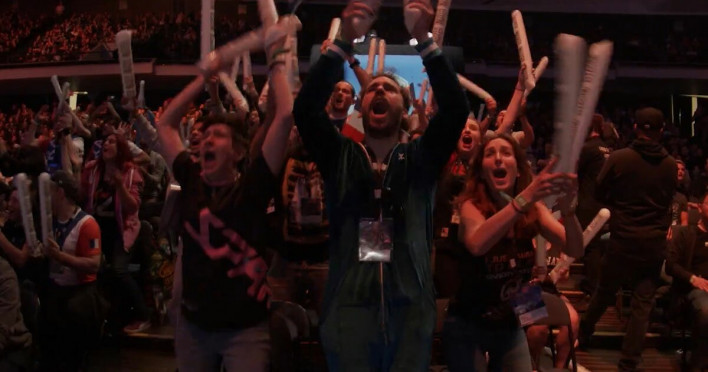
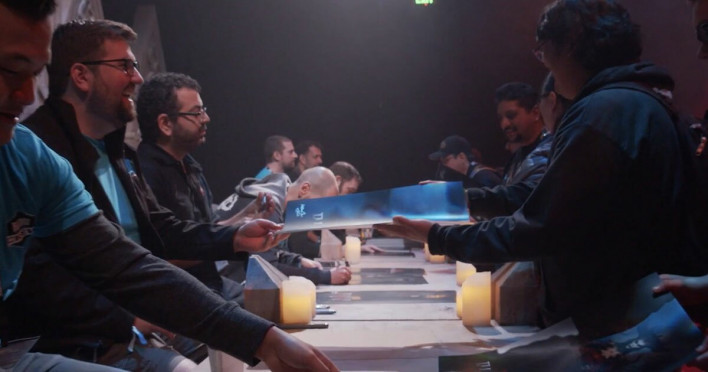
The opportunity to interact directly with developers and the tailored portfolio review programs offered by Blizzard's recruitment team—helping fans channel their passion and experience into potential careers at Blizzard—share this same philosophy. Within this event, a virtuous cycle unfolds where a fan becomes a developer, and that developer sits down face-to-face with fans once again.
Most corporate events stop at thanking the consumers who spent the most on their products. BlizzCon goes a step further, handing the stage and microphone to those who used those products as raw materials to create something new.
That is why a word rarely used at other gaming shows is frequently heard at BlizzCon. It is "connection"—a word repeated several times during this year's opening ceremony. A place where gamers gather under the single name of Blizzard, understanding each other as they are, celebrating together, and finding inspiration. That is what BlizzCon is.
Why People Gathered Once Again Those Who Kept BlizzCon Alive
In the end, the question narrows down to one: Why did people gather at BlizzCon once again?
It isn't simply because the company returned with new games after three years. Even during the period when company leadership changed twice, ownership shifted, and an anticipated game quietly vanished, these fans kept the community alive in their own ways. They crafted costumes, created fan art, watched esports matches, and listened closely to developers online. Long before the company was ready to reopen its doors, there were people standing guard right outside them.
Thus, the answer to this question was already clear. People gathered at BlizzCon not because Blizzard had returned, but because these fans had never left in the first place.
Ordinary gaming conventions are plentiful. At any game show, the lineup of reveals may leave room for disappointment, or hands-on experiences might fall short of expectations. Yet regardless of all that, there are people who attend the event, gather together, and turn it into a culture. People who connect, share their passion, and keep that culture vibrant. Ultimately, it was not the developer but these fans who decided the vitality of these games. They are the ones who kept BlizzCon alive, and they are the ones who brought everyone together here once again.