The government will formally request this year that Chinese authorities expand the issuance of China’s game licenses—approval numbers commonly referred to as ISBNs—for Korean-made games. It has also finalized a concrete roadmap to foster the game industry as a core growth engine, including increasing support for indie game planning and development and diversifying export destinations.
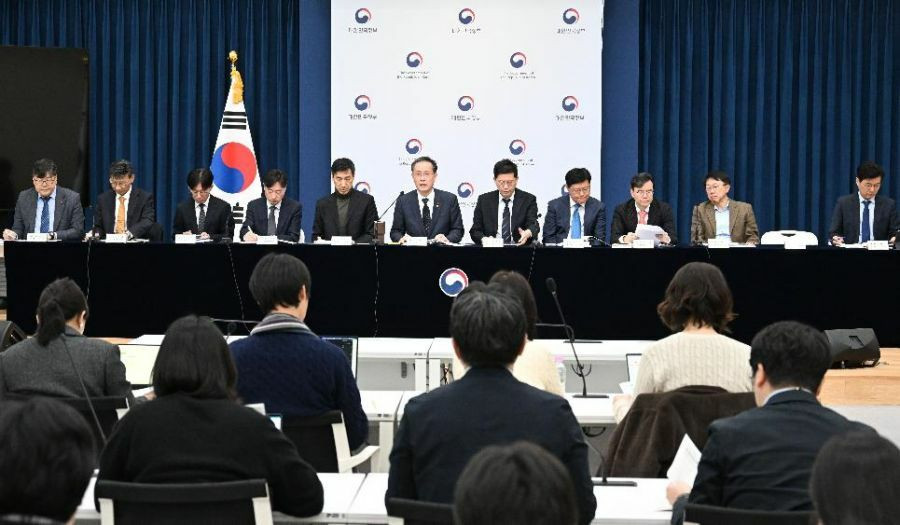
On the 9th, the Ministry of Economy and Finance and other relevant ministries announced the “2026 Economic Growth Strategy,” which includes these measures. In this strategy, the government set “Attractive Growth Led by Culture” as one of its four major policy directions, and singled out games as a key pillar for promoting the K-culture industry.
One notable section lays out plans to strengthen the export foundation to China. The government specified that, leveraging Korea–China ministerial-level meeting frameworks, it will pursue expanded issuance of game licenses (ISBN) alongside efforts to enable Korean films to be released in China.
As specific channels for consultations, the government plans to use the Korea–China Economic Ministers’ Meeting, tentatively scheduled for the first quarter of this year, as well as the Korea–China Trade Ministers’ Meeting to be held within the year. This reflects the government’s intent to expand the scope of discussions at the Meeting of Ministers for External Economic Affairs to include bodies such as the Ministry of Culture, Sports and Tourism, and to strengthen linkages with the Korean Wave from the earliest stages of formulating economic cooperation plans.
Measures have also been prepared to broaden the base of the game production ecosystem. The government plans to expand support for indie game planning and development to reinforce the foundation for creation. To address an export structure overly concentrated in specific countries, it will establish a new-market export strategy and pursue diversification of export destinations through localization support.
In particular, for games slated for overseas release, the government plans to increase their chances of success by supporting user evaluations and feedback by global region. The Ministry of Culture, Sports and Tourism is set to prepare within the second quarter of this year detailed measures for an indie game new-market export strategy and localization support.
Fiscal support aimed at a technological leap for the content industry will proceed in parallel. The government will create a 50 billion won “Content Future Strategy Sectors Fund” and build a content production ecosystem that leverages artificial intelligence (AI). This is part of a broader vision to position K-culture—alongside advanced industries such as AI and biotech—as a new national growth engine. In addition, the government plans to invest 1 trillion won in the media and content sector through the National Growth Fund in 2026, raising expectations for capital inflows into the game industry as well.
Separately, the government will establish a service export innovation strategy in the first half of the year to expand export financing for service industries, including games, and to develop sector-specific export models.
This article was translated from the original that appeared on INVEN.

Sort by:
Comments :0