“I want to create a stage where game developers are respected, just like filmmakers.”
That was the pledge of a young games journalist who, a little over a decade ago, walked away from his day job at a broadcaster. He hated seeing games dismissed as nothing more than “kids’ play.” So he poured $1 million of his own money into building an awards show. This is the story of Geoff Keighley, the head of The Game Awards (hereafter, TGA).
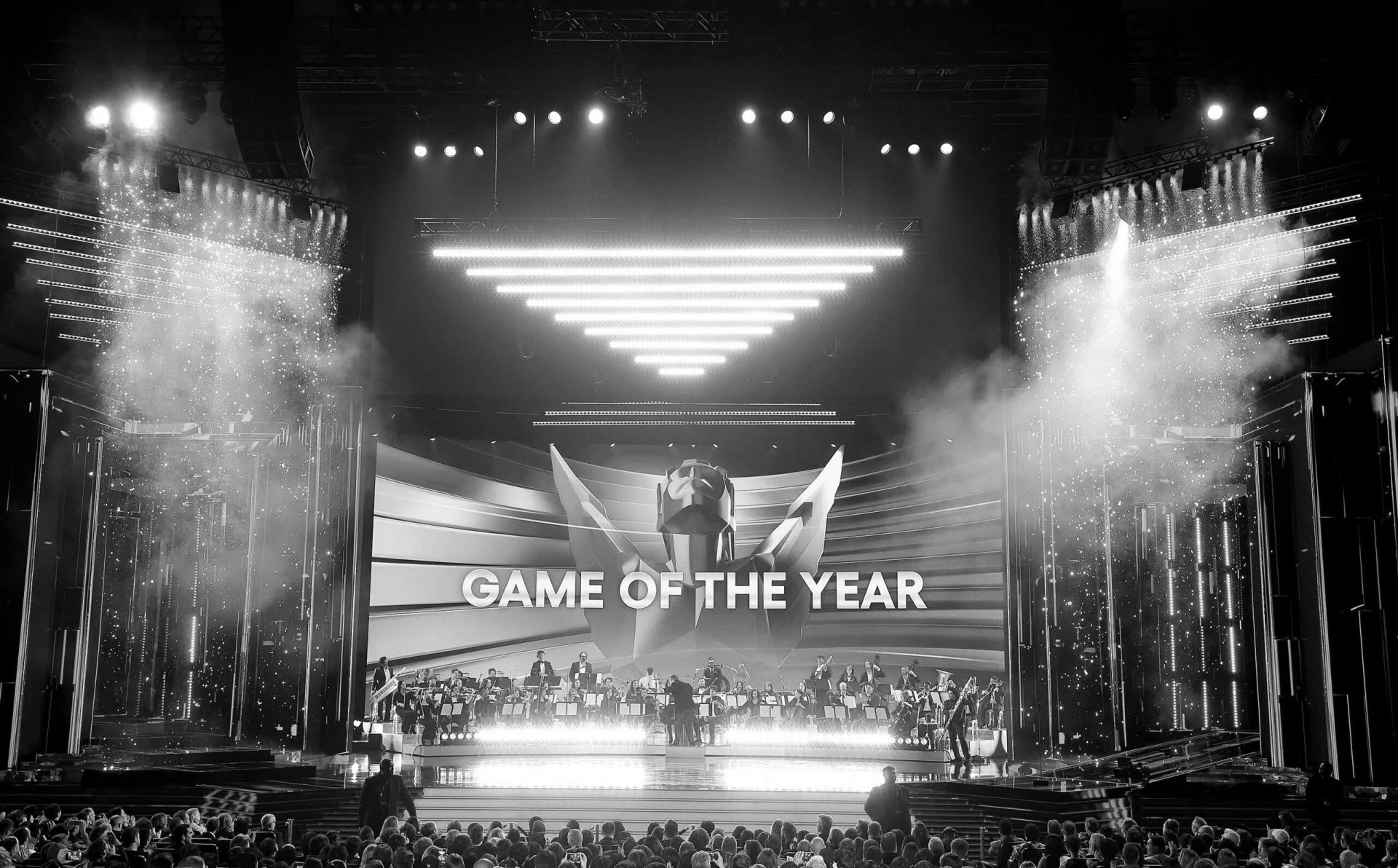
What looked like a reckless gamble became a major success. In 2025, the show he created drew an astonishing 170 million viewers. The Washington Post hailed TGA as “the Oscars of gaming,” crediting it with pushing video games to the very pinnacle of mainstream culture.
And yet, the TGA that once aspired to be “an awards show for game developers” is now being questioned for its very identity. TGA succeeded—and as it succeeded, it grew into something enormous. An enormous machine needs money to run, and big-ticket advertising gradually swallowed the event whole.
The star of the show shifted from people to new trailers. Cutting off winners’ acceptance speeches with an orchestral cue—because there’s “no time”—only to roll into ads, was the clearest possible example of the ceremony putting the cart before the horse. Across overseas communities like Reddit, people have mocked TGA as “not an awards show, but a three-hour billboard.”
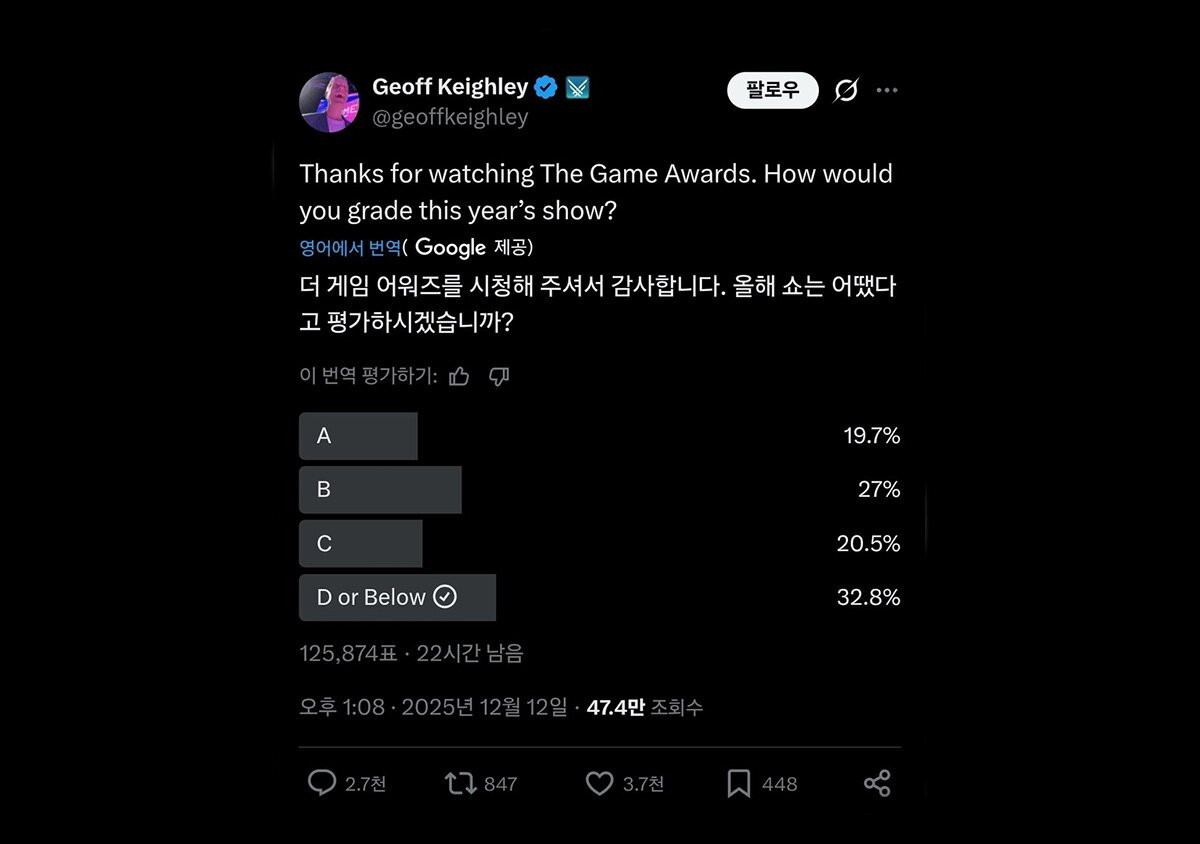
That backlash is visible in the numbers, too. In a poll Geoff Keighley personally ran on his own social media, 32.8% of respondents handed this year’s show a failing grade of “D or below.” It’s the cold reality of public sentiment—hidden behind the report card of record-breaking viewership.
▲ Geoff Keighley’s poll received a lukewarm reception from the public
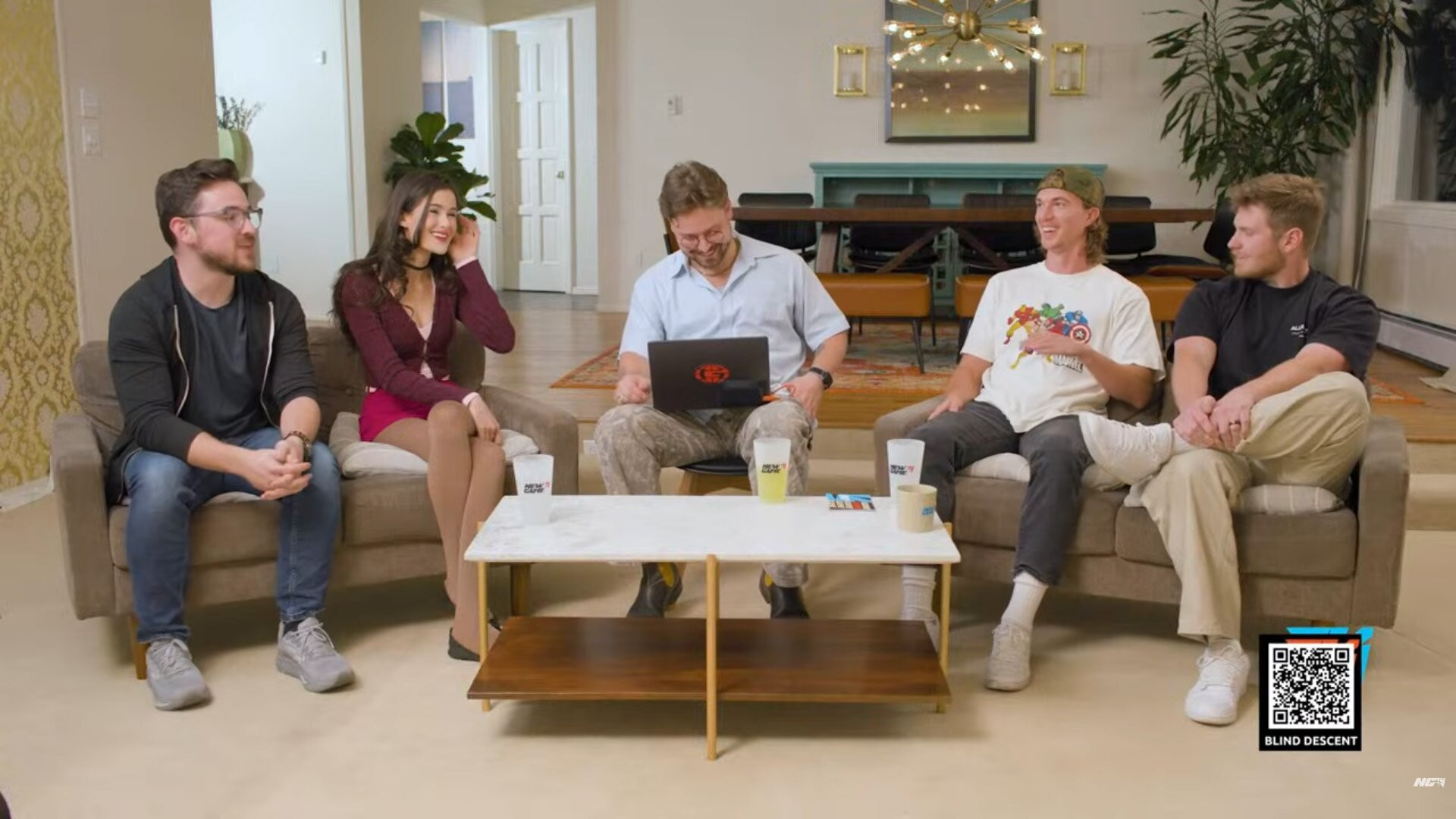
Held on the 9th, New Game+ Showcase 2026 is a game show born out of pushback against a TGA seen as captured by capital. Well-known creators such as Luke Stephens and Jake Lucky hosted the event under a clear banner: “a game show with no paid advertising slots.”
They said they built the lineup—from indies to AAA tentpoles—by focusing on just one question: “From a gamer’s perspective, is this genuinely exciting?” The format was different, too. They sat together on a couch, listened to developer interviews, and talked about the games. For nearly four hours, the program was filled solely with new game reveals and interviews with the people making them.
Of course, good intentions don’t always produce good outcomes. The verdict was unsparing. Viewers called it “too long and boring,” and some international outlets pointed out that it had “too much unnecessary chatter.” For a first attempt, the rough, half-baked execution was a real limitation.
Still, the stone they threw was small—but it clearly rippled outward. The stream logged 140,000 viewers, and coverage followed not only from Western outlets like IGN and GameSpot, but also from numerous Chinese media organizations, including 17173.com, which highlighted the games shown and the developer interviews. In that sense, they secured enough momentum to make people look forward to what comes next.
The road ahead doesn’t look unconditionally bright. Even if they find success, success inevitably enlarges an event’s scale—and scale demands fuel. TGA, now criticized as it is, also began from a place of sincerity, only to change through the pressures of survival and expansion. There is no guarantee that New Game+ Showcase will remain free from the gravity of capital forever.
But we can’t let fear of future corruption diminish today’s attempt. Even if the ending isn’t perfect, the 고민 and struggle to reclaim the “essence of games” is, in itself, worthy of applause. So rather than rushing to worry, I want to trust their pure passion. Ten years from now, will they still be on that couch—talking about games and laughing together? I can’t help but hope that cheerful image becomes reality.