Donation announcements from game developers often follow a similar pattern. When a good cause arises, funds are delivered, a single press release is published, and that is the end of the story. More often than not, players enjoying the game fail to even remember that such a donation took place, primarily because they were not directly involved in it.
Smilegate wanted to change this structure—often obscure and fleeting—starting seven years ago. The question was whether donations could become content players look forward to, like updates or events, and ultimately a natural part of live service operations. As a result, 13 donation campaigns were conducted between 2020 and this year across three IPs: Epic Seven, LORD NINE, and Chaos Zero Nightmare (Kazena). Cumulative donations reached approximately 900 million won, benefiting over 43,000 individuals. Most encouragingly, players are now actively aware of these charitable initiatives.
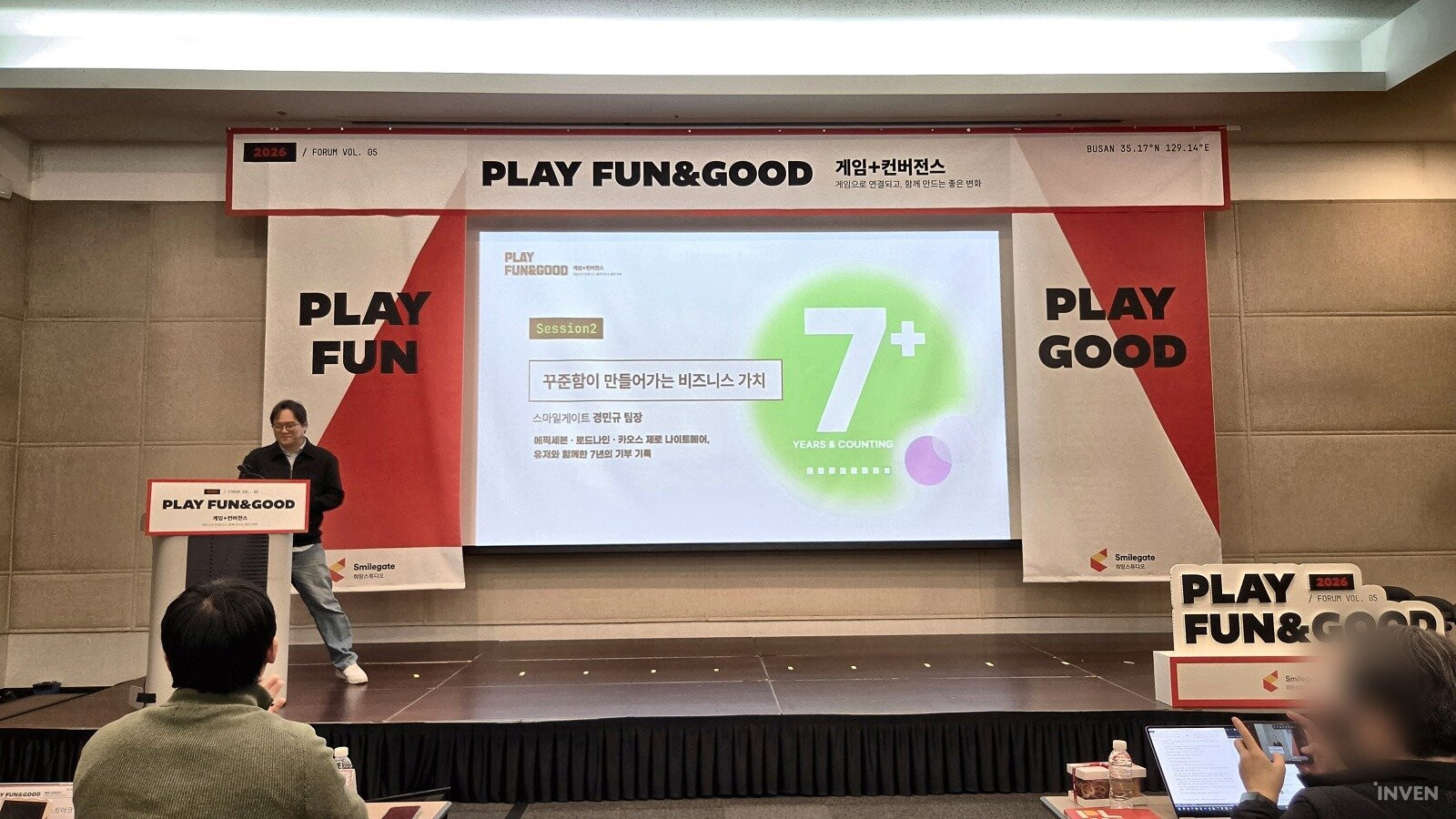
At the "2026 PLAY FUN & GOOD Forum" held by Smilegate Hope Studio at BEXCO in Busan on November 20, Smilegate Content Marketing Team Lead Min-kyu Kyoung shared the record of these seven years. Known to players as "Mr. Navi," Kyoung presented on the topic "Business Value Built by Consistency," introducing how donations were redesigned around participation rather than monetary figures.
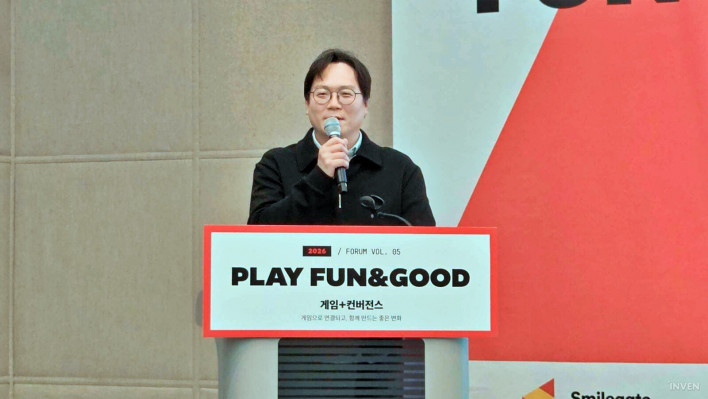
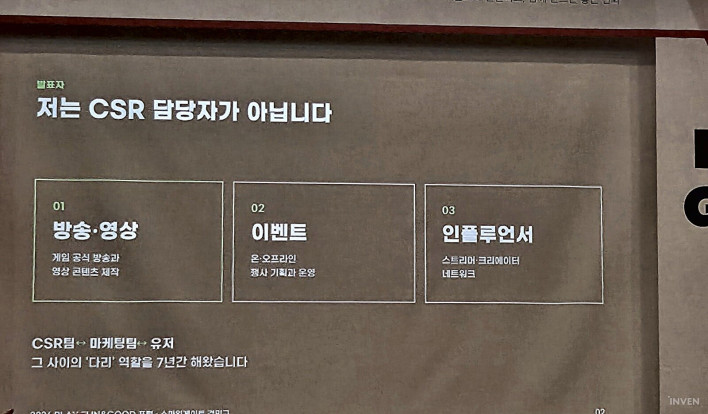
Opening his presentation, Team Lead Kyoung confessed, "I am actually not a CSR manager." His primary role is as a marketer who directs or hosts game broadcasts, plans videos, runs online and offline events, and collaborates with influencers. Nevertheless, the reason he stood on the forum stage was that he had served as a bridge between the game development teams, Hope Studio's CSR team, and the players over the past seven years. While the CSR team identifies beneficiaries and executes the donations, marketing and other relevant departments, alongside the developers, take charge of making those donations visible, audible, and actionable for players.
He pointed out the "common outcome" of game company donations mentioned earlier: delivering funds for a good cause, releasing a press statement, and ending the matter there—leaving players with no memory of donations in which they had no direct hand. Thus, in 2020, the Epic Seven team and the CSR team posed the question: "Can donations become part of live service operations?" They began deliberating how to turn charitable giving into content that players look forward to, much like game updates or events, moving away from the conventional model of simple donation announcements.
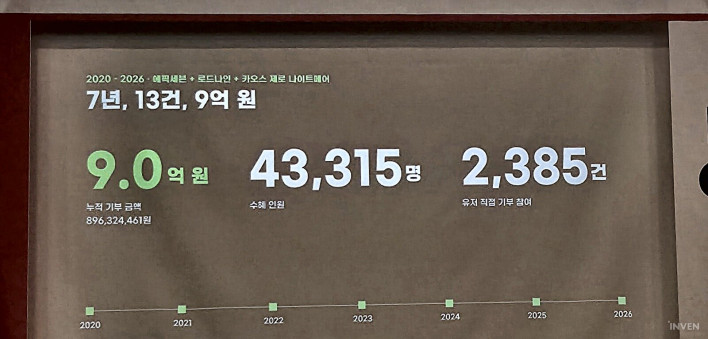
The results were reflected in the metrics. From 2020 to this year, 13 campaigns were held across three IPs, generating a cumulative donation total of approximately 900 million won and benefiting over 43,000 individuals. However, the metric Kyoung highlighted as most vital was distinct: 2,385 instances of direct player participation in donations. He noted that while total donation amounts were higher in the early years and decreased more recently, this shift represents the core insight of his talk.
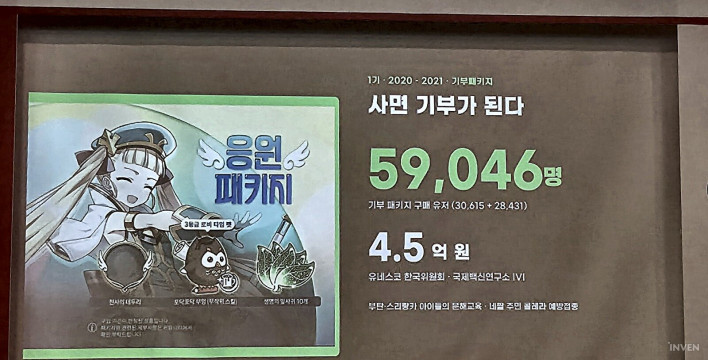
The first phase in 2020 operated on a "buy to donate" model. Epic Seven released in-game cheer packages and donated the proceeds. In 2020, 30,615 players purchased packages, delivering approximately 230 million won through the Korean National Commission for UNESCO to support literacy education for children in Bhutan and Sri Lanka. The following year, 28,431 players participated in the Hope Package, providing approximately 210 million won toward cholera vaccinations for residents in Nepal.
In the summer of that same year, an emergency relief campaign was launched to assist group homes flooded by heavy rains. Although the total amount raised was relatively modest at 30 million won, player participation reached 288 contributions. It served as a clear case demonstrating that players respond more to the sense of "I directly participated" than to the monetary total.
In 2021, the Hope Studio CSR team and the Epic Seven team visited the field in person to spend a day with the children. Kyoung, who visited alongside Epic Seven GMs at the time, recalled initially worrying whether he could make a meaningful impact, but found the time spent with the children deeply fulfilling. He noted, "Sending donation funds and meeting the children in person feel fundamentally different," adding that this experience served as the origin of the core principle maintained by the Epic Seven team: "Always return the results to the players."
Starting in 2022, the second phase connected gameplay itself to giving, rather than relying on purchases. The 2022 "Start Again" campaign simultaneously supported three causes—children of fallen firefighters, wildfire-damaged forests, and housing for vulnerable groups—setting a record for the highest single-campaign engagement with 879 player contributions. The subsequent "Share Warmth" event was designed as a cooperative mission where donation amounts accumulated when players gifted in-game items earned through play to friends. Gifting topped 7 million instances, translating ordinary gameplay into educational support for 3,000 children in Sri Lanka.
In the third phase starting in 2024, the event venue itself became the platform for donation. Epic Seven hosts its annual esports tournament, the Epic Seven World Championship (E7WC), and tied charitable giving directly to the finals venue. By donating a portion of ticket revenue while operating both on-site donation booths and online donation channels, the team continued supporting educational aid for children in Sri Lanka. Direct player donation contributions rose from 98 in 2024 to 375 in 2025, with approximately 320 visitors stopping by the physical booth alone. This year's finals, scheduled for next week, are being prepared under the same framework.
The core insight was that seeing the natural, genuine expressions of players willingly engaging in donation activities surpassed any venue program prepared beforehand. Although the monetary total was roughly 1/30th of the first phase, Smilegate gained invaluable lessons from transforming donations into an experience players could see with their eyes and participate in with their hands.
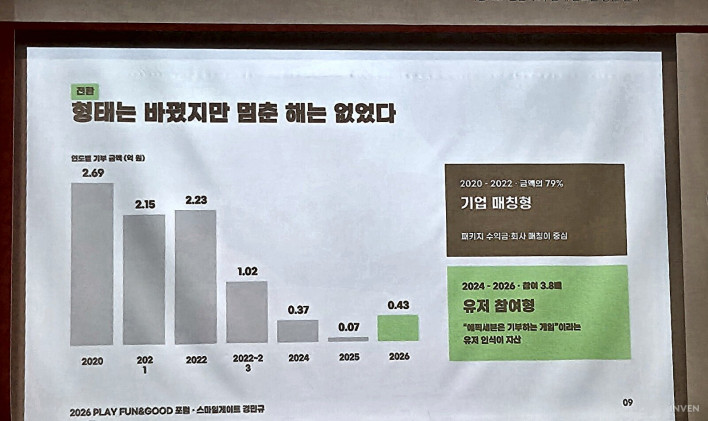
The key shift was moving the center of gravity from corporate-matched donations of large funds to direct player participation. While 79% of total funds from 2020 to 2022 came from corporate matching, the period from 2024 to 2026 transitioned into player-participatory initiatives, driving a 3.8-fold increase in engagement. Although a monetary chart alone suggests a downward trend, what the Epic Seven team gained was a lasting player perception: "Epic Seven is a game that gives back."
Having hosted official broadcasts, Kyoung admitted, "While the game went through various ups and downs over the years, players viewed these donation activities separately and received them in a very positive light." He added that the team learned such positive perception is not built through a single donation, but established when repeated year after year.
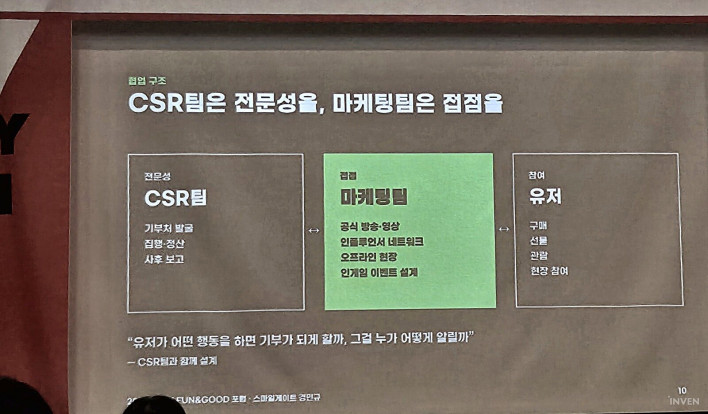
What enabled this transformation was a collaborative structure. While the CSR team possessed expertise in identifying beneficiaries, executing donations, and issuing post-campaign reports, building direct touchpoints with players remained difficult. Conversely, game teams possessed channels such as official broadcasts, influencers, offline venues, and in-game events. The marketing team served as the bridge between the two. Once the CSR team selected beneficiary organizations, the game team designed player actions that would trigger donations.
Influencers played the most critical role in this process. When a donation campaign is published purely as a notice board announcement, most players scroll past without reading. However, when streamers and influencers they regularly watch participate on stream and explain the cause, the donation ceases to be a notice and becomes content. The Hope Studio CSR team packaged the purpose, beneficiary information, and stories from the field into formats influencers could readily share, leading outreach and negotiations. The Epic Seven team complemented this by handling broadcast formats, on-site hosting, and content production.
From the perspective of influencers, participating in a good cause provided compelling stories to share with their communities, making them quick to respond favorably. Ultimately, the key was not asking for a "favor," but providing easy-to-discuss "materials." When those materials are properly prepared, the impact is highly encouraging.
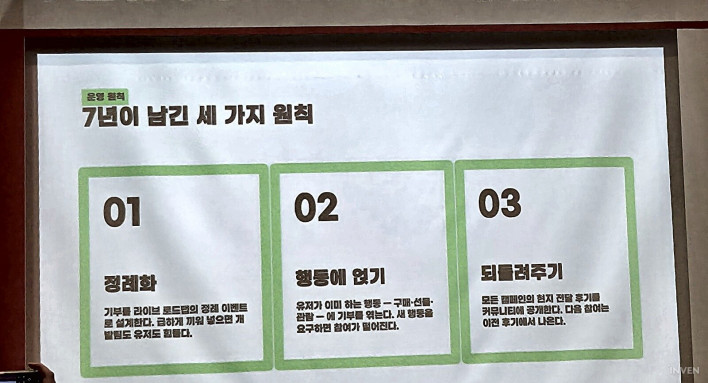
Smilegate established three core principles over the course of seven years. First, establishing donations as regularized events in the live operation roadmap. Second, tying donations to actions players are already taking, such as making purchases, sending gifts, or attending tournament finals. Third, ensuring results are returned to the players, with the CSR and game teams sharing post-delivery field updates on both Hope Studio and game community channels for every campaign.
So, what has changed? First, having 2,385 players contribute their own funds serves as evidence that players feel genuine pride in the game. Furthermore, in the Asian corporate social responsibility report published by the UK's Economist Impact in November last year, Hope Studio was named the sole "Social Innovator" from South Korea, with Epic Seven's in-game donations highlighted as a primary case study. The way the brand is mentioned outside the gaming industry has fundamentally shifted.
Finally, it generated "content" that marketing budgets simply cannot buy. Comments left by players upon seeing photos of children in need and their enthusiastic requests to participate further endured far longer than any commercial advertisement.
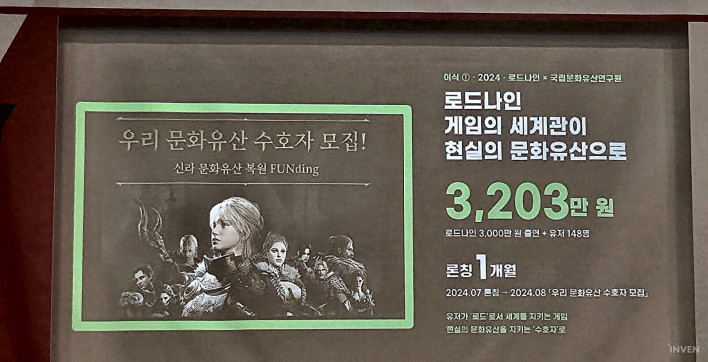
This experience gained from Epic Seven was extended to new IPs, starting with LORD NINE. In August 2024, one month after its July launch, the LORD NINE team held the "Recruiting Protectors of Our Cultural Heritage" campaign alongside Hope Studio's CSR team and the National Research Institute of Cultural Heritage. LORD NINE contributed 30 million won, and 148 players added their support to raise 32.03 million won. The funds were used to restore artifacts from Silla Jjoksaem Tomb No. 41, including gilt-bronze crown ornaments, birch bark hats, and armguards.
The standout aspect of this campaign was its deep connection to the game itself. As an MMORPG where players become "Lords" to protect the world, the charity target was framed around "protecting cultural heritage" rather than standard educational or medical causes, allowing players to fulfill their in-game persona in reality. The restoration process and outcomes were shared back with players through videos and reports. Team Lead Kyoung noted they learned that "when donation targets touch upon the game's world and lore, player immersion reaches a different level."
LORD NINE continued with five more donation initiatives over the following two years. In February this year, the "Warmth Supply Quest" provided 11,111 coal briquettes, 2,500 of which were hand-delivered to elderly residents by 41 Smilegate employees. During Family Month in May, 101 players raised 11.77 million won to support sports day events and independence programs for 36 children. For the game's anniversary in July, 118 players raised approximately 10.71 million won to help 100 seniors living alone navigate the summer heat. Naming these campaigns "Quests" and "Raid" was deliberate, aiming to make donations feel like in-game content rather than an external activity.
A second example followed with Chaos Zero Nightmare (Kazena). The Kazena team partnered with the CSR team to build donations into the "Nightmare Dream Park" 1st anniversary update from the start. The campaign provides food packages along with hygiene and safety education to 170 underprivileged children at risk of hunger in Korea. Player fundraising runs until December 2, with 179 participants raising approximately 11 million won as of the presentation date. Separate from player contributions, the Kazena team added 10 million won, creating a structure where the development team matches and joins the player-raised totals.
While Epic Seven introduced charitable campaigns in its second year, LORD NINE and Kazena integrated them starting in their first year. The goal was to "show players right from the beginning that we are doing this together."
This format is set to continue. Smilegate plans to apply the same model to upcoming projects such as Miraisi and Eclipse. The strategy includes embedding recurring donation events into launch roadmaps from the start, registering titles as partners on the Hope Studio platform, and co-designing influencer networks for each IP right from day one.
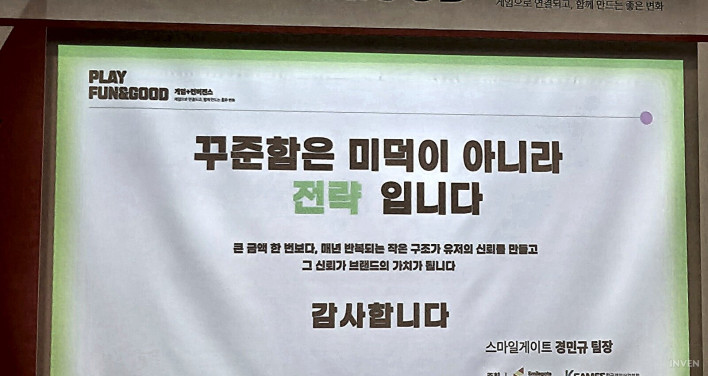
Kyoung concluded his talk by emphasizing that the lesson learned over seven years is simple. "I believe consistency is not a virtue, but a strategy," he said. "Rather than making a large one-time donation, building a modest structure repeated every year creates player trust, and we will strive to ensure that trust becomes brand value." He added, "We will do our utmost to ensure our consistency connects back to our games and continues driving positive change. All of this was possible because our players joined us, and I would like to take this opportunity to express my heartfelt thanks."