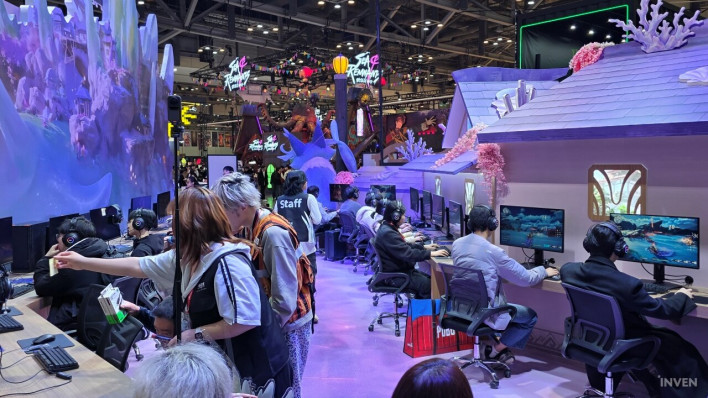
At G-Star 2026, where the exhibitor lineup differed from previous years in many ways, the booth for a company called YHKT in Exhibition Center 1 of BEXCO was likely one of the most unfamiliar to Korean gamers. That is because YHKT (YHKT Entertainment) is a Chinese 3D animation studio.
While domestic discussions have mostly focused on the growth of China's gaming industry, its animation industry has also been steadily expanding. The industry, including animation, comics, and related derivative products, grew from 76 billion yuan (approx. 15.5 trillion won) in 2019 to 400 billion won (8.18 billion won). YHKT is one of the high-profile studios leading this growth, with its flagship work 'Ling Long' (Ling Cage) recognized as a defining work of 'Guochuang' (purely domestic Chinese animation) that surpassed 10 billion cumulative views.
Having established a strong presence in Chinese 3D animation, the studio chose games as its vehicle to expand globally. Developing a game based on its original sci-fi animation IP 'Bringer', YHKT has appeared at Bilibili World, Gamescom, and now G-Star 2026, seeking to make an impression on global gaming fans.
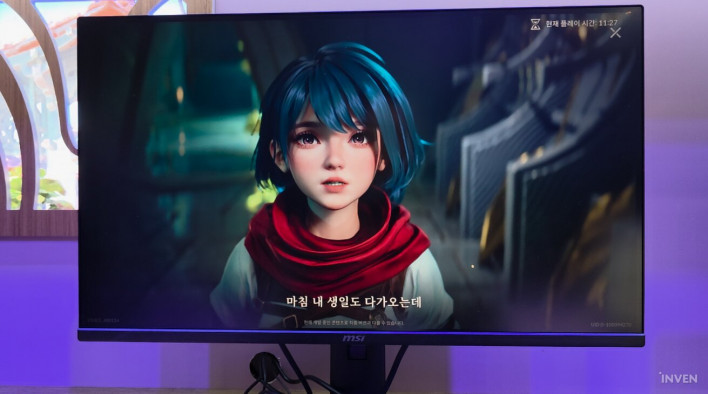
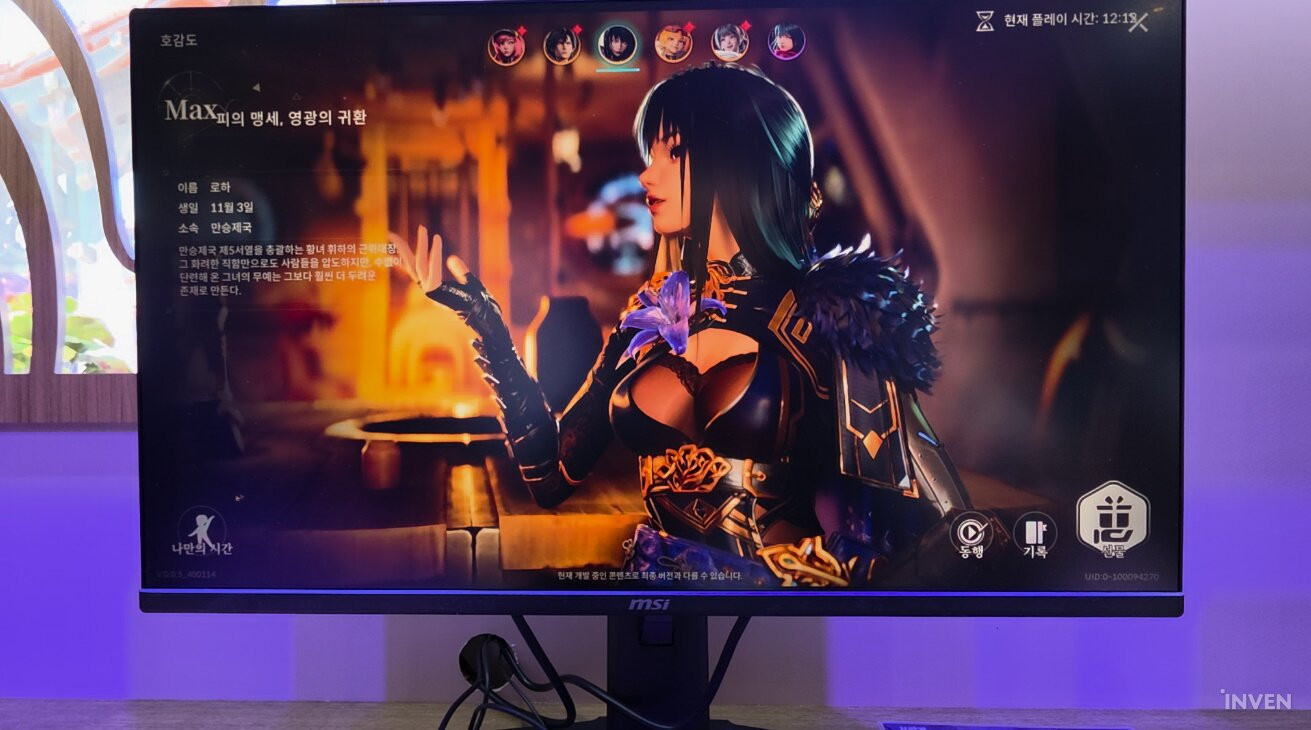
The demo version of 'Bringer' showcased at G-Star featured three main content pillars: Intimacy, Thalassa, and Combat. Intimacy literally involves interacting with the characters in Bringer to uncover their backstories and personal tales. From giving gifts to individual character storylines and profile details that gradually unlock as intimacy builds, these features present familiar mechanics for players of subculture games, told through cutscene animation. True to a company with extensive 3D animation experience, the vivid execution of everything from facial expressions to individual gestures stood out. While the 3D animation style differs from the conventional anime aesthetic typical of subculture games and may feel visually unfamiliar, setting aside that novelty, it was hard to find major fault with the level of detail and quality at this stage. The polish as a 3D animation was undeniably high.
The most eye-catching part of the Intimacy content was 'My Time', where players spend everyday moments with characters through casual minigames. Unlike stories that progress unilaterally without player intervention, periodic QTEs kept players engaged in the situation. The camera framing was also impressive, capturing emotional nuances—such as characters briefly meeting eyes before glancing away, or sharing a deep, captivating gaze. Even then, sudden shifts to QTE events created playful moments, showcasing strong pacing control.
The second content pillar, 'Thalassa', refers to the sea of the Bringer world and features naval combat taking place upon those waters. The party boards 'Arkiloth' (Longbo), a colossal living creature capable of navigating the Pure Sea, and uses pre-equipped weaponry to wipe out nearby lurking pirates. The Arkiloth is equipped with three types of weaponry—high-explosive cannons, cluster-bomb cannons, and torpedoes—which players must utilize strategically to quickly subdue the pirates.
As a living creature, the Arkiloth can jump unlike ordinary ships, allowing players to evade incoming enemy torpedoes and launch bombardment from above. However, players must exercise caution, as jumping can expose the creature to taking full hits from scattering cluster bombs. In addition to engaging in naval combat by maneuvering and utilizing weapons tailored to the situation, the demo offered a glimpse of exploration elements, such as gathering resources scattered around or clearing paths by destroying blocking obstacles.
The final content pillar, Combat, tasks players with taking on a boss using a preset four-character party. As the four-character party structure suggests, combat in 'Bringer' features tag-team battles familiar to fans of hero-collector action RPGs. The control scheme—left-click for normal attack, right-click for dodge, E for skill, and Q for ultimate—is equally familiar. Players unleash basic attacks and skills with each character, swapping between them during cooldowns to maintain their damage rotation. Mechanics common in modern action RPGs, such as perfect dodges followed by counterattacks and parrying with R, were also present in Bringer.
However, it was somewhat disappointing that there were no explanations of what effects trigger when elemental gauge meters accumulate, nor was there a way to preview each character's skill mechanics to clearly understand how combat unfolds. Fortunately, because control schemes and gauge systems common to the genre were shared, players could roughly figure out damage rotations through trial and error—such as pressing E or holding left-click when the bar above the health gauge filled up. Nevertheless, aside from Freeze triggering upon accumulating the Ice element, the effects of other elements remained unintuitive.
Taking only about 20 minutes to go through all of this content, the hands-on offered just a brief taste of what 'Bringer' is. In a way, that was the biggest drawback of the demo. Looking at the setup of the Thalassa content and combat, 'Bringer' is an action RPG centered on world exploration. Yet from the current demo build, it was difficult to grasp what kind of world players will explore or who the companions joining the adventure actually are. It felt as though the demo merely presented fragmented slices of available content.
The original story concept also centers on people traveling the world aboard Arkiloth, navigating across Thalassa. In a world where Thalassa—a sea flowing endlessly from north to south—swallows the land, humanity survives by building homes on top of or inside the Arkiloth as they move. The core narrative follows travelers who begin questioning this phenomenon and journey across the world to uncover the truth. While this bigger picture was briefly teased in a promotional video revealed three months prior to Gamescom, the demo itself left those glimpses of adventure feeling vague.
Additionally, the 3D animation art style infused with Chinese-style stylized beauty—a look rarely adopted in games of this genre—could feel unfamiliar to some. To draw an easier comparison, it brings to mind the stylized characters seen in Chinese wuxia games like 'Moonlight Blade'. Slim faces and sharp jawlines, which can sometimes make lip movements look slightly exaggerated, define this aesthetic. While the studio mitigated awkwardness and elevated overall quality by blending in touches of Western and international 3D animation, subtle uncanny-valley moments still catch the eye between facial expressions.
To convince players to embrace that unfamiliarity and embark on a new adventure, 'Bringer' still has a long road ahead. Offline playtests in China only began around Bilibili World earlier this year, so following in the footsteps of other Chinese games targeting the global market, it will likely undergo multiple tests to refine itself. While it is unfortunate that this first step presented only fragmented pieces, it is encouraging that the overall localization and voice direction were solid enough to navigate proper-noun traps and the unfamiliar style smoothly. This demonstrates the studio's genuine interest and preparation for the Korean market. As a new title based on Chinese 3D animation—an endeavor few Chinese studios have attempted—it will be exciting to see how 'Bringer' pushes forward past G-Star 2026 to open up new territory in the domestic market.