In video games, art is far more than just creating visual assets. A character's pose, the texture of a building's wall, or the distance between the camera and a figure can completely alter how players perceive the story. A well-crafted game world operates on its own logic and rationale, where a single brief animation can sometimes define a character more clearly than a line of dialogue.
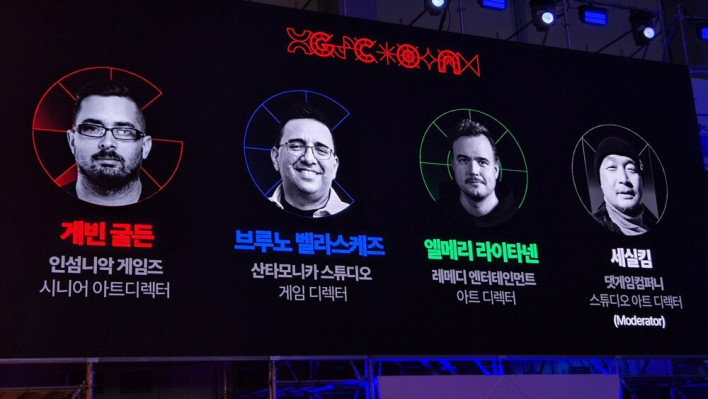
On November 20, the second session on Day 2 of G-CON 2026, held at BEXCO in Busan, examined this multifaceted role of game art. Titled "How Game Art Completes a World," the session featured Elmeri Raitanen, Art Director at Remedy Entertainment; Bruno Velazquez, Game Director at Santa Monica Studio; and Gavin Goulden, Senior Art Director at Insomniac Games. The panel was moderated by Cecil Kim, Studio Art Director at thatgamecompany.
Though the three developers have worked on distinct titles such as 'Control Resonant', 'God of War', and 'Marvel's Wolverine', they shared a core perspective on the essence of game art: more important than simply creating beautiful imagery is being able to justify why that imagery needs to exist. The presentation highlighted concrete development cases, ranging from the rules governing character movement to persuasively depicting worlds beyond reality, as well as the necessity of decisively trimming back visual assets during development.
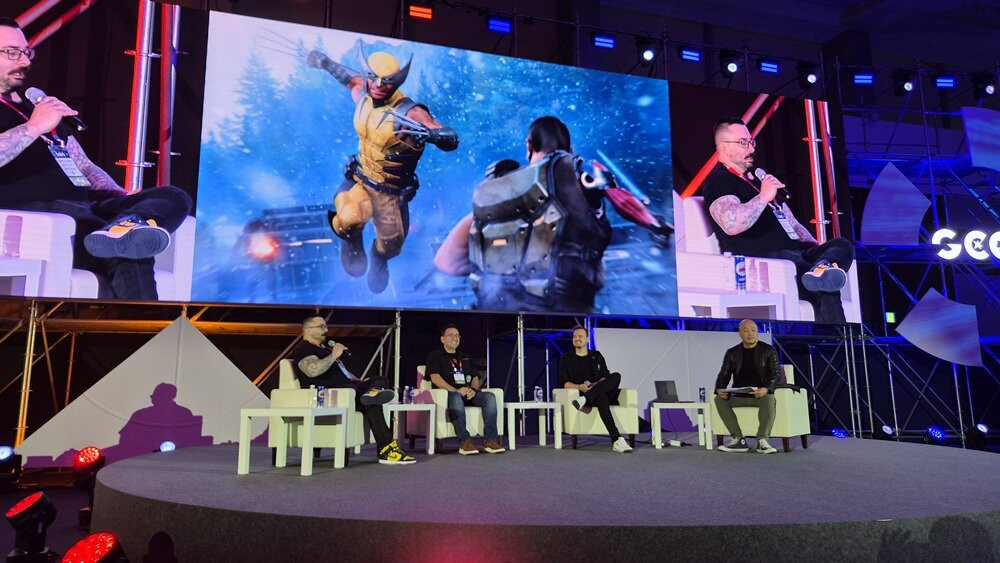
Remedy Entertainment Art Director Elmeri Raitanen, and thatgamecompany Studio Art Director Cecil Kim ©INVEN
Gavin Goulden likened worldbuilding in games to plating food. If story and gameplay are the dish itself, art is the presentation that makes it enticing. However, making it visually appealing alone is not enough; art must also visually communicate where players should go, what actions they can take, and what meaning their current environment holds. Ultimately, game art serves to translate story and mechanics into a format players can intuitively understand.
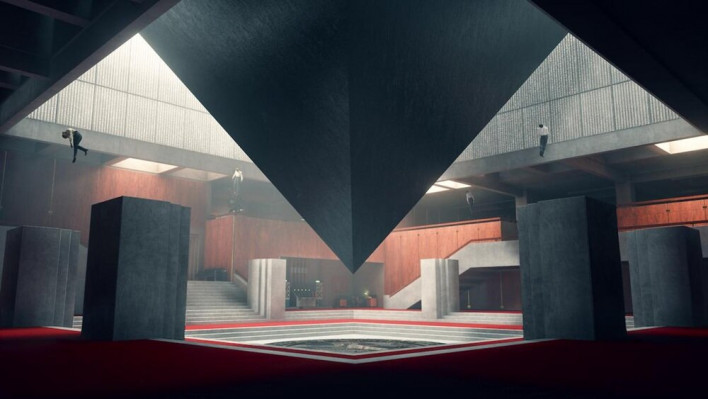
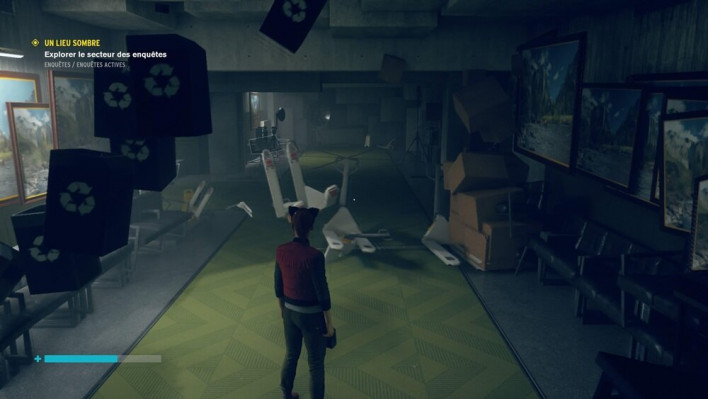
Elmeri Raitanen used Remedy's 'Control' as an example to explain the critical role of worldbuilding rules and contrast. Even in a game filled with supernatural phenomena, filling every space with weird elements is counterproductive. The team calls this "stacking weird on top of weird"—when everything is abnormal, nothing feels special anymore. To highlight bizarre phenomena, a mundane, realistic baseline is essential for contrast.
A prime example was early concept art for 'Control' featuring a water cooler installation. In the art, an employee instructed to install a water cooler in the Oldest House is unable to finish the job because the building's architecture keeps shifting. The completely mundane task of installing a water cooler highlights the strangeness of the situation far more than the supernatural building itself. This approach carried over into the sequel, 'Control Resonant'. The studio maintained this contrast by treating surreal occurrences like routine office work, even featuring posters noting that delayed clock-outs due to building shifts do not qualify for overtime pay.
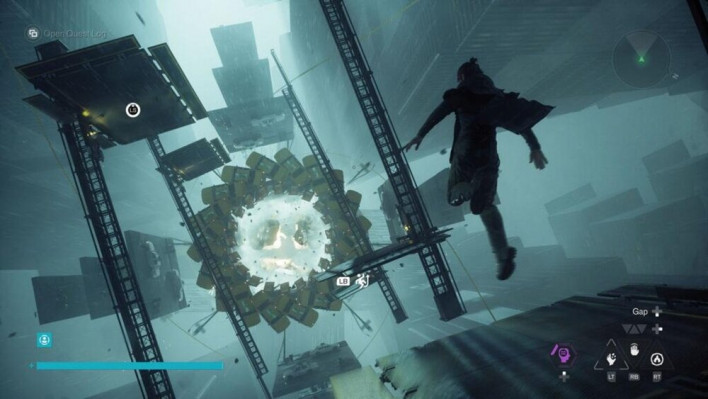
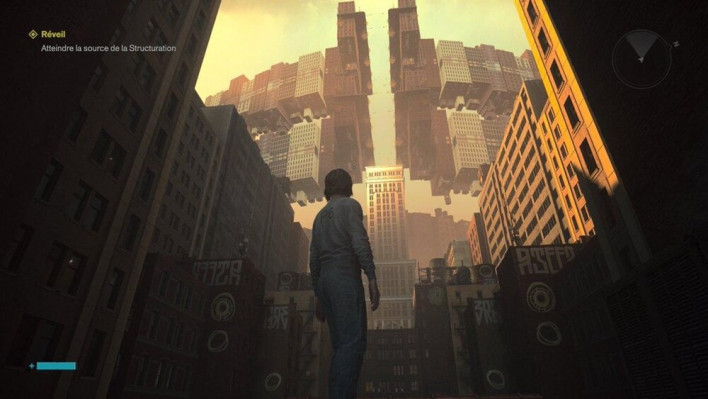
In 'Control Resonant', this principle extends to gameplay. The game's Manhattan is warped by otherworldly entities, requiring players to navigate surfaces tilted in various directions. Because the environment itself is unnatural, players could easily lose their sense of direction. To solve this, the developers leveraged physics by having rain fall in a fixed direction. No matter how inverted the surrounding terrain may be, looking at the rain drops allows players to orient themselves. A visual effect designed for atmosphere doubles as crucial navigational guidance.
The methods used to depict supernatural phenomena were equally unique. Remedy had to portray the collapse of time in 'Quantum Break' and overlapping realities in 'Alan Wake'. In 'Control Resonant', the challenge was visualizing high-dimensional entities beyond human comprehension. To accomplish this, the development team spent a week conducting live-action filming experiments—exposing film to electrical discharges from Tesla coils, applying acoustic vibrations to liquid and sand, and spinning physical sculptures. By blending analog footage into a digital game, they created a striking, otherworldly aesthetic distinct from conventional computer graphics.
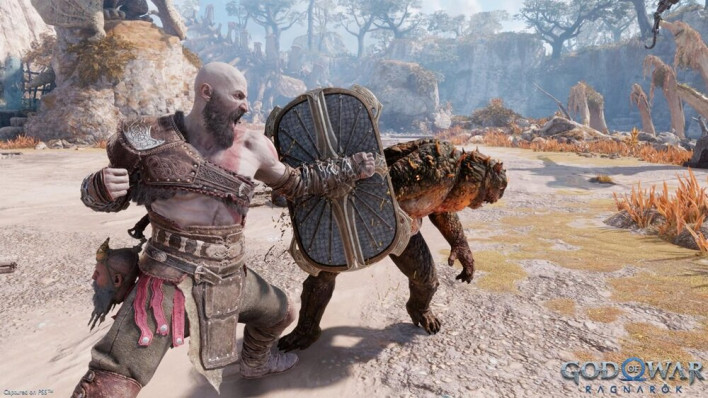
Bruno Velazquez emphasized that the most critical aspect of character animation is not the polish of the movement itself, but first understanding who the character is and what motivates them. Over nearly 20 years of crafting Kratos for 'God of War', Santa Monica Studio established over 20 rules governing actions he would and would not perform. These rules served as guidelines to maintain consistency in his characterization.
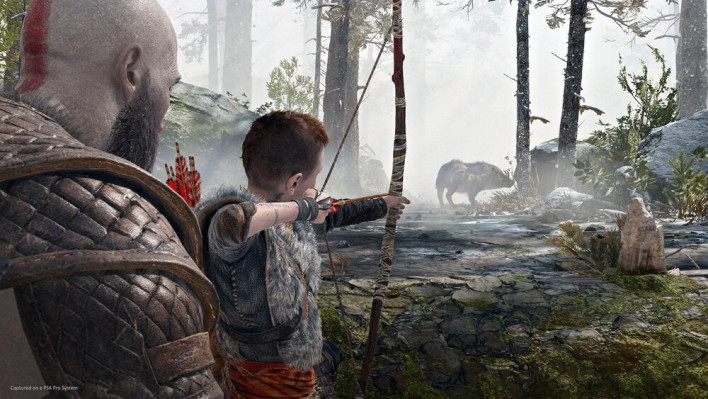
A signature rule is that Kratos always moves forward. Even when blocking enemy strikes, he steps forward rather than retreating. Another rule dictates that he never lies flat on his back unless he dies. If knocked down by an attack, he is animated to catch himself on his shoulder and roll back up. While these appear to be simple movement choices, experiencing them repeatedly helps players naturally grasp Kratos's unyielding personality.
Conversely, Atreus in 'God of War Ragnarök' has not yet acquired his father's raw power. This contrast was reflected in how he opens treasure chests. At first, Atreus tries to copy Kratos by punching the chest, only to hurt his hand. Later, he shifts to using his bow to pry them open. It is an example of conveying a character's growth and personality through action alone, without lengthy dialogue or explanation.
Gavin Goulden similarly explained that character design requires functional reasoning. The white spider emblem and armored padding on the suit in 'Marvel's Spider-Man' are not mere decoration; they are designed to protect vital areas for a mortal human vulnerable to injury. Conversely, Wolverine's vibrant yellow suit reflects a persona that draws enemy attacks rather than avoiding them. Possessing powerful healing abilities, he intentionally makes himself a conspicuous target to provoke combat.
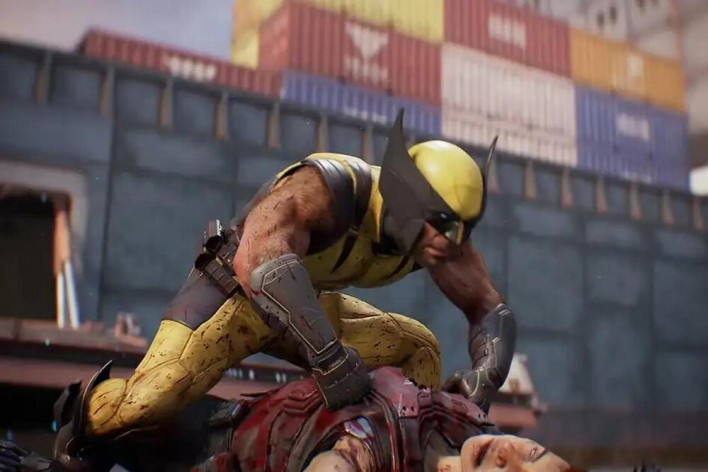
This distinct identity also shines through in environmental interactions. In 'Marvel's Wolverine', a destruction system allowing claws to break through walls and slice down trees imparts the feeling of playing as a living weapon. Bruno Velazquez highlighted an intriguing detail from combat against the hostile organization The Hand, where Wolverine can pull swords lodged in his own body and use them as weapons. The character's physical traits go beyond mere lore, integrating directly into active gameplay.
Goulden also noted the importance of subtle details that make a world feel alive—such as showing wear and battle damage on character attire, or having enemies repair equipment and prep weapons before encountering the player. These touches create the impression that characters are living their own lives within the game world, rather than simply spawning in to fight the player.
Developers working on beloved, long-standing franchises face an additional challenge: preserving the identity of past titles while delivering fresh experiences. Goulden explained that when working with Marvel characters, he first identifies core non-negotiable lore. Elements like Wolverine's claws, healing factor, and adamantium cannot be altered lightly; however, fresh interpretations can be explored through story, background, materials, and artistic rendering. The goal is to craft something that feels familiar to fans yet entirely new.
Bruno Velazquez described the evolution of 'God of War' in a similar vein. The series shifted its setting from Greek to Norse mythology and pivoted its narrative core by introducing Kratos's son. 'Ragnarök' allowed players to control Atreus directly, while the new title 'God of War Laufey' features Kratos's wife as the main protagonist. He noted that if you do not feel a degree of fear when making a new game, you might not be taking bold enough creative risks.
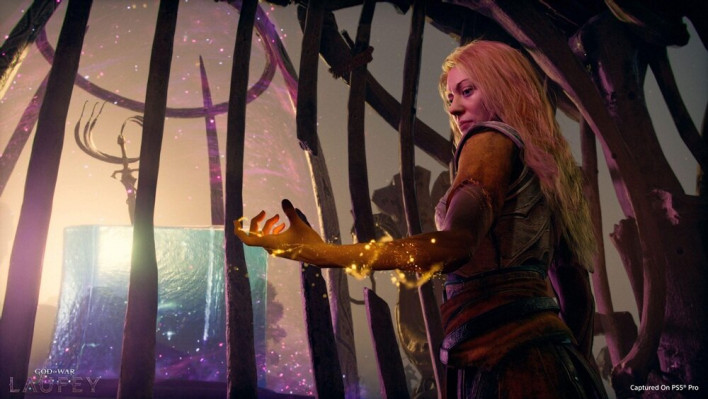
Remedy took a slightly different approach. Raitanen explained that originality was a matter of survival for them. Manhattan, the setting for 'Control Resonant', had already been impressively realized in 'Marvel's Spider-Man'. Rather than competing on realistic urban recreation, Remedy needed to create a distinct world recognizable as 'Control' from a single screenshot. Moving from Jesse Faden's ranged combat in the original to featuring her brother Dylan as the protagonist emphasizing melee combat in the sequel was part of this transformation.
To pull off new ideas, the entire development team—including gameplay and narrative, not just art—must align on a shared vision. All three developers agreed that clear communication is paramount. Raitanen explained that starting his career as a visual effects artist helped him anticipate post-production issues during early planning stages. Similarly, Velazquez noted that starting as an animator and gaining experience across combat design, cinematics, and environment art helped him direct projects holistically.
Yet in game development, even painstaking work must sometimes be cut. Cecil Kim shared an experience from working on 'God of War' when a boss was cut, causing months of work on its combat arena to be scrapped alongside it. Raitanen recalled a tricky situation during 'Quantum Break' development caused by a short script line describing a river starting to flow again and a flock of birds taking flight. At the time, the game had no water or bird systems built. It served as a lesson that a few lines of prose can translate into a massive workload for other departments.
Raitanen concluded that the mark of a great product is not what more can be added, but what can be subtracted while still functioning effectively. If players are already receiving sufficient information, additional visual elements become unnecessary clutter. While developers naturally grow attached to their work, directors must be willing to make decisive cuts or revisions for the polish of the final game.
In the latter half of the session, the impact of camera work on game narrative was discussed. Velazquez explained that the camera played a crucial role in 'God of War''s evolution. While earlier entries set in Greek mythology positioned the camera far back to capture massive backdrops and crowds of enemies, the Norse saga pulled the camera close to emphasize the intimate story between Kratos and Atreus. Notably, they adopted a single-shot camera technique, seamlessly following the action from start to finish without cuts.
This approach could not be achieved through camera techniques alone. The team had to choreograph actor movements and camera paths like a live theater production, conducting exhaustive rehearsals. In contrast, Remedy deliberately constrains its camera movements to simulate real physical camera rigs, despite the lack of physical limits in digital cameras. Goulden similarly noted that while Spider-Man uses a wide camera distance to provide peripheral vision during rapid city traversal, Wolverine's camera stays close to deliver a grittier, visceral combat experience.
Finally, the panelists shared anecdotes about players interpreting their work in entirely unintended ways. Velazquez revealed that in 'God of War III', the crest on the Spartan shields summoned by Kratos was accidentally placed upside down. Upon release, however, some players interpreted this as a symbol representing the resistance of exiled Spartans. A simple mistake in development was embraced by fans as hidden lore.
A similar incident occurred in 'Control'. When a streamer spotted an office chair spinning endlessly on its own, viewers began analyzing its significance, speculating that it might be a supernatural 'Altered Item'. In reality, it was merely a physics engine bug causing the chair to spin continuously. Goulden also recalled an instance from a past project where a character's mismatched head and torso were mistakenly used in promotional artwork, leading players to assume it represented a transformation caused by a special ability.
These examples demonstrate that game worlds are not always interpreted exactly as developers intended. While developers create rules and lore, conveying meaning through art and animation, the ultimate experience and interpretation belong to the player. Cecil Kim emphasized that in titles like 'Journey'—which forgo explicit narrative explanations—leaving space for players to discover their own meaning is vital.
Ultimately, completing a world through game art is far more than making every frame look beautiful. From a character's forward stride to a mundane water cooler sitting in a bizarre space, or rain falling in a fixed direction through a surreal city, every visual expression carries intention and information meant for the player. Once released, the world leaves the developers' hands and is truly completed through each player's individual experience and interpretation.