
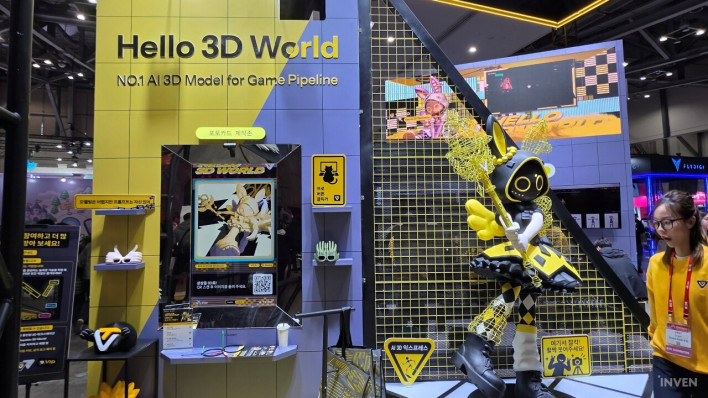
As AI has become a hot topic in the gaming industry over recent years, one name has been consistently mentioned among developers: Tripo AI, a 3D model generation service and platform. Generating 3D models quickly from just text, images, or sketches, Tripo AI has continuously evolved alongside the rapid development of the AI ecosystem by integrating with various platforms and AIs to deliver results tailored to user needs even faster and easier. On the back of this momentum, Tripo AI attended G-STAR again this year following last year, attracting numerous industry officials who visited to share their thoughts.
In particular, this year Tripo AI set up a booth in the B2C hall as well to expand touchpoints with students and small indie development studios who might find it difficult to visit the B2B hall. By getting even closer to developers and gathering candid feedback on-site, the company is preparing to take another leap forward. We spoke with Jack Fan, Head of Product, and Ellie Wang, Head of Korea & Japan Markets, to learn about the future direction of Tripo AI, which is establishing itself as an indispensable partner in the era of AI.

Please start by introducing yourselves and telling us what kind of service and platform Tripo AI is.
Jack Fan: I am Jack Fan, supervising overall product strategy at Tripo AI. My duties range from establishing product strategy to leading development and improving the user experience. I have worked in the AI field for about eight years, building my background in SaaS.
We are currently focusing on two main products. The first is 'Tripo Studio,' which allows users to generate 3D models instantly with a single click. The second is 'Canvas'. In Canvas, creators can divide their work into step-by-step stages according to what kind of final result they want, configuring that process into a single production workflow. This means you can extract and reuse only the necessary parts from a character you previously created. It is a service designed to help developers achieve better results relative to their costs while boosting work efficiency.
Ellie Wang: I am Ellie Wang, Head of Korea & Japan Markets at Tripo AI. I studied abroad in Korea for 14 years, and I am currently in charge of both B2C and B2B businesses in the two countries. I often meet developers in Korea and Japan in person, and I am truly grateful whenever they tell me how well they are using our service. Since so many people use it across various fields including gaming, I came to G-STAR to meet them face-to-face and exchange thoughts.
At this year's G-STAR, you set up booths in both the B2B and B2C halls. Is there a reason for participating in both?
Ellie Wang: Because we operate both B2B and B2C businesses, and it allows us to meet various users in person.
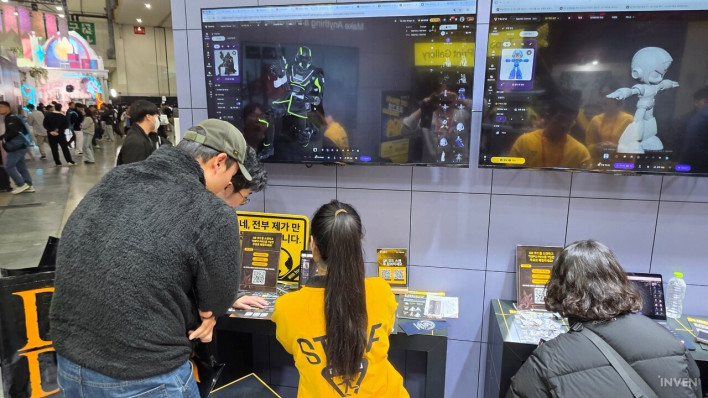
First of all, since we provide APIs to enterprise clients and have existing partners, the reason to participate in the B2B hall was obvious. However, there are also many people who use Tripo AI for personal projects, including many students. Students in particular naturally do not come to the event for business purposes, making it difficult for them to visit the B2B hall. Therefore, we participated in B2C as well so that indie developers working alone or in small teams, as well as students, could comfortably stop by. We also wanted to raise awareness of Tripo AI among those who are interested in game development, even if they aren't actively developing right now.
The AI field progresses exceptionally fast. Tripo AI has also been continuously evolving, not only compared to last year or early this year, but even compared to last month. How often do you actually release updates?
Jack Fan: I can divide my answer into two main areas. First, our existing service is updated multiple times every week. While some updates involve bug fixes, many focus on addressing points that users found inconvenient based on customer feedback. As people use it, demands arise to perform specific tasks within the tool, and we respond to those needs by adding new features.
The development cycle for our foundational models is a bit longer. Currently, we introduce a new model once every few months. In short, we refine the user experience of 'Tripo Studio' and 'Canvas' weekly, while releasing new underlying models every few months.
Apart from 'H3.1,' which is an ultra-high-precision model, you introduced 'P2.0,' which focuses on generating models in under 5 seconds with lightweight geometry under 50,000 polygons. What was the reason for splitting these two models?
Jack Fan: User needs generally split into two main directions. The 'H-series' is heavily used by people into 3D printing. What matters most to them is how accurately the service can reproduce an object they have in mind or in an image. Since they already have a clear picture of what they want, they place value on realizing that image with maximum precision. Polygon counts and similar factors are secondary issues for them.
What we emphasized in the 'P-series' is, as you mentioned, lightweight optimization. Game developers use various engines, and each game has different system specifications. After generating a model, developers must be able to edit it easily, and it needs to be in a format that can be imported directly into a game. For that purpose, rather than pushing hyper-realistic detail to the absolute limit, adjusting elements like polygon count to fit game specifications allows for far more versatile usage.
Compared to last year, how has the Korean game industry's reception changed? We are also curious about the feedback you felt in the B2B and B2C halls respectively.
Ellie Wang: As brand awareness grew, far more people visited our booth. I stopped by the B2C hall in the morning, and the response was wonderful. Many aspiring game developers came by, and some passersby even remarked, "Tripo is super famous!" In the B2B hall, a truly diverse range of people visited. Korean developers would see our booth while passing by and come up to greet us first, and even a developer from Uganda came to tell us that they use Tripo AI frequently in their regular work.
When we first entered the Korean market last year, we were considering a broad range of industries. However, starting this year, interest coming from the gaming sector among those various fields expanded explosively. Compared to last year, that is the most noticeable change.
Jack Fan: In the B2C hall, I saw quite a few visitors purchasing additional credits right on the spot. I was surprised by how immediate the response was.


While Tripo AI can be used standalone, its capability to integrate with other engines and tools is also a major strength. In what direction are you refining this aspect?
Jack Fan: There are already various agents, and new agents will continue to emerge in the future. That's because many users enter Tripo AI from whichever agent they were originally using via MCP (Model Context Protocol). Therefore, what we view as most important is ensuring that users can effectively utilize Canvas no matter which entry point they use.
As a result, we are continuously issuing updates so that users can easily access Tripo AI from various agents. Allowing users to enter directly from whatever environment they are accustomed to and efficiently use the features they need—that is our development direction for MCP.


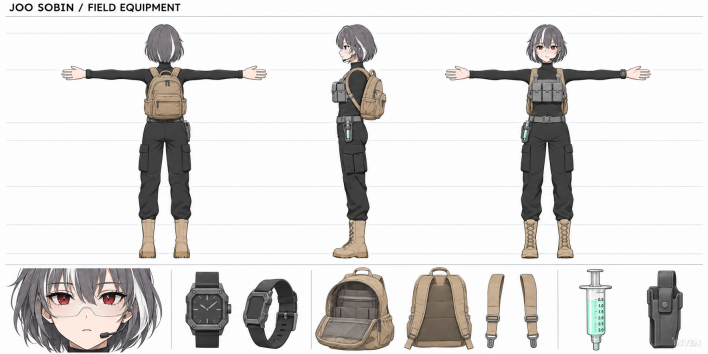
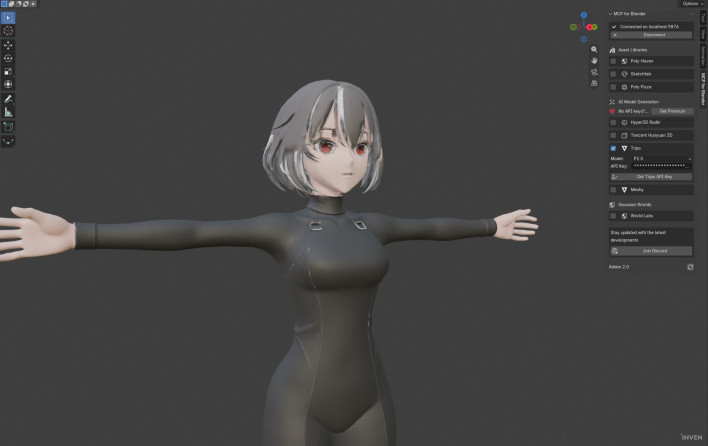
There are also many competitors in the 3D generative AI space. How do you differentiate yourselves technically? We are also curious about examples where you reflected requests from Korean game developers into the product.
Jack Fan: We take pride in being ahead of competitors in terms of update speed and understanding what customers need. Some people have described our newly introduced 'P2.0' as a tool optimized for web game development. We don't believe we received that evaluation simply because the generated models look great and perform efficiently. We see it as the result of looking closely at where actual game creators felt unsatisfied and filling the exact gaps they needed.
Canvas was built with the same philosophy. Game creators in particular want step-by-step control over the production process. That's because they want to inspect interim results firsthand, and when they get an output they like, easily reuse it across multiple places. That is why, even after release, we continue to roll out updates big and small by listening to feedback from active users. Developing technology aligned with what customers need is what sets us apart.
When talking about game development, the Korean market cannot be overlooked. Not only is the market size large, but we feel that developers' passion is exceptionally strong. One request we heard frequently from Korean development studios was to be able to collect assets created with Tripo AI into a database so team members could access and use them together. Reflected from that feedback, we released the 'Team Plan.' With one team leader paying, other team members within that tier can use the service together and share created assets.
Through what channels do you mainly receive user feedback?
Jack Fan: Mainly through three channels. First, while using the product, clicking the support link allows users to send an email immediately. This is the most direct channel for conveying feedback experienced during use.
Second is Discord. Tripo AI's Discord community is so large that it can be considered the world's biggest in this field, with a massive number of members gathered there. We monitor the discussions taking place there and gather user opinions.
Lastly, we conduct surveys targeting users in specific sectors. We offer small rewards such as credits to participants to gather deeper insights into how they actually use the tool in their specific fields.
How are you expanding touchpoints with developers and aspiring developers in Korea?
Ellie Wang: In Korea, we listen to user feedback by operating KakaoTalk open chat rooms and an official community cafe. We also regularly conduct interviews with experienced industry professionals from both large corporations and small-to-medium studios. When we meet in person, they give us candid feedback without hesitation, which is immensely helpful. Being based in Korea myself, I transmit that input directly to headquarters, where local feedback is quickly reflected in development and updates.
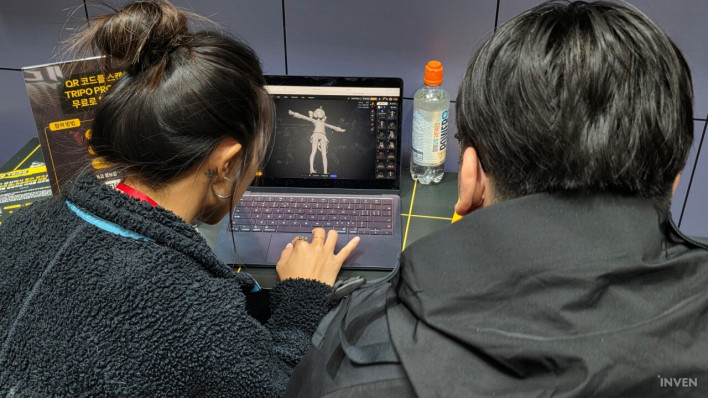
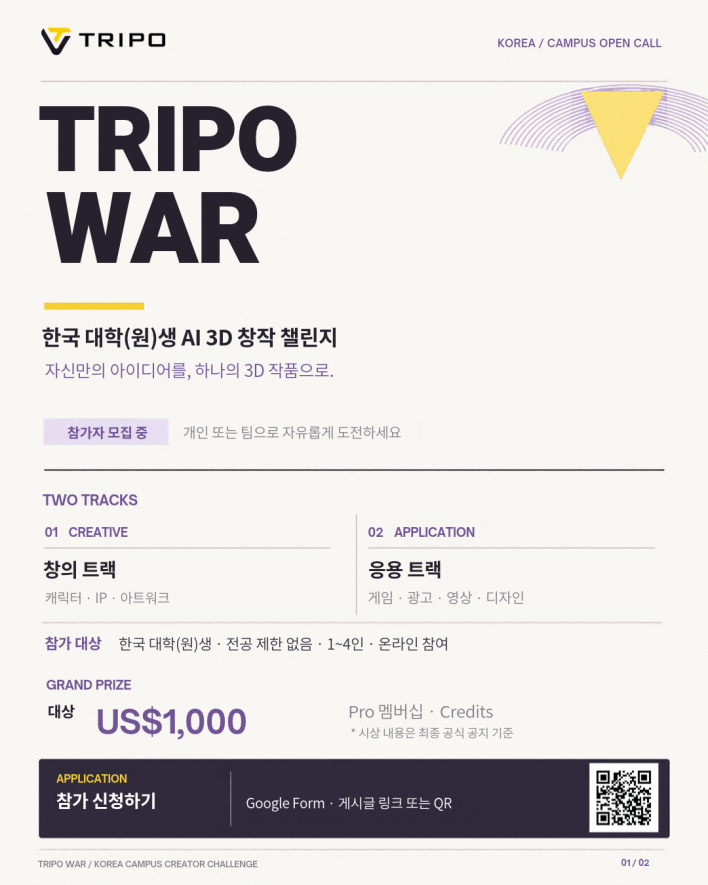
Furthermore, to expand touchpoints with aspiring developers, we frequently hold camps and campaigns targeting university students, as well as events in partnership with academies. Participating in or supporting game jams and hackathons hosted by university clubs is part of this effort. We also provide credits at events so interested individuals can try out the platform without burden. At our booth this time, scanning the QR code grants a 7-day trial of our Pro model.
Jack Fan: We also frequently collaborate with influencers and solo developers. They try out the tool, share their experience, and introduce how they integrated it into their own work to others.
For first-time users in particular, they might wonder how to use the tool more efficiently. Could you share some tips? We are also curious about how you are preparing guidelines for beginners.
Ellie Wang: We are creating many usage guides together with influencers. We actively share methods we know on how to achieve desired results more efficiently.
In Korea, as mentioned earlier, we share tips on our official cafe and other channels to help users efficiently achieve their desired outputs. We are also creating user guides with influencers, and for beginners, we recommend trying image and text inputs separately using free features to see which fits their workflow better. There are also many particularly useful tutorials, so skimming through the tips on the cafe first should be a big help.
To highlight some helpful points from those materials: when starting with text, it is best to specify concretely what model you want. For instance, if you simply type "spaceship," everyone envisions something different. Specifying the usage and style first—such as "a low-poly spaceship for a mobile game"—and then adding key features you want to emphasize, like the hull shape or surface texture, works best.
Generated models can also be exported in your preferred file format and refined further in your regular 3D editing software. If you like the overall shape and only want to touch up certain parts, this method is very useful. Looking through other users' work cases and tips on the official community cafe will also help you find a workflow suited to your own projects.
Finally, do you have any closing words for developers and aspiring creators currently using Tripo AI, as well as those who haven't tried it yet?
Jack Fan: First, thank you to everyone who loves Tripo AI. To repay that support, we will continue updating and introducing even better products.
For those who haven't tried it yet, since so many creators are already using it, I'd like to invite you to jump on board and give it a try. At the very least, we won't disappoint you when you use it.
Ellie Wang: Everyone on our team is striving hard so that people will naturally say, "When it comes to game development, Tripo AI is a must." We will keep releasing updates, so please look forward to what's coming. I believe that even those who haven't tried it yet will realize its true value as soon as they give it a shot.