Loading previous messages...
Pasted text(1)(4).txt
Document
This is just the Pragmata and Moving lecture content from earlier modified into article format with line breaks. Could you insert the image locations here as
-~~Image
so that I can place the images you found there?
Processed in 40s
I kept the sentences, line breaks, and HTML subheadings from the original draft as they were, and added the -~~Image marker to 9 locations where images would fit well.
Download article draft with image placement markers
The image locations were determined based on previously found materials. These include Hugh and Diana from 'Pragmata', 'Aliens', Jang Joo-won from 'Moving', Diana's drawing, the funeral scene, the 'Asura's Wrath' trailer, and the charge scene from 'Kingdom'.
Descriptions were added to each marker explaining which image to insert, and spoiler tags were included for ending images.
GCON_Pragmata_Moving_ImagePlacementMarkers.txt
Document
I'm going to give you the completed Team NINJA interview body text, but the Q&A answers feel like sentences break up too often. Please adjust the paragraphs so they aren't split as frequently.
Sure. Please send the completed Team NINJA interview body text.
This time, I will adjust only the paragraph breaks in the answer sections without touching the content or tone.
Places where paragraphs currently break every two or three sentences will be combined so context flows naturally, while keeping paragraph breaks where themes shift or emphasis is needed.
I will also preserve existing HTML formatting, including distinctions between questions and answers and speaker bold tags. I'll work on making the paragraph pacing slightly longer than now without editing any sentences.
Pasted text(1)(5).txt
Document
Processed in 58s
Paragraph cleanup complete. I didn't edit any sentences or expressions from the original draft at all, adjusting only the paragraph breaks in the answer section.
Download Team NINJA interview — Organized paragraphs file
I consolidated the original 83 paragraphs in the answer sections down to 37. Short, fragmented paragraphs were merged, while line breaks were retained where explanation topics shifted.
All 15 questions, 10 photos, captions, HTML tags, and speaker labels were preserved as original. You can paste it directly into the CMS.
TeamNINJA_Interview_ParagraphCleanup.txt
Document
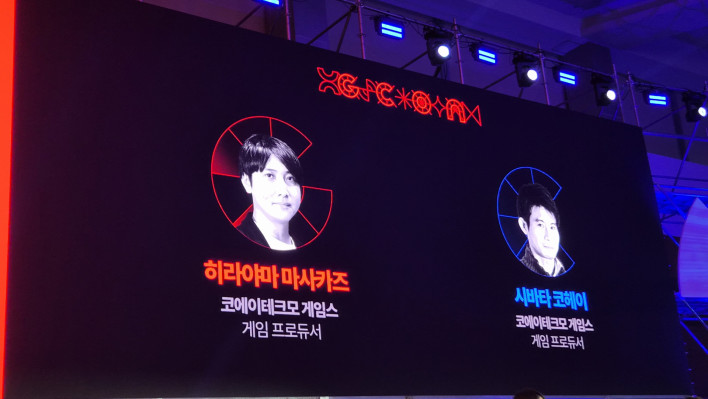
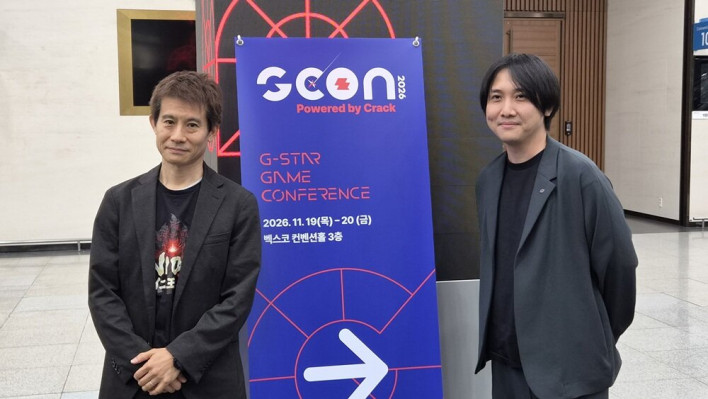
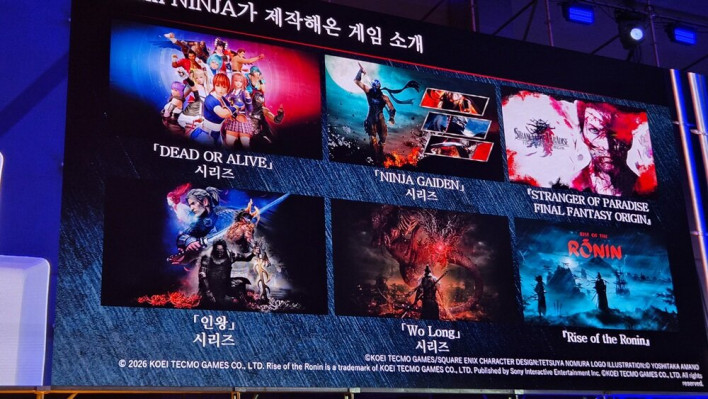
Producers Kohei Shibata and Masakazu Hirayama of Koei Tecmo Games' Team NINJA presented the development philosophy behind the Nioh and Wo Long series during their G-CON 2026 presentation on the 19th. While both titles are characterized by their high difficulty, the direction of their combat is quite distinct. Where Nioh emphasizes a samurai's static concentration and instantaneous strikes, Wo Long places weight on fluid, aggressive offenses and defenses unique to Chinese martial arts.
In the joint media interview following the presentation, they shared more detailed stories ranging from the background of these differences to the exchange of development experience between series and how global user feedback is incorporated. Regarding AI technology—a hot topic in recent game development—they noted that while they already use it for quality assurance and verification tasks, human judgment remains indispensable in completing the thrill of action gameplay.
The two producers also explained their criteria for distinguishing between a high-difficulty game and an unfair game. The core lies in whether players can learn an attack and test their methods of responding to it. No matter how powerful an attack is, if there is no means to react, it can hardly be considered a fair battle.
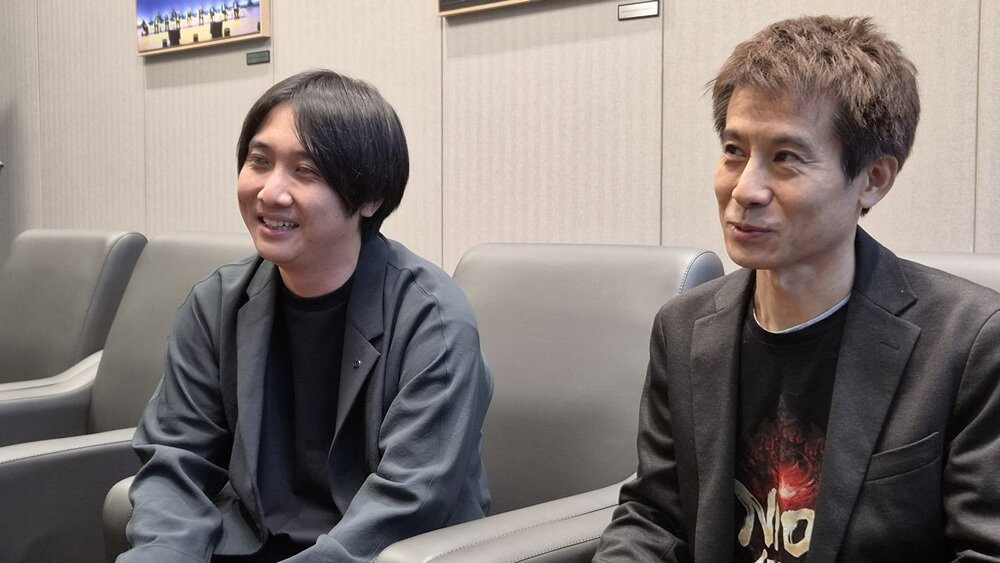
First, we'd like to hear how you feel about visiting Korea and participating as speakers at G-CON. What message did you hope to convey to Korean developers and gamers through this presentation?
Masakazu Hirayama: I've long known that Korea is a vibrant market for online games, and recently I've heard that console games are becoming quite active as well. We wanted to share our mindset when creating games with Korean developers and gamers. I hope we can advance the entire game industry together by sharing each other's experiences.
Kohei Shibata: This was my first time visiting G-STAR. Walking around the venue myself, the passion on the floor was incredibly impressive. I participated in the lecture hoping to convey the charm of our games and the action RPG genre to as many people as possible.
Both Nioh and Wo Long are high-difficulty action RPGs crafted by Team NINJA, but their tactile combat feel is quite different. How would you define the action of each series in a single phrase?
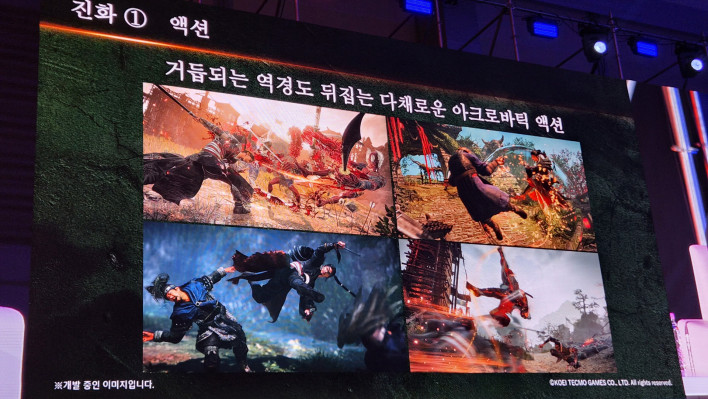
Kohei Shibata: I consider Nioh to be samurai action. Samurai combat possesses stillness and motion. It's about planting your feet firmly on the ground, observing the opponent's moves, and delivering a sharp strike the moment an opening appears. Rather than constantly moving while attacking, you watch the opponent from a state of stillness and move instantaneously. I believed that waging a life-or-death battle in that split second of vulnerability defined samurai action, and we pursued that direction right from when we first made Nioh.
Masakazu Hirayama: If I had to sum up Wo Long in one phrase, it would be 'aggressive Chinese martial arts action.' If Nioh values stillness and motion, our starting point was pondering what characteristics Chinese martial arts possess. In Chinese martial arts films, offense and defense flow together seamlessly. The exchange of attacks is fast and fierce, yet the movements themselves are beautiful. We wanted to capture that impression in the game. That's why we introduced systems like Spirit and Deflect. While attacking aggressively is important, defense must also lead into the next attack. We designed it consistently so that both offense and defense create an aggressive combat dynamic.
Since you are developing different series within the same studio, were there elements from each other's games that you felt envious of or wanted to reference?
Kohei Shibata: While it was addressed to some extent in Nioh 3, the existing Nioh series didn't have jumping. Because we pursued samurai action, it was hard to fully implement acrobatic movements. On the other hand, Wo Long utilized jumps to present much more three-dimensional and dynamic action. I was envious of that, and referenced it heavily when implementing new movement mechanics in Nioh 3.
Masakazu Hirayama: Seeing Team NINJA develop open worlds and open fields through Rise of the Ronin and Nioh 3 gave me a lot to think about. When making the first Wo Long, we used a linear mission structure, so there were limits to expressing strategic freedom. There were constraints on stage size itself, making it hard to sufficiently portray the vast battlefields characteristic of the Three Kingdoms. So watching the other team create open fields made me think, 'What if we made Wo Long with this kind of structure?' That became one of the key catalysts for planning Wo Long 2.
There was another thing I envied. Nioh is set in Japan, while Wo Long is set in China. When developing the first title, researching materials on Chinese history was extremely difficult. During development, we researched local literature and visual materials alongside Chinese team members, but especially in the early stages when starting the project with a small team, collecting vast amounts of data wasn't easy. In that respect, I felt a bit envious of the Nioh team, which deals with domestic history.
Both of you toured G-STAR in person. Compared to Tokyo Game Show or other overseas gaming events, did you notice any unique characteristics of G-STAR?
Kohei Shibata: First of all, I felt the venue design was very impressive. The overall visual design, including the layout and logo, was sophisticated. To put it simply, I got the impression that it was really 'cool.'
Masakazu Hirayama: I was particularly impressed by the enthusiasm felt at the booths of game companies from Korea and across Asia. Even compared to Tokyo Game Show, there was a remarkably strong energy. Touring various booths gave me a great deal of vitality. As a developer, it was an inspiring experience.
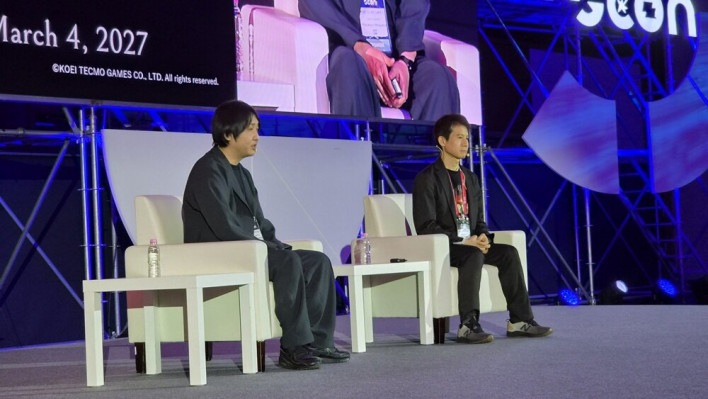
Both Nioh and Wo Long receive feedback from players all over the world. How do you gather regional feedback, and what are your criteria for incorporating it into actual development?
Masakazu Hirayama: We gather information online far more actively than players might expect. In Japan, we check X; overseas, we monitor Reddit, Chinese social media, and whatever platforms are primary in each region. We do this almost daily. One of our most important feedback collection methods is demos. Recently, Team NINJA titles often release a demo ahead of the official launch. We release these globally to analyze regional reactions and feedback trends.
Based on those results, we decide which areas to improve before the official release. This approach has established itself as an essential development process in how Team NINJA polishes its games today.
Kohei Shibata: Among feedback, there are areas that don't differ much by country, and areas where differences clearly emerge. Surprisingly, evaluations concerning the core fun of the game, like action or level design, show very little regional variance. Players in Japan, Korea, other Asian countries, and the West find similar aspects enjoyable or frustrating, though individual preferences vary. On the other hand, the degree of familiarity with the historical background differs. Nioh uses Japanese history and Wo Long uses Chinese history as their backdrop. Developers often assume players will instantly recognize a historical figure just by hearing their name.
However, many Western players aren't familiar with those figures or events. We realized that historical knowledge developers take for granted isn't shared by every player. So we pay extra attention to ensuring that even players unfamiliar with the history can grasp character traits and enjoy the story.
Both series have evolved in different directions, and recent action games are increasingly combining diverse genres and systems. Having developed action games for a long time, what do you consider the core essence that must be preserved regardless of changes?
Kohei Shibata: I believe it's control responsiveness. When a player presses a button, the character must move exactly as intended. If you press a button and the character doesn't move properly, it creates stress. Conversely, if a slight input causes far larger movement than expected, it feels uncomfortable. Therefore, responses to inputs must be simple and intuitive, and movement must translate quickly. The sense that the game responds accurately whenever the player inputs an action is the core of an action game.
Masakazu Hirayama: I basically agree. However, I think the reason action feels different in each title is because their underlying themes differ. Depending on whether it's samurai action or Chinese martial arts action, the movements players expect are different. Our team tries to translate the motions and feel that people naturally envision upon hearing those themes into actual gameplay. Those differences give each game's action its distinct personality. But at the foundation lies the control intuitiveness and responsiveness that Producer Shibata mentioned. That is something Team NINJA collectively considers crucial.
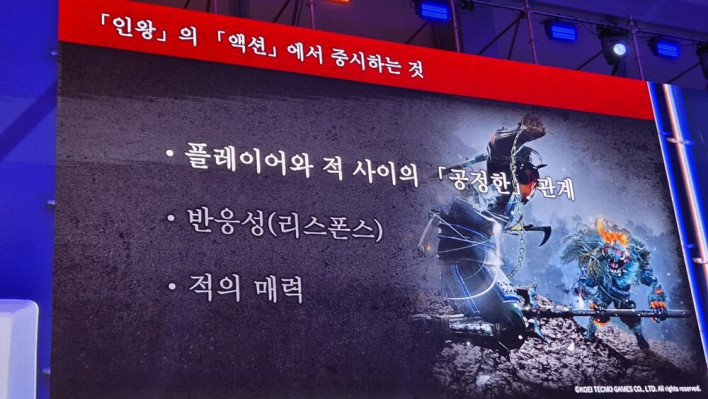
Both Nioh 3 and Wo Long 2 attempted a shift from traditional linear mission structures to open fields. What are the pros and cons of these two structures, and why did you choose open fields instead of further evolving the previous approach?
Masakazu Hirayama: The biggest advantage of linear level design is packing a dense experience into a single stage. Enemy placement, exploration routes, and combat tension can all be concentrated within a specific space. On the other hand, because clearing one stage moves you on to the next, continuity in gameplay experience can be lacking. Open fields can resolve this issue, but there is a risk of diluting the dense action experience previously provided. I heard that the Nioh 3 team also faced challenges implementing that balance.
We also considered this issue critical. Rather than simply connecting spaces to make them larger, we strived to maintain the dense experience provided by traditional linear stages within the open fields.
Kohei Shibata: Whenever we create a sequel in the Nioh series, we feel it must evolve beyond the previous entry. In Nioh 3, adding the Ninja style significantly altered the look of the action and the feel of controls. Naturally, we felt stage and level design had to evolve as well. Instead of simply refining existing stages, we judged that significantly altering the design framework itself would transform the play experience. That's why we boldly introduced open fields.
Team NINJA already had experience developing an open world with Rise of the Ronin. We believed combining that know-how with the level design experience accumulated from Nioh would yield exciting results.
Masakazu Hirayama: For Wo Long, we felt the Three Kingdoms setting itself fit open fields very well. Warfare in the Three Kingdoms involves events unfolding in multiple locations leading toward a single conclusion, with stories of various figures influencing one another. In such a setting, we wanted to create an experience where players make choices and alter the battlefield situation in their own way. To convey the feeling of directly shifting the tide of historical war, open fields were ideal. That was a key reason we chose a new structure for Wo Long 2.
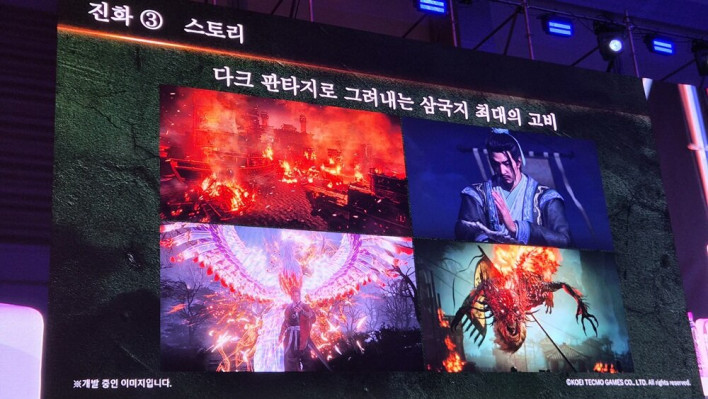
Nioh 3 achieved strong sales performance right from launch. How do you evaluate player feedback so far, and was there any particularly memorable opinion from Korean users?
Kohei Shibata: As I mentioned earlier, feedback regarding the action gameplay itself showed no major difference between Japan and Korea. Reactions about what was fun or what was hard to understand were generally similar. Rather than distinct opinions unique to Korean users, there was a lot of common feedback. However, because the game uses Japanese history, overseas players might not be familiar with figures or events that Japanese players intuitively grasp. We are constantly learning to convey those aspects in a way anyone can understand.
Wo Long 2 is set in the Three Kingdoms era, where historical events and figures are already established. How did you navigate the balance between replicating historical facts and giving players a free-form experience?
Masakazu Hirayama: I actually consider that an advantage of creating historical fiction. While historical events and figures are established, many details aren't recorded in real history. I feel historical romance in those gaps. For example, even if a figure appears in history, what they thought or did at a specific moment might remain unknown. Being able to portray those moments through our team's interpretation affords a great deal of freedom.
There's also the fun of players looking up actual history after playing the game. As they research historical events, they might realize, 'Ah, because there was a record of this, it was depicted that way in the game.' I think enjoying both the game and history together is the true appeal of historically themed games.
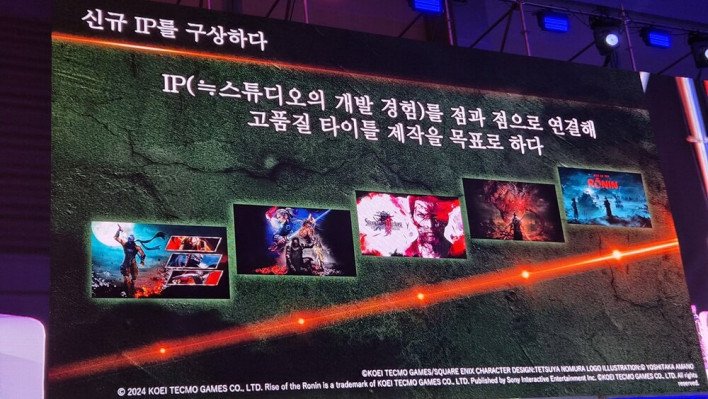
Ahead of its release next year, Wo Long 2 offered hands-on demo opportunities at this year's G-STAR. Did you observe Korean players and find anything useful to reference for development?
Masakazu Hirayama: I was really glad we could set up demo stations this time. Of course, we watch videos and streams of players playing our games. But opportunities to observe players controlling the game right in front of us at a live venue are rare. Today, I stood behind people playing at the demo stations and watched continuously. From a player's perspective, having someone constantly watching from behind might have felt a bit uncomfortable (laughs). But we gained so much information. We could see firsthand where players struggled and how they tackled the game.
It was immensely helpful in identifying areas to refine before the official launch. I am very happy that we were able to observe actual gameplay at this year's G-STAR.
As game development technology advances rapidly, the production environment is changing as well. How is Team NINJA embracing these changes, and is there any development process that will remain unchanged even as tech evolves?
Masakazu Hirayama: CG technology and hardware performance continue to evolve. Team NINJA also carries out continuous technology development so as not to fall behind those changes. As game engines and various tools advance, the development process is becoming increasingly convenient. However, no matter how much technology progresses, I believe there is work that will always remain: the fine-tuning of action. Even now, staff members adjust character movements frame by frame, down to 1 or 2 frames. A difference of just a few frames can change the intuitive feel of controls for players.
No matter how advanced technology becomes, I believe the work of perfecting the tactile feel of action through fine adjustments will continue.
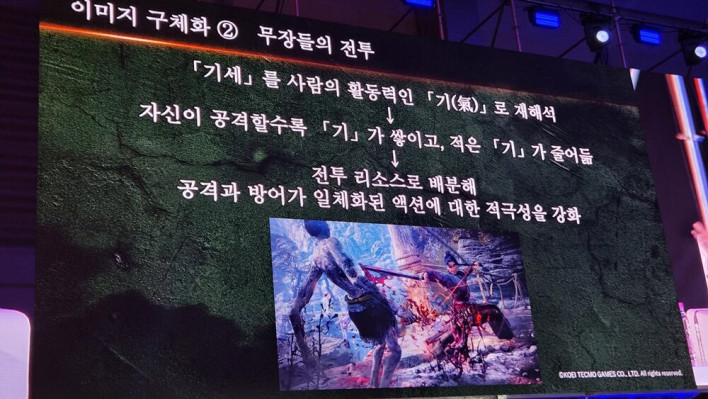
AI technology has recently emerged as a major topic in game development. How is Team NINJA actually utilizing AI, and how do you view its future potential?
Kohei Shibata: Currently, we utilize AI in QA and various verification tasks. It's a way to streamline certain workflows. If we can use AI to shorten task times, we can spend that much more time polishing game quality. In that sense, I think using AI is helpful. However, as it is still a new technology, we are continuously evaluating what method of use is most appropriate. I believe other game studios share similar concerns.
The important thing is that, ultimately, games become fun only when crafted by human hands. Simple, repetitive tasks that anyone must perform can be streamlined with technology. But judging how to craft the game and what makes it fun must ultimately be done by humans. Using AI should not become an end in itself. I believe the principle that humans must think for themselves to complete a game will remain unchanged.
During today's presentation, you emphasized fairness in high-difficulty action games. Where do developers draw the line between a 'difficult game' and an 'unfair game'? When receiving feedback that a boss is too hard, how do you decide whether to lower the difficulty or maintain it while refining it to feel acceptable?
Kohei Shibata: What Team NINJA considers important is fairness between enemies and the player—ensuring players don't feel it's unfair. If an enemy uses a devastating attack, an action must also be prepared for the player to respond. The key is whether players can learn and understand an enemy's attack, then decide how to counter it. For instance, even if you know an attack is coming, if you are hit without even having time to press a button, that's unfair. We try to eliminate such elements during development.
Another crucial element is giving players the opportunity to learn attacks. In high-difficulty action games, taking a hit and using that experience to retry is the core loop. Suppose a boss has an extremely powerful attack. If you die instantly upon being hit the first time, you don't get a chance to test what you learned in that battle. But what if you lose about 80% of your health instead? The extreme danger of the attack is clearly conveyed, while leaving the player with an opportunity to observe the next attack and test a countermeasure.
It's not simply about raising or lowering damage; it's about enabling players to learn enemy behaviors and apply what they understand in combat. Whether that process is possible is the standard separating a difficult game from an unfair game.
In the recent gaming market, live service games and packaged games compete for player time in different ways. What do you see as the unique competitiveness of packaged games?
Kohei Shibata: Live service games are basically meant to be enjoyed for a long time—in a sense, endlessly. It might sound slightly negative, but live service games are structured so they shouldn't end easily. New content must keep arriving so players can enjoy it for a long period. Naturally, that model has clear merits and fun. On the other hand, packaged games have an ending. That allows us to build the story toward a conclusion and create a powerful climax at the finish.
I like to compare the difference to a TV drama running for multiple seasons versus a standalone movie. A drama can extend its story across seasons, but a movie creates narrative ups and downs within a limited runtime to deliver an emotional peak at the end. Packaged games are similar. Within a set gameplay experience, they repeat tension and release to deliver emotion or excitement at the end. Of course, games enjoyed over a long time like multi-season dramas have their own charm. But delivering intense emotion through a single, complete experience is a major competitive strength of packaged games.
Lastly, please share a message with Korean fans who have long loved Team NINJA's works.
Masakazu Hirayama: Everyone in Korea, thank you so much for always playing our games. Visiting Korea for the first time, I was deeply moved by the love for games and the enthusiasm on site. We will continue creating games you can enjoy. Wo Long 2: Wings of Ember will also be released in the near future, so we ask for your interest and support. Thank you as always.
Kohei Shibata: I also visited Korea for the first time through this G-STAR. Actually, I wanted to visit Korea when Nioh 3 launched, but couldn't due to schedule conflicts. I'm truly happy to finally come to Korea this time. Meeting media representatives and players in person, and seeing so many people attend our lecture was very gratifying. Opportunities to meet fans directly like this are rare, making it all the more meaningful.
We will continue paying attention to the Korean market and strive to deliver great games. Also, news regarding the second DLC for Nioh 3 will be revealed soon, so please stay tuned for upcoming announcements. Thank you.