Making a difficult game is not the same as making a game that is fun because of its difficulty. Making an enemy's attacks undodgeable or putting players in completely unfair situations is easy. However, helping players understand why they failed and giving them confidence that they can achieve a better result on their next attempt is a different matter entirely. This distinction is precisely what Team NINJA, a studio with a long history of developing high-difficulty action RPGs, emphasizes.
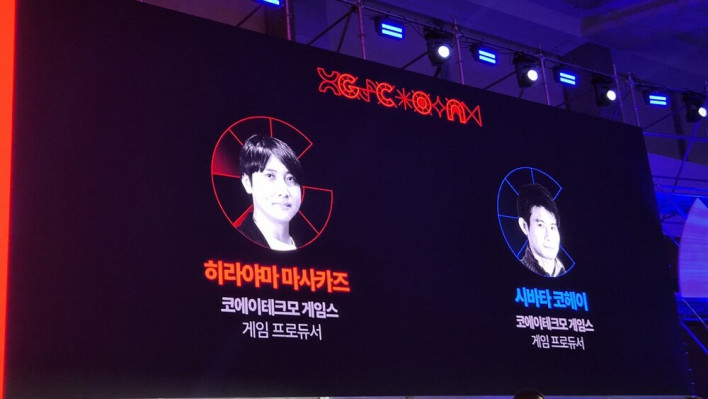
On November 19, at GCON 2026 held at BEXCO in Busan, Koei Tecmo Games producers Kohei Shibata and Masakazu Hirayama delivered a presentation on "How Team NINJA Builds High-Difficulty Action RPGs". Producer Shibata introduced the principles of combat and level design established through the 'Nioh' series, while Producer Hirayama explained the concepting process of 'Wo Long: Fallen Dynasty' and the changes being pursued for its sequel.
The games covered by the two speakers draw on distinct source material—Japanese history and China's Romance of the Three Kingdoms. Their combat is also differentiated, with one favoring weighty offense and defense and the other fast-paced swordplay. Nevertheless, both titles share a common development philosophy: high difficulty should not be expressed merely through how strong enemies are, but designed as a process where players read the situation, exercise judgment, and forge an advantageous outcome for themselves.
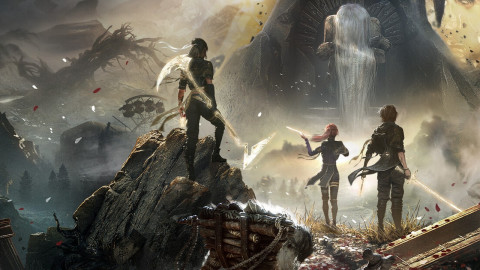
During the presentation, the producers detailed how this philosophy translates into combat systems, stage structures, and character progression. In particular, attendees got a look at the samurai and ninja combat styles and open field design of 'Nioh 3', as well as the battlefield mechanics and narrative changes coming to 'Wo Long 2: Wings of Ember', scheduled for release in March 2027.
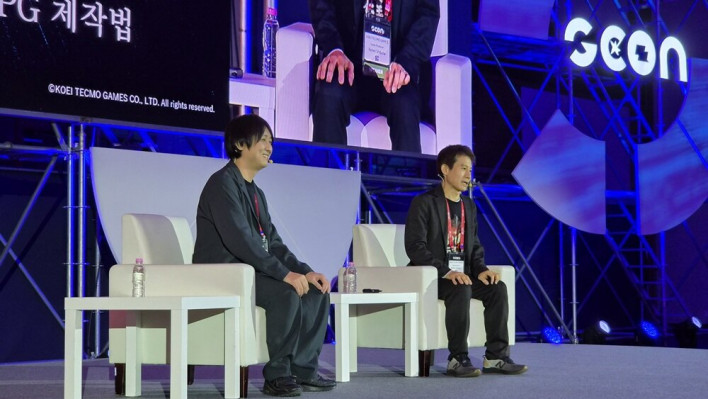
Challenging, But Never Unfair Team NINJA's Three Core Action Design Principles
Producer Kohei Shibata, who gave the first presentation, joined Tecmo in 1998 prior to its merger with Koei, working on titles such as the 'Deception' and 'Fatal Frame' series. He later served as producer on 'Nioh 2 Complete Edition' and 'Ninja Gaiden 4', before producing 'Nioh 3', which was released this year. He currently serves as head of Team NINJA's Division 1.
Producer Shibata first recounted the origins of the 'Nioh' series. The series began with a concept by Kou Shibusawa, the creator behind 'Nobunaga's Ambition' and 'Romance of the Three Kingdoms'. The idea was to create a game centered on William, a blonde-haired, blue-eyed samurai, but completing it into an actual product took a considerable amount of time.
Initially, multiple directions were considered, including strategy and standard action games. After a series of twists and turns, Team NINJA took over development. The team chose to combine their core strength in high-difficulty action with Koei's expertise in creating Japanese historical content. By adding hack-and-slash loot mechanics and RPG progression elements, the unique identity of 'Nioh' was born.
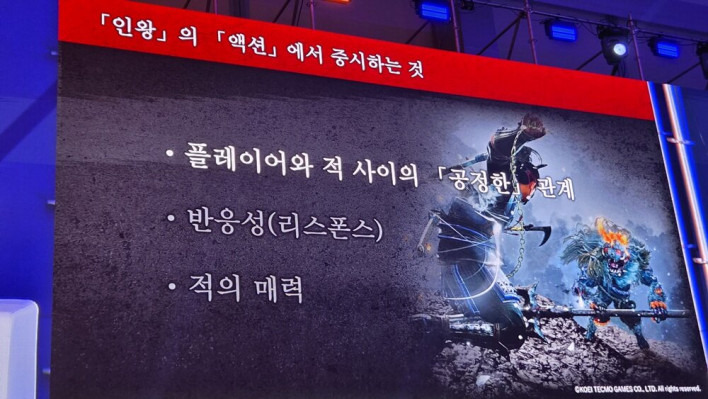
For the series created through this process, Producer Shibata's top priority was "fair combat." Even when implementing high difficulty, players must be able to observe and react to an enemy's actions. No matter how powerful an attack is, there should always be telegraphing cues that allow players to read the movement, giving them the opportunity to dodge or counterattack.
For instance, one of the simplest ways to make an enemy strong is to give them excessively fast attack speed. If enemies strike without giving players time to react, the threat level increases, but players are unlikely to feel a sense of accomplishment. Conversely, if a devastating attack features a clear wind-up animation, players may take damage the first time, but they can figure out how to respond on their next attempt.
Producer Shibata emphasized that this approach creates combat where failure feels fair. If players understand why they couldn't dodge an attack, death becomes a learning process for the next attempt rather than mere frustration.
The second principle is control responsiveness. When a button on the controller is pressed, the character must react as immediately as possible. When a player's intended action connects seamlessly with the character's movement on screen, the feeling of control becomes clear and precise.
In Team NINJA's games, player characters move fast alongside enemies. This is because players must not only dodge enemy strikes, but immediately capitalize on any opening with an attack. This interplay of swift movements on both sides creates the series' signature fast-paced clash of offense and defense.
The third principle is the appeal of the enemies themselves. Producer Shibata explained that compelling enemies are not just strong, but are designed to bait players into making poor decisions—such as intentionally leaving a window of vulnerability right after a heavy attack, or committing to a large wind-up at the end of a combo.
When an enemy leaves an opening, the player gets a chance to strike. However, they must judge in that instant how many hits they can land safely. Striking twice is safe but may lack damage; trying for four hits might leave them vulnerable to the next counterattack. It is precisely this dilemma that heightens combat intensity.
Ultimately, the key to designing strong enemies does not lie in unilaterally restricting the player's actions, but in generating tension through reading opponent movements and assessing risk. Producer Shibata stressed that these three principles serve as the foundation supporting combat across the 'Nioh' series.
Populating Stages Only with Strong Enemies Isn't Fun Design Principles Hidden in Pacing Tension and Progression Systems
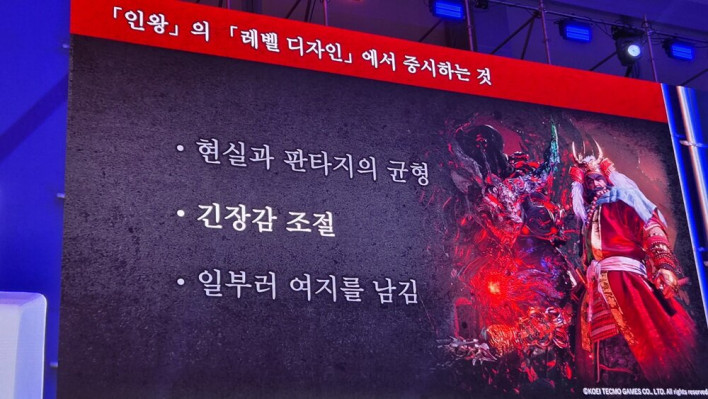
Following the combat system, Producer Shibata explained the studio's approach to stage design. His first principle was balancing historical realism with fantasy. 'Nioh' is set in actual periods of Japanese history, reproducing famous architecture and real-world locations in-game. However, the team felt that recreating historical spaces alone was not enough to make the game distinct.
To address this, the developers blended Japanese historical settings with fantasy elements in the form of Yokai. By letting supernatural beings distort locations rooted in real history, players experience both a historical period piece and fantasy action. Producer Shibata explained that this combination creates a unique world that only Koei Tecmo—a Japanese developer with a proven track record in historical content—and Team NINJA could bring to life.
The second principle is managing tension. Pursuing high difficulty does not mean filling an entire stage with relentless waves of formidable enemies. If combat remains relentlessly grueling, players eventually burn out. Therefore, stages must strike a balance between sections featuring tough foes and areas allowing relatively relaxed exploration.
Shortcuts play a crucial role in this design. When players first enter an area, they might spot a door locked from the other side or a ladder out of reach. After taking a long detour and defeating powerful foes to return to that spot, they can unlock the door or drop the ladder, connecting back to the previous area.
At that moment, players gain a sense of achievement that goes beyond simply shortening their travel distance. The spatial change confirms that they have overcome the challenging section they just traversed. At the same same time, it provides relief, knowing they can now traverse the area much more comfortably. Through such mechanics, the development team intentionally creates moments of release following high-intensity battles.
The third principle is leaving room for players to find their own solutions. Even when confronted by a formidable enemy, the game doesn't force players into a direct confrontation. By exploring the surroundings, they might discover a detour or a path leading behind the enemy. Players confident in their skills can charge straight ahead, while others can use the terrain to tilt the odds in their favor.
This design empowers players to choose their own approach, refusing to force a single prescribed solution even when taking down tough enemies.
Lastly, Producer Shibata discussed the design principles behind hack-and-slash loot and progression systems. The core structure is simple: while enemies grow stronger later in the game, defeating them yields superior gear that makes the player character stronger as well. Maintaining a reward structure where enemy strength and player growth move hand in hand is essential.
However, the team was careful not to disrupt the visual consistency of combat just to boost gear stats. For example, while stats that increase movement speed or dodge distance can exist, over-buffing them to let characters teleport across unrealistic distances would ruin the feel of the combat system. No matter how powerful the equipment, the fundamental character of the movements players have mastered must be preserved.
Producer Shibata particularly highlighted the intentional exclusion of random critical hits. While RNG critical hits that deal high damage are common in turn-based RPGs, real-time action games operate under a different dynamic.
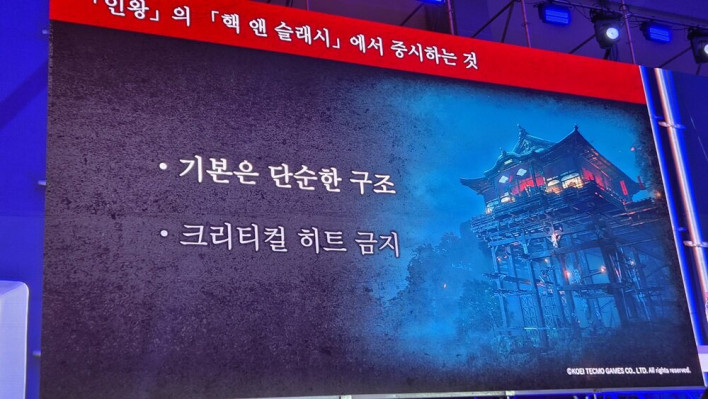
Action games inherently feature numerous real-time variables, such as whether an attack actually connects and which direction the enemy is moving. Layering random damage swings on top of this could cause players to view outcomes as unfair. Therefore, rather than relying on RNG hit chances, 'Nioh' was designed so that big damage comes from player actions, such as striking an enemy's back or targeting their weak points.
This choice balances the joy of acquiring powerful gear with the thrill of direct control. While stronger gear makes combat easier, player judgment and skill still dictate the outcome in crucial moments.
The New Challenges Chosen for 'Nioh 3' Samurai and Ninja, Open Fields, and an Adventure Across Eras
Building on these long-standing design principles, 'Nioh 3' takes on three new challenges: distinct samurai and ninja battle styles, an open field that expands on the traditional mission structure, and a storyline spanning multiple eras.
First introduced was the ninja combat style. While previous entries in the 'Nioh' series focused primarily on samurai combat, 'Nioh 3' introduces ninja as a distinct battle style. This was not merely a matter of adding new weapons, but an effort to differentiate combat movement and control mechanics themselves.
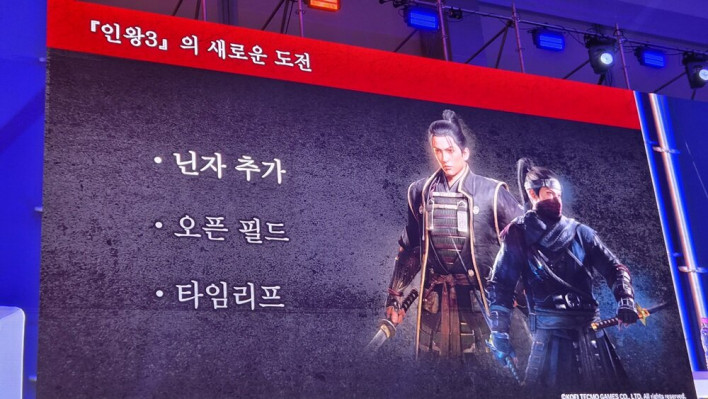
The samurai style places weight on deliberate focus—observing enemy movements and timing attacks carefully. In contrast, the ninja style emphasizes mobility and speed, moving rapidly to exploit openings. At the same time, new systems such as parrying and skill refinement were added to the samurai style to ensure both playstyles possess formidable combat capabilities.
Producer Shibata viewed positively the ongoing player debates post-launch over whether the ninja or samurai style is stronger. If one style were overwhelmingly dominant, such discussions wouldn't persist. The fact that players reach different conclusions depending on skill level, gear setup, and combat preference serves as proof that balance between both styles has been maintained.
The second change is the open field. While previous entries followed a structure of selecting individual missions and tackling specific stages, 'Nioh 3' allows players to explore a field and choose which areas to tackle and in what order.
However, the developers' goal was not simply to build a massive world. Producer Shibata stated that rather than emphasizing sheer map size, the focus was on preserving the dense level design and tense challenge characteristic of 'Nioh'. The core objective was expanding exploration freedom without losing the strengths of a mission-based structure.
The third change is a time-travel narrative structure. While previous games focused primarily on a single historical era, the protagonist of 'Nioh 3' travels through time, visiting different historical periods. Consequently, the historical backdrops and regional landscapes change dramatically, allowing players to explore environments that evolve from era to era.
The presentation also touched on DLC for 'Nioh 3'. The first DLC, released this past August, takes place after the main game's climax. In a future where peace was thought to have returned, hell breaks loose once more, following the protagonist Takechiyo as he investigates the cause.
With new factions and characters introduced, the narrative expands on the events of the main game. Producer Shibata explained that the first and second DLCs serve as Part 1 and Part 2 of a single narrative arc. While details on the second DLC cannot yet be revealed, he added that more information will be shared in the near future.
How 'Wo Long' Came to Be Three Conditions Required to Create a New IP
The second presentation was delivered by Producer Masakazu Hirayama, who leads Team NINJA's Division 2. Having served as director on 'Wo Long: Fallen Dynasty' and 'Ninja Gaiden 4', he is currently producing 'Wo Long 2: Wings of Ember'. In his talk, he explained the background behind conceptualizing an action RPG distinct from 'Nioh', as well as the elements being expanded in the sequel.
'Wo Long: Fallen Dynasty' is a dark fantasy action RPG set in the Three Kingdoms period, released in March 2023. It centers on fast, fluid Chinese martial arts combat, a Morale system that sways battlefield conditions, and a dark Three Kingdoms world populated by historical figures and demonic Yokai.
Interestingly, the project's inception began when a game Producer Hirayama was originally directing was canceled. Due to various circumstances, that project was halted, and while looking for a new direction, he brainstormed ideas with Team NINJA head Fumihiko Yasuda, eventually landing on a new action RPG based on the Three Kingdoms.
Producer Hirayama cited a vital lesson learned during this process: "You shouldn't create a new IP simply for the sake of making something new."
For example, suppose Team NINJA were to make a rhythm game based on a musical instrument that had never been used in video games before. While it might be a novel title absent from the market, Team NINJA wouldn't possess the experience and expertise of companies accustomed to developing rhythm games. Furthermore, it would be uncertain whether players awaiting Team NINJA titles would welcome such a departure.
Therefore, he explained that three criteria must be evaluated when planning a new IP: whether existing development expertise can be leveraged, whether there is a compelling reason for Team NINJA specifically to make it, and what new challenges can be pursued within that project.
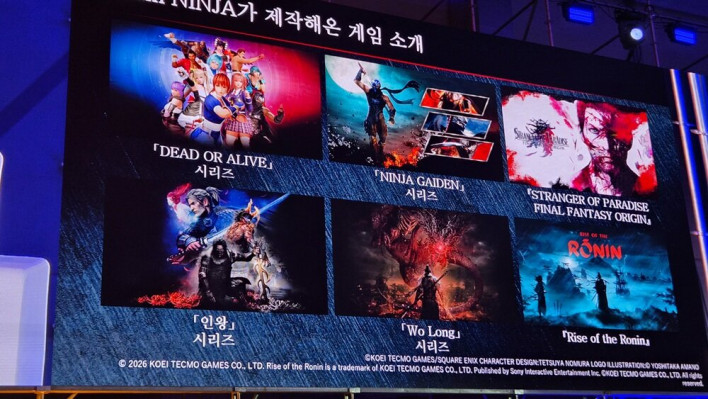
'Wo Long' satisfied these conditions. Team NINJA possessed extensive experience creating action games through 'Ninja Gaiden' and 'Nioh', and was also developing 'Stranger of Paradise: Final Fantasy Origin' at the time. The technology and personnel required to build an action RPG were already in place.
Moreover, while the Three Kingdoms was not a setting Team NINJA had handled directly, it was a domain where Koei Tecmo as a whole held decades of experience. Coupled with the studio's experience adapting historical themes into action RPGs via 'Nioh', this provided meaningful grounding for a new endeavor.
Finally, the team focused on the unique appeal of Chinese martial arts, which differs from Japanese samurai and ninja styles. Producer Hirayama noted his personal fondness for the fluid, continuous swordplay seen in Chinese martial arts cinema, which he wanted to translate into the core combat of the game.
The combat system born from this vision aimed for a rapid exchange of offense and defense. Where 'Nioh' placed weight on reading enemy movements and pacing attack and defense, 'Wo Long' emphasized a constant flow of back-and-forth strikes.
The core system created to achieve this flow was Deflect. Deflecting attacks was designed not merely as a defensive move, but as a bridge transitioning seamlessly into counterattacks. Rather than keeping defense and offense separate, it connected them into a single continuous rally.
Another core mechanic was the Spirit system. Producer Hirayama noted how warlords in the Three Kingdoms would gain momentum through combat success or turn the tide of battle with a single breakthrough despite being at a disadvantage. Reinterpreting this momentum as action energy, the team integrated it into the game system.
By enabling players to execute stronger actions as they attack aggressively and dominate combat, the system incentivizes players to maintain the offensive. This design pushed the back-and-forth combat of 'Wo Long' to be even more proactive.
The setting of a Three Kingdoms battlefield was also expanded into gameplay systems. The developers viewed each mission as a battlefield, aiming to craft an experience where players defeat powerful foes and capture strongholds step by step. Standard action RPG checkpoints were reinterpreted as capturing battlefield flags, which were linked directly to the Morale system.
As players explore the battlefield and plant flags, they expand their influence. This progression went beyond simply reaching the next checkpoint, allowing players to experience pushing the frontline toward their ultimate goal in true Three Kingdoms fashion.
New Systems Turning the Battlefield in 'Wo Long 2' Expanded Offense, Strategic Open Fields, and the Arrival of Pang Tong
Producer Hirayama stressed that when developing a sequel, building upon the strengths of the original is paramount. While it is easy to focus solely on addressing player criticisms during sequel development, studios must be careful not to lose what made the original well-received in the first place.
Thus, 'Wo Long 2' was planned by analyzing post-launch player feedback while revisiting ideas that couldn't be implemented in the original game. The objective was not just fixing shortcomings, but expanding existing strengths to naturally overcome those drawbacks.
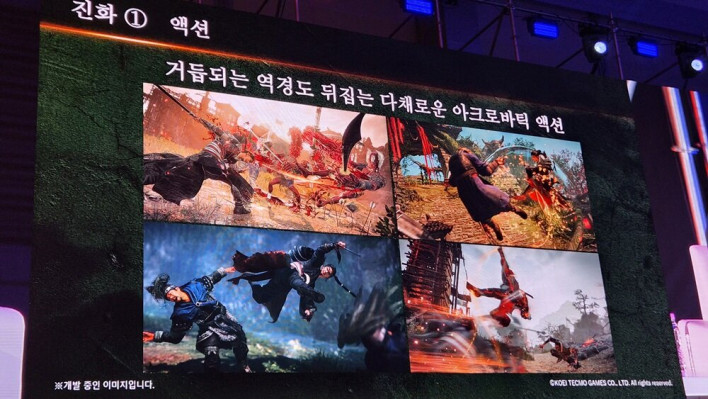
At the center of these changes is the dynamic nature of Chinese martial arts. While the original achieved fast combat through Deflections, its options for dealing with diverse combat scenarios were somewhat limited. The sequel seeks to expand this through more three-dimensional, acrobatic action.
For example, being surrounded by multiple enemies is traditionally a disadvantage. In 'Wo Long 2', however, players can knock an enemy back forcefully to collide with surrounding foes. If backed against a wall, players can jump off the wall to take the enemy's back or slam the opponent into the wall as a counter.
Players can also pull airborne enemies down to the ground to open up attack opportunities. Turning disadvantageous situations into offensive openings is the key concept. Through these mechanics, the developers aim to encourage aggressive player movement not only in 1v1 fights, but in multi-enemy encounters and complex terrain with elevation differences.
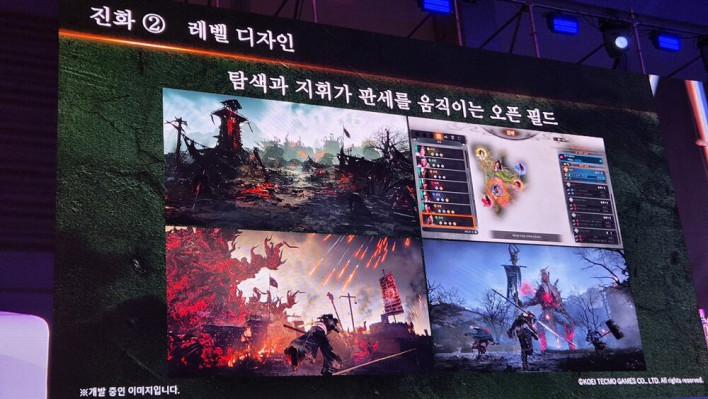
The second major change lies in battlefield scale and strategy. While keeping the fundamental concept of treating each mission as a battlefield, the game expands the scope of events and choices available within them.
The most notable addition is the ability to capture enemy bases and recruit officers to one's side. After defeating an enemy officer on the field, players can bring them under their command or deploy officers to captured strongholds to turn the battle in their favor. Rather than simply raising the protagonist's stats, this allows players to reshape the tactical tide of the entire battlefield.
Producer Hirayama explained that battles in the Three Kingdoms involve securing strongholds en route to an ultimate objective, with events at each base shifting the tide of war. 'Wo Long 2' implements this flow across larger fields, emphasizing the thrill of personally turning the tide of battle.
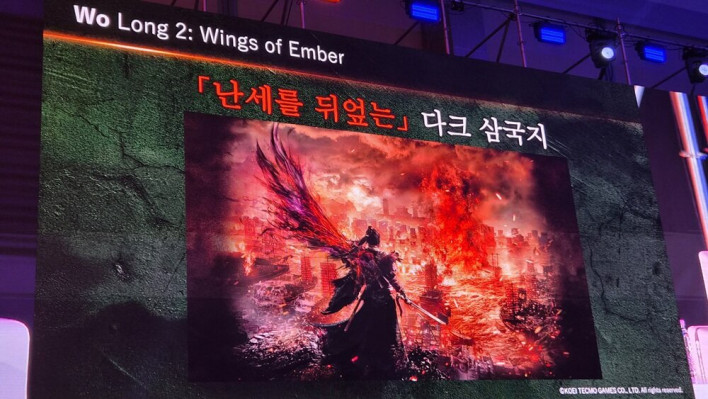
The third change is in the narrative. Set after the events of the original game, 'Wo Long 2' takes major Three Kingdoms events, including the Battle of Red Cliffs, as its backdrop. The dark fantasy world blending familiar historical events with demon Yokai and supernatural elements continues.
However, there are changes in how character relationships and protagonist motivations are conveyed. Producer Hirayama noted that because the original protagonist was portrayed as a solitary figure, understanding his goals and motivations could be difficult. To remedy this in the sequel, the famous Three Kingdoms strategist Pang Tong is featured as a key character.
Pang Tong serves as a friend to the protagonist and co-leads the narrative, voicing thoughts and emotions that the main character does not express directly, and helping players understand why the protagonist makes specific choices. Emphasizing interpersonal relationships more than in the predecessor is an effort to deepen narrative immersion.
Ultimately, the evolution pursued in 'Wo Long 2' goes beyond simply making combat visually flashier. It aims to broaden player maneuverability and tactical options while amplifying how player choices impact both the battlefield and the story.
At the end of the presentation, a gameplay video for 'Wo Long 2: Wings of Ember' was shown. Producer Hirayama announced that the sequel is scheduled for release on March 4, 2027, asking for players' continued interest alongside the Complete Edition of the original 'Wo Long: Fallen Dynasty'.
Both 'Nioh' and 'Wo Long' share the common thread of requiring high-level mechanics and split-second judgment from players. Yet while one prioritizes reading enemy attacks and punishing openings, the other focuses on maintaining relentless offense to turn the tide of battle. The session demonstrated how Team NINJA is evolving its long-standing action expertise in two distinct directions.
Above all, what ties both titles together is how they present challenge. Rather than forcing players to endure rigid, repetitive situations, they encourage players to understand combat, discover new methods, and overcome difficulty through their own growth. Ultimately, Team NINJA believes the true joy of high-difficulty action RPGs lies in that very journey.