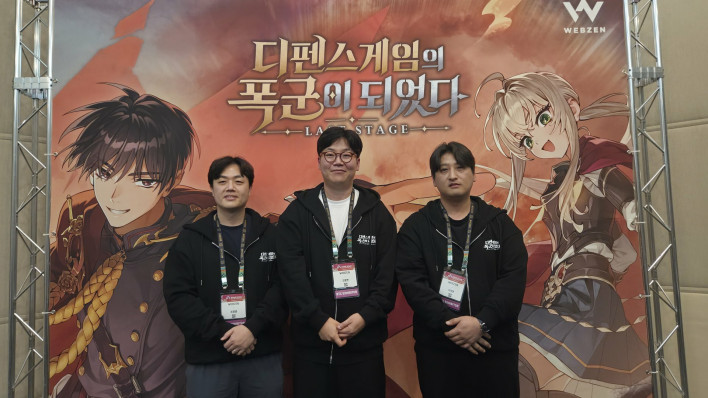
On November 19, Webzen introduced the development direction and core gameplay systems of its upcoming title, 'I Became the Tyrant of a Defense Game: LAST STAGE' (hereinafter 'Tyrant of a Defense Game'), at G-STAR 2026 held at BEXCO in Busan. Webzen Crevix CEO Kim Dong-hyun, Lead Designer Ryu Kwang-yeol, and Art Director Lee Dae-hyun attended the press conference, with CEO Kim Dong-hyun personally presenting the game's development philosophy, key features of the G-STAR demo build, and overall future plans.
'Tyrant of a Defense Game' is a command strategy RPG being developed based on the Naver Webtoon adapted from the web novel of the same name. The original story begins when the protagonist clears the notoriously difficult game 'Protect the Empire' and finds himself transmigrated as Ash, the Third Prince of the empire. Becoming the commander of the Southern Front, Ash defends Crossroad, explores the Lake Kingdom, and battles against invading monster hordes.
A central focus during development was capturing the role of the 'commander' as depicted in the original story—a constant process of deciding who to fight alongside, what assets to prepare, and when to commit force. The game is designed to offer a familiar experience for fans of the source material while serving as an immersive journey of discovering the world from a commander's perspective for new players.
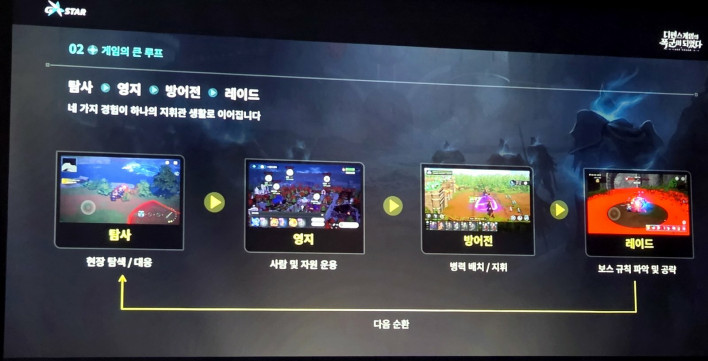
To achieve this, the game was structured as a continuous loop of exploration, management, and command. As players progress, tactical scenarios change, requiring distinct decisions at every phase. Information gathered during exploration is used to prepare forces, which are then deployed to counter invasions. The core idea is ensuring every decision made across different content types contributes to a single, cohesive commander experience. Furthermore, during the Q&A session, the developers emphasized their efforts to preserve the original lore as much as possible while shaping and implementing this game design.
Environments and Visuals Rendered in Diorama Pixel Art Lived-in Spaces and Grand-Scale Battlefields
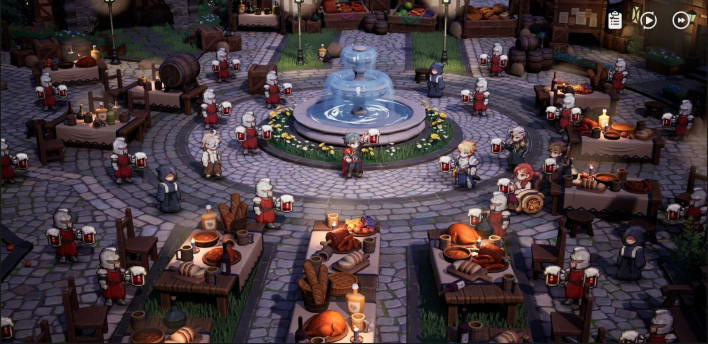
The game employs 'diorama pixel art' for its visual direction. Beyond simply recreating characters from the webtoon, establishing the exact spaces those characters inhabit was equally vital.
The spaces shared with companions serve as more than static backgrounds for placing units. Surrounding props and structures were crafted to give a genuine sense of daily life. By weaving various elements together into realistic living quarters, the team focused on adding depth and warmth to the world while maintaining the nostalgic appeal of pixel art.
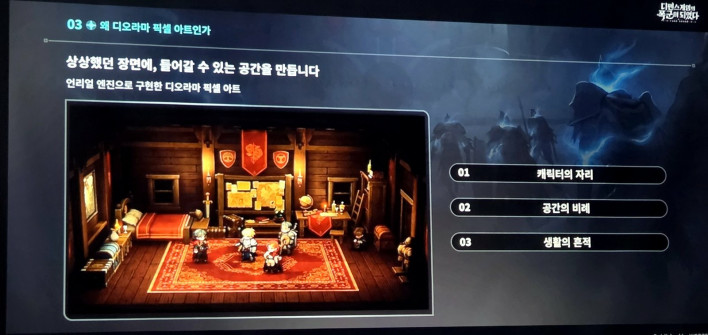
A similar approach was taken when representing battlefields. Up close, character animations and actions are clearly visible, while from a distance, the full scale of the battlefield unfolds. To achieve this balance, environments were constructed with careful attention to lighting, composition, and scale ratios between figures and structures. This allows players to observe the relationship between characters and their surroundings while clearly parsing the overall battle.
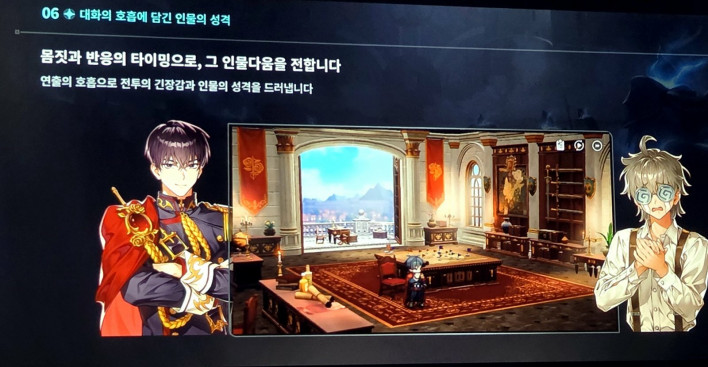
Detailed animation and camera work were added to convey character emotions. Everything was factored in—from unit positioning to camera focus during key moments, down to specific stances and movements. Tension can be established purely through how characters stand facing one another, while personality shines through gestures and reaction timing. Rather than relying strictly on text dialogue, careful attention was given to directional pacing to capture combat tension and character individuality.
Exploration: Learning the Rules of the World Tactics Shaped by Elements, Status Effects, and Environments
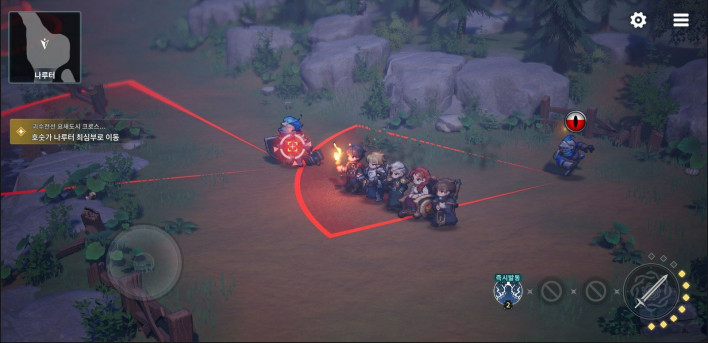
In actual gameplay, 'Exploration' serves as both a means of discovering the world and a process for gaining tactical intel and learning combat mechanics for future battles. Just as in the original story—where exploring the Lake Kingdom uncovered critical facts to prepare against invasions—the game directly ties exploration to a commander's role in preparing defenses. A core element during exploration is linking elemental attributes with status conditions. Each character has distinct attacks and elemental properties, and how these interact with status conditions creates diverse tactical possibilities.
A primary example is combining the 'Wet' status with Electric attacks. Applying Electric attacks to a Wet target triggers an Electrocuting status effect. Companions utilize their unique skills to inflict different statuses, which can then be chained into follow-up attacks. Strategy extends beyond using individual skills to actively coordinating how companions team up to apply synergized status conditions.
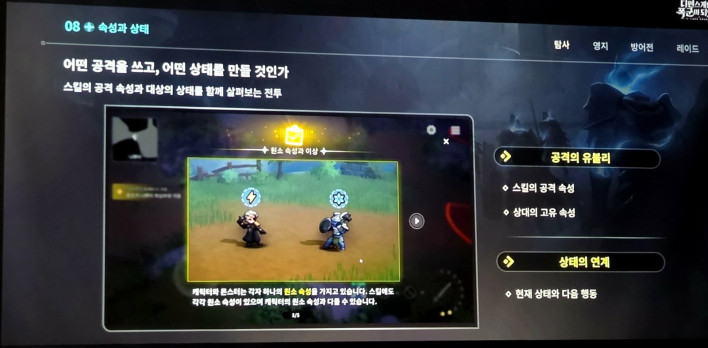
These interactions apply not only to unit skills but also to environmental objects placed around the battlefield. For example, players can apply Electric attacks to enemies that step into water puddles and become Wet, or ignite Mana Stone fragments to trigger explosions.
Consequently, players must be aware of character skills as well as nearby objects and their activation triggers. Even against the same enemy, tactics vary depending on how elements and status ailments are chained together. Reading battlefield conditions and making sound judgments is paramount. Players must evaluate which targets are in what state, anticipate when and where environmental reactions will occur, and decide their next action accordingly. Through this structure, learning the rules of the world via exploration directly feeds into tactical decision-making in combat.
Prepare in the Territory, Command in Defense Battles Sequential Decisions Driven by Enemy Intel and Battle Conditions
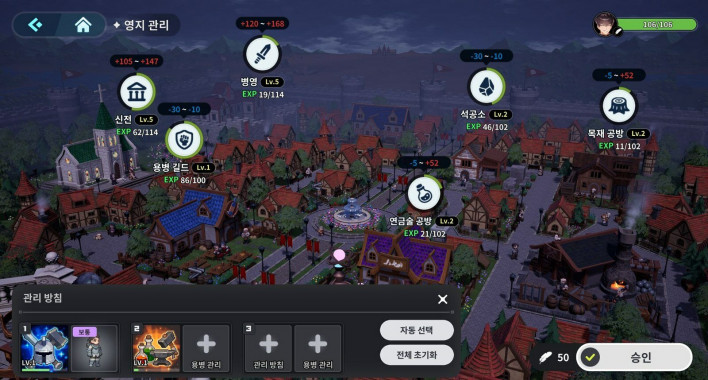
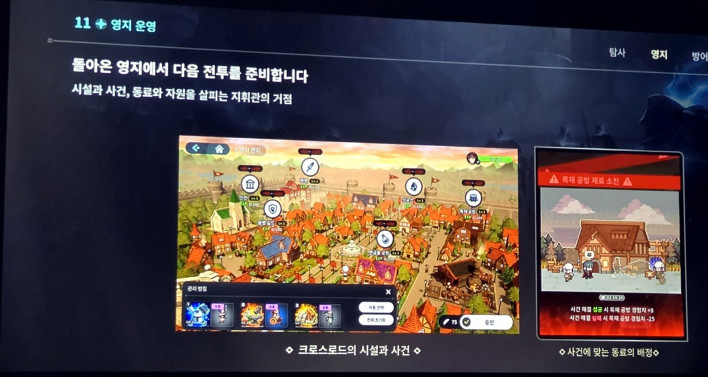
Alongside exploration, 'Territory Management' forms another major gameplay pillar. Serving as a management hub where players oversee Crossroad's facilities and resources while preparing for upcoming invasions, it extends the commander's duties outside of active combat.
Utilizing companions effectively is critical in this phase. Companions do not exist solely for combat; they actively participate in territory management, each offering different roles and utility. Events occurring in the territory also serve as opportunities to discover individual character traits and roles. Players manage allies and resources in this manner, organizing the necessary military strength for upcoming invasions. Deciding which allies to assign and what military assets to secure directly feeds into defense battle preparations.
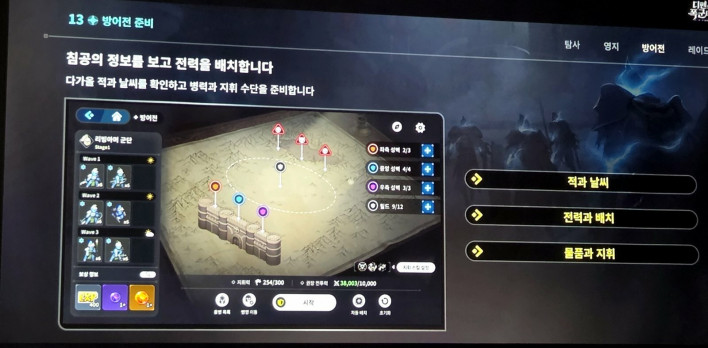
In the defense battles that follow, intelligence on incoming enemies sets the baseline for preparation. Players must check enemy wave compositions and weather conditions, then decide how to position troops and supplies across the field and along castle walls.
Reviewing enemy intel prior to battle and appropriately deploying available forces and command assets is essential. Rather than relying solely on fielding strong characters, emphasis is placed on tailoring forces and assets to match specific situations.
However, decision-making does not end once the battle begins. A commander's duties continue throughout active defense battles. Players must constantly evaluate battlefield conditions to determine how best to deploy their prepared forces.
Rather than passively watching pre-battle strategies play out, players must adapt their tactics as conditions change. How pre-gathered intelligence and readied forces perform in combat, along with adapting to changing circumstances, forms the core engagement of defense battles.
Boss Raids and the Commander's Core Game Loop Main and Reserve Party Setup and Break Timings
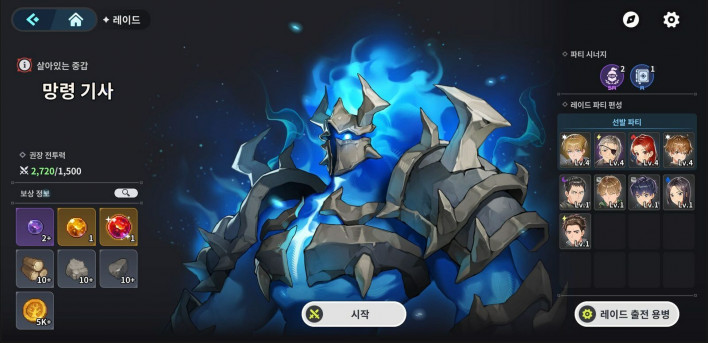
Following defense battles, players take on 'Raids' against powerful bosses. In Raids, understanding boss characteristics and building a counter-party is vital. Parties consist of main members and reserves. Since players can swap formations upon clearing stages or if the main party is wiped out, forces must be organized with both initial engagements and fallback scenarios in mind.
Active player intervention is required during combat, such as identifying boss attack indicators and directing party movement. In particular, timing reactions to boss patterns to inflict Break states is a key element of raid strategy. Beyond assembling a proper squad, accurately judging when to dodge attacks and counterplay during real-time combat is crucial.
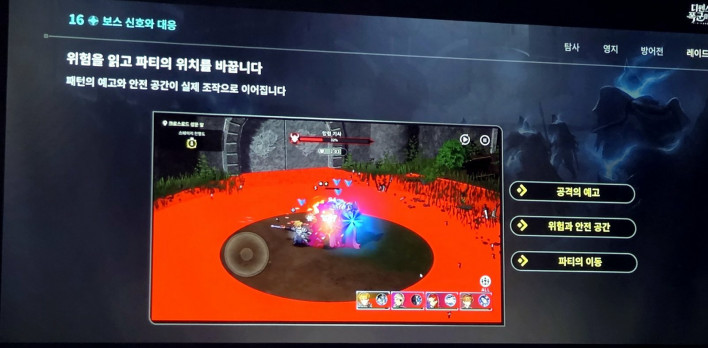
Dynamic staging is also utilized in raids to convey combat intensity. As attacks and counters unfold, character movements and dynamic camera framing highlight the high-stakes flow of boss battles.
In this way, 'Tyrant of a Defense Game' features a gameplay loop where players learn the rules of the world through exploration, prepare companions and assets in their territory, and make real-time command decisions during defense battles and raids. While each content type functions differently, the player's underlying role remains consistently aligned as a commander. Ash's journey in the original work—gathering intelligence, leading allies, and fighting against overwhelming odds—is translated into gameplay through this framework. This creates a cohesive game loop of exploring the world, learning its rules, preparing forces, and executing commander-level decisions on the actual battlefield.
Closing the presentation, CEO Kim Dong-hyun stated, "The experiences across exploration, management, and defense battles all converge into a single commander's experience," adding, "Players will decide what assets to utilize, who to prepare, and when to intervene and react. We designed the game so that these distinct choices seamlessly come together as the unified experience of being a commander."